

Generative AI is reshaping how people search, compare, and decide — and with that change comes a new discipline for digital marketers and small businesses: Generative Engine Optimization (GEO). This piece synthesizes the practical guidance and strategic thinking behind GEO, explains how it differs from conventional SEO, validates key claims against industry reporting, and provides an actionable roadmap that small businesses can implement without turning marketing into guesswork.
The last two decades of digital marketing rewarded those who could win the “ten blue links”: keyword dominance, backlinks, and page-rank mechanics. Today, an increasing number of queries start with or are resolved by conversational AI assistants — platforms such as ChatGPT, Google Gemini, Microsoft Copilot, Perplexity and specialist research engines — that synthesize answers instead of simply listing links. That fundamental shift moves value from ranking pages to being recognizable and trustworthy as an entity in an AI’s retrieval and synthesis pipeline. This phenomenon has been discussed across industry coverage and emerging academic work on Answer Engine Optimization (AEO) and GEO. Generative Engine Optimization is not a gimmick or a single tweak; it is a strategic reorientation. Where traditional SEO optimized for keywords and positional advantage, GEO optimizes for entity clarity, structured signals, and third‑party corroboration so that an AI system can confidently reference a business in a synthesized answer. The practical contours of GEO are already visible in vendor offerings and industry playbooks that emphasize machine‑readable business profiles, consistent citations across directories, and authoritative explanatory content.
At the same time, GEO does not eliminate risk. Generative models can hallucinate, platform policies change, and vendor claims may overpromise. The balanced strategy is to adopt GEO fundamentals early, document outcomes rigorously, and diversify discovery channels so your business does not depend on a single assistant interface.
Industry sources and practitioner playbooks converge on the same point: being machine‑understandable and human‑trustworthy simultaneously is the most enduring advantage in the AI‑first discovery era. Implemented responsibly, GEO is less an attempt to “game” AI and more an exercise in good identity, good content, and good reputation management.
Consistent, machine‑readable identity; precise specialization; and verifiable third‑party trust are the bedrock of Generative Engine Optimization — a practical approach that turns the anxiety of AI discovery into a manageable roadmap for sustained visibility and customer connection.
Source: Newsmax https://www.newsmax.com/finance/georgementz/serach-engine-generative/2025/12/31/id/1240352/
 Background / Overview
The last two decades of digital marketing rewarded those who could win the “ten blue links”: keyword dominance, backlinks, and page-rank mechanics. Today, an increasing number of queries start with or are resolved by conversational AI assistants — platforms such as ChatGPT, Google Gemini, Microsoft Copilot, Perplexity and specialist research engines — that synthesize answers instead of simply listing links. That fundamental shift moves value from ranking pages to being recognizable and trustworthy as an entity in an AI’s retrieval and synthesis pipeline. This phenomenon has been discussed across industry coverage and emerging academic work on Answer Engine Optimization (AEO) and GEO. Generative Engine Optimization is not a gimmick or a single tweak; it is a strategic reorientation. Where traditional SEO optimized for keywords and positional advantage, GEO optimizes for entity clarity, structured signals, and third‑party corroboration so that an AI system can confidently reference a business in a synthesized answer. The practical contours of GEO are already visible in vendor offerings and industry playbooks that emphasize machine‑readable business profiles, consistent citations across directories, and authoritative explanatory content.Why GEO matters now
- AI assistants are increasingly the first stop in discovery workflows, especially for research-oriented, local, and transactional queries.
- Generative models synthesize from many sources and favor signals that reduce ambiguity: structured data, corroborative third‑party mentions, and narrow topical expertise.
- For small businesses, GEO shifts the battleground from scale to clarity: consistent, authoritative identity beats noisy mass marketing.
How AI systems decide what to cite (technical primer)
The retrieval and synthesis pipeline (simplified)
- Query interpretation: natural language understanding converts user intent into candidate vectors.
- Retrieval: a retriever (index, knowledge graph, or document store) finds likely sources using vector similarity, keyword matches, and metadata.
- Synthesis: the generative model composes an answer from retrieved passages, then often applies a ranker to choose which items to surface or cite.
- Provenance and safety checks: systems apply trust, recency, and safety filters before presenting content or naming businesses.
Signals that carry weight for GEO
- Structured business data: schema.org markup, clear NAP (name/address/phone) consistency, and machine-readable product/service descriptors.
- Knowledge graph connections: entries in curated knowledge panels, enterprise directories, and authoritative registries.
- Third‑party corroboration: mentions by trade associations, government registries, academic or industry PDFs, and reputable media.
- Authoritative explanatory content: FAQ pages, “how it works” guides, and clear procedural write-ups that directly answer user questions.
- Local and transactional signals: verified map listings, recent reviews, and transactional metadata (hours, appointments, service areas).
- Topical narrowness: precise niche descriptions (e.g., “crypto tax CPA for seed‑stage founders”) increase model confidence.
What GEO is — and what it is not
GEO is:
- A practice of making your business machine readable, unambiguous, and corroborated across the web.
- An emphasis on third‑party trust signals (not merely self-promotional content).
- A focus on niche clarity and local/transactional readiness when appropriate.
- A long-term, compounding strategy: once entity trust is established, AI inclusion is more likely and more persistent.
GEO is not:
- A shortcut to instant inclusion or guaranteed citations. There is no legitimate “pay-to-get-cited” shortcut that reliably works across major generative systems today.
- A replacement for SEO; rather, it augments and redirects certain priorities (from ranking to identity and trust).
- A magic content‑spam tactic. Volume and keyword stuffing are counterproductive; AI systems prioritize clarity and verifiability.
The small business case: how to prioritize GEO practicalities
For most small businesses the reality is twofold: AI will not name every small firm, and when it does, it favors local/transactional intent and narrow specialty. That means small firms can win — but only by being precise, consistent, and verifiable.A 90‑day GEO sprint (practical, low-cost roadmap)
- Day 0–15: Define your single, precise entity statement. Distill the business down to one primary niche + location or industry. Example: “Austin CPA firm specializing in crypto tax for startups.”
- Day 16–30: Normalize public profiles. Update and verify:
- Google Business Profile (GBP) / Apple Maps
- Yelp, Bing Places, LinkedIn
- Industry directories and licensing bodies
Ensure exact NAP consistency across all profiles. - Day 31–60: Publish 5–10 authoritative pages:
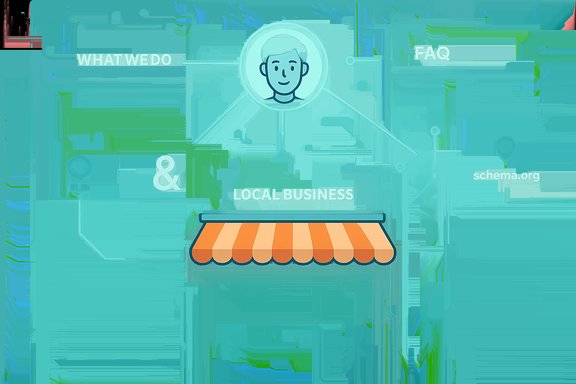
- A canonical “What we do / Who we serve” page (clear one-sentence answer at the top).
- FAQ pages targeting real user questions in natural language.
- A “how it works” or “process” page with step-by-step clarity.
Use schema.org markup for Organization, LocalBusiness, Service, FAQ, Product, and Author where appropriate. - Day 61–75: Secure 3–5 credible third‑party mentions:
- Local press, trade association directory, accredited training program, or university partner.
- Aim for third‑party PDFs, press releases, or directories (these often persist in document indexes).
- Day 76–90: Measure and iterate:
- Track assistant‑driven referrals (Copilot, SGE/Overviews, Perplexity, discovery referrals).
- Document any assistant citations with time‑stamped screenshots or transcripts.
- Refine the niche statement and pages based on observed queries.
Content that works for GEO (and content that wastes time)
GEO‑friendly content is not flashy; it is factual, concise, and structured for question–answer flows.- Create short, answer‑first paragraphs (one‑sentence lead answers followed by supportive detail).
- Use descriptive headings that match conversational queries (e.g., “How much does estate planning cost in Denver?”).
- Provide reproducible facts, process steps, and definitions that can be excerpted without editorializing.
- Publish PDFs or whitepapers that can be cited by professional AI systems and repositories (academic PDFs often seed secondary knowledge layers).
- Avoid speculative or promotional fluff; generative models downweight hype and favor corroboration.
The limits, risks, and the ethics of optimization
Hallucination and factual risk
Generative models can and do generate plausible but incorrect claims. Independent journalistic audits have found significant inaccuracies in AI summarization tasks, particularly for current affairs and evolving stories. That means being surfaced by an assistant carries reputational risk when the assistant’s synthesis is wrong. Businesses should document when and how they appear in assistant outputs and be prepared to correct misinformation through authoritative channels.Vendor claims and the “slot‑machine” problem
Many vendors now offer AEO/GEO services with ambitious 90‑day roadmaps and guarantees. Buyers must treat AI‑citation claims skeptically and insist on verifiable, timestamped evidence. AI outputs can vary by query phrasing, locale, or model update; a single citation is not proof of consistent authority. Procurement due diligence should require:- Time‑stamped transcripts or searchable logs showing assistant outputs.
- Metrics linking AI visibility to concrete business outcomes (calls, bookings, conversions).
- Repeatability evidence across multiple queries and platforms.
Platform concentration and gatekeeping
If user discovery consolidates around a few assistant interfaces, those platforms acquire outsized control over who gets recommended. That raises competition, data‑provenance, and policy concerns. Firms should diversify discovery strategies and not rely solely on being “cited” by one dominant assistant. Industry coverage highlights both the rise of assistant referral concentration and the regulatory attention that follows.Tools, tactics, and measurement for practitioners
Technical hygiene (checklist)
- Canonical site with clear Organization/LocalBusiness schema.
- FAQ schema and QAPages for question-first content.
- Consistent NAP in all directories (one canonical formatting).
- Verified Google Business Profile and Bing Places entries.
- Sitemaps, Open Graph and structured product data where relevant.
- PDFs with metadata for industry/case studies.
Reputation signals (priority order)
- Government or professional licensing directories.
- Trade association directories and academic citations.
- Local press and high‑quality trade press mentions.
- Verified reviews (prefer platforms that show verification metadata).
Measurement and validation (how to prove value)
- Record: take dated transcripts/screenshots of AI outputs citing your business.
- Correlate: link assistant mentions to referral upticks, lead volume, or conversion events.
- Repeat: measure frequency across multiple timestamps and slightly different prompts.
- Audit: maintain a scoreboard of which platforms cite you (Gemini, Copilot, Perplexity, etc. and how often.
How GEO favors some businesses — and what others should do
Who benefits most
- Narrowly specialized firms with demonstrable domain expertise (e.g., niche consultancies, specialized medical or legal practices).
- Local transactional businesses with accurate, verified map/listing signals.
- Organizations that can secure credible third‑party references (accreditations, government lists, academic citations).
Who faces the steepest uphill climb
- Businesses with inconsistent online identity (multiple names, addresses, or service descriptions).
- Brands that rely purely on self-promotion without third‑party corroboration.
- Firms in categories where the AI’s training data over-indexes dominant incumbents and large retailers.
A practical GEO playbook for the next 12 months
- Quarter 1: Entity consolidation and schema hygiene
- Standardize your entity statement and update every public profile.
- Publish or retrofit schema across key pages.
- Quarter 2: Authoritative content and third‑party outreach
- Produce 5 to 10 explanatory assets (FAQs, “how it works” guides, checklists).
- Secure mentions in local press, trade bodies, or accreditation listings.
- Quarter 3: Measurement, documentation, and refinement
- Begin collecting dated assistant transcripts and create an “AI citations” dashboard.
- A/B test question-first page layouts and measure assistant pickup.
- Quarter 4: Mature trust signals and automation
- Build automated review solicitation and maintain recency.
- Maintain a cadence of authoritative updates and evergreen content refreshes.
The strategic takeaway: GEO as long-term defensibility, not a quick hack
Generative Engine Optimization reframes discoverability: it rewards clarity, narrow expertise, and corroboration. That plays to the strengths of many small businesses — they can be deeply specific, locally entrenched, and easier to verify than national brands with sprawling claims.At the same time, GEO does not eliminate risk. Generative models can hallucinate, platform policies change, and vendor claims may overpromise. The balanced strategy is to adopt GEO fundamentals early, document outcomes rigorously, and diversify discovery channels so your business does not depend on a single assistant interface.
Industry sources and practitioner playbooks converge on the same point: being machine‑understandable and human‑trustworthy simultaneously is the most enduring advantage in the AI‑first discovery era. Implemented responsibly, GEO is less an attempt to “game” AI and more an exercise in good identity, good content, and good reputation management.
Final recommendations (for IT managers and local business owners)
- Prioritize a 90‑day entity sprint focused on clarity and directory consistency.
- Invest in five to ten high‑quality explanatory assets rather than a high volume of keyword posts.
- Secure and document at least three third‑party corroborations in credible sources.
- Track assistant citations with time‑stamped evidence and link them to outcomes.
- Treat GEO as an extension of reputation management — accurate, verifiable, and conservative claims win.
Consistent, machine‑readable identity; precise specialization; and verifiable third‑party trust are the bedrock of Generative Engine Optimization — a practical approach that turns the anxiety of AI discovery into a manageable roadmap for sustained visibility and customer connection.
Source: Newsmax https://www.newsmax.com/finance/georgementz/serach-engine-generative/2025/12/31/id/1240352/
