

Genese Solution’s Tech Job Enablement workshop in Kathmandu is a small but telling example of how private tech firms, local government and community programs are beginning to stitch together practical pathways from training to work in Nepal’s fast-changing digital economy.
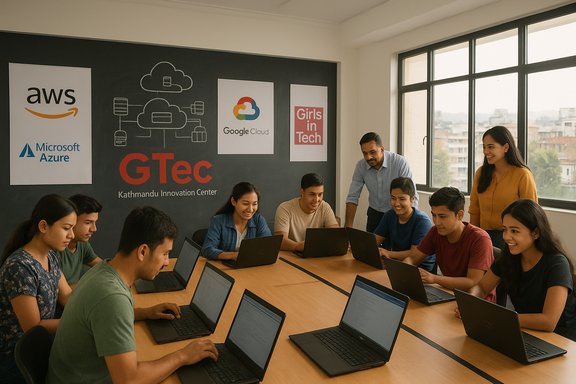
Genese Solution, a UK‑headquartered IT consulting and cybersecurity firm with a growing footprint in South Asia and beyond, ran a “Tech Job Enablement” workshop in collaboration with Kageshwori Manahara Municipality at the municipality’s newly established Innovation Center. The one‑day event brought company leaders and municipal officials together to promote a local training pipeline — branded as G‑Tec — aimed at giving youth hands‑on exposure to industry‑aligned skills such as web development, data science, AI and cybersecurity. Company leadership framed the initiative as a concrete step toward connecting certificate pathways (AWS, Microsoft Azure, Google Cloud) with local employment opportunities, while the municipality positioned the Innovation Center as an initial node in a wider plan to become a national IT hub.
What was announced and reiterated at the workshop:
The promise is straightforward and real: municipal innovation centers paired with industry‑grade training can become anchors for local digital economies. The pathway to realize that promise, however, requires moving beyond announcements to measured outcomes, durable partnerships and funding models that sustain cohorts and create real jobs. If the actors involved treat those operational challenges seriously, the next stage will be converting the energy around one workshop into a repeatable model that keeps more young Nepalis engaged, trained and working close to home.
Source: Nepalnews.com Genese Solution hosts Tech-Job Enablement IT workshop in Kathmandu
 Background
Genese Solution, a UK‑headquartered IT consulting and cybersecurity firm with a growing footprint in South Asia and beyond, ran a “Tech Job Enablement” workshop in collaboration with Kageshwori Manahara Municipality at the municipality’s newly established Innovation Center. The one‑day event brought company leaders and municipal officials together to promote a local training pipeline — branded as G‑Tec — aimed at giving youth hands‑on exposure to industry‑aligned skills such as web development, data science, AI and cybersecurity. Company leadership framed the initiative as a concrete step toward connecting certificate pathways (AWS, Microsoft Azure, Google Cloud) with local employment opportunities, while the municipality positioned the Innovation Center as an initial node in a wider plan to become a national IT hub.What was announced and reiterated at the workshop:
- The creation of G‑Tec in partnership with Kageshwori Manahara Municipality to run bootcamps and certificate‑linked training.
- Public‑private collaboration under an MoU signed earlier in August 2025 to boost digital literacy and workplace readiness.
- An explicit gender inclusion effort with a newly formed “Girls in Tech” cohort.
- Early traction: nearly 70 local youths are reported to have registered for courses at the center.
- Claims that bridging gaps in digital governance and skills could generate significant local employment opportunities.
Why this matters: context and stakes
The local context
Nepal’s IT sector has been growing steadily as a source of export revenue and jobs, but structural challenges persist: uneven internet and power access across regions, a shortage of high‑quality local placements, and significant out‑migration of working‑age youth seeking employment abroad. Local innovation centers and municipal‑level training programs are a tactical response to these realities — designed to keep trained talent closer to home by offering certified, industry‑aligned skills and visible pathways into local or remote IT employment.The private sector play
Companies like Genese Solution are well‑positioned to operate at the interface between global cloud vendors and local aspirants. By offering bootcamps and facilitating certificate tracks through AWS, Microsoft Azure and Google Cloud, private training providers reduce the logistical and technical barriers for local learners to access recognized credentials. That can both accelerate employability and make local talent visible to hiring managers outside Kathmandu.The governance opportunity
Local governments establishing Innovation Centers create a civic anchor for skilling and workforce development. When municipal priorities — infrastructure, regulatory help, and demand aggregation — align with private training capacity, the result can be a replicable playbook: public venues + private training + credential pipelines = higher chances of local hiring or remote employment.What Genese Solution brings to the table
Strengths and positive signals
- Industry alignment: The workshop highlighted direct routes to internationally recognized cloud certificates (AWS, Azure, Google Cloud). That alignment matters: certificates from major cloud vendors are often used as screening signals by recruiters for entry and junior roles.
- Existing credentials and partnerships: The company’s narrative and prior announcements show a history of cloud partnerships and regional expansion, which strengthens credibility when promising certificate access and employer pathways.
- Local presence and multi‑channel delivery: Establishing a physical Innovation Center and organizing in‑person bootcamps reduces access friction for learners who need device access, stable power, and mentorship.
- Gender focus: Forming a “Girls in Tech” stream is a strategic move to improve diversity and will be crucial if it ships real supports (stipends, mentorship, childcare flexibility) rather than symbolic participation.
- Municipal buy‑in: The mayor’s public endorsement and a formal MoU indicate institutional support that can unlock municipal resources and legitimacy for the program.
Risks, gaps and things to watch
While the initiative is promising, there are practical and strategic risks that could blunt long‑term impact if not addressed proactively.1. Certificate ≠ job: the employment funnel problem
Certificates open doors but do not guarantee placements. Unless the program couples training with:- employer partnerships that commit to internships/hiring,
- apprenticeship or paid internship slots,
- active placement services and soft‑skills coaching,
many participants may still struggle to convert credentials into sustainable employment.
2. Infrastructure and scale limitations
Remote and peri‑urban learners face recurrent obstacles:- intermittent power and low‑bandwidth internet can limit access to cloud labs and real‑time mentoring.
- hardware shortages — laptops or modern devices — remain a practical barrier for many trainees.
3. Quality control and instructor capacity
Short bootcamps can be valuable primers, but quality depends on the instructors’ experience and the curriculum’s fidelity to employer needs. Rapid scale‑ups without robust instructor training and curriculum reviews can dilute the practical value of certificates.4. Sustainability and funding
Workshops and initial cohorts are one thing; sustaining a year‑over‑year program needs recurring funding, employer buy‑in, and systems for continuous monitoring and adjustment. Relying solely on CSR cycles or one‑off events jeopardizes long‑term continuity.5. Over‑reliance on third‑party credentials
Vendor certifications from AWS, Microsoft and Google are powerful signals, but over‑dependence on vendor tracks can create narrow pathways that don’t map to all local employer demands (for example, Linux‑heavy or non‑cloud application stacks). Balanced curricula should include platform‑neutral fundamentals (programming, data fundamentals, security basics) and localized problem solving.6. Measurement and transparency
Claims like “bridging the gap in digital governance could generate thousands of jobs” are aspirational and need measurable KPIs. Without clear metrics — placement rate within 6 months, retention, gender parity in outcomes, employer satisfaction scores — it will be hard to validate impact or secure scaling investments.Verification and factual checks
- The event details and program claims were publicly reported following the Kathmandu workshop, including mention of the G‑Tec initiative and an MoU signed in August 2025.
- The company’s public profile shows an expanding global footprint and repeated emphasis on cloud partnerships and academy programs, which supports assertions about trainer access to cloud curriculum and vendor certifications.
- Leadership credentials: the CEO involved in the program has been publicly recognized in AWS Ambassador activities for the UK and Ireland region, lending credibility to the firm’s cloud education claims.
- A minor factual discrepancy appears around the number of countries where the company has offices — company materials cite multiple country offices and recent site updates list differing totals (ten versus eleven), indicating recent expansion or inconsistent reporting across channels. This should be treated as a minor inconsistency to be clarified directly with the company.
Practical recommendations for Genese Solution, Kageshwori Manahara Municipality and community partners
To convert promise into measurable impact, stakeholders should consider these operational steps:- Define and publish clear outcome targets
- Example KPIs: 6‑month job placement rate, number of paid internships created, percentage of trainees who complete the certificate, and gender‑disaggregated outcomes.
- Lock in employer pathways before scaling cohorts
- Secure commitments from local and remote employers for interview slots, paid internships, or project contracts tied to course completion.
- Invest in access infrastructure
- Maintain a small device pool, subsidized data plans, and off‑peak lab hours to accommodate students who lack continuous connectivity.
- Blend vendor certifications with platform‑agnostic fundamentals
- Teach core programming skills, data literacy, and secure development practices alongside vendor certificates to broaden employability.
- Establish mentoring and placement teams
- A dedicated placement officer and a mentor network (including remote mentors from partner firms) will increase conversion rates from certification to employment.
- Build a feedback loop with employers
- Quarterly employer roundtables and competency mapping will help adjust curriculum to real job requirements and reduce mismatch.
- Gender‑specific supports for “Girls in Tech”
- Provide stipends, flexible schedules, mentorship from female technologists, and safe transport options where needed to improve enrollment-to-completion rates.
- Publish a public impact dashboard
- Transparency on outcomes will attract funders, employers and non‑profit partners. Even a simple quarterly dashboard with verified placement numbers increases credibility.
Broader implications for Nepal’s digital economy
Local initiatives like this matter not only for the individuals trained but for systemic capacity building. If municipal Innovation Centers — correctly resourced and aligned to employer demand — proliferate, they can:- Reduce the economic pressure driving youth out‑migration by generating local, paid work.
- Build a distributed pool of cloud‑literate professionals able to serve both national projects (e‑governance, digital services) and international remote contracting.
- Strengthen the talent pipeline that global clients and remote startups look to when outsourcing work — provided quality and placement metrics are met.
What success would look like in 12–24 months
- A 6‑month placement rate of 40–60% for graduates into paid roles (local or remote), with an increasing share of positions being technically substantive (developer, junior data analyst, security analyst) rather than entry‑level admin tasks.
- A maintained gender balance target for cohorts, with documented supports leading to parity in completion and placements.
- Regularly updated curriculum mapped to employer demand and a functioning apprenticeship model with at least three committed employer partners.
- An open, public dashboard showing cohort outcomes, employer feedback and infrastructure usage rates that demonstrates continuous improvement.
Conclusion
Genese Solution’s Kathmandu workshop and the G‑Tec initiative illustrate a practical form of collaboration: private trainers, municipal space, and global vendor certificates coming together to create local opportunity. The early signs — municipal backing, initial registration numbers, and connections to well‑known cloud vendors — are promising. Yet the leap from workshops and credentials to sustainable, local employment will depend on hard operational work: employer commitments, infrastructure investments, transparent metrics, and targeted supports for women and marginalized learners.The promise is straightforward and real: municipal innovation centers paired with industry‑grade training can become anchors for local digital economies. The pathway to realize that promise, however, requires moving beyond announcements to measured outcomes, durable partnerships and funding models that sustain cohorts and create real jobs. If the actors involved treat those operational challenges seriously, the next stage will be converting the energy around one workshop into a repeatable model that keeps more young Nepalis engaged, trained and working close to home.
Source: Nepalnews.com Genese Solution hosts Tech-Job Enablement IT workshop in Kathmandu
