 Green Cabbage and Flywl are betting that cloud procurement’s biggest problem is not price alone, but complexity
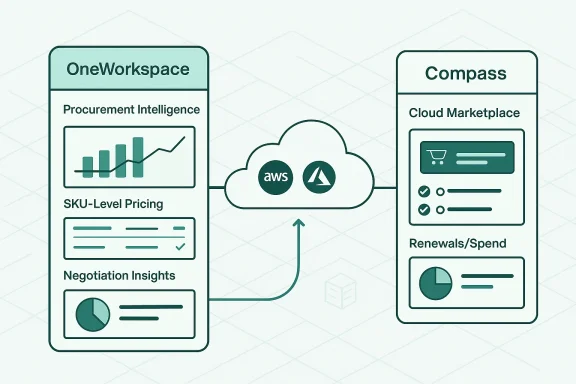
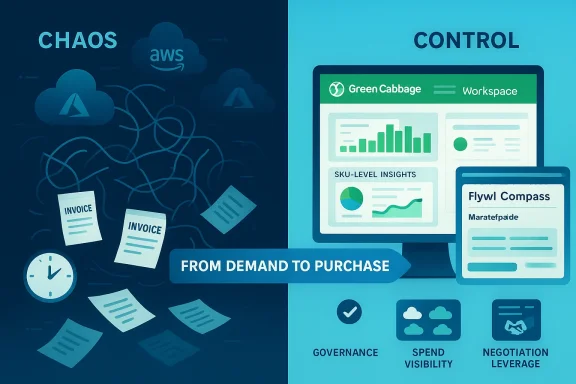
The latest partnership between Green Cabbage and Flywl is more than another vendor press release in a crowded enterprise software market. It is an attempt to attack one of the most frustrating bottlenecks in modern IT buying: the slow, fragmented, and often opaque process of purchasing software through cloud marketplaces. Green Cabbage says the collaboration will combine its procurement intelligence and commercial expertise with Flywl’s cloud marketplace platform, creating a faster path from demand to purchase for organizations that buy through AWS, Microsoft Azure, and Google Cloud.At a glance, the pitch is compelling. Procurement teams are under pressure to reduce costs, improve governance, and make faster decisions without creating compliance risks or wasting cloud commitments. Flywl’s Compass platform is designed to streamline marketplace transactions and centralize cloud spend data, while Green Cabbage’s OneWorkspace platform focuses on intelligence, benchmarking, negotiation support, and supplier optimization. Together, the two companies are positioning themselves as a solution for enterprises that want both speed and financial control.
Overview: why this partnership matters now
Cloud procurement has become a harder job than many technology leaders expected. The old model of centralized buying, with long approval chains and a single dominant vendor, has been replaced by a more distributed environment where marketplace listings, commitments, renewals, rebates, and governance rules all intersect. That complexity is exactly where Green Cabbage and Flywl see an opening.Green Cabbage frames the partnership as a way to help clients move faster and make stronger commercial decisions. Flywl frames it as a way to bring more value to buyers managing software purchases across multiple cloud providers. Both messages align around a broader enterprise trend: procurement is no longer just a back-office control function. It is increasingly a strategic lever for cloud economics, vendor discipline, and software portfolio optimization.
The timing also matters. Green Cabbage has been expanding aggressively in 2026, including a strategic partnership with OMNIA Partners announced on March 6, 2026. That deal was explicitly about expanding access to procurement intelligence at scale. The Flywl partnership appears to continue that same strategy, but with a narrower, more technical focus on cloud software buying.
What Green Cabbage and Flywl each bring to the table
Green Cabbage’s strength: procurement intelligence and commercial leverage
Green Cabbage’s OneWorkspace platform is built around real-time intelligence, supplier benchmarking, contract insight, and procurement workflow support. The company says its platform centralizes intelligence across the procurement lifecycle and gives leaders visibility into Technology, Marketing, Third Party Labor, and T&E spend. On its website, Green Cabbage also highlights features such as market intelligence, commercial intelligence, supplier intelligence, and renewal workflows.That matters because cloud procurement is not simply a question of who can sell software fastest. The real challenge is knowing whether a given deal reflects market pricing, whether the terms are favorable, whether the discount structure is consistent across the enterprise, and whether the commitment strategy is actually delivering value. Green Cabbage’s focus on negotiation expertise and micro-level commercial analysis is designed to answer those questions.
Green Cabbage also claims rapid turnaround, saying its analysts can deliver a Market Intelligence Thesis within 24 to 48 hours. That kind of speed could be especially valuable in cloud deals, where approval windows are short and vendors often push for quick signature cycles tied to quarter-end targets or commitment deadlines.
Flywl’s strength: cloud marketplace workflow and transaction speed
Flywl’s Compass is built around cloud marketplace procurement across AWS, Azure, and Google Cloud. The company says its platform unifies procurement, helps buyers maximize commitments, improves spend visibility, and supports faster transactions. Flywl’s own messaging says Compass can turn procurement from months into days, and its site describes the product as a way to get actionable insights, identify procurement sources, and reduce costs from a single dashboard.That transactional layer is important because cloud marketplaces are often where friction accumulates. Buyers may know what they want to buy, but they still have to navigate multiple vendor systems, approval workflows, contract governance requirements, and commitment alignment issues. Flywl’s value proposition is that it reduces that friction while preserving the controls enterprises need.
The company’s launch history also supports the idea that it is focused on building a broader procurement ecosystem, not just a narrow marketplace tool. In January 2025, Flywl announced Compass and described it as a unified dashboard with integrations into AWS, Azure, and Google Cloud. By November 2025, the company was describing a more integrated platform with multiple live products. That suggests a company trying to become infrastructure for cloud commerce rather than just a niche point solution.
The promise: faster procurement, better visibility, and sharper negotiations
The partnership announcement emphasizes four benefits that reflect the overlap between the two platforms:- Faster procurement through simplified software buying.
- Complete spend visibility across commitments, renewals, and costs.
- Sharper commercial insights to improve negotiations.
- Maximized savings opportunities through rebates, optimization, and pricing alignment.
The most interesting part of the pitch is the emphasis on SKU-level commercial insight. That suggests the partnership is not just about high-level spend dashboards. It is about drilling into the actual product and pricing components that determine whether an enterprise deal is truly competitive. In practice, that kind of granularity can help procurement teams identify hidden margin, misaligned discounts, and inconsistent pricing across business units.
Why cloud procurement is such a hard problem
Fragmentation is the enemy of control
Cloud procurement is complicated because buying channels are fragmented. Enterprises may purchase through AWS Marketplace for one application, Azure Marketplace for another, and Google Cloud for a third. Each channel may have different billing mechanics, contract terms, approval requirements, and reporting gaps. Flywl’s own product descriptions repeatedly emphasize unified procurement across these marketplaces, which is a strong signal that fragmentation is a core pain point.That fragmentation also complicates finance governance. If commitments are spread across multiple clouds, it becomes harder to understand whether the organization is optimizing spend or merely shifting it around. Green Cabbage’s intelligence layer could help interpret the commercial side of those decisions, but the operational value depends heavily on how well the systems integrate in the real world.
Speed can help, but only if governance stays intact
The promise of faster procurement can be a double-edged sword. Enterprises absolutely need speed, but they also need approval controls, auditability, and policy enforcement. Flywl says its platform automates compliance, approvals, and spend visibility, which is reassuring. Still, any organization adopting a faster buying model will need to ensure that procurement shortcuts do not become governance gaps.That concern is especially relevant when the buyer and seller channels converge in cloud marketplaces. These are not simple e-commerce transactions. They often involve enterprise commitments, co-terming, channel incentives, and downstream renewal obligations. The faster the buying process becomes, the more important it is to preserve data quality and policy discipline.
What is credible in the companies’ claims
The product descriptions are consistent across sources
One of the strongest signs that the partnership has substance is that the companies’ public messaging is broadly consistent with the claims in the announcement. Green Cabbage’s website describes OneWorkspace as a secure, centralized platform for procurement intelligence, while Flywl’s site describes Compass as a unified cloud marketplace procurement platform. Independent references from earlier announcements also show Flywl positioning Compass as a multi-cloud buyer product and Green Cabbage positioning OneWorkspace as a broader intelligence platform.That consistency does not prove the partnership will deliver every promised outcome, but it does indicate that the announcement is not inventing new capabilities out of thin air. The two companies appear to be aligning existing strengths in a way that is commercially logical.
Green Cabbage has a large installed base and a clear procurement story
Green Cabbage’s public site says it serves 2,600+ clients globally, while its March 2026 press materials also frame the company as a global leader in procurement intelligence. Its platform messaging highlights measurable savings, rapid analyst turnaround, and a broad set of spend categories. That gives the company enough scale and credibility to act as a meaningful intelligence partner in enterprise procurement.The company also appears to have a strong narrative around savings and ROI, which can be persuasive in budget-conscious enterprise environments. The danger, of course, is that ROI language can become overly broad if not backed by specific customer outcomes in cloud procurement use cases. The announcement does not provide customer case studies or quantified results specific to Flywl, so those claims remain directional rather than proven.
The risks and limitations enterprises should watch
Integration risk is real
Every partnership in enterprise software sounds seamless on paper. In practice, integration is where many promising alliances slow down. If Green Cabbage and Flywl cannot connect procurement intelligence, workflow approvals, marketplace purchasing, and spend reporting cleanly, the user experience could become fragmented rather than simplified.This is especially important because the value proposition depends on combining two different operating models. Green Cabbage is an intelligence and advisory-heavy platform. Flywl is a transaction and marketplace orchestration platform. Those approaches are complementary, but they are not identical. The partnership will need careful product design and operational coordination to avoid creating duplicate data sources or confusing ownership boundaries.
The sales narrative may outrun proof
The announcement uses strong language: game-changing, redefine cloud procurement, and faster, smarter, more cost-effective technology buying. That is standard PR rhetoric, but it also raises the burden of proof. Enterprises will want to see whether the partnership produces measurable cycle-time reductions, better contract outcomes, and lower total cost of ownership.The absence of publicly disclosed customer metrics in the announcement means buyers should be cautious about treating the claims as settled facts. The partnership makes strategic sense, but strategic sense is not the same thing as operational success. The real test will be whether the combined workflow shortens buying cycles without increasing governance overhead.
Cloud marketplace economics can be tricky
Cloud marketplace purchasing can improve buying power, but it also introduces a layer of dependency on provider-specific commercial structures. Organizations may be attracted by the convenience of marketplace-based procurement, yet still face the same underlying challenges around renewal timing, commitment utilization, and vendor concentration. Flywl’s platform says it helps maximize committed spend, but maximizing commitments is only useful if the commitment strategy itself is sound.That means buyers should not confuse automation with optimization. A faster workflow can accelerate a bad decision just as easily as a good one. Green Cabbage’s intelligence layer is meant to reduce that risk, but enterprises will still need disciplined procurement governance and cross-functional oversight from finance, IT, and legal teams.
What this says about the broader procurement market
Procurement is becoming more software-defined
A notable theme in this partnership is the increasing software-ization of procurement itself. Green Cabbage is not simply selling advice, and Flywl is not simply selling marketplace access. Both are selling systems that shape how companies evaluate suppliers, route approvals, and execute purchases. That reflects a broader enterprise trend where procurement is becoming more data-driven, automated, and embedded in operational systems.This matters because procurement leaders are under pressure to do more than cut costs. They need to support resilience, compliance, speed, and strategic sourcing. The best procurement tools now function as decision engines, not just reporting tools. Green Cabbage and Flywl seem to understand that shift and are trying to meet it from different angles.
Partnerships are becoming the preferred route to platform expansion
Another trend visible here is the use of partnerships rather than organic product expansion to cover more of the enterprise buying lifecycle. Green Cabbage’s OMNIA Partners deal expanded access through an external procurement network. Its Flywl partnership expands access into cloud marketplace execution. That is a smart move in a market where no single company can easily own all of procurement intelligence, marketplace access, governance, and analytics.For buyers, that can be positive if the partnerships are well-integrated. It can also create a more modular ecosystem, where each vendor solves one part of the workflow. The challenge is avoiding vendor sprawl while still gaining best-of-breed capability.
Bottom line: promising strategy, but execution will decide the outcome
Green Cabbage and Flywl are addressing a real and growing pain point: the difficulty of buying cloud software quickly without losing visibility, control, or leverage. Green Cabbage brings procurement intelligence, commercial analysis, and negotiation depth. Flywl brings cloud marketplace workflow, transaction speed, and multi-cloud procurement orchestration. On paper, the fit is strong and the market need is genuine.Still, the most important question is not whether the partnership sounds good. It is whether enterprises can use it to reduce procurement friction while improving commercial outcomes in a measurable way. That will depend on integration quality, governance discipline, and the ability to turn broad promises into repeatable results. If Green Cabbage and Flywl can prove that combination at scale, they may indeed help define the next phase of cloud procurement excellence. If not, the partnership will be remembered as another elegant idea that ran into the realities of enterprise software buying.
Source: The Manila Times Green Cabbage + Flywl: A Game-Changing Partnership for Cloud Procurement Excellence