

HCLSoftware and Microsoft have launched a global collaboration to deliver HCLSoftware’s new Xperience‑Data‑Operations (XDO) blueprint on Microsoft Azure, packaging HCL’s enterprise software portfolio as Azure‑hosted offerings available through the Microsoft commercial marketplace—and positioning the combined play as an AI‑enabled route to accelerate enterprise digital transformation.
Microsoft has been reshaping its partner motion to favour full‑stack, co‑engineered solutions that unify cloud migration, data unification, and AI application development. That partner playbook—now expressed through programs such as the Microsoft AI Cloud Partner Program and new ISV pathways—rewards partners that modernize estates, consolidate data, and publish transactable solutions on the Microsoft Marketplace. The result: a commercial and technical ecosystem that prioritizes marketplace transactable offerings, co‑sell routes, and Azure‑native AI capabilities designed to shorten procurement cycles and scale deployments.
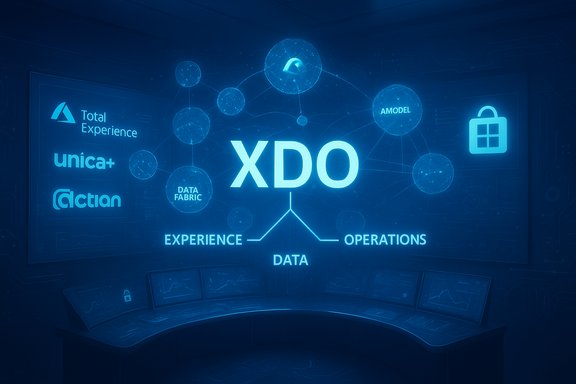
HCLSoftware’s announcement plugs directly into that strategy. The vendor describes XDO as a unified blueprint that binds three enterprise imperatives—customer Experience (X), enterprise Data (D), and operational Operations (O)—into a single, AI‑augmented engine. HCL will host core products (HCL Total Experience, HCL Unica+, HCL Actian, HCL BigFix, HCL AppScan on Cloud, HCL Universal Orchestrator, HCL Workload Automation) on Azure and list them via Microsoft’s commercial marketplace to make the stack available to joint customers. Industry press reporting and HCL’s own product pages confirm the product list and marketplace intent.
However, the announcement raises as many implementation questions as it answers. Important details—such as the names and scope of the early “three large enterprise deals,” specific pricing models, concrete migration blueprints and the precise operational responsibilities between Microsoft and HCL—are not publicly disclosed in the initial coverage. These are not minor omissions: they determine risk, cost, and long‑term portability for an enterprise buyer. Until those commercial and technical specifics are published or disclosed in customer references, procurement teams should treat the announcement as an exciting product milestone but not as a turnkey guarantee.
For IT leaders and WindowsForum readers, the practical takeaway is clear: leverage marketplace transactable offers for low‑risk PoVs; insist on runbooks, governance controls and exit plans before production rollouts; and use Microsoft’s partner funding or Azure Accelerate programs where they reduce pilot cost—but maintain vigilance about long‑term TCO and vendor dependency. The HCL–Microsoft XDO play is another signal that enterprise AI is becoming operational and merchantable at scale—but success will be decided in the details of implementation, governance and measurable outcomes rather than in promotional soundbites.
Source: The Fast Mode HCLSoftware, Microsoft Partner on Gen AI & Azure Cloud to Accelerate Enterprise Digital Transformation
 Background / Overview
Microsoft has been reshaping its partner motion to favour full‑stack, co‑engineered solutions that unify cloud migration, data unification, and AI application development. That partner playbook—now expressed through programs such as the Microsoft AI Cloud Partner Program and new ISV pathways—rewards partners that modernize estates, consolidate data, and publish transactable solutions on the Microsoft Marketplace. The result: a commercial and technical ecosystem that prioritizes marketplace transactable offerings, co‑sell routes, and Azure‑native AI capabilities designed to shorten procurement cycles and scale deployments.HCLSoftware’s announcement plugs directly into that strategy. The vendor describes XDO as a unified blueprint that binds three enterprise imperatives—customer Experience (X), enterprise Data (D), and operational Operations (O)—into a single, AI‑augmented engine. HCL will host core products (HCL Total Experience, HCL Unica+, HCL Actian, HCL BigFix, HCL AppScan on Cloud, HCL Universal Orchestrator, HCL Workload Automation) on Azure and list them via Microsoft’s commercial marketplace to make the stack available to joint customers. Industry press reporting and HCL’s own product pages confirm the product list and marketplace intent.
What is XDO? A practical blueprint, not a buzzword
X for Experience, D for Data, O for Operations
XDO is positioned as a pragmatic blueprint aimed at retrofitting AI into existing enterprise estates to achieve unified customer journeys underpinned by governed data and automated operations. In marketing language that matters to CIOs and CTOs, HCL frames the blueprint as a way to:- Personalize customer touchpoints using unified campaign and experience tooling.
- Create a single data layer that supports analytics, RAG (retrieval‑augmented generation) and model inference.
- Orchestrate operations—security, deployment, workload automation—so experiences and data pipelines run reliably at scale.
How XDO is being delivered
The collaboration calls for HCLSoftware’s solutions to be deployed and sold as Azure‑hosted offerings available in the Microsoft commercial marketplace—an important operational detail because it changes procurement, consumption reporting, and the potential for Microsoft field motion or co‑sell. Marketplace transactable solutions also enable customers to acquire software with Azure billing profiles and standardized terms, which can accelerate procurement and trialing for enterprise buyers. Multiple industry outlets reporting the HCL‑Microsoft announcement explicitly note marketplace availability.The Azure technical stack behind the play
Azure AI Foundry and AI services
HCL’s messaging mentions leveraging Microsoft Azure Data, Azure AI Foundry, and Azure security capabilities as foundational elements of the XDO architecture. Azure AI Foundry is Microsoft’s unified platform for building, customizing, testing, and operating AI apps and multi‑agent systems at enterprise scale. It provides model cataloging, agent orchestration, fine‑tuning, observability and governance features—capabilities that align directly with HCL’s aim to retrofit AI across legacy systems. Microsoft’s product pages and technical docs define Azure AI Foundry as the operational layer for enterprise AI workloads. Key Azure capabilities that matter for XDO implementations:- Model and agent lifecycle management (Foundry Projects, Agent Service).
- Managed model catalog and choice of foundation, task, and industry models with enterprise SLAs.
- Observability, evaluation pipelines, and safety/filters to operationalise generative AI.
- Azure Data services (Data Factory, Synapse/Fabric/managed lakes) for building the data fabric that feeds AI and analytics.
Azure hosting and security
Hosting on Azure gives HCL the advantages of Azure’s global footprint, identity and access controls via Azure AD, and compliance attestations that enterprise customers often mandate. HCL’s Marketplace entries (for example, HCL Workload Automation on Azure) already describe platform‑agnostic orchestration and Azure‑native integration points, showing that at least parts of the portfolio are already packaged for Azure consumption.Commercial mechanics: marketplace, ISV routing and early traction
Why Marketplace matters
The Microsoft commercial marketplace is more than a storefront; it’s a co‑sell and monetization channel that can accelerate procurement, provide Azure billing convenience, and expose solutions to Microsoft field sellers when certain marketplace readiness and partner criteria are met. For ISVs, marketplace transactability unlocks:- Faster procurement and proof‑of‑value purchases.
- Potential co‑sell and field engagement if partner designation and qualifying metrics are achieved.
- Easier subscription and metered billing tied to Azure consumption.
Early traction and claims
HCLSoftware and reporting outlets say the ISV collaboration with Microsoft led to three large enterprise deals secured through the Microsoft Marketplace within weeks of formalising the relationship. That rapid closure claim is repeated by multiple industry outlets covering the announcement, and it signals early GTM momentum—though public disclosure of buyer names, contract values, and deal scope is not present in the reporting. Treat the “three deals” line as an indication of early marketplace success but not proof of scale or revenue impact until HCL or the customers disclose specifics.Strengths: what this collaboration gets right
- Market alignment with Azure’s partner programs. HCL’s marketplace approach fits Microsoft’s incentive model and co‑sell motion, increasing the odds of faster procurement and broader sales reach.
- End‑to‑end enterprise stack. HCL’s portfolio covers the customer journey, data layer and operations—an architecture that maps cleanly to enterprise use cases where integration across those domains is the primary barrier to AI deployment.
- Operational readiness via Azure Foundry. Using Azure AI Foundry for model management, agent orchestration and observability addresses a frequent enterprise blocker: running generative AI in production with governance and performance controls.
- Faster procurement and trials. Marketplace transactable listings reduce procurement friction, lowering the barrier for pilots and proof‑of‑value projects. Azure billing and marketplace terms make early cost attribution simpler for customers.
- Integrated security posture. Azure’s identity and compliance framework can be used to wrap HCL products inside an enterprise‑grade security posture, which matters for regulated industries and large enterprises.
Risks and unanswered questions
While the HCL‑Microsoft collaboration offers real potential, buyers and technical teams should weigh several important risks.1. Vendor and platform lock‑in
Deep integration with Azure services—Foundry, Fabric/Synapse, Azure OpenAI—offers performance and operational benefits but can increase switching costs. Enterprises with multi‑cloud strategies must demand portability plans and clear data‑egress controls. Microsoft’s partner programs accelerate Azure consumption, but that advantage can become a strategic constraint if exit or multi‑cloud replication isn’t considered during procurement.2. Unverified commercial details
Public reporting mentions “three large enterprise deals,” but there are no confirmed buyer identities, contract sizes or financial terms in public filings or HCL disclosures at this time. Treat the speed of early deals as an encouraging indicator rather than a validated commercial outcome. HCL or Microsoft disclosures would be required to substantiate revenue impact.3. Data residency, governance and compliance
Moving data to be “AI‑ready” often requires revisiting residency, encryption, and access control. Enterprises in regulated sectors must map where model training data, telemetry and logs reside, and whether third‑party model weights or vendor telemetry introduces compliance exposure. Azure provides tools to manage this, but the responsibility falls to the joint solution’s architecture and the operating playbooks that HCL and the customer implement.4. Integration complexity and legacy modernization
HCL speaks of retrofitting AI onto legacy systems; in practice, this is difficult. Integration across mainframes, on‑prem services and cloud data lakes requires careful dependency mapping, refactoring and often change to business processes. Microsoft’s migration tooling and Azure Accelerate programs ease some of this burden but do not eliminate the need for skilled engineering and governance.5. Cost management and billing surprises
Marketplace acquisition makes procurement simpler, but cloud consumption (AI inference, data transfer, model evaluation pipelines) can create variable costs. Procurement teams should map Azure billing models, Marketplace transactable terms, and expected consumption peaks to avoid unpleasant surprises. Azure Accelerate and ISV incentives can soften initial costs but long‑term TCO still needs modelling.Practical buyer checklist: how to evaluate an XDO deal
- Technical discovery (30–60 days)
- Document current CX, data and operations toolchains.
- Map data residency, data classification, and regulatory constraints.
- Ask for a detailed architecture diagram
- Which Azure services are used for model hosting, storage, identity and observability?
- Where does data leave the customer’s controlled zones?
- Validate marketplace listing and contract terms
- Confirm the Marketplace SKU, billing model (metered/subscription), and support SLAs.
- Understand the procurement route—Marketplace transactable vs. enterprise agreement integration.
- Request performance and governance details
- Model evaluation and drift detection mechanisms.
- Monitoring, logging, and incident playbooks.
- Run a scoped PoV with measurable KPIs (30–90 days)
- Define success metrics: response latency SLA, accuracy uplift, automation rate, cost per inference.
- Secure trial credits or discounted pilots and a clear path to production.
- Negotiate operational commitments
- Delivery timelines, runbooks, handover and knowledge transfer for ongoing ops.
- Clear IP and data ownership clauses in contracts.
- Cost governance and exit planning
- Tagging and budget controls for Azure consumption.
- A documented exit/replication plan to move to alternative cloud or on‑premise if needed.
Governance and security: what enterprises must demand
- Model governance policy: versioning, retraining triggers, evaluation metrics, user‑facing disclaimers.
- Data lineage and consent controls: for any data used to fine‑tune or contextualise models.
- Operational observability: telemetry tied to business KPIs, not just system health.
- Incident response and human‑in‑the‑loop controls: automatic rollback paths and human approvals for high‑risk agentic actions.
- Third‑party model risk assessment: if external foundation models are used inside Foundry, include supply‑chain review.
What this means for WindowsForum readers and enterprise IT teams
- For Windows administrators and enterprise IT teams, the most immediate implication is the operational shift: AI workloads are now treated as first‑class production services with new monitoring, security and cost disciplines.
- Managed marketplace SKUs mean some software procurement friction is removed, but IT teams must still validate integration, identity flows (Azure AD), and endpoint management when HCL pieces such as BigFix and Workload Automation are integrated into enterprise estates.
- Security teams should be particularly attentive to AppScan and BigFix integrations: shifting these functions into cloud‑hosted pipelines can change vulnerability scanning cadence, patch windows, and compliance reporting. Demand clear SLAs and data handling documentation from HCL and Microsoft for these capabilities.
Where this fits in the broader market
HCL’s play is symptomatic of a larger trend: enterprise software vendors are rearchitecting their portfolios for cloud marketplaces and leveraging hyperscaler AI platforms to combine product reach with AI capabilities. Microsoft’s Azure AI Foundry and marketplace incentives are accelerating this pattern by providing both the technical infrastructure for enterprise AI and the commercial mechanisms (co‑sell, marketplace transitability, funding programs) that reduce buyer friction. The partner play is powerful—but buyers must still apply traditional procurement and security rigor.Final analysis and conclusion
The HCLSoftware–Microsoft collaboration is a pragmatic and well‑timed alignment of an enterprise software portfolio with Azure’s production‑grade AI and marketplace channels. The XDO blueprint is conceptually sensible: enterprises need connected customer experience tooling, a unified data layer, and reliable operational automation to scale AI‑enabled workflows. By packaging HCL’s mature products as Azure‑hosted offerings and placing them on Microsoft’s commercial marketplace, HCL gains easier access to Microsoft’s field and procurement channels while customers gain a potentially faster route to proofs‑of‑value.However, the announcement raises as many implementation questions as it answers. Important details—such as the names and scope of the early “three large enterprise deals,” specific pricing models, concrete migration blueprints and the precise operational responsibilities between Microsoft and HCL—are not publicly disclosed in the initial coverage. These are not minor omissions: they determine risk, cost, and long‑term portability for an enterprise buyer. Until those commercial and technical specifics are published or disclosed in customer references, procurement teams should treat the announcement as an exciting product milestone but not as a turnkey guarantee.
For IT leaders and WindowsForum readers, the practical takeaway is clear: leverage marketplace transactable offers for low‑risk PoVs; insist on runbooks, governance controls and exit plans before production rollouts; and use Microsoft’s partner funding or Azure Accelerate programs where they reduce pilot cost—but maintain vigilance about long‑term TCO and vendor dependency. The HCL–Microsoft XDO play is another signal that enterprise AI is becoming operational and merchantable at scale—but success will be decided in the details of implementation, governance and measurable outcomes rather than in promotional soundbites.
Source: The Fast Mode HCLSoftware, Microsoft Partner on Gen AI & Azure Cloud to Accelerate Enterprise Digital Transformation
