

Blizzard has just handed Hearthstone players a bold, high‑stakes reset: Cataclysm — a nostalgia‑laced, time‑tangled expansion built around an alternate timeline where Deathwing’s domination never ended — lands March 17, 2026, and it’s designed to be both an entry point for new players and a major meta shakeup for veterans.
Hearthstone: Cataclysm reimagines one of World of Warcraft’s most seismic events as a playable “sliding‑doors” narrative for the card game. Lead designers framed the expansion around an invasion from a timeline where Deathwing was never stopped, with Chromie and the Dragonflights recruiting Heroes of Time to patch reality back together. The narrative scaffolding is pure Hearthstone — it lets the team justify alternate takes on established characters while introducing mechanics that lean heavily into the lore.
This reveal was part of Blizzard’s wider 35th Anniversary showcases, a multi‑week sequence of developer spotlights that inchise presentations. Hearthstone’s cadence—timed live events, cinematic drops, and a spotlight stream—places Cataclysm in an orchestrated marketing push intended to draw both returning and brand‑new players into the game.
Why this matters now: Blizzard isn’t just launching cards. Cataclysm is positioned as a narrative and mechanical reset intended to refresh the ladder, change the Core Set rotation, and temporarily remove one of Hearthstone’s largest barriers to entry (decades of card collections) with a large trial event. The combination of new keywords, units with board‑shape implications, and an entry‑level matchmaking track aims to affect everything from casual onboarding to competitive ladder balance.
That said, the launch will not be flawless. Expect a period of meta turbulence, swift patches, and passionate community debate. If Blizzard leans into transparency, offers PTR or post‑launch tuning rationale, and keeps meaningful power out of purchase‑gated packages, Cataclysm can be both a strong reentry point for new players and a creative sandbox for veterans.
Prepare accordingly: newcomers should use Dragon’s Hoard to learn without fear; veterans should treat the first month as experimental; and content creators should capture the discovery process — that’s where the most interesting Hearthstone moments will be found.
Enjoy the spectacle, but keep an eye on balance updates: the expansion that promises to break the world should not break the game.
Source: Windows Central https://www.windowscentral.com/gaming/hearthstones-own-take-on-the-cataclysm-is-the-ultimate-reset/
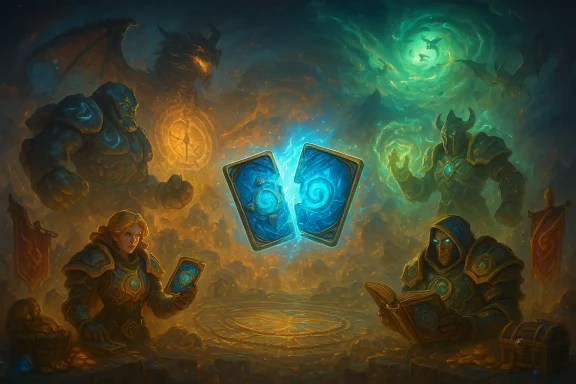 Background / Overview
Hearthstone: Cataclysm reimagines one of World of Warcraft’s most seismic events as a playable “sliding‑doors” narrative for the card game. Lead designers framed the expansion around an invasion from a timeline where Deathwing was never stopped, with Chromie and the Dragonflights recruiting Heroes of Time to patch reality back together. The narrative scaffolding is pure Hearthstone — it lets the team justify alternate takes on established characters while introducing mechanics that lean heavily into the lore. This reveal was part of Blizzard’s wider 35th Anniversary showcases, a multi‑week sequence of developer spotlights that inchise presentations. Hearthstone’s cadence—timed live events, cinematic drops, and a spotlight stream—places Cataclysm in an orchestrated marketing push intended to draw both returning and brand‑new players into the game.
Why this matters now: Blizzard isn’t just launching cards. Cataclysm is positioned as a narrative and mechanical reset intended to refresh the ladder, change the Core Set rotation, and temporarily remove one of Hearthstone’s largest barriers to entry (decades of card collections) with a large trial event. The combination of new keywords, units with board‑shape implications, and an entry‑level matchmaking track aims to affect everything from casual onboarding to competitive ladder balance.
What Cataclysm brings — headline features
The release and event timeline
- Expansion launch: March 17, 2026 — the official release date for Cataclysm.
- Dragon’s Hoard trial: beginning March 10, 2026, Blizzard will unlock a large pool of trial cards so new players can jump in before the expansion hits.
The Dragon’s Hoard — new player access, stripped of collection barriers
Blizzard is explicitly addressing the intimidation factor: a week before Cataclysm’s launch, the company opens the Dragon’s Hoard, a limited‑time event that grants access to over a thousand trial cards drawn from two full expansions (Into the Emerald Dream and The Lost City). That means:- New players can play with ready‑made deck recipes built from those free cards.
- There’s a skill‑based matchmaking track so beginners face similarly inexperienced opponents rather than decade‑old veterans.
- The goal is clear: accelerate onboarding, reduce the pay/collection advantage, and let fresh players experience ladder without a massive dust bill.
New mechanics that reshape play
Cataclysm introduces a suite of mechanics designed to create distinct decision spaces and dramatic board states. The key mechanics announced include:- Colossal — returns from Voyage to the Sunken City: minions large enough to occupy multiple board slots, fundamentally changing tempo and placement calculus.
- Herald — a synergy keyword used by Deathwing‑aligned classes. Repeated Herald use powers up a class’s Lieutenants.
- Shatter — a novel split mechanic for Dragonflight allies: a Shatter card draws into your hand as two halves on opposite ends. You can play each half separately or recombine them for a merged, more powerful effect. This creates meaningful hand‑management decisions and introduces a visceral “assemble or adapt” moment on every Shatter draw.
- Triumphs and Last Stands — class‑specific spell cards that spotlight each class’s Hero of Time and showcase victory or heroic sacrifice narratives, adding high‑value singletons that tie into the expansion’s story beats.
- Neutral Hero Card: Deathwing, Worldbreaker — a Hero card available to six classes with large, game‑altering abilities named Raze, Topple, and Enthrall, which read as world‑ending ultimates and open new deck design vectors.
New card slate and class identity
Cataclysm follows the now‑standard expansion size (announced as 135 collectible cards). The early revealed list includes both iconic returns and new pieces intended to anchor class identities: Warmaster Blackhorn, Chromatus heads (several Aspects), Ragnaros variants, the Deathwing suite, and a set of Lieutenants tied to class identities (Cho’Gall, Sinestra, etc.). These cards are built to define archetypes—particularly the dichotomy between Deathwing’s forces and Dragonflight defenders. JudgeHype’s prepatch notes and the Hearthstone announcement emphasize the 135‑card framework and the reallocation of neutral common slots into higher‑rarity event cards as part of the new design space.Background context and design intent
A time‑travel story that unlocks alternate versions
Hearthstone has historically leaned on alternate versions and playful “what ifs” to justify unusual card designs and wild kit variations. Cataclysm doubles down on this by using Chromie and time‑displacement as a narrative engine. That choice has practical benefits:- It lets designers present wildly different character takes without betraying established lore.
- It provides a coherent throughline for event rewards and card flavors that might otherwise feel disparate.
- It lets the team pair spectacle (cinematics and spotlights) with mechanically meaningful cards that reinforce the storyline.
The Core Set rotation and the Year of the Scarab
Cataclysm also ushers a Core Set change: the Year of the Raptor ends and the Year of the Scarab begins. That rotation alters the competitive landscape by swapping several Core cards (for example, Brawl and Shadowstep will rotate out and be replaced with alternatives like Decimation and Shadow of Demise). Core Set rotation is a meta lever—by changing which bedrock cards are guaranteed, Blizzard purposefully nudges the ladder toward new archetypes and away from long‑settled strategies. Expect a meta shift in the weeks following launch as players adapt to new staples and losing familiar tools.What’s good about the approach — strengths
1. Low‑friction entry point for new players
Dragon’s Hoard is an honest, concrete attempt to solve a real problem: Hearthstone’s collection depth is a barrier. By providing two full expansions’ worth of trial cards and curated deck recipes, Blizzard reduces friction for new entrants. This kind of onboarding is one of the most effective ways to convert curiosity (from a cinematic or spotlight) into habitual play.2. Narrative coherence that supports marketing and esports
Tying a year or season to a clear story (Deathwing gone rogue in an alternate timeline) makes developer messaging and content scheduling cohesive. It’s easier to sell and sustain multiple in‑game events, cinematics, and cross‑promotion when they feed a single, recognizable story arc.3. Meaty mechanical toys for veterans
Colossals, Shatter, Herald, and the Deathwing Hero Card are not incremental. They are mechanically interesting and will spawn new archetypes, tech cards, and deckbuilding theory. That’s the kind of design that keeps a collectible card game fresh for long‑term players and content creators.4. Tactical design changes to the Core Set
Rotating the Core Set is an effective meta reset. It helps prevent stagnation and allows designers to spotlight new mechanics. By swapping in new Core cards, Blizzard nudges the ladder in a particular direction without hard‑banning existing strategies.Risks and open questions — what to watch closely
Balance complexity and the meta shock window
Reintroducing Colossals (multi‑slot board entities), adding Hero cards with ultimate‑like effects, and launching new keywords simultaneously increases balancing permutations exponentially. Expect a turbulent first month of ladder as designers and players discover dominant combos, unintended synergies, and potential degenerate interactions.- Immediate fix cycles will be needed; players will watch patch cadence closely.
- Colossals, in particular, can create board states that feel less interactive if not carefully tuned.
Monetization optics and pre‑purchase messaging
The pre‑purchase ecosystem (bundles, cosmetics, early access perks) is still sensitive territory. If any pre‑purchase or shop item confers meaningful competitive advantage in the early season—especially during a period of rapid balance discovery—the community backlash will be loud and sustained. Blizzard has to keep monetization clearly cosmetic or otherwise balanced to preserve player trust. JudgeHype’s coverage highlighted pre‑purchase bundles and design comments about card counts, which underscores the commercial stakes tied to the expansion.Complexity creep and player guidance
Cataclysm’s layered systems—new keywords, Colossals, Hero cards, Core rotation—create a steep amount of new information for players. If onboarding is shallow or tutorials are absent, the expansion could frustrate casual players who wanted a light reentry. Blizzard’s curated deck recipes and the Dragon’s Hoard help, but long‑term retention will depend on clear tooltips, tutorials, and a robust practice environment.Unverified design details and PTR length
Until the public PTR (if Blizzard runs one) or detailed developer notes appear, some mechanics’ exact parameters remain untested. Community trust increases with transparency: long PTR windows, visible telemetry, and developer rationale for balance decisions will shield against perception of rushed or opaque design.Practical recommendations for players, streamers, and competitive teams
- If you’re new: use the Dragon’s Hoard trial period starting March 10 to learn deck recipes and basic card interactions before you risk ranked play. The curated decks will accelerate your learning curve.
- If you’re a returning player: don’t panic‑dust. Try the trial cards to see which new staples fit your existing decks and prepare for the Core Set rotation—some of your tech cards may lose platform support.
- Competitive teams and streamers: run a small internal PTR and scrim pool the first two weeks. Expect high variance and rapid patching; recording and publishing early tech guides will be valuable content during the meta’s discovery phase.
- Content creators: focus on teaching mechanics like Shatter and Colossal visually — showing the recombination decision and spatial implications will click better for audiences than trying to memorize stat lines.
- Community leaders: encourage patience. Early ladder should be read as a data‑gathering window, not a final judgment on the expansion’s balance.
Design and meta forecast — how the ladder will behave initially
- Week 0–2 (Launch window): High variance, many top‑deck combos, and emergent Colossal archetypes. Shatter will likely spawn new tempo‑value hybrids that reward hand‑architecture skill. Expect top ladder lists to include at least one Deathwing Worldbreaker copy in hybrid midrange/control shells.
- Week 2–6: Designers will ship tuning patches responding to dominant, repetitive combos. We should see nerf/adjust cycles focused on either Colossal stat inflation or specific Shatter/resync abuse cases.
- Month 2+: Archetypes settle; class identity from Herald/Lieutenant synergies crystallizes into 2–3 stable competitive archetypes per class. The Core Set rotation’s effect becomes clear as new staples are adopted or discarded.
Critical analysis: does Cataclysm achieve what Blizzard needs?
Cataclysm is an ambitious play. It ticks several critical boxes for a live‑service title:- It creates a marketing moment with a high‑concept cinematic and a clear story hook.
- It lowers barriers to entry via the Dragon’s Hoard.
- It introduces mechanically interesting toys that will keep long‑term players engaged.
- Run robust PTRs or at least provide extended post‑launch patch notes with rationales.
- Avoid gating meaningful early‑season power behind paid access.
- Offer clear tutorials and practice tools so the spike in mechanical depth doesn’t translate into frustration for newcomers.
Deep dive: why Shatter and Colossal represent interesting design tradeoffs
Shatter — split cards as dynamic reads
- Strengths: Shatter adds optics and choice at the point of draw. It rewards players who can think in two horizons (play now vs. assemble later). This behaviorally encourages patience and planning, and it makes hand‑management more skillful.
- Risks: If Shatter values are set too high when recombined, it doubles powerful effects in a way that can feel swingy and non‑interactive. Balancing must ensure that individual halves are playable but not oppressive when reunited.
Colossal — board architecture and tempo recalibration
- Strengths: Colossals force board planning; space becomes a resource (not just mana). They create memorable board states and can make certain trades deeply satisfying.
- Risks: Large minions that lock in board control can make matches feel less interactive if removal and answers aren’t balanced. Designers will need to ensure reliable, accessible answers exist across mana curves.
Final verdict — what to expect and when to recalibrate
Hearthstone: Cataclysm is a confident expansion that intentionally blends spectacle and accessibility. The Dragon’s Hoard addresses a structural onboarding problem; Colossal and Shatter supply mechanical novelty; the Deathwing narrative gives Blizzard the license to play fast and loose with alternate character versions. Taken together, these elements make Cataclysm a smart bet as both a marketing spike and a potential long‑term meta pivot.That said, the launch will not be flawless. Expect a period of meta turbulence, swift patches, and passionate community debate. If Blizzard leans into transparency, offers PTR or post‑launch tuning rationale, and keeps meaningful power out of purchase‑gated packages, Cataclysm can be both a strong reentry point for new players and a creative sandbox for veterans.
Prepare accordingly: newcomers should use Dragon’s Hoard to learn without fear; veterans should treat the first month as experimental; and content creators should capture the discovery process — that’s where the most interesting Hearthstone moments will be found.
Enjoy the spectacle, but keep an eye on balance updates: the expansion that promises to break the world should not break the game.
Source: Windows Central https://www.windowscentral.com/gaming/hearthstones-own-take-on-the-cataclysm-is-the-ultimate-reset/