

Infrastructure as Code (IaC) is no longer an optional convenience for serious DevOps teams — it’s a foundational discipline that governs speed, repeatability, security, and cost control across cloud, container and hybrid platforms in 2025. The recent ET CIO roundup of the “10 Best IaC Tools for DevOps Teams in 2025” captures the mainstream options — from classic declarative engines to GitOps controllers and Kubernetes-native control planes — and is a useful starting point for teams choosing an IaC strategy. The list and selection criteria in that piece align with observed market forces, but the choice of tool today requires sharper scrutiny: licensing shifts, vendor lock‑in, Kubernetes maturity, and platform deprecation timelines are deciding factors that can change program risk materially.
Infrastructure as Code describes the practice of describing infrastructure (networks, VMs, load balancers, DNS, IAM, and higher‑level services) in versioned artifacts that teams can validate, test, review and apply automatically. In 2025, IaC spans several technical models:
Adopt the following as non‑negotiable: Git from day one, automated policy checks in CI, encrypted remote state and strict RBAC for state backends, and a published migration plan for any cloud vendor deprecation. These operational controls, combined with a clear licensing decision and cost model, will ensure IaC remains an engine of speed and safety — not a source of technical debt.
Frequently asked operational checks (quick list)
Source: ET CIO 10 Best Infrastructure as Code (IaC) Tools for DevOps Teams in 2025
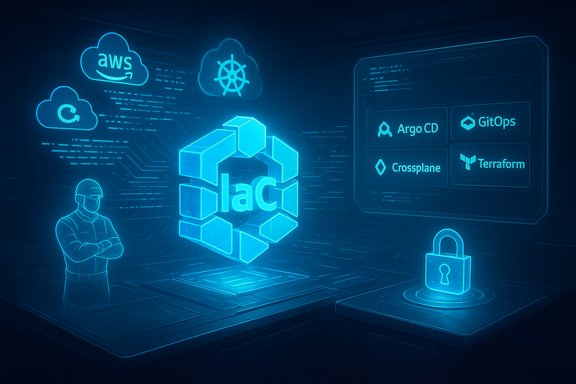 Background / Overview
Infrastructure as Code describes the practice of describing infrastructure (networks, VMs, load balancers, DNS, IAM, and higher‑level services) in versioned artifacts that teams can validate, test, review and apply automatically. In 2025, IaC spans several technical models:- Declarative multi‑cloud provisioning (Terraform, OpenTofu, Pulumi declarative providers)
- Imperative or language‑native IaC (Pulumi with TypeScript/Python/Go/C#)
- Kubernetes‑native control planes and GitOps controllers (Crossplane, Argo CD)
- Cloud‑native template languages (ARM/Bicep, CloudFormation, Deployment Manager / Infra Manager)
- Configuration management and state enforcement (Ansible, SaltStack)
The ET CIO “Top 10” snapshot — what’s inside and why it matters
The ET CIO piece lists ten tools and positions each against common enterprise needs: multi‑cloud provisioning, Kubernetes/GitOps, cloud‑native governance, vendor openness, and hybrid/VM management. The roundup includes:- Red Hat Ansible — agentless, YAML‑first config and orchestration
- Pulumi — code‑first IaC using mainstream programming languages
- Terraform — declarative HCL with a massive provider ecosystem
- Crossplane — Kubernetes‑native control plane, GitOps friendly
- OpenTofu — community open‑source fork of Terraform after a license shift
- Argo CD — GitOps continuous delivery for Kubernetes
- Broadcom / VMware SaltStack — VMware ecosystem configuration enforcement
- Azure Resource Manager (ARM) — Azure‑native declarative templates (and Bicep)
- AWS CloudFormation — AWS‑native templates and governance primitives
- Google Cloud Deployment Manager — GCP native templates (now being replaced by Infra Manager)
What’s changed in 2023–2025 that matters to decisions today
Several platform and licensing developments since 2023 materially affect how teams should evaluate IaC vendors.- Terraform’s relicensing by HashiCorp to the Business Source License (BSL) in August 2023 triggered community concern and led to a high‑profile fork / alternative known as OpenTofu (OpenTF/OpenTofu initiative under neutral governance). This matters because organisations sensitive to open‑source licensing or vendor actions now treat “Terraform compatibility” as two different realities: HashiCorp’s commercial Terraform ecosystem and the community‑driven OpenTofu fork. The fork, manifesto and community response remain central to vendor selection considerations.
- Pulumi’s commercial model and language‑first approach has matured into a predictable offering with explicit per‑resource billing tiers on Pulumi Cloud (Team/Enterprise) and feature parity for CI/CD integrations and secrets management. Pricing information is now explicitly published and should be modelled against expected resource counts and concurrent stack updates.
- Kubernetes‑native IaC projects gained production credibility. Crossplane’s progression inside the CNCF and its move toward stable APIs make it a realistic option for platform teams that have standardised on Kubernetes and want to treat infrastructure as composable Kubernetes APIs rather than separate provisioning workflows. Argo CD remains the dominant GitOps controller for Kubernetes deployments. These projects have accelerated feature delivery — improved reconciliation, performance, and security controls — making them viable for enterprise platform engineering.
- Cloud vendor template lifecycles matter. Google Cloud announced that Deployment Manager is being deprecated and replaced by Infrastructure Manager (Infra Manager) — support for Deployment Manager will end on March 31, 2026. That timeline is crucial for teams still depending on Deployment Manager templates and indicates the need to plan migration to Infra Manager or an alternative IaC tool. AWS and Azure maintain long support for CloudFormation and ARM/Bicep respectively, but their native IaC choices can lock teams into a single cloud’s governance model.
Deep dive: strengths and risks for each IaC category
1) Declarative multi‑cloud provisioning — Terraform and OpenTofu
Strengths:- Large provider ecosystems, reusable modules, mature state handling.
- Terraform (HashiCorp) remains a de‑facto standard for multi‑cloud provisioning in many organisations.
- The module ecosystem accelerates onboarding and standardisation.
- Licensing and governance: Terraform’s BSL relicensing changed the risk profile for organisations that must rely on OSI‑approved open source licenses; OpenTofu emerged to preserve a community‑governed, open fork. Organisations must decide whether to rely on HashiCorp’s commercial governance or the community fork. These choices affect supportability, third‑party integrations, and the long‑term portability of IaC code.
- State management complexity: Large teams must implement remote state locking, encryption, and access controls. Without careful design, state can become a single point of friction and accidental source of drift.
- Evaluate the legal and procurement implications of BSL vs an explicitly open fork. For mission‑critical, compliance‑sensitive environments, OpenTofu (community) or purchasing enterprise support through Terraform Cloud may be necessary to satisfy governance.
2) Code‑first IaC — Pulumi
Strengths:- Allows teams to express infrastructure with general‑purpose languages (TypeScript, Python, Go, C#, Java).
- Excellent IDE support and software engineering practices (unit testing, functions, loops).
- Developer skillset mismatch: Non‑developer ops teams may find a language‑centric approach harder to adopt.
- Commercial pricing: Pulumi’s resource‑hour billing should be modelled; costs can rise with many managed resources or concurrent runs.
- Use Pulumi where software engineering practices must be woven into platform operations (complex logic, SDK usage, rich abstractions), and when teams can enforce language‑level testing and code review policies.
3) Kubernetes‑native control planes — Crossplane
Strengths:- Treats infrastructure as Kubernetes APIs: compositions become reusable platform APIs, enabling platform engineering at scale.
- Continuous composition and reconciliation reduce drift when Kubernetes is the team’s control plane.
- Kubernetes expertise required. Crossplane introduces cluster management overhead and is best where clusters are already mature and platform‑engineering practices are established.
- Adopt Crossplane for organisations that already run Kubernetes extensively and want to present infrastructure as first‑class Kubernetes APIs to application teams.
4) GitOps and continuous reconciliation — Argo CD
Strengths:- Git as single source of truth; continuous reconciliation and self‑healing.
- Highly adopted in production Kubernetes fleets; recent v3 updates improved performance and security for large fleets.
- Limited to Kubernetes workloads (not a general multi‑cloud provisioning engine).
- Environment promotion and advanced release workflows may require additional tooling or custom pipelines.
- Use Argo CD as the canonical GitOps engine for Kubernetes delivery, and pair with Crossplane when infrastructure needs to be managed from the same GitOps workflows.
5) Cloud native template languages — ARM/Bicep, CloudFormation, Deployment Manager / Infra Manager
Strengths:- Tight integration with cloud governance primitives (policies, RBAC, locks, StackSets).
- Day‑0 access to new service types and platform features.
- Vendor lock‑in: Native languages work best inside a single cloud and don’t translate cleanly across providers.
- Deprecation risk: Google’s Deployment Manager deprecation requires migration planning.
- Use cloud native IaC languages for cloud‑specific features and governance but standardise module design and tagging to ease future migration or cross‑cloud adoption.
6) Configuration management and state enforcement — Ansible, SaltStack
Strengths:- Configuration management, drift remediation, and orchestration for both servers and hybrid infra.
- Ansible’s agentless SSH/WinRM model suits heterogeneous estates.
- Larger estates may require centralised automation platforms and robust RBAC.
- Vendor packaging and commercial tiers can be expensive for smaller teams.
- Use configuration management to complement IaC provisioning to ensure runtime configuration, patching and compliance are enforced after initial resource provisioning.
Selection criteria that actually predict success
The ET CIO selection criteria (functionality, ease of use, integrations, pricing, onboarding/support) are correct but require operational granularity. The following refined checklist helps convert abstract selection into procurement decisions:- Support model & licensing risk
- Confirm license type (OSI‑approved or not), commercial support SLAs, and indemnity terms.
- Model the impact of license changes (if any) on long‑term support and third‑party dependencies. Open forks (OpenTofu) reduce licensing risk but shift support responsibilities to community or third‑party vendors.
- State and secrets handling
- Require encrypted remote backends, remote locking, and least‑privilege ACLs for state access.
- Validate secret integration options (HashiCorp Vault, cloud KMS, Pulumi secrets, etc..
- Drift detection and remediation
- Ensure the tool supports plan/preview workflows, automated drift detection and safe rollbacks or remediation playbooks.
- Policy as code
- Confirm integration with enforcement tools like Open Policy Agent, Sentinel, Kyverno, or native policy engines to prevent misconfiguration before apply.
- Integration with CI/CD and Observable pipelines
- Require pipeline guardrails: plan validation, automated policy checks, security scanning (Checkov, tfsec), and promotion gates.
- Operational scale & cost model
- Model per‑resource or resource‑hour cost (Pulumi/Pulumi Cloud style), concurrent update limits, and storage/usage charges in Terraform/Pulumi/Cloud vendor SaaS offerings.
- Recovery and auditability
- Test restore procedures for remote state, history, and promotion paths. Auditable change logs should be a procurement must.
Implementation best practices (step‑by‑step)
- Standardise structure and naming before authoring modules.
- Enforce Git from day one: store IaC artifacts in Git with PR reviews, automated linters and plan checks.
- Break templates into small modules and publish a curated module registry for internal reuse.
- Gate production changes with automated policy and security checks (OPA, Sentinel, Checkov).
- Use CI to run unit and integration tests, plus plan outputs and drift detection on a schedule.
- Implement RBAC and least‑privilege for any remote state backends, enable state encryption and access logs.
- Run periodic drift sweeps and remediation jobs; treat drift resolution as a reviewed change, not a silent action.
- Maintain golden images and image pipelines (Packer/Image Builder) for VM fleets referenced by IaC modules.
- Maintain change playbooks and rollback procedures for both infrastructure and platform upgrades.
- Treat platform upgrades (Terraform, Crossplane, Argo, providers) as release‑milestones with proper staging and canary updates.
Cost, vendor lock‑in and long‑term governance
- Commercial IaC services often charge per‑resource or per‑resource‑hour (Pulumi publishes explicit per‑resource rates). These costs can scale materially with very large estates; model the expected monthly resource‑hour consumption and account for concurrent updates and state history retention.
- Licensing changes (Terraform BSL, for example) can force architecture decisions: switching runtime tooling vs migrating to a community fork carries operational, legal, and migration costs. Organisations should formalise an IaC governance board that includes security, legal and platform engineering to evaluate licensing risk and ensure procurement clauses for data portability and code escrow where required.
Cross‑referenced facts and verifications
- Market projection: multiple industry reports project the IaC market to grow rapidly; one widely‑published forecast cites USD 6.14 billion by 2033 (CAGR ~22% from 2025–2033). This aligns with market demand for improved automation, governance and platform engineering.
- Terraform relicensing and community response: HashiCorp’s license change to the BSL in August 2023 produced a community reaction that resulted in the OpenTofu initiative and broader debate about open source stewardship. OpenTofu (formerly OpenTF) is positioned as a community‑governed open fork to preserve OSI‑approved licensing for the Terraform ecosystem.
- Pulumi pricing and billing: Pulumi’s published pricing shows Team ($40/month with included resources) and Enterprise ($400/month with more resources), plus resource‑hour billing for excess resources; teams should calculate cost per managed resource accordingly.
- Crossplane and Argo CD maturity: Crossplane’s CNCF adoption and Crossplane v1+ milestones have elevated it to production suitability for platform teams; Argo CD is the dominant GitOps engine in many enterprise Kubernetes fleets. Both projects are actively maintained and suitable for production use with proper operational investment.
- Google Cloud Deployment Manager: Google has announced the deprecation of Deployment Manager with support ending on March 31, 2026 — projects must migrate to Infra Manager or alternative IaC tooling before that date. This is an example of platform lifecycles teams must monitor.
- ET CIO’s roundup and practical selection guidance align well with these broader trends and form a practical decision artefact for teams evaluating IaC tools. Use the ET CIO feature as a starting checklist, but validate pricing, license and deprecation timelines against vendor documentation during procurement.
Practical decision matrix — which tool for which team
- If the team needs multi‑cloud provisioning, large provider ecosystem and reusable modules:
- Consider Terraform or OpenTofu (evaluate license preferences and support model).
- If the team wants code‑centric infrastructure with software engineering workflows:
- Consider Pulumi.
- If the organisation is Kubernetes‑centric and wants platform APIs:
- Consider Crossplane + Argo CD for GitOps reconciliation.
- If the workload is heavily vendor‑specific (deep Azure, AWS, GCP features and governance):
- Use ARM/Bicep for Azure, CloudFormation for AWS, and migrate Deployment Manager workloads to Infra Manager for GCP before March 31, 2026.
- If runtime configuration enforcement and OS‑level remediation are needed:
- Use Ansible or SaltStack as complementary tools to IaC provisioning.
Risks that are easy to miss (and how to mitigate them)
- Licensing governance surprises: Licence moves can change the legal footing for embedded code — mitigate by pre‑signing procurement agreements that require notice periods and by considering community‑governed forks or paid support contracts.
- Hidden operational cost from resource‑hour billing: Model costs for thousands of resources and for long‑running state retention; run a cost PoC to measure actual Pulumi/Pulumi Cloud or SaaS provider expenses.
- Kubernetes surface area: Adopting Crossplane/Argo increases dependency on Kubernetes health and control plane capacity; mitigate with dedicated management clusters, resource quotas, and observability.
- Toolchain sprawl: Allowing teams to pick multiple IaC tools without governance increases drift; implement a platform engineering strategy and an internal module registry to standardise patterns.
- Deprecation and migration windows: Treat provider template deprecations (like Google Deployment Manager) as program risks and assign migration owners and deadlines.
Conclusion
IaC in 2025 is diverse, powerful, and strategically consequential. ET CIO’s “10 Best IaC Tools” list precisely captures the major options — from agentless Ansible to language‑first Pulumi, Terraform/OpenTofu, Crossplane and Argo CD — and offers a useful decision map. However, the right choice for a DevOps team now must be driven by legal and operational risk, platform lock‑in tolerance, team skills, and cost modelling. Licensing shifts (Terraform → BSL), the rise of community successors (OpenTofu), the maturation of Kubernetes‑native control planes (Crossplane), and explicit deprecation timelines (Deployment Manager → Infra Manager) change the calculus. Procurement and platform engineering teams should pair ET CIO’s practical selection criteria with fact‑checked vendor documentation, pricing modelling, and contractual clauses for portability and notice to avoid costly surprises.Adopt the following as non‑negotiable: Git from day one, automated policy checks in CI, encrypted remote state and strict RBAC for state backends, and a published migration plan for any cloud vendor deprecation. These operational controls, combined with a clear licensing decision and cost model, will ensure IaC remains an engine of speed and safety — not a source of technical debt.
Frequently asked operational checks (quick list)
- Does the chosen tool support encrypted, remote state with locking and audit logs?
- Is the license OSI‑approved, and what happens to code if the vendor relicenses?
- Are policy‑as‑code controls integrated into CI to prevent non‑compliant applies?
- Has the team modelled per‑resource or resource‑hour charges for managed IaC services?
- Is there a migration path for cloud‑native templates that are subject to deprecation (e.g., Deployment Manager)?
Source: ET CIO 10 Best Infrastructure as Code (IaC) Tools for DevOps Teams in 2025
