

Jamavar at The Leela Palace Jaipur reimagines palace dining as a full‑sensory act of cultural preservation — a candlelit theatre of mirrors, gold leaf, and dishes rooted in Mughal and Rajasthani courtcraft that announce both the weight of history and the ambitions of contemporary Indian luxury hospitality.
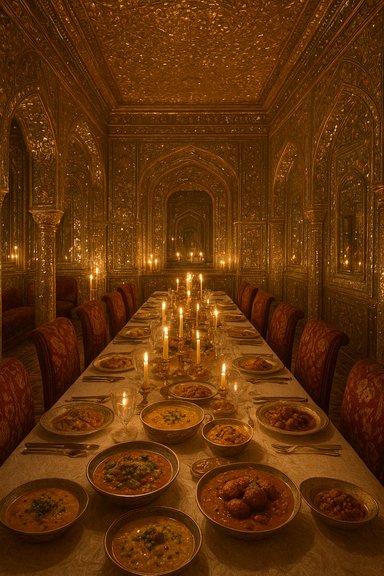
Set within the celebrated precincts of The Leela Palace Jaipur, Jamavar is the latest iteration of The Leela’s signature fine‑dining brand being introduced to Rajasthan by transforming the long‑standing Mohan Mahal into a new, thematically focused venue. The relaunch leans heavily on two intertwined narratives: textile and architectural heritage (the Jamavar shawl and Jaipur’s famed Sheesh Mahal mirrorwork) and the royal kitchens of northern India. The restaurant’s aesthetic — entirely candlelit, studded with hundreds of thousands of hand‑cut Thikri mirrors and finished with gold‑leaf ceilings — is presented as an immersive extension of the menu itself, which foregrounds dishes such as Gucchi Mutter Masala, Kofta‑e‑Jamavar, Dal‑e‑Jamavar and Gosht ki Galouti alongside a heritage‑led beverage programme and live instrumental music.
This repositioning is explicitly curated to amplify the “True Indian Luxury” proposition that The Leela has built across its Jamavar venues: craftsmanship, ritual, narrative gastronomy, and a theatrical approach to service. The relaunch also foregrounds a social angle — Jamavar Jaipur is staffed by an all‑women service team and inaugurates each dinner with a ceremonial handwash drawn from royal dining customs, gestures framed by the hotel as both authentic and empowering.
Yet there are trade‑offs to this approach:
This initiative has meaningful upside:
Recommendations for execution:
Caveat: the figure itself is presented in hotel materials and in press releases; while it is useful for scale and storytelling, it is a promotional number supplied by the venue. Such figures are not uncommon in hospitality marketing, and readers should treat them as brand‑provided rather than independently audited counts.
That said, marketing figures (for example, precise mirror counts) are vendor‑provided; while they serve the story well, readers and industry analysts should treat those numbers as brand claims unless independently audited documentation is published. Similarly, social claims such as “all‑women service team” are commendable but are best evaluated over time through transparent reporting on recruitment, training, pay equity and career development.
At the same time, the project must guard against the pitfalls of spectacle without substance. The most enduring luxury experiences marry craft to care — not only the craft of presentation, but the care of communities, ecosystems, and the staff who bring the story to life. Jamavar has the ingredients to reach that standard; the difference will be in the next chapters of its stewardship: how it measures impact, supports artisans, sustains materials responsibly, and turns the single night’s performance into a legacy worth preserving.
Source: Luxurious Magazine Jamavar Jaipur: Crafting Timeless Luxury Through Indian Culinary Art
 Background / Overview
Set within the celebrated precincts of The Leela Palace Jaipur, Jamavar is the latest iteration of The Leela’s signature fine‑dining brand being introduced to Rajasthan by transforming the long‑standing Mohan Mahal into a new, thematically focused venue. The relaunch leans heavily on two intertwined narratives: textile and architectural heritage (the Jamavar shawl and Jaipur’s famed Sheesh Mahal mirrorwork) and the royal kitchens of northern India. The restaurant’s aesthetic — entirely candlelit, studded with hundreds of thousands of hand‑cut Thikri mirrors and finished with gold‑leaf ceilings — is presented as an immersive extension of the menu itself, which foregrounds dishes such as Gucchi Mutter Masala, Kofta‑e‑Jamavar, Dal‑e‑Jamavar and Gosht ki Galouti alongside a heritage‑led beverage programme and live instrumental music.This repositioning is explicitly curated to amplify the “True Indian Luxury” proposition that The Leela has built across its Jamavar venues: craftsmanship, ritual, narrative gastronomy, and a theatrical approach to service. The relaunch also foregrounds a social angle — Jamavar Jaipur is staffed by an all‑women service team and inaugurates each dinner with a ceremonial handwash drawn from royal dining customs, gestures framed by the hotel as both authentic and empowering.
Design & Ambience: Sheesh Mahal Reimagined
The physical spectacle
Jamavar’s dining room retains the architectural bones of Mohan Mahal but is rebranded with a layered vocabulary of craft references: the restaurant claims to sparkle beneath roughly 350,000 hand‑cut Thikri mirrors and to be crowned with 18‑carat gold‑leaf detailing. The entire room is lit by candles, producing a soft, flickering glow that multiplies off tiny mirror facets and aims to echo the Sheesh Mahal tradition — the mirror‑inlay halls famously found at Amber Fort and other Rajput palaces.- Key design elements highlighted by the hotel:
- Candlelit dining throughout the room to recreate an intimate palace ambience.
- Hundreds of thousands of hand‑cut Thikri mirrors covering walls and arches.
- 18‑carat gold‑leaf finishes on ceilings and architectural detailing.
- Bespoke furnishings and soft finishes selected to evoke Jamavar textile motifs.
What the spectacle achieves — and what it risks
The visual program is the restaurant’s strongest tool for storytelling. It turns architectural heritage into an immediate, photogenic experience that aligns with modern luxury travellers’ appetite for Instagram‑ready spaces and memorable rituals. The candlelight and mirrors also do real work: they change how food appears on the plate, how guests experience textures and colours, and how music and fragrance circulate in the room.Yet there are trade‑offs to this approach:
- Safety and comfort: an entirely candlelit environment raises practical concerns (open flame near guests and fabrics), and the hotel mitigates this through policies such as an adult‑only environment for younger children.
- Theatricality versus function: heavy emphasis on spectacle can sometimes overshadow culinary nuance; the décor must never become a substitute for kitchen craft.
- Sustainability and sourcing: lavish materials — gold leaf, mirrored tesserae — carry environmental and supply‑chain footprints that merit transparency.
Culinary Narrative: Royal Kitchens, Local Produce
From archive recipes to contemporary plates
Jamavar’s menu is positioned as a curated archive of regal recipes reinterpreted for modern palates. The dining narrative explicitly references Mughal and Rajput culinary techniques — slow braises, delicate emulsions, spice layering, and jewel‑like presentation — while leaning on locally sourced ingredients. Typical plates emphasized in launch material include:- Gucchi Mutter Masala (morel mushrooms and peas in a refined gravy)
- Kofta‑e‑Jamavar (specially composed vegetable or paneer dumplings with rich saffron‑suited sauces)
- Dal‑e‑Jamavar (a regionally styled dal given palace treatment)
- Gosht ki Galouti (a delicate, melt‑in‑the‑mouth minced lamb specialty)
Technique, sourcing and presentation
The Leela presents Jamavar as marrying heritage technique and contemporary gastronomy. Dishes are modern in plating but rooted in time‑tested constructions: long cooking for concentrates, tempering of spices for aroma, and finishing with locally foraged or curated produce. There is a declared commitment to local sourcing — an important signal for both flavour authenticity and modern hospitality sustainability.- Benefits for guests:
- A menu that teaches and entertains through story-driven dishes.
- Local ingredient traceability supporting seasonality.
- Opportunities for elevated vegetarian options that reflect regional traditions.
- Operational realities:
- Maintaining culinary authenticity at scale requires strong procurement channels and continuous training — particularly for mushroom varieties like gucchi, and for maintaining consistent quality in delicate dishes like galouti kebabs.
- Price positioning: The Leela’s set menus and the theatre of dining put Jamavar firmly in the premium price bracket, which shapes guest expectations and imposes pressure to deliver perfect execution consistently.
Service Rituals, Team Composition, and Hospitality as Storytelling
Ritual handwash and the opening moment
Jamavar inaugurates each dinner with a symbolic handwash ritual derived from royal dining etiquette. Per the venue’s materials, the ceremony is intended as a pause — a moment of reverence that physically and psychologically separates the outside world from the dining experience. The ritual functions as:- A storytelling device linking guests to Mughal‑era court customs.
- A sensory reset that heightens anticipation (aromatic water, silk towels, gentle choreography).
- A hospitality differentiator that reinforces the restaurant’s premium positioning.
An all‑women service team: empowerment or marketing?
The decision to staff Jamavar with an all‑women service team is presented simultaneously as a values statement and a brand differentiator. The reasoning is twofold: to showcase skilled women in hospitality leadership and to align a feminine gaze with an ethos of care and meticulous service.This initiative has meaningful upside:
- Real employment and leadership pathways for women in a sector where gender parity in senior on‑floor roles is still developing.
- A visible brand commitment to diversity that resonates with international guests and domestic audiences.
- Scope and sustainability: Is the all‑women model permanent, and does it extend to kitchen leadership, management, and supplier relationships, or is it limited to front‑of‑house optics?
- Tokenism risk: Without transparent reporting on training, career progression, pay equity, and retention, the initiative can be perceived as performative.
- Cultural context: The idea will be celebrated in many quarters, yet it also requires sensitivity to local expectations and norms around gendered roles.
Beverage Program & Live Music: Complementing the Meal
Jamavar’s beverage programme is described as narrative‑driven, weaving heritage recipes with modern mixology and an international wine roster. Key features include:- Heritage‑inspired cocktails that reference regional ingredients and classic recipes.
- Carefully chosen wines intended to both complement and contrast the rich spicing of Rajasthani cuisine.
- Non‑alcoholic offerings and curated pairings for guests who prefer zero‑proof experiences.
Recommendations for execution:
- Calibrate music volume and repertoire to table acoustics and guest mix.
- Offer pairing notes and sommelier guidance for the set menu rather than a purely à la carte approach.
- Ensure that beverage program storytelling matches the kitchen’s narrative so every element feels cohesive.
Heritage, Craftsmanship & Historical Context
Jamavar shawls and Mughal patronage
The restaurant explicitly takes its name from Jamavar (Jamawar) shawls — tapestry‑style textiles historically woven in Kashmir and prized by Mughal and regional courts. Textile histories trace Jamawar weaving intensively into the Mughal era, with significant development from the 16th century onward. The shawls are known for brocaded weaves, complex boteh (paisley) motifs, and the long production times that made them aristocratic objects.- Why this matters: the shawl metaphor is apt because both Jamavar textiles and palace cuisine are crafts that reward time, technique and patronage.
- Cultural sensitivity: weaving a culinary offering around another community’s textile heritage places a responsibility on the restaurant to acknowledge and support those artisan lineages, whether through sourcing, patronage, or cultural programming.
Thikri mirrors, Sheesh Mahal and the language of light
Jamavar’s mirror work references Thikri — small mirror tesserae used in Rajasthan’s traditional mirror‑inlay crafts — and Jaipur’s Sheesh Mahal, where mirror surfaces in palaces refract light into luminous interiors. Recreating that visual vocabulary within a modern hotel requires artisanship and restoration expertise. The claim of 350,000 hand‑cut mirrors reiterates the venue’s theatrical lineage; it also functions as a tangible claim that anchors the design in local craft histories.Caveat: the figure itself is presented in hotel materials and in press releases; while it is useful for scale and storytelling, it is a promotional number supplied by the venue. Such figures are not uncommon in hospitality marketing, and readers should treat them as brand‑provided rather than independently audited counts.
Business & Brand Strategy: Why Jamavar in Jaipur?
Jamavar is already an established concept for The Leela in other cities, and importing or evolving the brand for Jaipur achieves several strategic aims:- Brand uniformity: Extending Jamavar strengthens The Leela’s portfolio coherence for upscale diners who travel across Indian gateway cities.
- Destination reinforcement: Jaipur is already a heritage tourism hub; Jamavar positions The Leela Palace as a culinary anchor for luxury travellers seeking authentic, elevated local experiences.
- High‑yield revenue: Fine‑dining set menus, private events, and cultivated wine pairings command higher average checks, which is critical in premium hotel P&L strategies.
Critical Analysis: Strengths, Opportunities, Concerns
Notable strengths
- Compelling multisensory storytelling: Jamavar succeeds at creating a seamless narrative between décor, menu, and service ritual. This cohesion is rare and valuable for high‑end hospitality brands.
- Cultural framing: Rooting the concept in Jamawar textiles and Sheesh Mahal traditions offers rich creative material for menu development, music programming, and guest education.
- Social positioning: An all‑women service team and ritualized hospitality make a clear statement about values — if backed by sustained action, this can be a meaningful contribution to gender equity in hospitality.
Significant opportunities
- Artisan partnerships: The restaurant can translate its textile and mirror narratives into direct support for craftspeople — commissioned textile displays, mirror restoration workshops, or a sourcing program that benefits weavers and inlay artisans.
- Culinary stewardship: Jamavar can become a reference point for stewardship of regional dishes, documenting recipes, and training cooks to keep palace techniques alive.
- Educational programming: Pairing tasting menus with short talks, curated music sets, and craft demonstrations would deepen guest engagement beyond spectacle.
Potential risks and blind spots
- Performative heritage: There is a fine line between homage and commodification. The retelling of Mughal and Rajput culinary heritage must avoid simplification and must credit source regions and communities honestly.
- Transparency on claims: Large, specific numbers (350,000 mirrors; “16th‑century” Jamavar origins) function well in copy but should be presented transparently as hotel claims and contextualized historically; independent verification or documentation would strengthen credibility.
- Sustainability and supply chain: The use of high‑value materials and exotic ingredients raises sustainability questions — from the environmental impact of gold‑leaf gilding to ethical sourcing of specialty mushrooms or rare spices. The restaurant should publish sourcing commitments where feasible.
- Operational fragility: The candlelit environment and exclusive rituals add complexity and cost. Staffing, safety protocols, and service training must be consistently excellent, otherwise guest experience — and the brand — can suffer quickly.
- Economic accessibility: The price positioning and adult‑only, candlelit environment position Jamavar as an exclusive, premium product. That exclusivity is intentional, but the restaurant should balance elite appeal with inclusive storytelling that doesn’t privatize cultural heritage.
Practical Takeaways for Guests and Industry Observers
- Jamavar is a high‑theatre dining proposition that pairs opulent design with a menu that claims roots in royal kitchens; reservations, formal attire and expectations for a multi‑course set menu are reasonable.
- Guests sensitive to open flames, strong fragrances, or auditory programs should ask about seating and accessibility options in advance; the candlelit format and live music are core to the experience.
- For hospitality professionals, Jamavar provides a case study in translating museum‑grade craft into a living dining format — and simultaneously illustrates the management challenges of authenticity, sustainability, and workforce empowerment in luxury operations.
Verification, Context and Cautionary Notes
Key factual claims about Jamavar Jaipur — including the restaurant’s name origin (Jamavar shawls), the preservation of Mohan Mahal’s mirror work, the scale of mirror tesserae (a figure provided in hotel materials), the 18‑carat gold‑leaf finish, the all‑women service team, and the ceremonial handwash ritual — are presented in primary materials released by The Leela and have been echoed in industry press. Historical assertions about Jamawar shawls being developed and popularized during the Mughal era (centuries including the 16th century) are supported by textile histories and museum records that trace shawl weaving and Jamawar motifs to Mughal patronage.That said, marketing figures (for example, precise mirror counts) are vendor‑provided; while they serve the story well, readers and industry analysts should treat those numbers as brand claims unless independently audited documentation is published. Similarly, social claims such as “all‑women service team” are commendable but are best evaluated over time through transparent reporting on recruitment, training, pay equity and career development.
Conclusion
Jamavar at The Leela Palace Jaipur is a richly conceived, high‑stakes experiment in translating India’s palace cultures into contemporary fine dining. Its strengths are unmistakable: meticulous design, evocative ritual, and a menu that promises to lift regional palace cooking into a modern, cinematic frame. If executed with consistent culinary excellence, genuine artisan partnerships, and transparent social and sourcing commitments, Jamavar can be more than a lavish dinner — it can be a model for how luxury hospitality preserves and uplifts living cultural traditions.At the same time, the project must guard against the pitfalls of spectacle without substance. The most enduring luxury experiences marry craft to care — not only the craft of presentation, but the care of communities, ecosystems, and the staff who bring the story to life. Jamavar has the ingredients to reach that standard; the difference will be in the next chapters of its stewardship: how it measures impact, supports artisans, sustains materials responsibly, and turns the single night’s performance into a legacy worth preserving.
Source: Luxurious Magazine Jamavar Jaipur: Crafting Timeless Luxury Through Indian Culinary Art