

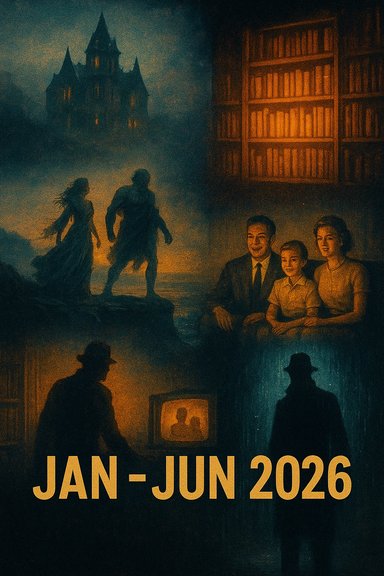
Get ready: the first half of 2026 brings a deep, diverse slate of fiction from big-name returnees to bold debuts — from intimate domestic dramas and literary historicals to hair-raising horror and twisty psychological thrillers — giving readers more than enough reasons to clear their TBR lists.
Background
The opening six months of 2026 show publishers leaning into safe bets and adventurous swings at the same time. Established authors who reliably sell (and headline seasonal lists) are releasing headline titles, while imprints continue to invest in provocative debuts and midlist genre work that plays to passionate communities — think BookTok, Bookstagram, and dedicated thriller and horror circles.This season is notable for three intersecting dynamics:
- A continued appetite for female-centered stories that interrogate family, fame, and agency.
- A strong presence of historical fiction that revisits under-told eras and perspectives.
- The horror and psychological-thriller resurgence, with high-profile authors delivering visceral, literary terror.
Overview of the must-watch releases (January–June 2026)
Below is a curated selection drawn from the broad list of releases this season, organized by month. Each pick includes a short reading guide, why it matters, and — when available — publisher-confirmed on-sale dates so readers can plan preorders and library holds.January — family drama, literary reconstructions, and a signature thriller
- Meet the Newmans — Jennifer Niven (on sale Jan 6, 2026)
A richly textured family novel about a TV family’s unraveling, Jennifer Niven’s new work leans into mid-century satire and emotional reckoning. Publisher bibliographic and tour pages list a January 6, 2026 on-sale date, situating the title as an early-season centerpiece. - A Box Full of Darkness — Simone St. James (on sale Jan 20, 2026)
Simone St. James returns with a Gothic-tinged haunted-house story that promises her signature blend of period atmosphere and creeping dread. The publisher listing shows a Jan 20, 2026 publication date and positions the book as a major horror release for the season. - Is This a Cry for Help? — Emily Austin (Jan)
A topical novel about libraries, censorship, and recovery; with the ongoing national conversation around book bans, stories situated in libraries remain culturally resonant and timely. - Dandelion Is Dead — Rosie Storey (Jan; debut)
A debut handling grief and rebuilding after loss; the book represents the quieter, character-forward end of the January list and highlights the continual thirst for tender, adult contemporary fiction.
February — sweeping historicals, reinventions, and psychological tension
- Nowhere Burning — Catriona Ward (on sale Feb 24, 2026)
Catriona Ward’s work has become synonymous with literary horror and psychological extremity. This title — a survival tale with mythic echoes — is listed on the publisher’s site with a Feb 24 on-sale date and arrives with industry expectations for unsettling, character-driven chills. - A Crown of Stars — Shana Abe (Feb)
A meticulously researched re-telling focusing on the RMS Lusitania’s last days. This release shows publishers continuing to mine early 20th-century global crises for dramatic storytelling. - Where the Wildflowers Grow — Terah Shelton Harris (Feb)
A character-driven novel of survival and reawakening that fits the season’s tendency toward emotionally resonant, readable fiction.
March — mythic retellings, horror pushes, and domestic suspense
- No Friend to This House — Natalie Haynes (Mar)
A reimagining of Medea, Haynes continues the contemporary trend of retellings that interrogate classic myths through a modern moral lens. - Wretch — Eric LaRocca (Mar)
Classified as tech-gothic horror, this title signals the genre’s willingness to fuse contemporary anxieties about memory, technology, and identity with traditional body-and-soul horror. - You Did Nothing Wrong — C.G. Drews (Mar; adult debut)
A shift from YA to adult horror/dark domestic suspense; a good example of authors leveraging platform crossover.
April — mainstream literary fiction and crowd-pleasing contemporary voice
- American Fantasy — Emma Straub (on sale Apr 7, 2026)
Emma Straub’s new novel taps nostalgia, middle-age reckoning, and celebrity culture via a themed cruise premise. Publisher listings show an April 7, 2026 release, and multiple retailer pages confirm the date — a reliable on-ramp for wide-audience fiction and bookstore promotion. - Last Night in Brooklyn — Xochitl Gonzalez (Apr)
Gonzalez’s fiction often blends acute social observation with emotional nuance; this title extends her interest in neighborhood, identity, and personal history. - Japanese Gothic — Kylie Lee Baker (Apr)
A lyrical horror informed by Japanese mythology — part of a midseason cluster of mythic horror and cross-cultural gothic that aims to reach both literary and genre readers.
May — high-concept horror, domestic pressure, and historical breadth
- The Dorians — Nick Cutter (on sale May 19, 2026)
Nick Cutter (pseudonym of Craig Davidson) delivers a new novel of terror with a high-concept hook; the publisher lists May 19, 2026 as publication day, and major retailers confirm the same. This is a headline horror release with broad marketing muscle behind it. - Caller Unknown — Gillian McAllister (May)
A taut parenting-strikes-back thriller that plays into perennial “what would you do” suspense scenarios. - The Calamity Club — Kathryn Stockett (May)
A return from a bestselling author whose earlier work remains a touchstone for readers looking for warm, women-led ensemble fiction with emotional stakes.
June — historical scope, literary mythology, and big-name mass-market draws
- A Fortune of Sand — Ruta Sepetys (June 2026)
Ruta Sepetys’s move into adult historical fiction is one of the season’s bigger signals: a June release from a bestselling YA author broadens crossover visibility and anchors midyear marketing cycles. Popular press coverage and publisher information identify June 2026 as the window for this Prohibition-era novel. - This Immortal Heart — Jennifer Saint (June)
Another mythic retelling — this time focusing on Aphrodite — that demonstrates the industry’s confidence in classical-myth reframings as a continuing trend. - Three Hitmen and a Baby — Rob Hart (June)
A return to fast-paced, commercially minded thrillers with an ass-kicking premise: a franchise-friendly book that plays well into serialized adaptations.
Debuts and notable midlist breakthroughs
The first half of 2026 includes several promising debuts and breakout midlist books that merit attention beyond the headline names:- Dandelion Is Dead (Rosie Storey) — emotionally-driven debut exploring grief.
- The Midnight Taxi (Yosha Gunasekera) — a fresh mystery voice offering cross-cultural setting and procedural drive.
- The Library After Dark (Ande Pliego) — a locked-room thriller set in a haunted library combining bibliophilia with puzzle-box plotting.
Trends, strengths, and editorial analysis
- Mythic retellings and classical pulls are mainstreaming. Titles from Natalie Haynes and Jennifer Saint reinforce the appetite for reinterpretations of familiar myths from female-focused perspectives. These books do more than retell: they reframe moral agency and patriarchal narratives for contemporary readers.
- Horror is both literary and commercial. Authors like Catriona Ward, Simone St. James, and Nick Cutter deliver horror that courts both critical acclaim and visceral community buzz. Publishers are investing heavyweight promotion into horror again, reflecting genre health across formats (print, audio, and licensing).
- Female-driven domestic fiction dominates list power. From Jennifer Niven’s family drama to Emma Straub’s crowd-pleasing contemporary voice, women-authored narratives about interior lives and social pressures are a unifying through-line.
- Publishers are mixing predictable marketing windows with genuine editorial risk. Big names anchor calendar months while edgier debuts and cross-genre books fill out lists, hoping discovery funnels (bookstores, newsletters, social media) will amplify lesser-known voices.
Risks, caveats, and what to watch
- Publication dates can shift. Publisher pages are the best source for on-sale dates, but schedules sometimes change for production or marketing reasons. Rely on the publisher or official author channels for last-minute updates. (Major publisher listings cited above reflect current on-sale dates as posted.
- Marketing noise vs. editorial quality. Heavy advance marketing can inflate expectations. Readers should be prepared for variance: some heavily hyped titles meet the hype; others land as perfectly serviceable but not career-defining.
- Reviewer embargo structures. Early-starred reviews or attention from outlets may skew early visibility. If you’re building a reading list around critical consensus, wait for mid-list reviews and reader reviews before committing preorder dollars.
- Adaptation pressure. Titles that are immediately framed as “adaptation-friendly” may see rights-solicitation buzz that influences editorial choices and the direction of publicity campaigns — sometimes at the expense of nuanced long-form promotion.
How to choose what to preorder (practical steps)
- Decide whether you prioritize author, concept, or community buzz — pick one primary criterion to narrow choices.
- Read publisher descriptions and sample chapters (whenever available) to test voice and pacing.
- Check multiple sources for on-sale dates and formats (hardcover, ebook, audio). Confirm with the publisher page or major retailers.
- Use library holds for titles you want to sample but don’t wish to buy immediately — this reduces financial risk.
- If a title is a social-media breakout, give it a week after release for reviews and reader conversation to settle before deciding on a purchase.
Cross-referencing and verification notes
For major titles that anchor this season, publisher pages and established media outlets confirm release schedules and positioning:- Jennifer Niven’s Meet the Newmans is listed with a Jan 6, 2026 on-sale date on the publisher’s site, with early coverage in feature press.
- Simone St. James’ A Box Full of Darkness shows a Jan 20, 2026 on-sale date on the Penguin Random House listing and has preview coverage in national outlets.
- Catriona Ward’s Nowhere Burning has a Feb 24, 2026 on-sale date listed on the publisher page.
- Emma Straub’s American Fantasy appears with an April 7, 2026 publication date across publisher and retailer pages.
- Nick Cutter’s The Dorians is listed with a May 19, 2026 publication date on publisher and retail pages.
What this season means for readers and the market
Publishers are placing their bets on stories that combine strong author brands, accessible high concepts, and resonant themes. For readers, that means:- A reliable flow of page-turning thrillers and psychological horror if that’s your preference.
- Comforting but incisive domestic and literary fiction from authors with track records.
- A steady emergence of new voices and diverse perspectives; the midyear list is not simply franchise-driven.
Final assessment
The January–June 2026 fiction window is rich and deliberately varied. The season is anchored by name authors who will drive preorders and bookstore displays, but it also includes risk-takers — debut novelists and cross-genre experiments — that could generate the surprise cultural moments readers live for.If you prioritize tenderness and character-driven storytelling, watch the family dramas and literary releases; if you crave adrenaline, the horror and thriller offerings from established genre authors should deliver. For the curious reader, the best approach is a mix: preorder one anticipated marquee title, reserve a few library copies, and keep an eye on the conversation in the weeks after release — that’s where sleeper hits make themselves known.
This season’s list is a reminder that well-crafted fiction can both comfort and disturb, and that the publishing ecosystem in 2026 continues to reward clear voices and bold premises in equal measure.
Source: The Nerd Daily https://thenerddaily.com/2026-fiction-book-releases/