

If you live or run a business in Malvern and are shopping for a trusted TSS security provider, this is the practical, in‑depth guide you need to separate marketing from reality, understand the technology, and make decisions that lower real risk instead of simply adding gadgets.
Choosing a security company is no longer just about a buzzer and a keypad; modern TSS (Total Security Solutions) providers combine hardware, cloud services, monitoring, and cybersecurity practices into a single offering. A convincing quote‑unquote “top‑rated” vendor may advertise alarms, CCTV, access control, and 24/7 monitoring, but the difference between effective protection and a false sense of safety comes down to engineering, lifecycle management, and operational security practices.
This article unpacks the core service categories you should evaluate, the technical and regulatory guardrails that matter, the cybersecurity pitfalls that frequently derail deployments, and a step‑by‑step due‑diligence checklist you can use when comparing local Malvern providers. Wherever I make specific technical claims or reference standards, I’ve verified those claims against publicly available guidance and independent advisories to give you a verifiable baseline to work from.
Source: thedetroitbureau.com Top-Rated TSS Security Company In Malvern
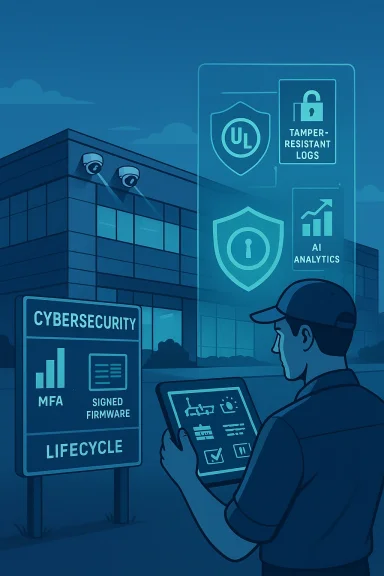 Background / Overview
Choosing a security company is no longer just about a buzzer and a keypad; modern TSS (Total Security Solutions) providers combine hardware, cloud services, monitoring, and cybersecurity practices into a single offering. A convincing quote‑unquote “top‑rated” vendor may advertise alarms, CCTV, access control, and 24/7 monitoring, but the difference between effective protection and a false sense of safety comes down to engineering, lifecycle management, and operational security practices.This article unpacks the core service categories you should evaluate, the technical and regulatory guardrails that matter, the cybersecurity pitfalls that frequently derail deployments, and a step‑by‑step due‑diligence checklist you can use when comparing local Malvern providers. Wherever I make specific technical claims or reference standards, I’ve verified those claims against publicly available guidance and independent advisories to give you a verifiable baseline to work from.
What “TSS security” actually includes
Alarm systems: more than sensors
Modern alarm systems are a blend of mechanical sensors and networked logic. A proper commercial or residential alarm installation typically includes:- Door and window contacts (reed switches or magnetic contacts) for perimeter breach detection.
- Motion detectors (PIR, microwave, or dual‑technology) tuned to reduce false alarms.
- Glass‑break sensors and acoustic detectors where glazing is a vulnerability.
- Panic / duress devices for occupant‑initiated emergency signaling.
- Remote arming/disarming and push notifications via mobile apps.
- Integration points for video, access control, and automation platforms.
Surveillance systems: cameras are sensors and endpoints
Surveillance (CCTV) has moved from tape‑based recorders to smart, IP camera fleets that stream to local recorders or the cloud. Key attributes to compare:- Sensor quality (resolution and low‑light performance) — HD alone isn’t sufficient if low‑light imaging is poor.
- On‑camera analytics (motion zones, object detection, line crossing) — useful when tuned and validated.
- Edge vs cloud recording — local NVR/DVR vs cloud retention affects response times, cost, and privacy obligations.
- Firmware and lifecycle support — many camera models become unpatchable at end of life and carry serious risks. Recent advisories show unsupported models can contain remote admit be patched.
Access control: from keypad to biometrics
Access control governs who enters controlled spaces. Systems range from simple keypad locks to enterprise solutions using card readers, mobile credentials, and biometric readers. Important features include:- Audit trails with time‑stamped access logs.
- Role‑based policies and easy revocation of credentials.
- Integration with intrusion and video systems for correlated forensics.
- Tamper detection and anti‑spoofing for biometric readers.
Monitoring services: what “24/7” really means
Third‑party monitoring is where alarms become actionable. Monitoring centers vary widely in capability and documentation; look for:- UL 827 or equivalent central‑station certification for monitoring reliability and auditability. A UL‑listed central station operates under certified procedures that many insurers and code officials recognize.
- Redundant monitoring sites and disaster recovery plans.
- Operator training and documented escalation procedures.
- Prompt emergency dispatch policies and local authority notification workflows.
Security consulting: risk‑based design
A competent TSS vendor will offer a security assessment that includes physical vulnerabilities, network exposure analysis, and a prioritized remediation roadmap. True consulting is technology‑agnostic: it prescribes the right mix of cameras, sensors, access control, and operational practices tailored to the facility.Why a local Malvern provider can be better — and when it isn’t
Local companies bring advantages, but local alone is not a guarantee of quality.Advantages of local providers
- Local knowledge: familiarity with area crime patterns and local authorities can speed response.
- Faster service: technicians on short call routes reduce mean time to repair.
- Personalized relationships: smaller providers can offer named customer managers and on‑site followups.
- Community accountability: local reputations are often easier to vet through direct referrals.
When national chains or specialists beat a local shop
- Scale for enterprise needs: large sites may need a certified integrator experienced with multi‑site deployments and enterprise directory integration.
- Specialized cyber/OT expertise: if a facility mixes operational technology (industrial equipment) with building security, ask for vendors with explicit OT security experience.
- Monitoring pedigree: certified, high‑availability central stations with international SLAs might be outside the capability of local shops.
Certifications, regulations, and proof points to insist on
Demand documentary evidence for each of these claims.- UL 827 / UL central‑station listing for monitoring stations and central‑station alarm service. This is an industry benchmark for monitoring quality and continuity.
- Manufacturer lifecycle and patch policy for cameras, recorders, and access readers: confirm the product support window and how the vendor manages end‑of‑life replacements.
- Cybersecurity practices: technical details about firmware signing, encrypted communication (TLS), and password policies.
- Insurance and bonding: proof of liability insurance and, where applicable, professional licenses required by state or local authorities.
- Written SLAs for response times, warranty, and ongoing maintenance.
Cybersecurity is now a core part of physical security
Physical security and cybersecurity are inseparable when devices are networked. Several authoritative advisories and incidents make this point bluntly:- CISA and international partners have published guidance for securing edge devices and recommend minimizing internet exposure for cameras and other embedded devices. Following these recommendations reduces remote compromise risk and supports containment strategies.
- Real‑world device advisories warn that unsupported camera models can have remote administrative backdoors and cannot be patched, leaving sites exposed unless devices are removed or network‑segmented. This is not hypothetical: multiple advisories documented remotely exploitable camera vulnerabilities where vendors declared affected models end‑of‑life.
Case study: why end‑of‑life cameras are a liability (short, practical example)
Imagine a mid‑size office in Malvern protected by a fleet of IP cameras installed five years ago. The cameras provide 24/7 recording to a local NVR and are accessible for remote viewing. One camera model is later flagged by a public advisory for an authentication bypass that allows remote admin access and command execution; the vendor has declared the product end‑of‑life and will not release patches.- Immediate risk: attackers can silently access live feeds, disable recording, or pivot onto the corporate network using the.
- Mitigations: isolate the cameras on a separate VLAN, remove internet access, implement firewall rules, and schedule full replacement with actively supported devices.
- Long term: require lifecycle policies in vendor contracts that include explicit replacement funds or trade‑in programs.
Practical, verifiable due‑diligence checklist for hiring a TSS company
Use this checklist during vetting. Ask vendors for written answers and sample evidence.- Licensing & insurance
- Provide state and local security contractor licenses.
- Provide current liability insurance and workers’ compensation documentation.
- Monitoring & central station
- Identify the monitoring partner and provide UL 827 or other central‑station certification evidence.
- Show documented operator training and escalation matrices.
- Hardware lifecycle & firmware updates
- Provide manufacturer lifecycle schedules for cameras, recorders, and controllers. Ask how EOL devices are handled.
- Demonstrate a secure update mechanism (signed firmware, encrypted channels).
- Network & cybersecurity controls
- Explain network segmentation, VLAN strategy, and firewall rules for IoT devices.
- Provide encryption standards, password policies, and whether multi‑factor authentication (MFA) is used for administrative access.
- Incident response & forensic readiness
- Provide an incident response playbook and sample forensic artifacts retained after an incident.
- Ask about log retention policies and whether logs are tamper‑resistant.
- Service levels & maintenance
- Get a written SLA with mean time to respond (hours) and mean time to repair (days) for typical incidents.
- Confirm warranty periods and who pays for replacement hardware.
- References and local track record
- Request at least three local references with similar site complexity.
- Visit live installations if possible.
- Cost transparency
- Ask for a multiyear TCO estimate showing hardware replacement cycles, monitoring fees, and anticipated optional upgrades.
Technical and operational controls that materially reduce risk
- Network segmentation: isolate cameras, access control, and building automation on separate VLANs with strict ACLs between business and operational networks.
- Deny by default egress rules: prevent internet access from edge devices unless explicitly allowed and logged.
- Firmware hygiene: mandate signed firmware and automatic update channels for critical devices.
- Centralized log collection: collect device logs in a tamper‑resistant SIEM or log archive for incident analysis.
- UL‑listed monitoring: prefer monitoring centers with certified processes and documented audit programs.
- Replace EOL hardware proactively: budget for device refresh cycles and avoid supplier lock‑in that hides replacement costs.
Pricing and value: how to compare bids
Price alone is a poor proxy for quality. Use this approach:- Get a line‑item quote (hardware, installation, cabling, programming, first‑year monitoring, ongoing monitoring).
- Ask for the five‑year TCO including scheduled replacement of EOL devices and firmware maintenance costs.
- Compare monitoring features (hours, dispatch policy, number of operator redundancies) rather than just the monthly price.
- Favor vendors that include a security review and network hardening in the initial install cost — these services materially reduce future incident costs.
The future: trends TSS customers must plan for
AI and video analytics — helpful, but not magic
AI‑driven video analytics can reduce operator fatigue by automatically flagging anomalies, detecting loitering, or identifying vehicle license plates. However, these systems produce false positives unless trained for the environment and maintained continuously. Agencies and vendors are racing to integrate AI into surveillance stacks, but buyers must insist on transparent accuracy metrics and the ability to tune or disable analytics when performance degrades.Edge devices and IoT guidance
Government cybersecurity entities emphasize that edge devices (cameras, intercoms, OT gateways) must be treated as critical assets. Guidance from national cybersecurity agencies recommends minimizing internet exposure and prioritizing device segmentation and detection. Use those guidelines when negotiating technical controls with vendors.Product labeling and consumer trust marks
Emerging initiatives like a national “Cyber Trust Mark” for smart home devices aim to give consumers a verifiable signal of device security posture (secure update mechanisms, authenticated communications, vendor lifecycle commitments). Over the next few years, expect manufacturers to highlight these marks — and make them a factor in procurement.Common vendor claims that deserve skepticism
- “We handle everything in‑house.” — Ask for proof of monitoring certification, operator audit logs, and the name of the central station.
- “Our cameras are ‘military grade.’” — Ask for specific sensor specifications, firmware update policy, and third‑party testing.
- “We never expose devices to the internet.” — Request a network diagram showing VLANs, firewall rules, and remote access methods.
- “Our system integrates with anything.” — Verify integration depth: tokenized API access vs insecure credential sharing are very different in risk.
Red flags during installation and maintenance
- No documented change control or software update logs.
- Default credentials live on devices or on unencrypted spreadsheets.
- NVRs or recorders accessible over the public internet without VPN and MFA.
- Monitoring contract that permits long notification windows or rescinds operator dispatch discretion.
- Lack of a documented device lifecycle plan or replacement budget.
Action plan for Malvern homeowners and small businesses (practical steps)
- Inventory — compile a list of every networked security device (model, firmware, IP address).
- Verify support — check manufacturer support windows; flag EOL hardware for replacement.
- Network isolation — create a device VLAN and restrict outbound internet access to only required services.
- Monitoring confirmation — get the monitoring company’s certification document (UL 827 or equivalent).
- Contract updates — add SLAs for firmware updates and an explicit EOL replacement clause.
- Regular reviews — schedule annual security reviews and firmware audits.
Concl6 is a multidisciplinary obligation — merging physical security, networking, device lifecycle management, and incident readiness. In Malvern, a top‑rated TSS provider is one that proves its claims with certifications (like UL central‑station certification), transparent lifecycle management, documented cyber hygiene practices, and clear SLAs for response and replacement. Beware of vendors who confuse features for protection: smart devices are powerful, but their value collapses if they are unsupported, internet‑exposed, or poorly integrated.
Demand written evidence, insist on network segmentation and monitoring certifications, budget for replacement of end‑of‑life devices, and verify that AI and analytics are treated as features to be tuned, not silver bullets. Doing this will shift your security posture from reactive to resilient — and give you the peace of mind that the label “top‑rated” should actually mean something.Source: thedetroitbureau.com Top-Rated TSS Security Company In Malvern
