

Satya Nadella opened 2026 with a tightly argued, strategy-first provocation: the AI era is no longer about dazzles and demos but about engineering systems that reliably amplify human judgment — and that imperative now defines Microsoft’s product roadmaps, corporate priorities, and risk profile.
In a short personal essay posted on his sn scratchpad blog at the end of December 2025, Satya Nadella framed 2026 as a pivot year: move beyond model‑level spectacle, treat AI as a “cognitive amplifier,” and invest in systems engineering (memory, entitlements, provenance, and safe tools use) that can make AI dependable in real‑world production. That message is consistent with Microsoft’s recent product push — from Microsoft 365 Copilot and GitHub Copilot to Copilot integrations in Windows and device-level Copilot+ features — and it reads as both internal product signal and external defense of a massive corporate bet on generative AI.
But the same months that saw this rhetorical reset also produced textured, sometimes contradictory evidence: Microsoft publicly claims major adoption metrics for Copilot and other AI features, while user communities and independent testers report persistent reliability gaps. At the same time, the company has restructured teams and undertaken multiple rounds of workforce reductions that observers say are tied, at least in part, to automation and AI-driven efficiency objectives. Meanwhile, competitors — most notably Google with Gemini — are aggressively pushing enterprise offerings that threaten to siphon momentum in corporate accounts. And on the consumer side, recent price adjustments to gaming hardware and what many see as questions over device strategy have amplified user dissatisfaction.
This feature unpacks Microsoft’s 2026 AI posture, traces the product and business realities behind the rhetoric, assesses strengths and risks, and recommends practical approaches enterprise and Windows users should consider as this transition accelerates.
This shift changes evaluation criteria. Benchmarks and model-size headlines give way to real‑world KPIs: error rates, hallucination frequency, end‑to‑end latency, auditability, and measurable business impact (time saved, revenue uplift, support cost reductions). For Microsoft, the payoff is twofold: better product reliability for customers, and a clearer commercial proposition for enterprise buyers that demand governance and provenance.
Strengths of this approach include:
This competition matters because enterprises evaluate not only model quality but also security, compliance, ecosystem fit, and total cost of ownership. Google’s tight Workspace ties and its cloud offerings position it as a direct rival for Microsoft in the seat‑based enterprise market.
The cumulative effect of hardware price changes and device neglect is a rising interest among power users in alternatives — Linux distributions and macOS for some professionals — especially when those alternatives are perceived as delivering better value or more refined control.
But the path is perilous. Execution gaps in Copilot experiences, consumer friction over device and pricing decisions, workforce changes tied to automation, and fierce enterprise competition from Google and other vendors all raise the stakes. Microsoft can win this era if it delivers auditable, reliable systems that demonstrably improve business outcomes — and if it does so while acknowledging and mitigating the social costs of technology transition.
Practical corporate and IT buyers should treat Microsoft’s corporate commitments as a starting point, not a promise: validate with pilots, insist on governance and provenance, and avoid vendor‑centric hype when measuring impact. Meanwhile, Microsoft’s leadership face a classic trade‑off: keep dazzling investors and race models forward, or slow down to solidify product quality, rebuild user trust, and earn the societal permission Nadella says will be required for widespread adoption. The company’s next moves — and how it balances speed with discipline — will determine whether 2026 becomes a year of durable AI value or another chapter in the cycle of hype and disappointment.
Source: SSBCrack News Microsoft's 2026 Vision: A Future Fixated on AI - SSBCrack News
 Background / Overview
In a short personal essay posted on his sn scratchpad blog at the end of December 2025, Satya Nadella framed 2026 as a pivot year: move beyond model‑level spectacle, treat AI as a “cognitive amplifier,” and invest in systems engineering (memory, entitlements, provenance, and safe tools use) that can make AI dependable in real‑world production. That message is consistent with Microsoft’s recent product push — from Microsoft 365 Copilot and GitHub Copilot to Copilot integrations in Windows and device-level Copilot+ features — and it reads as both internal product signal and external defense of a massive corporate bet on generative AI.But the same months that saw this rhetorical reset also produced textured, sometimes contradictory evidence: Microsoft publicly claims major adoption metrics for Copilot and other AI features, while user communities and independent testers report persistent reliability gaps. At the same time, the company has restructured teams and undertaken multiple rounds of workforce reductions that observers say are tied, at least in part, to automation and AI-driven efficiency objectives. Meanwhile, competitors — most notably Google with Gemini — are aggressively pushing enterprise offerings that threaten to siphon momentum in corporate accounts. And on the consumer side, recent price adjustments to gaming hardware and what many see as questions over device strategy have amplified user dissatisfaction.
This feature unpacks Microsoft’s 2026 AI posture, traces the product and business realities behind the rhetoric, assesses strengths and risks, and recommends practical approaches enterprise and Windows users should consider as this transition accelerates.
Microsoft’s AI Pivot: From Models to Systems
The strategic thesis
Nadella’s public framing is straightforward: AI must transition from individualized model feats to engineered, orchestrated systems that reliably produce measurable outcomes. That means building scaffolding — orchestration layers, persistent memory, entitlement controls, audit trails, and safe tool‑invocation mechanisms — so agents and models can operate with predictable behavior in production.This shift changes evaluation criteria. Benchmarks and model-size headlines give way to real‑world KPIs: error rates, hallucination frequency, end‑to‑end latency, auditability, and measurable business impact (time saved, revenue uplift, support cost reductions). For Microsoft, the payoff is twofold: better product reliability for customers, and a clearer commercial proposition for enterprise buyers that demand governance and provenance.
Copilot as the front door
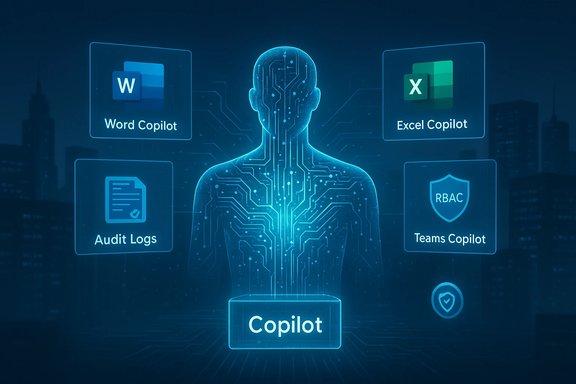
Microsoft has positioned Microsoft Copilot as the “UI of AI” — an interface concept that stitches AI into Office, Windows, Teams, Visual Studio, and developer workflows through role‑based copilots and agent frameworks. The Copilot family is now central to the company’s narrative: the idea is that copilots will be the default way people interact with productivity software, not a separate siloed product.Strengths of this approach include:
- Native integration into apps people already use every day.
- A platform model that can monetize seat-based enterprise licensing and consumption for high-value requests.
- A single-brand user experience across consumer and enterprise surfaces.
Product Reality vs. Rhetoric: Where Copilot Works and Where It Doesn’t
Where Copilot shows value
- Developers report real productivity gains from GitHub Copilot in repetitive coding tasks, boilerplate generation, and IDE-driven completions when combined with solid test coverage and code review workflows.
- In large enterprises, tailored Copilot deployments (for example, role‑based copilots for sales or finance) can accelerate routine work: summarizing documents, extracting action items from meetings, generating first drafts of slides, and surfacing key analytics in spreadsheets.
- Copilot’s integration into Microsoft 365 and Azure backends gives the company a data advantage for building context‑aware assistants tied to enterprise data stores and governance controls.
Failure modes and user pain points
- Many consumer‑facing Copilot experiences remain brittle. Outputs can be irrelevant, inconsistent, or hallucinated; multi‑step agent flows sometimes break; and fallbacks are not always clear to end users.
- Several features require advanced user skill to be effective, undermining the “it just works” promise for casual users.
- Security, data residency, and privacy controls are improving but still a source of friction for regulated industries.
- There’s a growing perception among Windows and Surface users that core device lines and legacy features are being deprioritized in favor of AI initiatives — a perception that feeds migration interest to alternatives like Linux in some communities.
The Competitive Landscape: Google, OpenAI, and the Enterprise Fight
Google Gemini’s enterprise rise
Google has heavily integrated Gemini into Workspace and launched enterprise‑oriented Gemini offerings that emphasize governance, integration with Workspace data, and agent deployment tooling. Several large enterprises and consultancies report scaled deployments; Google’s enterprise‑first approach — bundling AI into familiar productivity apps — offers a strong playbook for broad adoption.This competition matters because enterprises evaluate not only model quality but also security, compliance, ecosystem fit, and total cost of ownership. Google’s tight Workspace ties and its cloud offerings position it as a direct rival for Microsoft in the seat‑based enterprise market.
OpenAI and the partner ecosystem
OpenAI remains a critical partner and source of model capability for Microsoft, but the landscape is multi‑vendor. Customers increasingly ask for choice: Anthropic, Google, OpenAI, and specialized vendors now all compete for enterprise licensing. That makes engineering and governance the battleground: who can provide the most auditable, reliable, and cost‑effective agent platform?The Economics: Adoption Claims, Layoffs, and the Productivity Question
Adoption numbers vs. lived experience
Microsoft has publicly stated large usage numbers for its AI features and Copilot family. These corporate metrics are important commercial signals, but they do not, by themselves, prove universal effectiveness or user satisfaction. Reported enterprise deployments and token‑processing volumes show economic commitment at scale; they do not eliminate the operational challenges of making agentic features dependable in day‑to‑day work.Layoffs, automation, and the human impact
Microsoft — like other tech giants — has undertaken significant workforce reductions in recent cycles. Those changes intersect with AI strategy in two ways:- Operational: the company is reallocating resources toward AI infrastructure, platform engineering, and model operations.
- Product: automation ambitions can reduce certain categories of headcount, particularly in repetitive or lower‑margin roles.
Claims to treat cautiously
A number of widely circulated claims require careful scrutiny:- Statements that “30% of Microsoft’s code is now generated by AI” have appeared in community reporting and commentary but cannot be independently verified through public company disclosures. Treat such percentages as anecdotal unless corroborated by internal documentation released by Microsoft.
- Broad headlines about “nearly a billion people using AI daily” are inconsistent across sources and depend heavily on definitions (embedded AI features vs. conscious use of generative apps). Industry estimates of AI reach vary widely; some datasets point to hundreds of millions of daily users for specific consumer apps, while others estimate larger monthly reach when counting embedded features across major platforms.
Hardware and Consumer Friction: Xbox, Surface, and the Brand Trade-offs
Xbox pricing and consumer trust
Microsoft’s price adjustments across the Xbox console family and first‑party game pricing have generated genuine consumer pushback. For console owners, price hikes — even if explained as responses to macroeconomic pressures — erode goodwill. Those headwinds complicate Microsoft’s attempt to appear as a consumer‑centric ecosystem while it reallocates capital toward datacenter build‑out and AI infrastructure.Surface and device impatience
Surface users and device enthusiasts note extended product cycles and perceived stagnation in flagship development. The tension is clear: heavy investment in cloud and model infrastructure can deprioritize device innovation, which matters for many Windows loyalists.The cumulative effect of hardware price changes and device neglect is a rising interest among power users in alternatives — Linux distributions and macOS for some professionals — especially when those alternatives are perceived as delivering better value or more refined control.
Engineering Realities: Why “Systems” Is the Hard Part
Building for reliability and governance
Turning models into systems demands investments in fundamental engineering:- State management (memory) that respects access controls and minimizes privacy leakage.
- Entitlements and role‑based access to prevent unauthorized actions or data exposure.
- Observability and audit logs so organizations can validate outputs and perform forensics.
- Safe tool invocation patterns to prevent agents from making destructive external calls.
UX and discoverability
A persistent product gap is the human‑facing experience. Agents must explain uncertainty, show provenance, and guide users through corrective actions when outputs are wrong. Without clear UX primitives for trust and control, agents will remain both powerful and perilous.Risks, Governance, and the “AI Bubble” Conversation
Misinformation and economic skepticism
Public discourse about “AI slop,” misinformation, and profitability constraints is not mere noise. There are real economic and reputational risks if generative features scale faster than their safety and audit mechanisms. Economists and regulators worry about unsustainable valuations and the social consequences of rapid automation.Regulatory and legal exposure
As AI embeds into critical workflows, regulatory scrutiny will intensify. Procurement teams must factor compliance, data residency, and potential liability into procurement decisions. Microsoft’s public offers to take on certain legal risks for customers are material, but these commitments come with conditions and are not a blanket substitute for due diligence.Vendor lock‑in and interoperability
Large enterprise bets on a single vendor’s agent platform raise lock‑in concerns. Standardization, portability of agent artifacts, and multi‑model orchestration will be priorities for organizations that do not want critical workflows to be tied to a single cloud provider.What Windows IT Pros and Enterprise Buyers Should Do Now
- Prioritize measurable pilots. Run narrow, outcome‑oriented pilots with clear KPIs (time saved, error reduction, ticket deflection) and defined safety checks.
- Demand provenance. Ensure any deployed copilot produces traceable sources and logs suitable for audits and compliance review.
- Harden governance. Implement entitlement models, RBAC, and data residency constraints before scaling agents across sensitive domains.
- Measure productivity honestly. Quantify both gains and rework overhead introduced by AI outputs that require human correction.
- Balance vendor convenience with interoperability. Evaluate agent portability and plan for hybrid or multi‑cloud strategies where possible.
Alternatives and the Open‑Source Dynamic
Windows power users and organizations frustrated with perceived product degradation are exploring alternatives. Interest in consumer‑friendly Linux distributions and cross‑platform tools is higher than at any recent point, driven by:- Cost sensitivity amid console and device price changes.
- Desire for stable, minimal tooling without embedded agent distractions.
- Concerns about long‑term platform direction and vendor dependence.
Conclusion: Can Microsoft Square the Circle?
Microsoft’s 2026 thesis is clear: engineer systems, not just models; design for human amplification; and focus scarce compute and engineering talent where real social value accrues. Those are defensible, even necessary, priorities. The company’s product reach and deep enterprise ties give it a unique shot at turning agential AI into dependable workflows.But the path is perilous. Execution gaps in Copilot experiences, consumer friction over device and pricing decisions, workforce changes tied to automation, and fierce enterprise competition from Google and other vendors all raise the stakes. Microsoft can win this era if it delivers auditable, reliable systems that demonstrably improve business outcomes — and if it does so while acknowledging and mitigating the social costs of technology transition.
Practical corporate and IT buyers should treat Microsoft’s corporate commitments as a starting point, not a promise: validate with pilots, insist on governance and provenance, and avoid vendor‑centric hype when measuring impact. Meanwhile, Microsoft’s leadership face a classic trade‑off: keep dazzling investors and race models forward, or slow down to solidify product quality, rebuild user trust, and earn the societal permission Nadella says will be required for widespread adoption. The company’s next moves — and how it balances speed with discipline — will determine whether 2026 becomes a year of durable AI value or another chapter in the cycle of hype and disappointment.
Source: SSBCrack News Microsoft's 2026 Vision: A Future Fixated on AI - SSBCrack News
