

Mustafa Suleyman’s Microsoft AI team is being told to show up more often — and in a layout he believes fuels faster collaboration — a move that tightens the company’s new return‑to‑office baseline and sharpens the emerging debate over proximity, productivity, and talent in big‑tech AI teams.
Mustafa Suleyman, the former Inflection AI co‑founder now running Microsoft AI, has instituted an org‑level return‑to‑office (RTO) expectation that is stricter than Microsoft’s recently announced company baseline. According to internal documents reported by Business Insider, employees who live within a specified commuting radius of a Microsoft AI office are expected to be onsite four days a week starting January 26, 2026; exceptions must be signed off by executives who report directly to Suleyman and are reviewed annually. This tighter rule sits alongside Microsoft’s broader update that sets a company‑wide floor of three days a week in the office for employees who live within commuting distance, a change announced in a phased rollout beginning early 2026. That baseline was framed by Microsoft HR leadership as a move to accelerate collaboration for AI‑first product work. Suleyman’s preference extends beyond mere seat counts. He has signaled a cultural and physical reconfiguration: favoring open floor plans and “neighbourhoods” — clusters of 20–30 desks positioned to maximize visible, spontaneous interaction — over closed offices and tightly bounded teams, arguing this design creates energy, “buzz” and informal collaboration he deems essential to fast AI development. The leadership shift and workplace layout choices are reported in the Business Insider profile and have been replicated by other outlets. These moves land against a complex corporate backdrop that includes large AI investments, organizational restructuring and heightened attention to internal communications and campus security — factors that Microsoft leadership explicitly ties to the need for more concentrated in‑person work. Internal analyses assembled in leaked and shared documents highlight similar themes: tighter moderation of employee forums, stricter building access after on‑site protests, and a company posture oriented toward operational “intensity.” These internal summaries emphasize that the RTO baseline is one element in a broader shift of corporate governance and execution priorities.
Pros of this design:
For leaders and practitioners, the immediate priorities are clear: communicate objectives and metrics, protect deep work while enabling collaboration, formalize fair and transparent exceptions, and measure effects on hiring and retention. That disciplined approach will determine whether the neighbourhoods and four‑day calendars become a competitive edge or a cautionary example in how the AI era reshapes where — and how — the world’s smartest teams get work done.
Source: Storyboard18 Microsoft AI CEO Mustafa Suleyman enforces stricter office rules than rest of company
 Background / Overview
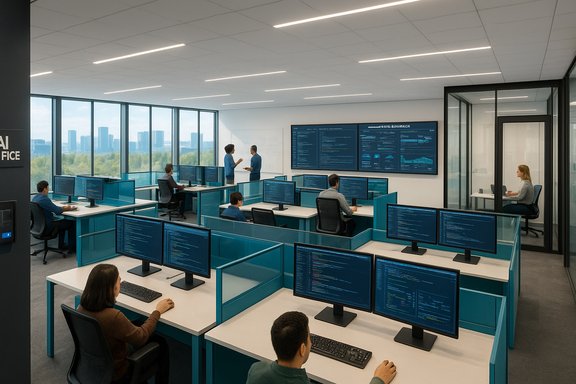
Mustafa Suleyman, the former Inflection AI co‑founder now running Microsoft AI, has instituted an org‑level return‑to‑office (RTO) expectation that is stricter than Microsoft’s recently announced company baseline. According to internal documents reported by Business Insider, employees who live within a specified commuting radius of a Microsoft AI office are expected to be onsite four days a week starting January 26, 2026; exceptions must be signed off by executives who report directly to Suleyman and are reviewed annually. This tighter rule sits alongside Microsoft’s broader update that sets a company‑wide floor of three days a week in the office for employees who live within commuting distance, a change announced in a phased rollout beginning early 2026. That baseline was framed by Microsoft HR leadership as a move to accelerate collaboration for AI‑first product work. Suleyman’s preference extends beyond mere seat counts. He has signaled a cultural and physical reconfiguration: favoring open floor plans and “neighbourhoods” — clusters of 20–30 desks positioned to maximize visible, spontaneous interaction — over closed offices and tightly bounded teams, arguing this design creates energy, “buzz” and informal collaboration he deems essential to fast AI development. The leadership shift and workplace layout choices are reported in the Business Insider profile and have been replicated by other outlets. These moves land against a complex corporate backdrop that includes large AI investments, organizational restructuring and heightened attention to internal communications and campus security — factors that Microsoft leadership explicitly ties to the need for more concentrated in‑person work. Internal analyses assembled in leaked and shared documents highlight similar themes: tighter moderation of employee forums, stricter building access after on‑site protests, and a company posture oriented toward operational “intensity.” These internal summaries emphasize that the RTO baseline is one element in a broader shift of corporate governance and execution priorities.Why this matters: the operational logic and the counterarguments
The company case for more in‑person time
Microsoft’s leadership rationale — echoed by Suleyman for his team — rests on several operational arguments:- High‑bandwidth coordination: Complex generative‑AI projects require rapid iteration across model builders, product teams, infrastructure and safety reviewers. Executives argue that proximity shortens feedback loops and accelerates decisions.
- Onboarding and mentorship: New hires and junior researchers benefit from in‑person mentoring and serendipitous exposure to domain knowledge within dense teams.
- Facilities and resource planning: Predictable in‑office days make capacity planning for desks, meeting rooms and on‑site hardware more efficient.
- Signaling and talent concentration: Concentrating teams in recognized hubs (notably Silicon Valley and Redmond) reinforces “talent density” that some leaders believe is necessary to compete for top AI hires.
The counterarguments and risks
Despite the operational case, there are immediate and medium‑term tradeoffs:- Talent and retention risk: A stricter four‑day regime narrows the candidate pool for many roles and increases the chance that employees who prefer remote or more flexible arrangements will depart. Teams that must compete for scarce senior AI talent may face higher churn and heavier compensation pressure.
- Equity and accessibility: A uniform radius‑based rule (25–50 miles depending on location) treats geography as a gatekeeper. This can disproportionately affect caregivers, people with disabilities, and those living in high‑cost or transit‑poor regions, potentially creating equity issues and legal accommodations challenges across jurisdictions.
- Evidence gap: Publicly available, team‑level evidence linking mandated in‑office days to measurably better AI outcomes is sparse. Microsoft’s public case cites internal data about collaboration, but the company has not published external, reproducible analyses proving causality between a specific in‑office threshold and superior product performance. Internal summaries repeatedly caution that the causal link remains an assertion rather than a proven fact.
- Cultural friction: Open floor plans and high‑visibility neighbourhoods can increase interruptions and reduce deep work time for many engineers. The layout preference can be polarizing, and forcing physical proximity without addressing distraction and focus needs risks lowering individual productivity for certain work types.
What the documents say — specifics and verification
Suleyman’s AI org: four‑day rule, distances, exceptions
Business Insider’s reporting — based on an internal document it reviewed — lists detailed thresholds for the four‑day expectation: employees who live within 50 miles of certain US offices (Seattle area, Silicon Valley, San Francisco, New York, Chicago, Los Angeles) and 25 miles of designated offices in parts of Asia, Europe and other regions are expected to be onsite four days weekly beginning January 26, 2026. Exceptions require approval by a direct report to Suleyman and are subject to annual review. This is an org‑level policy that explicitly deviates from Microsoft’s own companywide baseline (three days), highlighting how Microsoft permits executives discretion to set stricter norms where they judge team needs require it. The Business Insider account is the primary public source for these specific Suleyman org rules and the associated dates.Microsoft corporate baseline: three days and phased rollout
Microsoft’s Chief People Officer issued guidance establishing a three‑day in‑office baseline for employees who live within a commutable radius, to be rolled out in phases beginning with the Puget Sound/Redmond cohort in early 2026. Regional phasing, exception windows, and managerial discretion are central features of the company approach; outlets including Reuters and The Verge corroborate the three‑day baseline, the roughly 50‑mile radius for initial cohorts and the phased timeline.Cross‑verification and caution flags
- Business Insider’s Suleyman‑specific reporting and Reuters’ coverage of Microsoft’s company RTO both align on the broad picture: a company baseline of three days, and stricter team‑level policies in places. Using those independent outlets provides cross‑validation for the high‑level assertions.
- Internal analysis and compilations of leaked briefings (available in organizational transcripts and community research files) reinforce the framing that Microsoft’s policy changes are part of a broader governance shift that includes internal communication tightening and building access rules. Those internal summaries also flag several unverifiable internal figures — for example, large dollar commitments cited in some slides — and explicitly recommend caution where numbers can’t be matched to public financial filings. Readers should treat internal slide figures that are not present in Microsoft’s SEC or CFO disclosures as provisional.
Cultural design: neighbourhoods, open plan, and visible collaboration
Suleyman’s stated architectural preference — clusters of open desks or “neighbourhoods” — is intended to yield visible collaboration and serendipity. That setup is explicitly designed to make presence tangible: when teammates are visible, leaders argue, cross‑pollination happens more often and decisions accelerate.Pros of this design:
- Encourages quick hallway syncs and unplanned problem solving.
- Simplifies ad‑hoc pairing and review, particularly for model debugging and integration sprints.
- Makes capacity and team presence more observable for managers.
- Open plans can compromise privacy and focus; many engineers report lower deep‑work productivity when frequent interruptions occur.
- Noise and visual distraction are documented productivity hazards in workplace design literature; without quiet zones and protected heads‑down time, the net gain is uncertain.
- Psychological safety implications: clustering may increase pressure to appear busy or to conform to in‑office norms, which can harm diversity of working styles.
Legal, HR, and operational impacts — what teams must plan for
HR and compliance
- Reasonable accommodations and local labor law: Anywhere policies vary by country; HR must be ready to adjudicate accommodation requests under local disability, parental leave and labor rules. A one‑size‑fits‑all radius rule can create compliance headaches across multiple jurisdictions.
- Exception approvals and audit trails: Suleyman’s org requires approval from direct reports; HR must ensure clear, documented processes to avoid inconsistent outcomes and discrimination claims.
- Performance and retention metrics: Expect HR to monitor attrition by job family and location. Teams should instrument voluntary departures, offer acceptance rates, and recruiting funnel conversion rates to quantify RTO impact.
Facilities and IT
- Capacity planning: Facilities must reconfigure desk hoteling, reserve quiet rooms, and ensure network and compute provisioning matches concentrated in‑office schedules.
- Security and access control: Tighter access policies (already implemented in some campuses) require updated physical security integrations and visitor workflows.
- Hybrid tooling and observability: IT should build dashboards that show desk utilization, meeting‑room load, and app authentication peaks to better balance capacity and identify friction points. Internal documentation suggests this is already in scope for Microsoft’s operations teams.
Recruiting and compensation
- Talent market segmentation: Expect a two‑tier market where locally concentrated, in‑office roles command premium compensation, and remote roles become a separate pipeline. Recruiting teams must price offers accordingly and monitor counteroffer dynamics.
- Relocation and relocation allowances: For roles that must be present, companies will need relocation programs, commuter benefits, and targeted hiring incentives — particularly in expensive hubs like Silicon Valley. Suleyman’s organization reportedly maintains an aggressive recruiting arm to compete for top AI talent.
Tactical playbook for teams and leaders
Below is a pragmatic plan teams can use to operationalize stricter in‑office expectations while mitigating risk.- Communicate the business rationale clearly and repeatedly.
- Explain what specific outcomes in the next 3–6 months require closer proximity.
- Publish measurable goals (e.g., reduce model iteration cycle time by X days, improve cross‑team incident response SLA).
- Design for mixed needs.
- Create neighbourhoods for collaboration but provide quiet zones and scheduled heads‑down days to protect deep work.
- Offer bookable focus rooms and enforce norms around quiet hours.
- Build a fair exceptions process.
- Publish explicit criteria for exceptions (commute complexity, caregiving duties, disability), processing timelines, and appeal paths.
- Log approvals centrally to ensure consistency and defendability.
- Measure the right metrics.
- Track retention by role and location, time‑to‑hire, candidate acceptance rates, on‑site utilization, and objective product velocity metrics.
- Run controlled experiments where possible (pilot teams with different on‑site frequency) and publish results internally.
- Invest in onboarding and mentoring.
- If proximity is required for mentorship, formalize pairing, mentoring hours, and code review windows to ensure in‑office time yields reproducible learning outcomes.
- Protect culture and dissent.
- Keep safe, moderated channels for employee feedback; avoid collapsing open forums into purely curated town halls without alternative upward pathways.
Strategic implications for Microsoft and the AI sector
- Signal to the market: Microsoft’s dual posture (company baseline plus tighter team rules) signals that executives may use proximity as a strategic lever where competition is fiercest. That can shape industry norms and influence how competitors structure their remote vs. in‑office tradeoffs.
- Real‑world experiments: Microsoft now becomes an important live experiment: will concentrated in‑person time measurably increase AI product velocity or simply raise costs and talent friction? The industry will watch retention, hiring, and product cadence closely.
- Regulatory and labor considerations: As companies tighten expectations, regulators and courts will increasingly evaluate whether these practices comply with local labor rules, accommodation statutes, and anti‑discrimination laws. Multinational employers must reconcile local law with centralized expectations.
- Culture and innovation: The bet is cultural as much as operational. If neighbourhoods and four‑day proximity deliver repeatable, measurable gains — faster release cycles, fewer integration regressions, better cross‑discipline learning — the model will be vindicated. If gains are marginal and attrition spikes, leaders will need to recalibrate quickly.
What is verifiable — and what to treat with caution
- Verifiable: Microsoft announced a three‑day company baseline and a phased rollout starting in early 2026; independent outlets corroborate the policy and phased timing.
- Verifiable: Business Insider reviewed an internal document describing a four‑day requirement for employees in Microsoft AI who live within certain radii of specified offices, with exceptions to be approved by direct reports to Mustafa Suleyman; the report includes specific dates and radius thresholds.
- Treat with caution: Internal slide figures and some leaked numbers (for example, very large dollar figures cited in some internal decks) are reported in community summaries but have not been confirmed in Microsoft’s public financial disclosures and should therefore be treated as provisional until matched to official filings. Internal summaries explicitly flag these as unverifiable.
- Contextual nuance: Some operational details — exact exception adjudication thresholds, the number of disciplinary actions tied to campus events, and final seating allocations — vary across reports and internal memos and are still being finalized inside Microsoft. These are actionable only when HR publishes the canonical policy text.
Conclusion
Mustafa Suleyman’s tighter in‑office rules and his architectural preference for “neighbourhoods” are a clear expression of a leadership strategy that treats proximity as an operational lever in the high‑stakes AI race. Microsoft’s approach — a company baseline of three days plus the ability for execs to mandate four or more days in select teams — codifies a two‑tiered hybrid model that prioritizes intensity and concentrated collaboration for mission‑critical AI groups. The debate now is practical and empirical. If visible collaboration and higher presence translate into faster, higher‑quality AI outcomes, the move will be judged a pragmatic reallocation of human capital and real estate. If, however, the policy accelerates attrition, compounds equity problems, and fails to deliver clear product gains, the company will face costly churn and reputational friction. Internal analyses and early reporting note both the operational intent and the unresolved evidence gap; organizations implementing similar shifts should plan as if they are conducting a controlled experiment — instrumented, time‑boxed, and ready to evolve based on measurable outcomes.For leaders and practitioners, the immediate priorities are clear: communicate objectives and metrics, protect deep work while enabling collaboration, formalize fair and transparent exceptions, and measure effects on hiring and retention. That disciplined approach will determine whether the neighbourhoods and four‑day calendars become a competitive edge or a cautionary example in how the AI era reshapes where — and how — the world’s smartest teams get work done.
Source: Storyboard18 Microsoft AI CEO Mustafa Suleyman enforces stricter office rules than rest of company
