

Microsoft's latest flirtation with renaming — the appearance of a product page that calls the familiar Office app "The Microsoft 365 Copilot app (formerly Office)" — has set off predictable outrage, fresh confusion, and a broader conversation about the real costs of sloppy or opportunistic rebranding in tech. What looked like a sudden erasure of the Office name was actually a long, incremental shove: Microsoft has been layering the Copilot label across its ecosystem for years, and this particular wording change surfaced an underlying truth many users already suspected — that brand clarity is being sacrificed to signal AI-first strategy. The result is the same problem we see in other flawed rebrands: user bewilderment, regulatory scrutiny, and potential commercial fallout.
Microsoft quietly updated the product description for the Office hub that points users to online Office tools so it read: “The Microsoft 365 Copilot app (formerly Office) lets you create, share, and collaborate all in one place with your favorite apps, now including Copilot.” That sentence reads to many like a name change — and in isolation it would be accurate to say Microsoft made a textual rebrand.
But the reality is messier. The “Office” page Microsoft updated refers to a legacy 2019-era Office app that served as a shortcut to web versions of Word, Excel, and PowerPoint. Microsoft has been evolving the web hub and the marketing copy for years (the move to “Microsoft 365” began in earnest in 2022), and the new phrasing is the latest layer in that evolution rather than the wholesale renaming of the Office product line. Microsoft still sells and supports standalone, perpetually licensed releases — for example, Office 2024 — and the desktop apps Word, Excel, and PowerPoint remain named as such. This semantic sleight-of-hand is why the online reaction was so quick and heated: users read the phrase and interpreted it as the death of a trusted brand. That interpretation isn’t wholly unreasonable — the marketing copy is ambiguous on purpose — and the public backlash is a symptom of a brand architecture problem, not merely line-editing.
Two practical regulatory risks arise from sloppy naming:
Good branding reduces friction; bad branding raises costs, damages trust, and invites regulatory attention. For companies large and small, the lesson is consistent: treat naming and microcopy as product features that require testing, governance, and careful roll-out. The wins from a successful rebrand can be large—clear customer recognition, easier cross-sell, and a sharper narrative—but the costs of getting it wrong are real, measurable, and sometimes existential.
Microsoft and its peers are still learning that lesson the hard way. The path forward is obvious: slow down, map the user journey, explain plainly, and preserve the product signals that customers use to make decisions. In the age of AI, names matter more than ever — because a name is often the first and last thing a customer remembers about what you shipped.
Source: theregister.com Microsoft 365 Copilot app rebrand was bad, others were worse
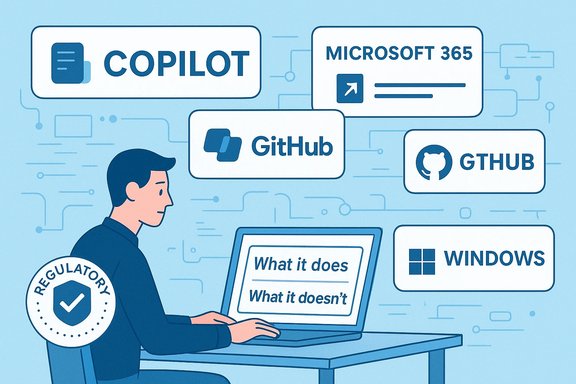 Background: what happened with Microsoft 365 and the “Copilot” label
Microsoft quietly updated the product description for the Office hub that points users to online Office tools so it read: “The Microsoft 365 Copilot app (formerly Office) lets you create, share, and collaborate all in one place with your favorite apps, now including Copilot.” That sentence reads to many like a name change — and in isolation it would be accurate to say Microsoft made a textual rebrand.But the reality is messier. The “Office” page Microsoft updated refers to a legacy 2019-era Office app that served as a shortcut to web versions of Word, Excel, and PowerPoint. Microsoft has been evolving the web hub and the marketing copy for years (the move to “Microsoft 365” began in earnest in 2022), and the new phrasing is the latest layer in that evolution rather than the wholesale renaming of the Office product line. Microsoft still sells and supports standalone, perpetually licensed releases — for example, Office 2024 — and the desktop apps Word, Excel, and PowerPoint remain named as such. This semantic sleight-of-hand is why the online reaction was so quick and heated: users read the phrase and interpreted it as the death of a trusted brand. That interpretation isn’t wholly unreasonable — the marketing copy is ambiguous on purpose — and the public backlash is a symptom of a brand architecture problem, not merely line-editing.
Overview: Copilot as a brand — breadth, promise, and muddled meaning
Microsoft’s Copilot is no longer a single product; it’s a label applied to many different offerings:- Microsoft 365 Copilot — an enterprise AI assistant integrated across Microsoft 365 apps;
- GitHub Copilot — AI coding assistance for developers;
- Copilot in Windows — system-level conversational features in Windows;
- Copilot for Security — vendor-specific security tooling; and others.
Why naming matters: brand equity, cognitive load, and purchase friction
Branding is not decoration. Names, icons, and simple messaging do real work:- Function signaling — a good name hints at what a product does. "Office" means productivity apps; "Copilot" implies an assistant. When both labels apply to the same domain, customers must reconcile the difference.
- Cognitive load — every naming change forces users to re-learn: where to find features, what to pay for, what the support boundaries are.
- Purchase friction — uncertainty reduces conversion. If buyers can’t tell whether Copilot is included, or if “Copilot” describes a feature or an entirely separate product, they may delay or abandon purchases.
Case studies: naming failures and the downstream damage
Tech has an unfortunate tradition of spectacularly bad renames. Some of the most instructive examples show the difference between PR-safe and business-toxic rebrands.Microsoft: a history of layered renames
Microsoft’s record is instructive because it’s not just about one bad decision — it’s a pattern of incremental renames and product shuffles that keep customers guessing. Examples include:- Office subscription names that shifted from Office 365 ProPlus to Microsoft 365 Apps for enterprise, and Office 365 Business to Microsoft 365 Business.
- Messaging products that moved from Lync to Skype for Business to Teams — each christening carried backend changes and feature shifts.
- The multi-year evolution of “.NET” terminology that left developers parsing the difference between .NET Framework, .NET Core, and .NET Standard when the brand was being used for several different technologies simultaneously.
Twitter to X: identity loss and measurable commercial pain
The Twitter-to-X rebrand under Elon Musk is the high-water mark for how badly rebranding can go when executed without clear product preservation plans. Replacing the bird and the verb "tweet" with a single letter erased decades of cultural and product-specific equity. That identity loss correlated with severe advertiser attrition and measurable revenue declines in the years immediately after acquisition. Public reporting and analyst estimates suggest ad revenue contracted sharply in the months and years after the rebrand and management turbulence; the platform’s overall annual revenues were reported well below pre-acquisition levels during that period. Beyond the financials, the rebrand made the product harder to talk about in culture — a real, enduring cost. The Financial Times even ran a high-profile piece that captured the reputational damage by referring to X as “the deepfake porn site formerly known as Twitter,” a piercing example of how reputational risk can attach to a brand and endure.Netflix’s Qwikster: speed, confusion, and quick reversal
Netflix’s 2011 announcement that it would separate its DVD-by-mail service into a distinct brand, Qwikster, is a classic lesson in executional hubris. The plan would have forced customers onto two websites and two bills. The backlash was immediate and fierce; Netflix reversed course within weeks and absorbed a measurable subscriber and market-cap hit in the short term. The core lesson: brand architecture that increases customer task complexity will be punished quickly.Warner Bros. Discovery and the “Max” gamble
When Warner Bros. Discovery renamed HBO Max to Max and de-emphasized the HBO label, the industry reaction was scathing. HBO is a premium, legacy-laden brand with strong associations to quality, edge, and prestige. Dropping it in favor of a more generic name diluted that association and gave competitors a marketing opening. In time, Warner Bros. Discovery readjusted its positioning and brought the HBO identity back into marketing and tiering decisions. The episode shows that tossing a beloved sub-brand in the service of a homogenous name can hollow out perceived product value. (Exact dates and internal spending numbers vary in reports; the lesson is one of brand equity, not accounting.Legal and regulatory implications: when marketing trips into enforcement territory
Bad branding doesn’t just annoy customers — it invites scrutiny. The NAD’s review of Microsoft’s Copilot claims is concrete evidence. Regulators, industry watchdogs, and self-regulatory bodies watch for advertising that implies capabilities beyond what products can deliver. When marketing copy suggests “seamless” cross-application operation or unlimited access to user files without clear disclosures, that can result in recommended modifications, required disclaimers, or reputational damage.Two practical regulatory risks arise from sloppy naming:
- Consumer protection challenges — if marketing implies feature parity across products that don’t actually share functionality, agencies can force clarifying statements or pausing of claims.
- Contract and procurement disputes — enterprise customers rely on precise product descriptions for SLAs and purchasing commitments; ambiguity can create grounds for disputes or renegotiation.
Business benefits that motivate rebrands — and why they still can be worthwhile
Rebrands are not intrinsically bad. Thoughtful, customer-focused renaming can deliver real value:- Unifies product families — a consistent brand (e.g., “Copilot”) can make cross-selling simpler when capabilities and pricing are aligned.
- Signals strategic focus — brands can reposition a company around new value propositions (e.g., AI-first productivity).
- Simplifies messaging — when executed with discipline, a single brand can reduce the cognitive work required to evaluate product portfolios.
Practical playbook: how to rename without wrecking revenue or trust
Enterprises and product leaders can avoid the pitfalls that have tripped major companies by following a short set of engineered steps.- Map the customer journey — document every place a name appears (app icons, web pages, billing, APIs, admin consoles).
- Preserve mental models — keep legacy names in front-line interfaces when users expect them; use umbrella branding only for marketing and cross-sell communications until parity is achieved.
- Be clear about scope in one sentence — every product page should include a plain-language sentence describing what the product does and what it does not.
- Align pricing and bundles — never put a common brand across products with materially different pricing or data policies without conspicuous comparison charts.
- Run legal and regulatory review — check for advertising implications before public messaging goes live.
- Stage the roll-out — pilot with a controlled group and measure confusion metrics (support tickets, churn intent, search queries).
- Invest in iconography and microcopy — a consistent icon and a short explanatory tooltip go a long way to reduce friction.
The trade-offs: why big tech keeps doing it anyway
If rebrands are risky, why do major companies persist? Several forces push them toward repeating the same mistakes:- Strategic storytelling — leadership wants a narrative that aligns investors, customers, and employees around a single theme (today: AI).
- Vendor consolidation — merging multiple acquisitions or product teams under a single brand simplifies corporate reporting and cross-sell.
- Competitive pressure — in fast-moving markets, the urgency to signal “we have AI too” can trigger rushed execution.
- Internal incentives — marketing and product teams rewarded for launching "transformational" initiatives may favour bold renames over incremental clarity.
What Microsoft can do now — specific remedies for Copilot confusion
Microsoft can limit the damage and better harvest the upside of its Copilot strategy with modest, tactical fixes:- Clarify product pages — every “Copilot” label should include a short parenthetical that specifies product boundaries (e.g., “GitHub Copilot — code suggestion service; separate license”).
- Make billing transparent — ensure invoices and subscription pages name both the umbrella brand and the specific product contributing to charges.
- Standardize icons — use consistent visual cues that connect Copilot-marked features to an explicit support page that defines capabilities and privacy terms.
- Publicly map migration paths — for customers who bought Office as a perpetual license, clearly explain what Copilot means to them (e.g., availability, extra cost).
- Proactive regulatory posture — publish a short “claims and limitations” document for Copilot features to reduce NAD-style findings in the future.
Conclusion: brand clarity is a product feature
The Microsoft 365 Copilot app kerfuffle is less about a single web-page edit and more about a structural problem in modern tech branding: the impulse to slap a single, fashionable label—Copilot, X, Meta, Max—across disparate products without doing the hard work to maintain clarity, alignment, and legal defensibility.Good branding reduces friction; bad branding raises costs, damages trust, and invites regulatory attention. For companies large and small, the lesson is consistent: treat naming and microcopy as product features that require testing, governance, and careful roll-out. The wins from a successful rebrand can be large—clear customer recognition, easier cross-sell, and a sharper narrative—but the costs of getting it wrong are real, measurable, and sometimes existential.
Microsoft and its peers are still learning that lesson the hard way. The path forward is obvious: slow down, map the user journey, explain plainly, and preserve the product signals that customers use to make decisions. In the age of AI, names matter more than ever — because a name is often the first and last thing a customer remembers about what you shipped.
Source: theregister.com Microsoft 365 Copilot app rebrand was bad, others were worse
