

Microsoft has quietly shifted Copilot’s consumer push out of slide decks and into short-form feeds, enlisting a roster of social media creators to demonstrate day-to-day uses of its AI assistant and to normalize generative AI for mainstream audiences. The move is part product marketing, part reputation repair: Microsoft’s consumer-facing Copilot — embedded across Windows, Bing, Edge and Microsoft 365 — still lags market leaders in public mindshare, so the company is experimenting with influencer-led storytelling and niche creator content to broaden adoption.
Microsoft’s Copilot family spans several products: Microsoft 365 Copilot for workplace workflows, the consumer Copilot app and integrations in Windows, Bing, and Edge. The product strategy is to surface AI assistance where people already work and browse, while building a standalone brand that consumers recognize as an everyday assistant. Microsoft’s executive reorganization and recent hires in its consumer AI unit underscore a push to tilt Copilot from an enterprise productivity add-on into a consumer-facing brand.
However, the strategy brings real risks: regulatory scrutiny over native advertising, mismatches between marketed utility and actual performance, and the potential for one viral misstep to set back public trust. Microsoft’s path forward requires the discipline of measurement, tight product-marketing feedback loops, and conservative public claims about data use and model reliability.
For users and creators alike, the campaign is a reminder that generative AI is still a tool with limits — best introduced through honest demonstrations rather than breathless hype. If Microsoft balances creative storytelling with responsible disclosure and product improvements that increase Successful Session Rate, influencer marketing can accelerate Copilot from enterprise feature to a mainstream utility people both try and keep using.
Source: Seeking Alpha Microsoft taps social media influencers to hype Copilot: report (MSFT:NASDAQ)
 Background
Microsoft’s Copilot family spans several products: Microsoft 365 Copilot for workplace workflows, the consumer Copilot app and integrations in Windows, Bing, and Edge. The product strategy is to surface AI assistance where people already work and browse, while building a standalone brand that consumers recognize as an everyday assistant. Microsoft’s executive reorganization and recent hires in its consumer AI unit underscore a push to tilt Copilot from an enterprise productivity add-on into a consumer-facing brand. Why influencer marketing now?
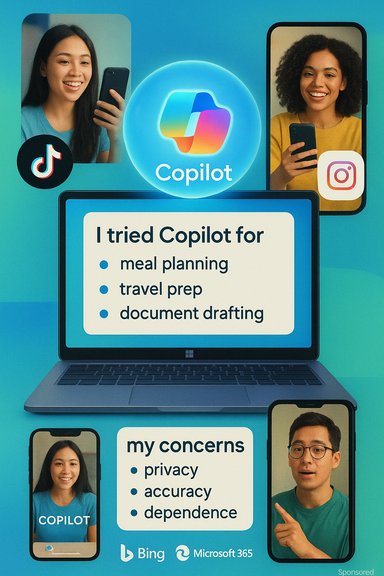
Large tech brands routinely use creators to explain new features and make complex technology feel accessible. For Copilot, Microsoft faces three simultaneous challenges: lingering public apprehension about generative AI, a crowded field of AI chatbots and assistants, and the need to grow consumer-level usage beyond Microsoft’s enterprise install base. Influencer campaigns promise to humanize Copilot by showing relatable, everyday examples — from meal planning and travel prep to creative prompts and content production — that traditional ads struggle to deliver at scale.What Microsoft is doing on social platforms
Microsoft’s recent creator push is notable for its breadth and tactics. Rather than limiting paid posts to tech reviewers, the company recruited creators in lifestyle, food, fashion and media literacy to reach nontechnical audiences and surface everyday use cases.- The campaign structure often pairs a candid conversation about AI concerns with a follow-up demo that shows Copilot solving a concrete task — a format designed to move viewers from skepticism to curiosity.
- Named creators in reporting include food and lifestyle personalities, comedic hosts and media-literacy influencers who each produced short videos explaining both their reservations and their practical uses of Copilot.
- Microsoft has experimented across platforms — TikTok, Instagram and short-form video hubs — where creators’ reach and content formats favor rapid, repeatable demonstrations.
Campaign goals and creative brief
The public-facing goal is awareness and trust-building: create repeatable, authentic moments where viewers see Copilot meaningfully reduce friction in ordinary tasks. Internally, the campaign also supports product objectives: drive downloads of the Copilot app, increase first-time activation rates, and feed usage signals back into product teams so consumer behavior shapes future features.- Primary content hooks include “I tried Copilot for X” demos, side-by-side workflow comparisons, and “my initial concerns” narratives followed by tangible wins.
- Creators were reportedly asked to produce two posts: one that prompts discussion around AI fears and another that shows Copilot in action on a real task.
Leadership and organizational context
Microsoft’s consumer AI organization, led by Mustafa Suleyman, has been retooling at the intersection of engineering, product and brand. The company recently added senior marketing talent from major consumer platforms to own creative direction and advertising strategy, signaling that Microsoft intends to treat Copilot like a consumer brand rather than a purely technical feature. This is a clear shift toward mainstream advertising playbooks — sponsorships, creator partnerships and brand narrative work.The strategic rationale
- Compete for attention in feeds where people discover tools and services.
- Reduce friction for nontechnical audiences who are uncertain how to use AI safely and practically.
- Create cultural touchpoints and memes that can spur organic discovery and downloads.
Measuring success: what Microsoft is watching
Microsoft measures Copilot success through a mix of standard engagement metrics and newer, AI-specific indicators. Public comments from the company’s AI leadership emphasize both usage and session quality: beyond daily active users, Microsoft’s teams look at measures like Successful Session Rate (SSR) — attempting to quantify when a Copilot session yields a satisfactory outcome for a user. Increasing SSR is a signal that the experience is becoming reliably useful rather than merely novel.- Short-term campaign KPIs include app downloads, activation rate, session starts and video completion.
- Mid-term signals are retention and SSR improvements: does a user return to Copilot after an initial try and complete meaningful tasks?
- Long-term measures focus on brand trust and Net Promoter-like scores among new users.
How this fits into Microsoft’s broader Copilot strategy
Microsoft has layered Copilot across its ecosystem to drive both enterprise value and consumer familiarity. The company’s approach includes:- Embedding Copilot in Microsoft 365 to increase workplace productivity and sell premium subscriptions.
- Surface integration within Windows and Copilot+ PCs to showcase local model acceleration and on-device features.
- Prominent placement in Bing search results and on the Copilot landing pages to capture search demand for rival AI services.
Strengths of the influencer play
- Authenticity at scale: Creators can translate product benefits into relatable moments, which lowers the cognitive barrier for trying a new technology.
- Audience targeting: By selecting creators in pockets like food, travel and lifestyle, Microsoft reaches users whose tech touchpoints would not be addressed by enterprise messaging.
- Narrative control: Influencer formats that pair skepticism with demonstration give Microsoft a credible framework for addressing privacy and safety questions in public forums.
Risks and blind spots
The influencer route brings meaningful risks that Microsoft — and any large brand dabbling in creator marketing — must manage carefully.Disclosure, transparency and regulatory risk
Creators must clearly disclose paid partnerships. The U.S. Federal Trade Commission and other regulators have increased scrutiny around native ads and undisclosed endorsements. Missteps — even honest-seeming creator testimonials that omit “paid partnership” labels — can lead to reputational damage and regulatory attention.- Paid posts should be clearly labeled and should not misrepresent Copilot’s capabilities or limitations.
- Claims about privacy, data usage or model capabilities require guarded language; overpromising invites backlash when users encounter hallucinations, incorrect outputs, or data-handling surprises.
Overpromising vs. actual product experience
Influencer content tends to emphasize delightful moments and short wins. If creators portray Copilot as infallible or overly human, users can quickly become disappointed when the AI produces errors, biased answers or inconsistent outputs. Any mismatch between the marketed experience and real-world outcomes damages long-term trust.Brand safety and creator selection
Aligning with high-reach creators risks unpredictable cultural baggage. Microsoft must apply stringent brand-safety checks: vet audience demographics, past content, and reputational volatility. One viral misstep by a partnered creator can flash out across social channels and undo months of careful messaging.Measurement noise and attribution
Creator-driven awareness is notoriously difficult to attribute precisely. Downloads and activation lifts in the short window after a campaign can bleed across paid search, organic social and product updates, making ROI calculations noisy. Microsoft will need careful A/B testing and statistical lift studies to prove causality.Competitive landscape: others are doing the same
Microsoft is not alone in using creators to normalize AI:- Adobe and Google have used creators to showcase generative tools and creative workflows.
- OpenAI and other model providers have leaned into mainstream spots and high-profile ads to demystify chatbots.
Financial and product implications
The shift to creator-led growth signals that Microsoft is willing to invest ad dollars in consumerization — not just enterprise retention. There are several implications:- Short-term advertising spend will increase acquisition costs for consumer Copilot users.
- Effective creator campaigns that improve retention and SSR justify higher marketing investment, creating a feedback loop between product signals and brand spend.
- If Copilot’s consumer footprint grows, Microsoft can expand premium offerings and ad surfaces within Copilot experiences — a commercial path that complements Azure and Microsoft 365 monetization.
What creators and publishers need to know
For creators approached by major tech brands to showcase generative AI, the playbook has evolved:- Be explicit about data and safety: disclose what data is shared with the app and how it may be used.
- Test real workflows: audiences trust creators who show raw, unscripted tests and share limitations honestly.
- Safeguard audience trust: avoid scripted hype that overstates model reliability or claims the AI replaces expertise.
Practical recommendations for Microsoft and other AI brands
- Maintain transparent disclosures in every paid post and include clear captions that explain what Copilot can and cannot do.
- Pair creator content with follow-up user education pages that address privacy and model limitations in plain language.
- Use controlled lift studies and multi-touch attribution to measure creator impact on activation, retention and SSR.
- Diversify creators across audience segments, but impose strict brand-safety and content-vetting protocols.
- Keep an engineering-and-marketing feedback loop so creators surface real product pain points that product teams can fix quickly.
What the data and academic work say
Recent academic analyses of Copilot and large-language-model interactions show that user satisfaction correlates strongly with alignment of expertise and accurate responses. When AI outputs misalign with user expectations, satisfaction drops markedly — a risk for marketing that paints Copilot as a universally reliable assistant. Product teams that prioritize successful session outcomes and explicit safety guardrails will reduce the likelihood that upbeat influencer stories meet disappointed new users.Final assessment
Microsoft’s use of social creators to promote Copilot is a logical next step in consumerizing a complex product. The approach leans on authenticity, format fit and targeted niche reach to demystify AI. When executed with transparent disclosure, careful creator selection and strong product alignment, influencer marketing can drive awareness and meaningful trial.However, the strategy brings real risks: regulatory scrutiny over native advertising, mismatches between marketed utility and actual performance, and the potential for one viral misstep to set back public trust. Microsoft’s path forward requires the discipline of measurement, tight product-marketing feedback loops, and conservative public claims about data use and model reliability.
For users and creators alike, the campaign is a reminder that generative AI is still a tool with limits — best introduced through honest demonstrations rather than breathless hype. If Microsoft balances creative storytelling with responsible disclosure and product improvements that increase Successful Session Rate, influencer marketing can accelerate Copilot from enterprise feature to a mainstream utility people both try and keep using.
Source: Seeking Alpha Microsoft taps social media influencers to hype Copilot: report (MSFT:NASDAQ)
