Microsoft Wave 3 Copilot Cowork and Agent 365 Drive Enterprise AI with E7 Frontier

  • Thread Author
Microsoft’s Wave 3 for Copilot is a clear escalation: the company is not merely adding features to Office apps, it is packaging an ecosystem—Copilot Cowork, Agent 365, and a new Microsoft 365 E7 (Frontier) bundle—to turn agentic AI from experiment into enterprise commodity. This set of announcements stitches Anthropic’s agent technology into Microsoft’s enterprise fabric, adds an agent governance plane, and creates a commercial path (and price incentive) for customers to adopt both AI and the controls that come with it. (microsoft.com)

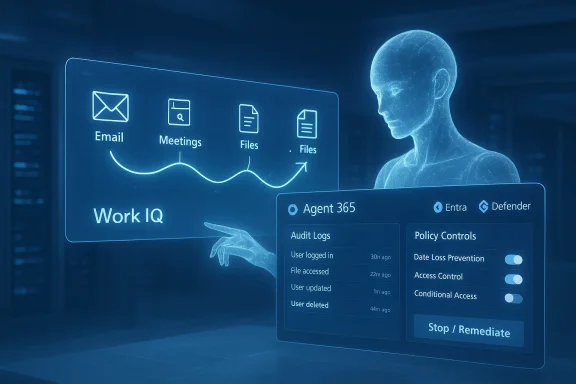
A holographic AI assistant manages a Work IQ dashboard with Email, Meetings, Files, and policy controls.Background / Overview​

Microsoft frames Wave 3 as the moment Copilot moves “beyond assistance to embedded agentic capabilities.” The technical shift is significant: agents are no longer single-turn helpers that answer questions; they are long-running, multi-step workflows that can act across Word, Excel, PowerPoint, Outlook and Copilot Chat, retaining context through Microsoft’s “Work IQ” graph. That graph stitches together emails, meetings, files and relationships so agents can reason about work the way humans do. (microsoft.com)
Strategically, the company is doing three things at once:
  • Bringing Anthropic’s agent reasoning into Copilot to improve multi-step task handling. (microsoft.com)
  • Offering a governance and observability layer (Agent 365) to manage agent sprawl and security risks. (microsoft.com)
  • Packaging the stack into a single commercial SKU, Microsoft 365 E7, to simplify procurement and create a price advantage against buying components a la carte. (microsoft.com)
Taken together, these moves are a direct response to a fast-evolving competitive landscape—OpenAI, Anthropic, Salesforce and an increasingly capable open-source ecosystem are all pushing enterprises to rethink how AI is acquired and governed. (fortune.com)

What Copilot Cowork Is — and What It Means for Knowledge Work​

A different class of automation​

Copilot Cowork is designed to do more than write a memo or draft an email. Its stated capabilities include multi-step orchestration: assembling slide decks from meeting notes, reconciling financials in Excel, drafting and sending contextual emails, and scheduling follow-up —all driven from a single high-level instruction and executed over time with visible progress and checkpoints. That is a qualitative difference from prompt-response assistants and positions Copilot as a digital coworker rather than a tool. (microsoft.com)

Multimodel reasoning, hosted in your tenant​

Microsoft says Copilot Cowork leverages Anthropic’s Claude agent technology (the same “agentic harness” concept that powers Anthropic’s standalone Cowork product) while running in the cloud inside the customer’s Microsoft 365 tenant. That hosting choice is deliberate: Microsoft argues the cloud/tenant model gives enterprises access to Graph-grounded context and enterprise data protection, as opposed to a local desktop implementation. The company explicitly positions cloud tenancy as a security and governance advantage. (microsoft.com)

Practical effects for end users​

Practically speaking, Copilot Cowork aims to:
  • Let users delegate multi-step work and monitor progress rather than manually orchestrating each step.
  • Keep creations and edits inside app-native contexts (Word, Excel, PowerPoint, Outlook) so changes are auditable, reversible, and aligned with corporate templates and labels. (microsoft.com)
This is the vision: agents that do useful, measurable work inside corporate guardrails. Whether the reality matches the promise will depend on model reliability, grounding fidelity, and enterprise controls—areas where we’ll return with analysis below.

Anthropic Partnership: Why It Matters​

Microsoft’s integration of Anthropic’s Claude agent family is notable for three reasons.
  • Technical complementarity. Anthropic’s agent work (Claude Cowork) has been widely praised for multi-step reasoning and tool use. Embedding that capability into Copilot gives Microsoft a new reasoning engine it can route to when tasks require deeper agentic thinking. (microsoft.com)
  • Multimodel strategy. Microsoft is now explicit that Copilot will host multiple model providers and select the “right model for the job.” That reduces single-supplier dependency and lets Microsoft offer customers model choice—an argument it will use to win enterprise customers who worry about vendor concentration. (microsoft.com)
  • Operational tradeoffs. Anthropic’s standalone Cowork has been shipped as a local/desktop offering; Microsoft emphasizes that its tenant-hosted approach is a feature that addresses scale, data protection, and integration with enterprise governance. That tradeoff—local compute vs cloud tenancy—has security and compliance consequences that vary by customer and regulatory regime. (fortune.com)

Agent 365: The Control Plane Microsoft Wants You to Buy​

Agent proliferation is already real. Microsoft says preview customers registered tens of millions of agents in Agent 365’s registry over a short preview period, and that Microsoft itself is tracking hundreds of thousands of internal agents. While those figures come from Microsoft and are not independently audited, they underscore a fast-growing problem: agents can multiply rapidly and act with varying permissions, creating blind spots for IT and security teams.
Agent 365 is positioned to solve that with:
  • Observability: a registry and dashboards showing what agents exist, what they can access, and how they behave.
  • Governance: policy controls, audit logs, and the ability to stop or remediate agent actions.
  • Integration: hooks into identity (Entra), device management (Intune), Defender and Purview for layered protection.
Microsoft will make Agent 365 generally available on May 1 at a list price of $15 per user per month (standalone), and also bundle it inside Microsoft 365 E7. That price point is explicitly packaged to make the E7 bundle look economically attractive versus buying components separately. (microsoft.com)

The Commercial Play: Microsoft 365 E7 (Frontier Suite)​

Microsoft is launching a new enterprise tier—Microsoft 365 E7, branded the Frontier Suite—priced at $99 per user per month and available for purchase starting May 1. E7 bundles:
  • Microsoft 365 E5 (enterprise productivity and security),
  • Microsoft 365 Copilot,
  • Agent 365,
  • Microsoft Entra Suite and other advanced security controls. (microsoft.com)
Microsoft’s math is explicit: buying E5 ($60), Entra Suite ($12), Copilot ($30), and Agent 365 ($15) at list prices would add to $117 per user; E7 is $99, so the bundle is pitched as a discount and a simplification. The strategic aim is clear: reduce procurement friction and make the governance-capable package the default commercial path for enterprise AI adoption. (microsoft.com)

Adoption and Growth Metrics — What Microsoft Is Saying​

On investor calls and in recent releases, Microsoft has disclosed several topline metrics for Copilot:
  • Roughly 15 million paid Microsoft 365 Copilot seats, with seat additions “up over 160% year-over-year.”
  • Daily active users (DAU) for Microsoft 365 Copilot increased roughly 10× year-over-year, while average conversations per user doubled in the cited quarter.
  • Microsoft reports 90% of the Fortune 500 use Copilot in some form, and that roughly 80% of Fortune 500 companies are experimenting with agent-style AI tools. These figures come from Microsoft and appear in its messaging about enterprise traction; independent verification of precise penetration rates is limited. (fortune.com)
Important context: 15 million paid seats is a strong headline but must be seen against Microsoft’s enormous installed base (hundreds of millions of Microsoft 365 seats). That implies that while seat growth rates are dramatic, overall attach rates remain far from saturation—something investors and customers alike will parse carefully.

Competitive Context: Why Microsoft Is Racing to Bundle​

Microsoft’s moves are partly defensive and partly expansionary.
  • Defensive: Anthropic’s Claude Cowork and other agent-first offerings have proven that multi-step, tool-using agents can deliver tangible work automation—something Microsoft needs to respond to if it wants to keep enterprise customers inside its ecosystem. (pcworld.com)
  • Expansionary: By offering model choice and an integrated governance plane, Microsoft is attempting to become the enterprise’s default platform for agentic AI—both the production model and the control plane. That positioning is designed to blunt competitive encroachment (Salesforce, niche vendors, open-source stacks) and to lock customers into Microsoft’s identity, security and compliance tooling. (fortune.com)
Open-source agent frameworks and smaller AI vendors complicate the landscape by offering lower-cost or highly-customizable alternatives. Microsoft’s answer is packaging trust and compliance as a product—on the thesis that large enterprises will pay a premium for a platform that reduces risk. VentureBeat and other outlets frame this as a pricing-and-trust play: Microsoft wants enterprises to “hire” AI agents under official identity and governance rather than letting uncontrolled agent sprawl proliferate.

Critical Analysis — Strengths, Gaps, and Risks​

Strengths: integration, governance, and scale​

  • Deep integration with productivity apps is a genuine differentiator. Agents that create native Word, Excel and PowerPoint artifacts—rather than producing files outside the app—reduce friction and version sprawl. This improves audibility and change traceability. (microsoft.com)
  • Work IQ grounding gives agents enterprise context, which should materially improve accuracy and relevance versus unconstrained generative models. That grounding is central to the claim that agents can safely automate business tasks. (microsoft.com)
  • Governance-first positioning addresses the biggest blocker for enterprise adoption: security and compliance. Agent 365 is a direct response to customer anxiety about unsupervised agents acting on sensitive data. For CIOs and CISOs, a single control plane that ties into Entra, Defender and Purview is an appealing proposition. (microsoft.com)

Risks and unanswered questions​

  • Model reliability and hallucination remain core technical risks. Agentic workflows compound the problem: a hallucination that goes unchecked and performs actions (sends emails, modifies financial spreadsheets) can create real operational harm. Anthropic’s reasoning strengths mitigate but do not eliminate these risks. Independent red teaming and rigorous, domain-specific testing will be required for high-assurance usage. (pcworld.com)
  • Measurement and attribution of “agents registered” is opaque. Microsoft’s claim of “tens of millions” of agents in the Agent 365 registry is plausible given low-code/no-code proliferation, but it is a company-supplied figure. Enterprises and analysts should treat it as an internal metric until third-party audits or case studies provide independent verification.
  • Economic friction: list prices vs real pricing. Microsoft’s headline bundle math (E7 at $99 versus a la carte $117) uses list prices. In practice, enterprise deals involve negotiated discounts, seat pacing, pilot rollouts and phased activations—meaning realized per-seat economics will vary widely. Procurement teams should model true TCO including adoption ramp, agent triggers/credits (where consumption applies), and integration costs. (microsoft.com)
  • Operational risk from agent sprawl. Even with Agent 365, the human problem—who owns agent design, who validates agent outputs, and who takes responsibility for agent-driven decisions—remains organizational. Tools can help, but governance is ultimately cultural and process-driven. CRN and others warned that ungoverned agents could become “double agents” if not properly constrained.
  • Regulatory and privacy considerations. Different jurisdictions have varying rules on automated decision-making, data residency and data processing. Running agent workloads in a cloud tenant mitigates some concerns, but enterprise legal teams must validate how the agent uses personal data, where inference happens, and what logs are produced for audit. Microsoft’s tenant model helps, but it does not absolve customers of regulatory responsibility. (microsoft.com)

Practical Guidance for IT and Security Teams​

If your organization is evaluating Copilot Cowork, Agent 365 or the E7 bundle, consider the following pragmatic steps:
  • Run a risk-first pilot.
  • Limit agent capabilities initially to read-only operations or narrow workflows with human-in-the-loop checkpoints.
  • Define success metrics up front: time saved, error rate, and downstream remediation costs.
  • Map agent ownership.
  • Assign a business owner for each agent. Require documented purpose, inputs, outputs and failure modes.
  • Tie ownership to change control and incident response processes.
  • Enforce least privilege with identity integration.
  • Use Microsoft Entra policies to ensure agents get the minimal rights necessary.
  • Review and rotate credentials and API keys that agents may use.
  • Monitor and audit.
  • Ingest Agent 365 observability logs into your SIEM and define alerts for anomalous agent behavior and unexpected data exfiltration patterns.
  • Measure costs holistically.
  • Model licensing, potential metered agent execution credits (if applicable), integration and remediation costs, and projected productivity gains.
  • Validate price comparisons with your account team and negotiate pilot terms that reflect your adoption ramp.
  • Set a model-validation cadence.
  • Periodically validate agent outputs against domain experts, especially for high-risk workflows (finance, legal, HR).
These steps reduce the likelihood of embarrassing or dangerous agent-driven outcomes and make it more likely that your Copilot investments generate measurable ROI.

How This Changes Vendor Strategy and Procurement​

Microsoft’s bundling of trust + model choice + governance is a familiar enterprise sales playbook: make it easier to buy the whole stack from a single vendor and make the economics attractive enough to dissuade best-of-breed stitching. For procurement and IT leaders, the choices are now both commercial and architectural:
  • Pay for convenience and integrated governance (E7).
  • Assemble best-of-breed components (third-party agents, open models, and separate governance tooling) but accept integration and operational costs.
  • Opt for hybrid approaches where sensitive workloads run behind stricter controls and less-sensitive automation adopts cloud-hosted, faster-moving agent tech.
Be explicit about exit criteria: any multiyear contract should include audit rights, data portability clauses, and clear SLAs for model quality and security controls.

Conclusion — A Pragmatic Outlook​

Microsoft’s Wave 3—Copilot Cowork, Agent 365, and Microsoft 365 E7—represents a major enterprise bet: that agentic AI becomes the default interface for knowledge work, and that enterprises will pay for trusted, integrated platforms that make agent deployment safe and auditable. The integration of Anthropic’s agent technology materially enhances Copilot’s reasoning capabilities; Agent 365 addresses the governance gap that would otherwise stall mass adoption; and the E7 bundle aligns commercial incentives toward platform-level adoption. (microsoft.com)
That said, the move does not remove technical or operational risk. Model reliability, hallucination, unclear internal metrics around agent counts, and the organizational work needed to govern agents remain real challenges. Procurement teams must do more than compare list prices—they should run pilots, demand measurable outcomes, verify vendor claims, and require auditability and portability before committing to broad rollouts.
For enterprises, the new offering is a pragmatic path to deploy agentic AI at scale without surrendering control. For Microsoft, it is a bid to turn Copilot from an add‑on into the platform for the next decade of productivity tooling. For competitors and CIOs, the timer is ticking: agentic capabilities are moving fast, and the organizations that master governance and measurement will benefit most. (microsoft.com)


Source: FilmoGaz Microsoft Launches Copilot Cowork with Anthropic Tech and E7 Suite
 

Microsoft’s Copilot has moved from “help me write” to “do it for me” — and this time the engine powering the leap isn’t solely in Redmond’s garage. In a major strategic shift announced March 9, Microsoft folded Anthropic’s agent technology — the same architecture behind Claude Cowork — directly into Microsoft 365 Copilot Wave 3, launching an agentic layer called Copilot Cowork, a control plane named Agent 365, and a premium commercial bundle (Microsoft 365 E7) aimed at enterprises ready to buy a seat for autonomous work. Microsoft frames the move as model diversity and practical agentization for workplace productivity; skeptics warn it’s also an implicit admission that the Copilot story needed third‑party help to scale into the kind of autonomous, multi‑step work that many businesses want. Official product messaging and multiple independent reports confirm the partnership and the shape of the new offering.

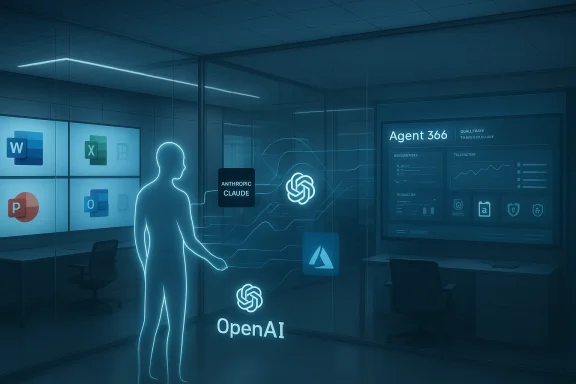
Futuristic control room with a glowing silhouette and OpenAI, Anthropic Claude, and Agent 366 dashboards.Background: from chat assistants to agentic coworkers​

Microsoft’s Copilot program began as an embedded assistant that answered questions, summarized content, and drafted text inside Word, Excel, PowerPoint, Outlook and Teams. Over successive updates it learned to produce richer drafts and offer context-aware suggestions; but the industry’s new expectation is not only better drafts — it’s agents that plan and finish work without step‑by‑step direction. Anthropic’s Cowork debuted in January 2026 as a research preview that turns Claude — originally a conversation-first model — into a desktop-aware agent that can read files, call plugins, and carry out multi‑step tasks across apps. Tech press and Anthropic’s own materials document that evolution.
Microsoft now says Wave 3 of Microsoft 365 Copilot will introduce a Work IQ intelligence layer and agent capabilities that create, edit, and refine documents end‑to‑end — not just by suggesting text but by executing sequences in Word, Excel, PowerPoint and Outlook. The company explicitly states it developed the agentic work experience “in close collaboration with Anthropic,” bringing the technology that powers Claude Cowork into Microsoft’s managed Copilot experience. The rollout is positioned as an enterprise, tenant‑managed feature set intended to operate inside organizational security boundaries.
Community and IT practitioners have been tracking Copilot’s move to multi‑model orchestration for months; corporate preview notes and forum threads describe the shift as opt‑in for tenants, with explicit caveats around third‑party hosting and data handling. That level of administrative control will be essential to adoption in regulated enterprises.

What Microsoft actually announced (the product pieces)​

Microsoft’s Wave 3 announcement bundles several distinct items that together change how Copilot will behave for business users:
  • Copilot Cowork — an agentic layer inside Microsoft 365 that can plan, execute and return finished work across apps, running as permissioned, long‑running agents rather than one‑shot chat responses. Microsoft says Copilot Cowork will use Anthropic’s agent tech to enable longer workflows and multi‑step tasks.
  • Agent 365 — a control plane for provisioning, monitoring, and governing agents at enterprise scale. Microsoft positions Agent 365 as the governance and telemetry backbone for agentic workloads; the company set a general availability (GA) target and pricing cadence for the platform.
  • Microsoft 365 E7 — a new premium suite tier that bundles agent capabilities, Work IQ, advanced security and the agent management stack. Microsoft announced a $99 per‑user per‑month price for the E7 Frontier Suite in its press material, with Agent 365 presence noted separately. Publications tracking the rollout reported that E7 and Agent 365 availability will broaden through Microsoft’s Frontier preview program and commercial availability windows beginning May 1, 2026 for Agent 365.
  • Multi‑model support — Microsoft confirmed Copilot was designed to support many models; Wave 3 surfaces Anthropic’s Claude family alongside OpenAI and other engines, giving administrators and Copilot Studio designers the option to route workloads to the model that fits a task. Microsoft emphasizes this is a managed, multi‑model orchestration approach rather than a swap of vendors.
Multiple independent technology outlets corroborated the product names, the Anthropic collaboration, and the bundled commercial approach. Fortune, Computerworld and GeekWire published contemporaneous reporting summarizing the same architecture and Microsoft’s stated intent to house Anthropic‑powered agents behind enterprise controls.

What Anthropic built (Claude Cowork and why it matters)​

Anthropic’s Cowork — announced publicly in January 2026 — took the company’s developer‑oriented Claude Code capabilities and wrapped them in a non‑developer experience that can:
  • read and write files inside a user‑scoped folder,
  • call plugins and private connectors,
  • maintain longer context windows and multi‑step plans,
  • present users with a plan and then execute it autonomously.
TechCrunch and other early coverage described Cowork as “Claude Code without the code,” an explicitly agentic mode designed for knowledge workers rather than engineers. Anthropic followed the initial reveal with plugin tooling, private plugin marketplaces, and enterprise integrations that made the product attractive to customers looking for an agent that does, rather than just advises.
That agentic capability — the ability to translate a single natural‑language brief into a multi‑step, cross‑app workflow that runs and returns finished outputs — is what Microsoft needed to move Copilot toward being a teammate rather than a smart secretary. Microsoft’s implementation embeds the agent inside the M365 data graph and governance stack, addressing a key enterprise requirement: agents must be permissioned and auditable when they touch corporate mail, files and chats.

Why Microsoft chose collaboration over rejection​

Anthropic’s Cowork was widely covered as a potential existential threat to incumbent productivity software: by enabling agents to do the work previously achieved through specialized SaaS, Claude Cowork raised the possibility that intelligent agents could displace whole categories of software that sit atop documents and spreadsheets. That debate accelerated investor scrutiny: analysts cited Anthropic’s progress when they reassessed Microsoft’s AI monetization prospects and capital‑expenditure profile. In February 2026, Melius Research and Stifel publicly downgraded Microsoft to “Hold,” calling out AI competition and Azure supply/capacity issues as part of the rationale. Those downgrades reflect investor concern that faster agent innovation from startups like Anthropic — coupled with heavy infrastructure spending by hyperscalers — changes the economic calculus for AI monetization.
Faced with a scenario where Anthropic’s product could undercut the uniqueness of Office experiences, Microsoft took the strategic approach of partnering: rather than rebuild the exact agent pipeline internally and risk years of engineering delay, Microsoft purchased the enterprise‑grade agent experience by integrating Anthropic’s technology into Copilot under Microsoft’s tenant controls and enterprise contract terms. That choice preserves Microsoft’s ability to deliver the agent promise inside a managed cloud with enterprise GDP and compliance controls — but it also cedes a visible, differentiating capability to a third party. Microsoft’s public messaging stresses multi‑model orchestration and the ability to use “all models for work,” a stance that explicitly reduces single‑vendor reliance.

The technical and governance tradeoffs​

How the integration works (at a high level)​

Microsoft’s Wave 3 architecture layers agentic capabilities on top of the Microsoft 365 data graph and security stack. Key elements:
  • Work IQ: a contextual intelligence layer that helps agents remain grounded in current files, meetings, and relationships so that generated outputs align with corporate style, brand kits and live data.
  • Agent runtime: Copilot Cowork agents execute multi‑step plans and can persist state over time, acting on Outlook, Excel and PowerPoint artifacts.
  • Agent 365 control plane: provisioning, permissioning, telemetry and policy enforcement for agents at enterprise scale.
  • Multi‑model routing: administrators and Copilot Studio can select which model powers which agent or task (Anthropic, OpenAI, Microsoft’s models, or custom foundation models hosted in Azure).
Forum discussions and early preview notes emphasize that the integration is opt‑in and tenant‑admin controlled; Microsoft is shipping the capability with explicit caveats about third‑party hosting and data handling. For most enterprise customers this is the difference between a feature and a compliance problem.

Governance, compliance and data residency​

The biggest non‑technical issue for enterprise customers is governance. Agents that read mail, examine files and write artifacts create a rich audit surface — and a compliance minefield — if not properly constrained. Microsoft’s architecture attempts to reduce risk by:
  • Running agents inside tenant boundaries and the Microsoft security fabric.
  • Exposing audit logs, policy controls and DLP hooks through Agent 365.
  • Making the integration opt‑in so IT can test and harden configurations before broad rollout.
That said, moving a third‑party agent engine into the M365 stack raises questions: how is data routed to Anthropic’s models? Is telemetry stored outside the tenant? Are connectors and plugins vetted to enterprise standards? Microsoft’s messaging addresses these controls, but enterprises will need to validate them in procurement and security due diligence. Multiple independent outlets and community threads call attention to these same questions.

Commercial implications and early market reaction​

Microsoft’s commercial packaging is explicit: Copilot Cowork and the agent stack are core to a new premium E7 bundle. Microsoft set a $99 per‑user per‑month price for Microsoft 365 E7 Frontier Suite and positioned Agent 365 with separate per‑user pricing for GA. That pricing — if widely adopted — could materially accelerate Microsoft’s AI monetization, but it also raises adoption questions: historically only a small share of M365 users have paid for Copilot features. Industry analysis suggests a delicate balance between sticker price and enterprise willingness to pay for autonomous work.
Investors are watching. The Melius and Stifel downgrades in February 2026 signaled skepticism about Microsoft’s ability to monetize Copilot at scale without heavy additional capital spending on Azure infrastructure. Those reports cited Anthropic’s traction and Google Cloud’s Gemini momentum as competitive risks. The Anthropic‑Microsoft collaboration may blunt some of those concerns by turning competitive threat into product advantage — but it also underscores that Microsoft is now buying differentiation rather than owning every layer.

Security and safety: real issues, immediate needs​

Anthropic’s Cowork has been praised for changing the productivity paradigm — but it has also attracted early security scrutiny. Independent reports flagged a reported data‑exfiltration vulnerability in Cowork soon after its January preview, prompting closer inspection of plugin and file‑access policies. That early security incident underscores a lesson: agentic models increase the attack surface for prompt injection, plugin compromise, and exfiltration if DLP and runtime protections are incomplete. Enterprises must validate the platform’s end‑to‑end protections before authorizing agent capabilities on sensitive data.
Practical security controls organizations should insist on before rolling out Copilot Cowork:
  • Tenant‑scoped deployments only — agents must operate within the organization’s M365 tenancy and not transmit raw data to unvetted third‑party endpoints.
  • Explicit plugin allowlists and code review for any third‑party connectors.
  • Audit logging and immutable trails for agent actions.
  • Data Loss Prevention (DLP) and exfiltration detection tuned for agent patterns (e.g., multi‑file reads, repeated exports).
  • Staged pilot with a small, high‑trust user group and a rollback plan.
Microsoft’s Agent 365 and Work IQ promise many of these controls, but independent verification and contractual commitments (SLA, data residency, breach response) will be necessary for regulated customers.

For IT leaders: a playbook to evaluate Copilot Cowork​

If you’re an IT or security leader deciding whether to pilot Wave 3 and Copilot Cowork, consider this pragmatic checklist:
  • Governance and procurement
  • Require Microsoft to document exactly where model inference occurs (Azure only? Anthropic cloud?), how long prompts are retained, and whether any telemetry leaves your tenant.
  • Insist on contractual DLP and breach‑notification terms for Agent 365 and any Anthropic flow.
  • Risk staging
  • Start with low‑risk, high‑value workflows (e.g., formatting and brand adherence for external decks) rather than sensitive legal, HR or finance tasks.
  • Use a canary group of power users with a clear rollback plan.
  • Security validation
  • Run threat modelling against plugin and agent flows.
  • Validate audit logs, access controls, and how Agent 365 surfaces policy violations.
  • Operational readiness
  • Train business owners on when to use an agent vs. a human.
  • Create an approval and monitoring process for Copilot Studio agents and their publisher connectors.
  • Cost modeling
  • Analyze E7 seat economics vs. incremental productivity gains — include automation ROI, reduced contractor time, and potential governance overhead.
These steps mirror what enterprise IT teams have been discussing in community forums and pilot documentation: the rollout is opt‑in and requires careful tenant‑level governance.

Strategic analysis: strengths, opportunities and risks​

Strengths and upside​

  • Fast innovation through partnership: Microsoft gains a proven agentic capability without rebuilding it from scratch, shortening time‑to‑value for enterprise customers.
  • Managed enterprise surface: wrapping Anthropic’s engine inside Microsoft’s security and identity layers makes adoption in regulated industries more plausible than a consumer‑grade agent.
  • Model choice = vendor risk reduction: multi‑model orchestration lets customers route specific tasks to models with different strengths, reducing dependence on any single provider.
  • New monetization path: E7 and Agent 365 create a higher ARPU (average revenue per user) path for Copilot that can be measured against productivity outcomes.
Multiple outlets and Microsoft’s own messaging emphasize these benefits and the rationale for multi‑model orchestration.

Risks and downsides​

  • Third‑party reliance: integrating Anthropic into the Copilot stack transfers a strategic dependency to a vendor Microsoft itself only partially controls. That could complicate long‑term product differentiation and negotiating leverage.
  • Security and compliance complexity: agentic operations increase attack surfaces and regulatory scrutiny. Early Cowork vulnerabilities demonstrate the need for rapid patching and rigorous controls.
  • Cost and adoption friction: premium pricing may limit uptake; historical Copilot monetization rates suggest only a minority of users have been converted to paid tiers so far. The economics must justify the price for most customers.
  • Operational overhead: multi‑model orchestration adds new governance complexity for IT teams — more policies, more monitoring, and more vendor contracts to manage. Community threads and early previews reflect these concerns.

What this means for the broader AI productivity market​

Microsoft’s move is both defensive and offensive. Defensively, it neutralizes a near‑term attack vector from Anthropic by integrating the firm’s agent tech into the dominant workplace stack. Offensively, it accelerates enterprise agent adoption by packaging agents with governance and commercial terms that large customers expect. The net effect is likely to push other enterprise SaaS vendors to either build agent runtimes of their own, partner with model providers, or rely on hyperscaler ecosystems. The market will fragment around two choices: proprietary, vertically integrated agent platforms (built by hyperscalers or large SaaS vendors) and interoperable agent orchestration stacks that let customers pick models and runtimes.
Analysts and investors are recalibrating as they watch the economics unfold: downgrades earlier this year signaled concern about Microsoft’s AI capex and the pace of Copilot monetization, but integrating Anthropic may be an attempt to accelerate feature competitiveness and justify premium pricing through demonstrable automation value. Whether enterprises pay up will depend on measurable productivity outcomes, security assurances and total cost of ownership.

Bottom line: when to pilot, when to wait​

If your organization is in a regulated industry or processes sensitive personal data, wait and validate. Demand transparency about model routing, data retention, telemetry, and plugin vetting before enabling agents beyond internal pilot scopes. If your organization runs high‑volume content workflows (marketing decks, recurring reporting, routine spreadsheet preparation) and you can accept an opt‑in pilot, Copilot Cowork promises immediate productivity gains — but those gains come with governance work up front.
Microsoft’s approach blends pragmatic product thinking with a market‑level concession: it will use best‑of‑breed models, regardless of origin, when they accelerate enterprise usefulness. That strategy buys Microsoft time and capability, but it also cedes visible innovation credit to third parties. For the enterprise customer, the immediate test will be whether Copilot Cowork’s agentic automation saves more time and cost than it introduces in governance overhead.
For IT leaders and procurement teams, treat Copilot Cowork as a new class of SaaS — one that’s closer to a managed service for autonomous work than a simple feature toggle — and apply your most rigorous vendor due‑diligence process before widening deployment. Community previews and Microsoft’s opt‑in rollout notes already point in this direction.

Microsoft’s Wave 3 is the clearest signal yet that the workplace AI race has moved beyond conversational assistants into doing assistants. By integrating Anthropic’s agent technology, Microsoft has put a tested agentic engine inside a managed enterprise shell — accelerating the arrival of agents that can plan and complete work inside Word, Excel, PowerPoint and Outlook. That’s a real step forward for productivity AI, but it’s also a real test of governance, procurement and economics. The coming months of pilot data, customer audits and market responses will determine whether this partnership turns into a durable advantage for Microsoft or a temporary truce in a rapidly evolving AI battleground.

Source: Chosunbiz Microsoft integrates Anthropic Claude CoWork to advance Copilot and diversify AI
 

Back
Top