Netflix’s choice of Hyderabad for a second India office and the hiring shift at OpenAI and Anthropic toward engineers who both code and engage with customers mark two connected trends: global tech firms are moving operations closer to regional markets while reshaping talent profiles to win enterprise adoption and build local trust.
The first story reports that Netflix has taken office space in Hyderabad, establishing what the company positions as its second major base in India after Mumbai. This expansion is framed as a move to deepen ties with South Indian film ecosystems, scale technical and production operations, and tap Hyderabad’s talent pool and media infrastructure.
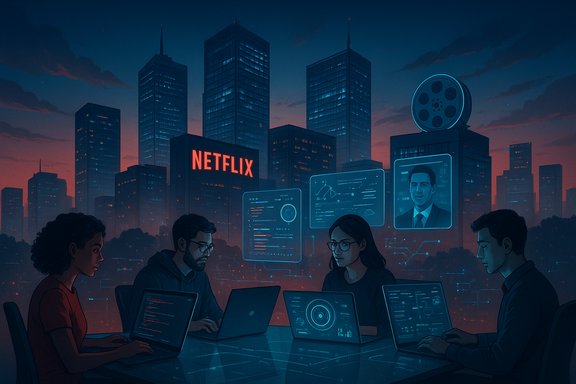
The second story describes a hiring trend at AI firms — notably OpenAI and Anthropic — that increasingly recruits engineers who combine strong coding skills with the ability to communicate directly with customers and partners. These hires (often called forward‑deployed engineers or customer‑facing engineers) are meant to accelerate enterprise integrations, reduce time‑to‑value for deployments, and translate technical capabilities into measurable business outcomes.
Both developments were reported in the Storyboard18 pieces provided and are verifiable through independent reporting: multiple Indian outlets confirm Netflix’s Hyderabad lease and local coverage of Netflix’s regional push, while global business press has documented the rise of customer‑embedded AI engineers across Anthropic, OpenAI and peers.
These trends offer opportunities for developers and IT leaders to adapt: invest in hybrid technical + customer skills, design integrations for portability and auditability, and treat announced moves (leases and hiring strategies) as signals that require validation through corporate milestones, hiring notices, and documented customer outcomes. The promise is real — but the difference between headline and delivery will be decided by measurable hiring, transparent SLAs, and the hard work of building reliable production pipelines that respect local legal and operational constraints.
Source: Storyboard18 Netflix chooses Hyderabad for second office in India after Mumbai
Source: Storyboard18 OpenAI, Anthropic hire engineers who can code and communicate with customers
 Background / Overview
The first story reports that Netflix has taken office space in Hyderabad, establishing what the company positions as its second major base in India after Mumbai. This expansion is framed as a move to deepen ties with South Indian film ecosystems, scale technical and production operations, and tap Hyderabad’s talent pool and media infrastructure.The second story describes a hiring trend at AI firms — notably OpenAI and Anthropic — that increasingly recruits engineers who combine strong coding skills with the ability to communicate directly with customers and partners. These hires (often called forward‑deployed engineers or customer‑facing engineers) are meant to accelerate enterprise integrations, reduce time‑to‑value for deployments, and translate technical capabilities into measurable business outcomes.
Both developments were reported in the Storyboard18 pieces provided and are verifiable through independent reporting: multiple Indian outlets confirm Netflix’s Hyderabad lease and local coverage of Netflix’s regional push, while global business press has documented the rise of customer‑embedded AI engineers across Anthropic, OpenAI and peers.
Why these moves matter
Netflix: more than a satellite office
- Strategic proximity to Tollywood and South Indian production: Hyderabad is India’s major hub for Telugu cinema and hosts dense post‑production and VFX talent. A local office reduces friction for content production and oversight, and positions Netflix to deepen collaborations with regional studios and stars.
- Engineering and technical operations: Reports indicate the leased space is sizable (reported at ~41,000 sq. ft. and sits in HITEC City’s media/tech cluster, which already houses other global studios and providers. That footprint suggests a mix of creative, post‑production and engineering functions rather than only sales or small local teams.
- Market signal and local ecosystem effects: A high‑profile entrant like Netflix validates Hyderabad’s proposition to recruit and retain media‑tech talent, potentially accelerating follow‑on investment in offices, studios, and specialized services.
- Consumers using Windows PCs should expect improved local production support for regional content (metadata, subtitle quality, timed releases). For the highest-quality playback, engineering realities remain the same: Windows users need the Netflix Microsoft Store app or Edge to enable 4K HEVC/PlayReady playback, and a Premium tier and HDCP2.2‑compliant display chain for 4K.
OpenAI & Anthropic: the rise of customer‑embedded engineers
- Role definition: Firms are hiring engineers who can both build technical integrations and communicate with customers — scoping pilots, demonstrating value, troubleshooting production issues, and transferring knowledge. This hybrid role shortens feedback loops and helps vendors embed AI into complex enterprise workflows.
- Why it matters commercially: Enterprise AI adoption is not plug‑and‑play; it requires customized pipelines, data governance, and performance tuning. Customer‑facing engineers increase the chance of successful, billable integrations while building long‑term relationships. Industry reports show demand for these roles has surged and several companies explicitly use them to close strategic enterprise deals.
- Talent market dynamics: The role appeals to engineers who blend systems skills with softer skills; it also becomes a battleground for talent as AI firms seek staff who can reduce churn and accelerate revenue. News outlets have documented aggressive hiring and talent movement between AI firms and larger platforms.
Deep dive: Netflix in Hyderabad — what is confirmed, what remains unverified
Confirmed details
- A new office lease in Hyderabad’s HITEC City has been widely reported across regional outlets, with the reported size and location (CapitaLand ITPH / HITEC City) appearing in multiple local articles. This is consistent with Storyboard18’s account of Netflix choosing Hyderabad for a second India office after Mumbai.
Open questions and caveats
- Scope and headcount: Press reports (and the government/local reporting that accompanied the announcement) do not yet disclose exact hiring targets, team composition, or which functions will be permanently domiciled in Hyderabad. That means any claims about massive hiring or a full production campus should be treated as provisional until Netflix publishes formal corporate details.
- Timing and milestones: Lease signing and initial occupation are distinct from scaling an office into a content or engineering hub. Watch for Netflix newsroom posts, local press releases, or official filings that list hiring phases, intended launch dates, or the office’s charter.
- Regulatory, infrastructure and cost tradeoffs: Hyderabad offers lower operating costs than some Indian cities and an attractive talent pool, but scaling production and post‑production operations requires sustained investments in connectivity, compute access (for VFX/rendering), and local vendor ecosystems.
Strengths and risks — a checklist for stakeholders
- Strengths:
- Local creative ecosystem and proximity to talent
- Technical and vendor clustering in HITEC City (post, VFX, cloud partners)
- Market credibility: local presence signals long‑term commitment
- Risks:
- Hype vs. execution gap if the office does not reach announced scope
- Talent competition driving wage inflation for senior specialists
- Operational complexity for content localization, rights management and DRM playback quality on PCs — particularly relevant for Windows users seeking consistent 4K experiences.
Deep dive: customer‑facing AI engineers — why code plus conversation wins
What these engineers do
- Act as the embedded technical bridge between vendor product teams and customer platforms.
- Deliver production‑grade integrations (SDKs, connectors, fine‑tuning) and translate business requirements into technical acceptance criteria.
- Provide ongoing troubleshooting, tuning for latency/cost/factuality, and help create governance or logging frameworks for enterprise audits.
Why firms like OpenAI and Anthropic invest in this role
- Enterprises demand fast, measurable outcomes. A single internal FDE (forward‑deployed engineer) can accelerate prototype → pilot → production timeframes.
- Customer‑embedded engineers de‑risk complex deployments where data governance, latency, and model behavior must be tightly managed.
- These roles help translate product roadmap requirements back into engineering priorities, making vendor products more enterprise‑fit.
Downsides and governance concerns
- Scaling quality at speed: Rapid hires risk uneven onboarding and inconsistent customer outcomes if playbooks and training are not standardized. Firms must invest in role‑specific training, playbooks, and domain toolkits to avoid churn and quality gaps.
- Data and legal exposure: Embedding engineers into customer stacks may expose vendors to sensitive data flows and contractual obligations. Clear data‑processing agreements and technical safeguards (sandboxing, tokenization, logs) are essential.
- Vendor lock‑in risk: Customers that deeply integrate a vendor’s agent or model APIs risk higher switching costs; engineers must design for portability where feasible.
Cross‑referencing and verification
The Storyboard18 articles provided the initial narrative points (Netflix’s Hyderabad office and the hiring profiles at OpenAI/Anthropic). Those claims are supported by independent reporting:- Netflix Hyderabad office: independent regional outlets report the same lease details and strategic intent. Reports cite a 41,000 sq. ft. office in HITECH City and note Netflix’s push into regional South Indian content and production partnerships. These external confirmations align with the Storyboard18 reporting and corroborate the office’s existence and location.
- OpenAI / Anthropic hiring shift: global press coverage documents industry hiring trends — the proliferation of FDEs and customer‑facing engineers is visible in hiring data and company announcements. The Financial Times reported the rising demand and job listing growth for forward‑deployed engineers, and Wired and other outlets have reported on high‑profile engineering moves and the strategic goal of embedding technical talent with customers. These sources corroborate the Storyboard18 narrative that leading AI vendors are retooling hiring to favor engineers with customer communication skills.
- Any specific headcount numbers, exact timelines for Netflix’s Hyderabad office expansion, or private contractual terms (investment size, incentive packages) that were not disclosed in public filings should be treated as unverified. Storyboard18 and regional reporting sometimes rely on government or media briefings; until Netflix issues a corporate statement with those specifics, they remain provisional.
Practical takeaways for WindowsForum readers, developers and IT leaders
For developers and local jobseekers in Hyderabad and India
- Netflix’s presence will increase demand for:
- Post‑production engineers, VFX pipeline developers, and media‑tooling specialists
- Cloud and rendering pipeline engineers (GPU orchestration, render farms, CI for media)
- Localization engineers (subtitle workflows, automated QA)
- For AI engineers, the market prize is the hybrid skills stack:
- Strong coding foundation (APIs, deployment, MLOps)
- Customer-facing skills (presentations, scoping, domain translation)
- Domain knowledge (regulatory requirements, industry datasets)
For Windows application developers integrating AI
- Expect more vendor‑supported SDKs and localized endpoints as AI firms expand regional presence; design integrations to:
- Use model‑agnostic abstraction layers to avoid lock‑in.
- Implement telemetry and model‑version logging for auditability.
- Plan for hybrid architectures (local inference + cloud) where residency or latency matters.
For enterprise buyers and CIOs
- Treat FDEs and vendor‑deployed engineers as part of procurement conversations: require SLAs, clear data processing terms, and exit plans.
- Demand role‑specific playbooks and onboarding metrics from vendors to ensure consistent delivery and reduce dependency on single experts.
Strategic analysis — strengths, opportunities and risks
Strengths across both trends
- Localization + technical presence: Building offices and hiring regionally demonstrates commitment and reduces friction for local content and enterprise deals.
- Faster enterprise adoption: Embedding engineers who can both ship code and manage client relationships accelerates deployments and proves ROI faster.
- Talent ecosystem effects: Large entrants create demand that spurs local skilling programs, contractor ecosystems and startup formation.
Risks and red flags
- Execution risk: Announcements can be symbolic without follow‑through (leases vs. staffed operations). Watch for milestones like hiring pages, job postings, and official press releases.
- Regulatory complexity: Both content licensing and AI deployments face complex local rules (data residency, content classification) which can slow implementations and increase compliance costs.
- Operational debt: Rapid hiring and expansion without clear governance (model governance, editorial review, rights documentation) creates future risk that is expensive to remediate.
What to watch next (milestones and signals)
- Netflix corporate confirmation and a newsroom post that details the Hyderabad office charter, opening date, and hiring plans.
- Job postings and recruitment pages showing specific roles (engineering, post‑production, product) and targets — a leading indicator that the lease is moving into operational scale.
- Public case studies of enterprise customers that worked with OpenAI/Anthropic FDEs to deploy production systems — evidence these roles move beyond pilot phase into sustained contracts.
- Emerging policy or regulatory guidance in India that clarifies cross‑border data handling for AI services — potential inflection point for vendor infrastructure and localized endpoints.
Conclusion
Both stories — Netflix’s Hyderabad expansion and the AI industry’s hiring pivot toward engineers who can code and communicate — are slices of the same larger dynamic: global technology firms are localizing presence and reimagining talent to close the gap between capability and customer impact. For WindowsForum readers, the practical consequences are tangible: better regional content workflows, more local engineering opportunities, and a shifting vendor landscape where operational support and governance become increasingly central to product selection.These trends offer opportunities for developers and IT leaders to adapt: invest in hybrid technical + customer skills, design integrations for portability and auditability, and treat announced moves (leases and hiring strategies) as signals that require validation through corporate milestones, hiring notices, and documented customer outcomes. The promise is real — but the difference between headline and delivery will be decided by measurable hiring, transparent SLAs, and the hard work of building reliable production pipelines that respect local legal and operational constraints.
Source: Storyboard18 Netflix chooses Hyderabad for second office in India after Mumbai
Source: Storyboard18 OpenAI, Anthropic hire engineers who can code and communicate with customers