

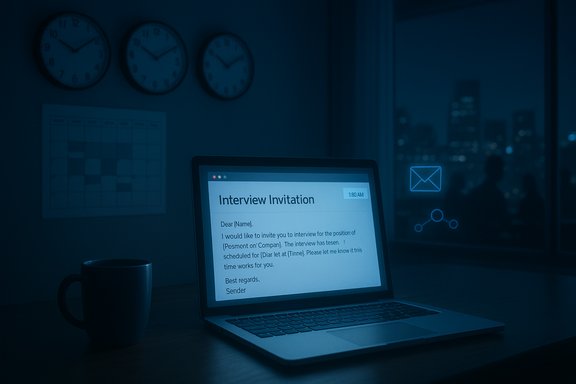
A single 1:00 a.m. email from a Microsoft recruiter — shared on the anonymous workplace forum Blind and picked up by social media — has touched off a wider, polarized debate about what after-hours outreach means for company culture, hiring practices, and the future of work–life balance in tech.
A post on Blind reported that a Microsoft hiring manager sent an interview request at 1:00 a.m., prompting the poster to ask whether that timing was a "red flag" about the team's expectations and internal culture. The thread accumulated hundreds of responses within hours, with commentators split between seeing the midnight message as a symptom of always‑on expectations and defending it as an innocuous or explainable anomaly — from scheduled sends to time‑zone mismatches.
The story spread quickly through industry news feeds and social outlets. Microsoft did not issue a public statement about the incident in the immediate aftermath; searches of company channels and public communications found no response as of November 12, 2025. The episode is small in isolation, but it amplifies longstanding anxieties about blurred boundaries between personal time and work, especially at global tech firms that operate across time zones and maintain high hiring velocity.
At an organizational level, the habit of sending or expecting responses outside regular hours can create inequality: employees with caregiving responsibilities, those in different time zones, and people who prioritize stricter boundaries bear a disproportionate burden when responsiveness becomes an implicit performance signal.
By contrast, jurisdictions such as the United States do not have a federal right‑to‑disconnect statute, leaving policymakers and companies to handle norms through internal policies and collective bargaining where present. For multinational employers, this regulatory patchwork raises compliance and reputational questions about consistent treatment across countries.
If companies want to keep attracting talent without contributing to employee exhaustion, the practical choice is to institutionalize simple courtesies — schedule sends, transparent expectations, and clear boundaries — that convey professionalism without creating pressure. Those small changes cost almost nothing and, in aggregate, protect the single most valuable asset in tech: people.
Source: Storyboard18 Microsoft recruiter sends interview email at 1 AM, sparks work–life balance debate
 Background
A post on Blind reported that a Microsoft hiring manager sent an interview request at 1:00 a.m., prompting the poster to ask whether that timing was a "red flag" about the team's expectations and internal culture. The thread accumulated hundreds of responses within hours, with commentators split between seeing the midnight message as a symptom of always‑on expectations and defending it as an innocuous or explainable anomaly — from scheduled sends to time‑zone mismatches.The story spread quickly through industry news feeds and social outlets. Microsoft did not issue a public statement about the incident in the immediate aftermath; searches of company channels and public communications found no response as of November 12, 2025. The episode is small in isolation, but it amplifies longstanding anxieties about blurred boundaries between personal time and work, especially at global tech firms that operate across time zones and maintain high hiring velocity.
Why a single late-night email matters
Small action, large signal
An email arriving in the middle of the night is, in practical terms, a trivial event: emails are easy to compose on mobile devices, and most major clients support scheduled send so a message can be written late but dispatched at a sleep‑friendly hour. Yet in social and cultural terms, after‑hours communication carries outsized symbolic weight. It can be read as:- a sign of a manager's personal working habits that may curve into expectations for their team,
- evidence of an "always‑on" culture where responsiveness is implicitly rewarded,
- or nothing more than a benign logistical quirk (time zone, travel, or scheduling tools).
Time zones, scheduling tools, and recruiting realities
There are several mundane technical and operational explanations that reduce the odds the midnight email was a deliberate test:- Major email clients (Outlook, Gmail, etc. include send later or schedule send features that queue messages for delivery at a specified time, so an email appearing at 1:00 a.m. may have been written earlier or scheduled by the sender from a different time zone.
- Recruiters and hiring managers often work across multiple time zones and may schedule batches of outreach to match the recipient’s local business hours.
- Hiring cycles, travel, interviews, and the intense bursts of calendar coordination that accompany recruitment can push communication into nonstandard windows without implying systematic expectation for immediate response.
What the research and labor policy landscape show
The human costs of after‑hours connectivity
Behavioral and occupational‑health research links persistent after‑hours communication to increased stress, poorer sleep, and long‑term burnout risk. Responding to work messages during evenings and weekends can fragment recovery time and reduce psychological detachment from work, a key predictor of well‑being.At an organizational level, the habit of sending or expecting responses outside regular hours can create inequality: employees with caregiving responsibilities, those in different time zones, and people who prioritize stricter boundaries bear a disproportionate burden when responsiveness becomes an implicit performance signal.
Legal and regulatory context
Jurisdictions have begun to react to these trends. Several European countries have formal or negotiated frameworks that recognize a right to disconnect and require employers — typically above a size threshold — to define practices that reduce after‑hours expectations. Those rules are intentionally flexible to accommodate business needs like 24/7 operations and cross‑border work, but they can impose negotiation or documentation obligations on employers.By contrast, jurisdictions such as the United States do not have a federal right‑to‑disconnect statute, leaving policymakers and companies to handle norms through internal policies and collective bargaining where present. For multinational employers, this regulatory patchwork raises compliance and reputational questions about consistent treatment across countries.
Recruiting at scale: efficiency vs. perception
The operational pressures recruiters face
Recruiters balance speed, candidate experience, and calendar constraints. Key realities include:- High volume: Large companies may process thousands of candidates simultaneously, and recruiters use batch outreach to coordinate screening and calendar scheduling.
- Global applicants: Recruiters manage candidates across widely disparate time zones, which complicates a one‑size‑fits‑all notion of "business hours."
- Time‑sensitive hiring: When teams are resourcing urgent projects, recruiters may escalate outreach to fill interviews quickly — occasionally creating the perception of elevated urgency or relentless cycles.
The brand and retention risk
A recruiting message that suggests an always‑on culture — even accidentally — has outsized branding costs. Candidates who interpret after‑hours outreach as a signal of poor balance may decline offers or bring negativity to the employer brand in public forums. Conversely, a well‑managed recruiting process that honors candidate time can be a differentiator in a tight talent market.Practical guidance: how recruiters should act
Recruiters and hiring managers can preserve speed without eroding candidate trust. Recommended best practices:- Use scheduled send for non‑urgent messages and time them to the recipient’s local business hours.
- When sending after‑hours messages, include a short, explicit note: “I’m sending this now for scheduling reasons — no immediate response required.”
- Avoid sending messages that introduce pressure or require urgent action during evenings or weekends (for example, do not request interview prep changes with same‑day notice unless unavoidable).
- Standardize templates and calendar blocks to avoid ad hoc midnight outreach.
- Train hiring teams on cultural sensitivity and time‑zone awareness. Make candidate experience part of recruiter performance metrics.
- Make the company’s expectations about responsiveness visible in recruiter signatures or scheduling invites: “We do not expect off‑hours responses.”
Practical guidance: how candidates should interpret and respond
A single after‑hours email is rarely definitive evidence of culture. Candidates who receive a late message should consider:- Review the content objectively — is the email merely scheduling, or does it contain wording that implies urgent expectations or weekend work?
- Check for practical explanations — the sender might be in a different time zone, using scheduled send, or traveling.
- Follow up professionally with a clarifying question if tone or timing is troubling: “Thank you for the invite; could you tell me a bit about the typical working hours for this team?”
- Use the interview to probe: ask specific questions about asynchronous norms, on‑call duties, meeting windows, and typical calendar density.
- Protect boundaries — you are not obligated to reply outside your normal hours, and you may set expectations in your response.
Technology tips that reduce friction
- Default to scheduling outbound emails to the recipient’s local morning hours when possible.
- Add a short no‑response‑required banner for messages dispatched outside typical business hours.
- Use calendar invites that automatically display the recipient’s time zone and include buffer windows for interviews.
- Implement reply‑deadline practices in job posts (e.g., “We’ll contact selected candidates within X days”) to limit anxiety.
- Use recruiting platforms and scheduling tools that surface time‑zone suggestions and avoid manual back‑and‑forth that increases pressure.
HR and legal considerations for employers
Companies should treat after‑hours outreach as a governance issue with reputational and legal dimensions:- Create a clear, written communications policy that outlines expectations about off‑hours messages, both internally and externally.
- Ensure managers know that their private habits (composing email late at night) can create external signals when messages are sent immediately.
- Include candidate‑facing recruiter behavior in hiring quality metrics and performance reviews.
- Where operations cross jurisdictions with formal right to disconnect rules, explicitly map and reconcile obligations to local laws.
- Maintain employee survey programs that track how communication norms affect morale, and act on trends aggressively.
Strengths and limits of the midnight‑email narrative
Notable strengths of the public debate
- The viral post opens an important, timely conversation about cultural signals: a single innocuous act can catalyze reflection on workload norms.
- Public forums create accountability and allow candidates and employees to compare notes across teams and companies.
- The episode foregrounds simple, actionable fixes (schedule send, disclaimers, timezone awareness) that recruiters can adopt immediately.
Potential risks and overreach
- Social amplification can cause overinterpretation. A lone late‑hour email may trigger a firestorm of reputational harm disproportionate to the conduct.
- Not every late message indicates abusive expectations; misclassification can bias hiring managers and unfairly penalize good teams.
- Public shaming of recruiters or isolated managers discourages candid conversation and may push cultural problems underground rather than triggering constructive remedies.
What companies should do next
- Formalize a candidate communications charter that sets tone and acceptable windows for outreach.
- Provide recruiter toolkits with templates, timezone guidance, and simple scripts that avoid loaded language.
- Train interviewers and hiring managers to explain team norms transparently during interviews.
- Monitor candidate experience metrics and public feedback: if patterns of discomfort emerge, investigate and remediate swiftly.
- Consider adding a simple line to recruiter signatures when messages are dispatched atypically, for example: “I sent this outside of standard business hours for scheduling reasons. No immediate response expected.”
Conclusion
The Microsoft recruiter’s 1:00 a.m. message sparked more than a momentary debate; it exposed how tiny, everyday actions can carry outsized weight in a labor market shaped by global teams, relentless hiring demands, and heightened sensitivity to burnout. For recruiters and hiring managers the lesson is straightforward: speed need not imply insensitivity. For candidates, the lesson is equally clear: decode signals, ask the right questions, and reserve judgment for patterns rather than single incidents.If companies want to keep attracting talent without contributing to employee exhaustion, the practical choice is to institutionalize simple courtesies — schedule sends, transparent expectations, and clear boundaries — that convey professionalism without creating pressure. Those small changes cost almost nothing and, in aggregate, protect the single most valuable asset in tech: people.
Source: Storyboard18 Microsoft recruiter sends interview email at 1 AM, sparks work–life balance debate
