

Microsoft’s Windows Central Podcast on June 12, 2026, framed Computex, Microsoft Build, new Surface hardware, Nvidia’s RTX Spark platform, Project Solara, and reported Xbox restructuring talks as one unusually concentrated reset for Microsoft’s consumer technology strategy. The through-line is not simply that Microsoft had a busy week. It is that Windows, Surface, AI devices, and Xbox all appear to be moving away from the old assumption that Microsoft wins by controlling a familiar platform layer. The company is now testing whether it can win by orchestrating ecosystems it no longer fully defines.
That is a thrilling prospect if you believe Microsoft’s best work comes when it is forced to compete. It is also a warning sign for anyone who remembers how often “the future of Windows” has meant asking users, developers, and hardware partners to wait for a platform transition that never quite arrives on schedule.
The most revealing part of the Windows Central discussion is not any single spec sheet. It is the shift in who gets to tell the story. Computex has always been a place where silicon vendors and PC makers try to bend Windows to their roadmaps, while Microsoft Build is where Redmond tries to bend developers toward its platform priorities. In 2026, those two events collided in a way that made Microsoft look less like the sole author of the PC future and more like the broker of several competing futures.
Nvidia’s RTX Spark announcement sits at the center of that tension. On paper, it is exactly the kind of high-performance Windows-on-Arm moment Microsoft has wanted for years: an Arm-based chip, a modern GPU architecture, serious unified memory, and a pitch aimed at creators, AI developers, and workstation users who might otherwise buy a MacBook Pro. But the branding matters. The podcast’s emphasis on Nvidia stepping around “Copilot Plus” language captures a deeper industry reality: Microsoft may have defined the AI PC category, but Nvidia has no intention of letting Microsoft define the premium AI workstation category.
That is not necessarily bad for Windows. In fact, it may be the best thing to happen to Windows hardware in years. Microsoft’s own PC branding has been muddy since the first wave of Copilot+ PCs tried to sell neural processing units to ordinary buyers before there was a compelling day-to-day software reason to care. Nvidia, by contrast, knows how to sell performance. It sells frames, render time, local AI throughput, and the emotional certainty that your expensive machine will not feel obsolete in 18 months.
The danger is that Windows becomes the neutral substrate underneath someone else’s platform story. Apple sells the Mac as a vertically integrated experience: silicon, operating system, battery life, display, developer tools, and creative software all narratively fused into one object. Nvidia is now trying to sell something similar for elite Windows hardware, except Microsoft is only one part of the stack. If that works, it could revive the high end of the Windows laptop market. If it fails, it will reinforce the suspicion that Windows PCs are still better at assembling components than delivering coherent experiences.
That change matters because platform transitions are won at the top as much as the bottom. Apple did not make Apple Silicon feel inevitable merely by improving the MacBook Air. It made the transition feel complete when the Pro, Max, and Ultra tiers proved that Arm could scale from fanless ultraportables to serious workstation loads. Windows has lacked that proof point. Qualcomm helped close the everyday productivity gap; Nvidia is trying to close the prestige gap.
The reported RTX Spark formula is strategically potent: Arm CPU cores developed with MediaTek, Blackwell-class graphics, TSMC’s 3nm process, and large pools of unified memory. Those details are not just nerd bait. They answer the specific doubts professionals have had about Windows on Arm: Can it run real workloads? Can it accelerate creative apps? Can it handle local AI models? Can it avoid becoming yet another elegant but under-supported Windows experiment?
Microsoft also benefits from the timing. Prism emulation has improved, more native Arm apps are arriving, and gaming compatibility on Arm has become less theoretical as anti-cheat support and store-layer plumbing improve. None of that means the compatibility problem is solved. But it does mean Nvidia can credibly argue that this is not a reboot of Windows RT with a better GPU. It is a workstation-class attempt to make Arm feel native to the Windows ecosystem.
Still, the most interesting competition here is not with Intel or Qualcomm. It is with Apple’s control over premium computing psychology. For years, Windows OEMs have been able to beat the Mac on choice, ports, and discrete GPU options, but they have struggled to match the Mac’s unified pitch: quiet power, long battery life, predictable thermals, and a developer ecosystem increasingly optimized for Apple Silicon. RTX Spark is an attempt to take that same integrated promise and make it available to the Windows world without requiring Microsoft to own the whole machine.
That is a very Microsoft answer to an Apple problem. It is also risky. Apple’s integration works because one company is accountable for the whole experience. The Windows version requires Nvidia, Microsoft, OEMs, app developers, driver teams, game studios, and enterprise management tools to move together. The history of the PC says that can produce miracles. It also says that one weak link can make a premium platform feel like a science project.
The design choices are telling. A “thick-and-dense” laptop is almost a rejection of the past decade’s obsession with thinness at any cost. If the machine is built around sustained performance, high-end display quality, and workstation credibility, Microsoft is effectively admitting that the premium Windows market cannot be won with another elegant ultrabook that throttles under pressure. The high end needs confidence, not just minimalism.
The mini-LED display also signals a belated understanding of where premium buyers compare products. Apple trained the market to expect high-brightness, high-contrast screens on expensive laptops. Windows machines have often offered excellent OLED options, but with tradeoffs around battery, burn-in anxiety, pricing, and inconsistent availability. A great mini-LED panel would give Surface a display story that feels professional rather than merely pretty.
Then there is the mystery magnetic breakaway USB-C port. If it really points toward the end of Surface Connect, that would be more than a port change. Surface Connect has been one of those proprietary remnants that made sense in an earlier Surface era but increasingly looked out of step with a USB-C world. A magnetic USB-C implementation would let Microsoft keep the convenience and safety of a breakaway connector while acknowledging that the industry standard won.
That would be a small act of humility, and Surface could use it. Microsoft’s hardware identity has too often oscillated between bold invention and stubborn attachment to ideas the market has moved past. A Surface Laptop Ultra that embraces standard ports, high-end thermals, top-tier display tech, and Nvidia-backed Arm performance could become a halo product again. But it has to be more than a showcase machine for reviewers. It has to convince developers, IT departments, and power users that Microsoft’s own hardware is once again the safest bet for the future of Windows.
This is where the PC market can still do something Apple resists. Apple protects the Mac’s average selling price with almost religious discipline. It may introduce lower-cost models, education discounts, or older designs, but it rarely turns its most recognizable premium hardware identity into a mass-market price weapon. Dell doing that with the XPS name would be an aggressive bet that the old walls between premium and budget Windows laptops are collapsing.
The comparison to a MacBook Neo, as framed in the podcast description, is about more than price. Apple has been rumored and expected to care more about lower-cost MacBooks for education and emerging buyers precisely because Chromebooks and budget Windows PCs have long owned the classroom price bands. If Dell can deliver a genuinely premium-feeling XPS at $599 with a 120Hz display and credible new Intel silicon, it forces Apple into a harder choice: protect margins or defend the entry point.
For Microsoft, this matters because Windows still wins when good hardware becomes ordinary. The company does not need every student to buy a Surface Laptop Ultra. It needs students, families, schools, and first-time buyers to stop associating cheap Windows laptops with bad trackpads, dim screens, weak hinges, and bloatware. A $599 XPS would not solve that across the ecosystem, but it would move expectations.
Intel’s role is equally important. Wildcat Lake, positioned for more affordable systems, would give Intel a chance to defend the mainstream Windows base while Nvidia and Qualcomm fight for Arm mindshare. That three-way silicon competition is good for buyers but complicated for Microsoft. Windows now has to feel excellent across x86 efficiency cores, Qualcomm Arm chips, Nvidia Arm workstations, and whatever AMD brings next. The operating system is no longer just supporting hardware diversity; it is being stretched by competing definitions of what a modern PC is supposed to be.
That is why the low end may be as strategically important as the high end. A great $599 Windows laptop says the PC ecosystem can democratize premium features faster than Apple. A bad one says Windows OEMs are still using famous brand names to move compromised machines. The difference will determine whether this “laptop war” becomes a reset or just another race to the bottom with better marketing.
The podcast’s framing of Solara as an agentic OS gets at the ambition, but the phrase risks making the project sound more mystical than it is. The basic idea is straightforward: instead of opening apps, managing windows, and moving data manually between services, the user delegates tasks to agents that create interfaces on demand. The interface becomes temporary, contextual, and disposable. The app becomes less a destination than a capability the agent can invoke.
That is a radical challenge to the Windows model. Windows is built around persistence: files, windows, applications, shortcuts, taskbars, registries, policies, and decades of compatibility. Solara points toward impermanence. It imagines a world where the user does not care which app performed the task, which screen hosted the interaction, or whether the interface exists after the task is complete.
Microsoft choosing Android as the base makes the decision even more revealing. It suggests that for a new class of small, mobile, sensor-rich AI hardware, Windows is either too heavy, too legacy-bound, or simply unnecessary. That does not mean Windows is dying. It means Microsoft knows the next fight may happen on devices where Windows has no natural right to exist.
The badge and desk concepts make the strategy concrete. A wearable badge suggests ambient computing: camera, microphone, connectivity, identity, and lightweight interaction. A desk device suggests a stationary AI companion that lives between smart display, speaker, thin client, and enterprise assistant. Neither is a PC in the traditional sense. Both are attempts to make Microsoft’s cloud, identity, productivity, and agent infrastructure feel present even when a user is not sitting at a Windows machine.
That is the real platform play. Microsoft may not need Solara to replace Windows. It needs Solara to prevent the next interface layer from being owned entirely by Apple, Google, Meta, or OpenAI-native hardware startups. If agents become the way people interact with software, Microsoft wants to own the trust, governance, developer model, and enterprise plumbing underneath them. Windows is part of that story, but no longer the whole story.
Agent-first devices raise uncomfortable questions. What can an agent see? What can it remember? Which services can it invoke? How does a user distinguish a temporary interface generated by a trusted enterprise workflow from a malicious or hallucinated one? What happens when a wearable device records, summarizes, or acts on sensitive information in a regulated environment?
Microsoft is aware of this, which is why its broader Build messaging around agent identity, containment, and manageability matters. The company understands that agents cannot simply be chatbots with better permissions. They need policy boundaries, audit trails, revocation, data-loss controls, and clear chains of responsibility. In other words, they need to become boring enough for IT.
That is harder than it sounds. Traditional apps are annoying, but they are administratively comprehensible. They have versions, vendors, installers, entitlements, logs, and known data flows. Agents blur those boundaries by design. The more useful they become, the more they operate across applications, documents, messages, meetings, and services. The more they operate across those domains, the more they resemble privileged users.
This is where Microsoft’s history cuts both ways. On one hand, no company is better positioned to sell agent governance to enterprises than the company behind Entra, Intune, Microsoft 365, Defender, Azure, and Windows management. On the other hand, Microsoft’s security reputation is under constant scrutiny, and enterprises have become less willing to accept “trust us” as a platform architecture. Agentic computing will not get a free pass because it arrives with a keynote and a reference device.
Solara’s success will therefore depend less on whether the badge looks clever and more on whether Microsoft can make agent behavior inspectable. The future interface may be conversational and contextual, but the administrative backend must be explicit. If Microsoft can square that circle, it has a credible enterprise story. If not, Solara becomes another attractive prototype that IT quietly blocks at the network edge.
Xbox has spent years trying to be console maker, subscription service, cloud platform, PC publisher, mobile aspirant, and cross-platform content empire all at once. That strategy made sense in PowerPoint. In the market, it created confusion. Was Xbox a box under the television, a Game Pass subscription, a publisher for PlayStation, a cloud service, or a Microsoft identity layer for games? The answer became “yes,” which is not always a strategy.
The Activision Blizzard acquisition intensified the contradiction. Microsoft became one of the largest game publishers in the world, but owning more content did not automatically clarify what Xbox hardware was for. If the company puts its biggest games everywhere, it maximizes software reach but weakens the console’s exclusive appeal. If it pulls games back toward exclusivity, it sacrifices some publisher economics to rebuild hardware identity. Both paths are defensible. The damage comes from trying to do both without saying which one has priority.
That is why the reported internal concern about business health and margins matters. Gaming is not a charity inside Microsoft. It competes for capital with Azure, AI infrastructure, enterprise software, and productivity services. If Xbox cannot explain how its hardware, content, subscription, and cloud pieces reinforce one another, the finance logic will eventually become louder than the fan logic.
A wholly owned subsidiary structure would not necessarily mean Microsoft is abandoning Xbox. LinkedIn and GitHub show that Microsoft can let large businesses operate with distinct identities while still benefiting from corporate ownership. But gaming is different. Xbox depends on consumer passion, developer trust, hardware roadmaps, retail relationships, and long-term content bets. A restructuring that looks efficient to Redmond could look destabilizing to players and studios.
The leadership story is also delicate. Phil Spencer’s tenure was defined by an expansive vision of access: play anywhere, subscriptions, acquisitions, and a softer boundary around exclusivity. Sarah Bond became associated with platform modernization and the promise of a next-generation Xbox that might look more like a Windows gaming device than a conventional console. Sharma, coming from an AI and business transformation background, appears to represent a reset toward operational discipline and franchise leverage. That may be necessary. It may also be culturally jarring for a gaming audience that can smell corporate abstraction from miles away.
Optionality is a Microsoft superpower. The company is rarely at its best when it copies Apple’s narrow integration. It wins by building platforms broad enough for partners, enterprises, developers, and competitors to inhabit. Windows itself is the grand proof of that model. Azure is another. Microsoft 365, for all its complexity, thrives because it meets organizations where they are.
But optionality has a cost: narrative confusion. Users do not buy roadmaps; they buy confidence. Developers do not optimize for every possible future equally; they pick platforms that appear likely to matter. IT departments do not deploy ambiguity; they standardize on what they can manage. Gamers do not rally around optionality; they rally around identity, content, and trust.
That is why this week feels consequential. Microsoft’s pieces are impressive, but the company now has to explain how they fit. Is Copilot+ still the umbrella for AI PCs if Nvidia prefers RTX Spark? Is Surface the reference point for Windows hardware or merely one premium participant among many? Is Solara a Microsoft device platform, an enterprise agent runtime, or a hedge against post-smartphone computing? Is Xbox a console ecosystem, a publisher, or an asset being prepared for corporate separation if performance does not improve?
The answer can be “all of the above” only if Microsoft supplies a hierarchy. Otherwise, partners will supply their own. Nvidia will define the premium AI PC. Dell will define the affordable flagship. Qualcomm will define mobile Arm efficiency. Xbox fans will define uncertainty as decline. Competitors will define Solara as another Microsoft attempt to chase a platform shift after losing mobile.
Microsoft does not need absolute control to win. But it does need editorial control over its own story. The week described by Windows Central shows a company with more strategic possibilities than at any point in recent memory. It also shows a company at risk of letting those possibilities talk over one another.
That is a thrilling prospect if you believe Microsoft’s best work comes when it is forced to compete. It is also a warning sign for anyone who remembers how often “the future of Windows” has meant asking users, developers, and hardware partners to wait for a platform transition that never quite arrives on schedule.
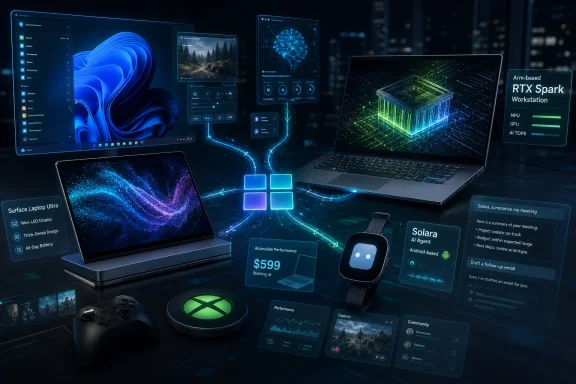 Microsoft’s Biggest Week Was Really a Test of Who Owns the PC Story
The most revealing part of the Windows Central discussion is not any single spec sheet. It is the shift in who gets to tell the story. Computex has always been a place where silicon vendors and PC makers try to bend Windows to their roadmaps, while Microsoft Build is where Redmond tries to bend developers toward its platform priorities. In 2026, those two events collided in a way that made Microsoft look less like the sole author of the PC future and more like the broker of several competing futures.Nvidia’s RTX Spark announcement sits at the center of that tension. On paper, it is exactly the kind of high-performance Windows-on-Arm moment Microsoft has wanted for years: an Arm-based chip, a modern GPU architecture, serious unified memory, and a pitch aimed at creators, AI developers, and workstation users who might otherwise buy a MacBook Pro. But the branding matters. The podcast’s emphasis on Nvidia stepping around “Copilot Plus” language captures a deeper industry reality: Microsoft may have defined the AI PC category, but Nvidia has no intention of letting Microsoft define the premium AI workstation category.
That is not necessarily bad for Windows. In fact, it may be the best thing to happen to Windows hardware in years. Microsoft’s own PC branding has been muddy since the first wave of Copilot+ PCs tried to sell neural processing units to ordinary buyers before there was a compelling day-to-day software reason to care. Nvidia, by contrast, knows how to sell performance. It sells frames, render time, local AI throughput, and the emotional certainty that your expensive machine will not feel obsolete in 18 months.
The danger is that Windows becomes the neutral substrate underneath someone else’s platform story. Apple sells the Mac as a vertically integrated experience: silicon, operating system, battery life, display, developer tools, and creative software all narratively fused into one object. Nvidia is now trying to sell something similar for elite Windows hardware, except Microsoft is only one part of the stack. If that works, it could revive the high end of the Windows laptop market. If it fails, it will reinforce the suspicion that Windows PCs are still better at assembling components than delivering coherent experiences.
RTX Spark Turns Windows on Arm From Apology Into Ambition
Windows on Arm has spent most of its modern life asking for patience. The early pitch was battery life. Then it was instant-on convenience. Then it was thinner designs. Then, with Qualcomm’s Snapdragon X generation, it became credible mainstream laptop performance. RTX Spark changes the tone from “this is good enough for many people” to “this may be the performance architecture professionals actually want.”That change matters because platform transitions are won at the top as much as the bottom. Apple did not make Apple Silicon feel inevitable merely by improving the MacBook Air. It made the transition feel complete when the Pro, Max, and Ultra tiers proved that Arm could scale from fanless ultraportables to serious workstation loads. Windows has lacked that proof point. Qualcomm helped close the everyday productivity gap; Nvidia is trying to close the prestige gap.
The reported RTX Spark formula is strategically potent: Arm CPU cores developed with MediaTek, Blackwell-class graphics, TSMC’s 3nm process, and large pools of unified memory. Those details are not just nerd bait. They answer the specific doubts professionals have had about Windows on Arm: Can it run real workloads? Can it accelerate creative apps? Can it handle local AI models? Can it avoid becoming yet another elegant but under-supported Windows experiment?
Microsoft also benefits from the timing. Prism emulation has improved, more native Arm apps are arriving, and gaming compatibility on Arm has become less theoretical as anti-cheat support and store-layer plumbing improve. None of that means the compatibility problem is solved. But it does mean Nvidia can credibly argue that this is not a reboot of Windows RT with a better GPU. It is a workstation-class attempt to make Arm feel native to the Windows ecosystem.
Still, the most interesting competition here is not with Intel or Qualcomm. It is with Apple’s control over premium computing psychology. For years, Windows OEMs have been able to beat the Mac on choice, ports, and discrete GPU options, but they have struggled to match the Mac’s unified pitch: quiet power, long battery life, predictable thermals, and a developer ecosystem increasingly optimized for Apple Silicon. RTX Spark is an attempt to take that same integrated promise and make it available to the Windows world without requiring Microsoft to own the whole machine.
That is a very Microsoft answer to an Apple problem. It is also risky. Apple’s integration works because one company is accountable for the whole experience. The Windows version requires Nvidia, Microsoft, OEMs, app developers, driver teams, game studios, and enterprise management tools to move together. The history of the PC says that can produce miracles. It also says that one weak link can make a premium platform feel like a science project.
Surface Laptop Ultra Is Microsoft’s Attempt to Reclaim the Halo
The rumored and reported Surface Laptop Ultra, as discussed on the podcast, is important because Surface has not recently felt like the machine that defines Windows ambition. The Surface line once served as a provocation: a Microsoft-built standard for what Windows hardware could be when OEMs were playing it too safe. Over time, Surface became more conservative, more expensive, and less central to the PC conversation. A thick, dense, 15-inch performance laptop with a mini-LED display and a massive haptic trackpad is Microsoft trying to put Surface back in the argument.The design choices are telling. A “thick-and-dense” laptop is almost a rejection of the past decade’s obsession with thinness at any cost. If the machine is built around sustained performance, high-end display quality, and workstation credibility, Microsoft is effectively admitting that the premium Windows market cannot be won with another elegant ultrabook that throttles under pressure. The high end needs confidence, not just minimalism.
The mini-LED display also signals a belated understanding of where premium buyers compare products. Apple trained the market to expect high-brightness, high-contrast screens on expensive laptops. Windows machines have often offered excellent OLED options, but with tradeoffs around battery, burn-in anxiety, pricing, and inconsistent availability. A great mini-LED panel would give Surface a display story that feels professional rather than merely pretty.
Then there is the mystery magnetic breakaway USB-C port. If it really points toward the end of Surface Connect, that would be more than a port change. Surface Connect has been one of those proprietary remnants that made sense in an earlier Surface era but increasingly looked out of step with a USB-C world. A magnetic USB-C implementation would let Microsoft keep the convenience and safety of a breakaway connector while acknowledging that the industry standard won.
That would be a small act of humility, and Surface could use it. Microsoft’s hardware identity has too often oscillated between bold invention and stubborn attachment to ideas the market has moved past. A Surface Laptop Ultra that embraces standard ports, high-end thermals, top-tier display tech, and Nvidia-backed Arm performance could become a halo product again. But it has to be more than a showcase machine for reviewers. It has to convince developers, IT departments, and power users that Microsoft’s own hardware is once again the safest bet for the future of Windows.
The $599 Flagship War Is a Bigger Threat to Apple Than Another Spec Race
The podcast’s discussion of Dell pushing the XPS 13 downward to a $599 starting price may sound like a separate story from Nvidia’s workstation ambitions, but it is part of the same squeeze. The Windows ecosystem is trying to attack Apple from both ends: workstation-class Arm machines above, premium-ish student laptops below. If the high end is about prestige, the $599 tier is about volume and habit formation.This is where the PC market can still do something Apple resists. Apple protects the Mac’s average selling price with almost religious discipline. It may introduce lower-cost models, education discounts, or older designs, but it rarely turns its most recognizable premium hardware identity into a mass-market price weapon. Dell doing that with the XPS name would be an aggressive bet that the old walls between premium and budget Windows laptops are collapsing.
The comparison to a MacBook Neo, as framed in the podcast description, is about more than price. Apple has been rumored and expected to care more about lower-cost MacBooks for education and emerging buyers precisely because Chromebooks and budget Windows PCs have long owned the classroom price bands. If Dell can deliver a genuinely premium-feeling XPS at $599 with a 120Hz display and credible new Intel silicon, it forces Apple into a harder choice: protect margins or defend the entry point.
For Microsoft, this matters because Windows still wins when good hardware becomes ordinary. The company does not need every student to buy a Surface Laptop Ultra. It needs students, families, schools, and first-time buyers to stop associating cheap Windows laptops with bad trackpads, dim screens, weak hinges, and bloatware. A $599 XPS would not solve that across the ecosystem, but it would move expectations.
Intel’s role is equally important. Wildcat Lake, positioned for more affordable systems, would give Intel a chance to defend the mainstream Windows base while Nvidia and Qualcomm fight for Arm mindshare. That three-way silicon competition is good for buyers but complicated for Microsoft. Windows now has to feel excellent across x86 efficiency cores, Qualcomm Arm chips, Nvidia Arm workstations, and whatever AMD brings next. The operating system is no longer just supporting hardware diversity; it is being stretched by competing definitions of what a modern PC is supposed to be.
That is why the low end may be as strategically important as the high end. A great $599 Windows laptop says the PC ecosystem can democratize premium features faster than Apple. A bad one says Windows OEMs are still using famous brand names to move compromised machines. The difference will determine whether this “laptop war” becomes a reset or just another race to the bottom with better marketing.
Project Solara Is Microsoft Admitting Windows Is Not the Only Future Interface
Project Solara is the most philosophically disruptive piece of the week because it asks a question Microsoft rarely asks in public: What if the next major Microsoft device platform is not Windows? The answer, at least for now, appears to be an Android-based agent-first environment designed around AI agents rather than traditional app stores. That is a remarkable admission from the company that spent decades making the operating system the center of personal computing.The podcast’s framing of Solara as an agentic OS gets at the ambition, but the phrase risks making the project sound more mystical than it is. The basic idea is straightforward: instead of opening apps, managing windows, and moving data manually between services, the user delegates tasks to agents that create interfaces on demand. The interface becomes temporary, contextual, and disposable. The app becomes less a destination than a capability the agent can invoke.
That is a radical challenge to the Windows model. Windows is built around persistence: files, windows, applications, shortcuts, taskbars, registries, policies, and decades of compatibility. Solara points toward impermanence. It imagines a world where the user does not care which app performed the task, which screen hosted the interaction, or whether the interface exists after the task is complete.
Microsoft choosing Android as the base makes the decision even more revealing. It suggests that for a new class of small, mobile, sensor-rich AI hardware, Windows is either too heavy, too legacy-bound, or simply unnecessary. That does not mean Windows is dying. It means Microsoft knows the next fight may happen on devices where Windows has no natural right to exist.
The badge and desk concepts make the strategy concrete. A wearable badge suggests ambient computing: camera, microphone, connectivity, identity, and lightweight interaction. A desk device suggests a stationary AI companion that lives between smart display, speaker, thin client, and enterprise assistant. Neither is a PC in the traditional sense. Both are attempts to make Microsoft’s cloud, identity, productivity, and agent infrastructure feel present even when a user is not sitting at a Windows machine.
That is the real platform play. Microsoft may not need Solara to replace Windows. It needs Solara to prevent the next interface layer from being owned entirely by Apple, Google, Meta, or OpenAI-native hardware startups. If agents become the way people interact with software, Microsoft wants to own the trust, governance, developer model, and enterprise plumbing underneath them. Windows is part of that story, but no longer the whole story.
The Agent-First Dream Still Has an Enterprise Hangover
For WindowsForum readers, the obvious question is not whether Project Solara looks futuristic. It is whether anyone will be able to manage, secure, audit, and support it without turning the workplace into a permission nightmare. Microsoft’s advantage in enterprise computing has never been that it makes the most elegant interface. It is that it makes technology legible to IT departments. If Solara cannot be governed, it will remain a demo.Agent-first devices raise uncomfortable questions. What can an agent see? What can it remember? Which services can it invoke? How does a user distinguish a temporary interface generated by a trusted enterprise workflow from a malicious or hallucinated one? What happens when a wearable device records, summarizes, or acts on sensitive information in a regulated environment?
Microsoft is aware of this, which is why its broader Build messaging around agent identity, containment, and manageability matters. The company understands that agents cannot simply be chatbots with better permissions. They need policy boundaries, audit trails, revocation, data-loss controls, and clear chains of responsibility. In other words, they need to become boring enough for IT.
That is harder than it sounds. Traditional apps are annoying, but they are administratively comprehensible. They have versions, vendors, installers, entitlements, logs, and known data flows. Agents blur those boundaries by design. The more useful they become, the more they operate across applications, documents, messages, meetings, and services. The more they operate across those domains, the more they resemble privileged users.
This is where Microsoft’s history cuts both ways. On one hand, no company is better positioned to sell agent governance to enterprises than the company behind Entra, Intune, Microsoft 365, Defender, Azure, and Windows management. On the other hand, Microsoft’s security reputation is under constant scrutiny, and enterprises have become less willing to accept “trust us” as a platform architecture. Agentic computing will not get a free pass because it arrives with a keynote and a reference device.
Solara’s success will therefore depend less on whether the badge looks clever and more on whether Microsoft can make agent behavior inspectable. The future interface may be conversational and contextual, but the administrative backend must be explicit. If Microsoft can square that circle, it has a credible enterprise story. If not, Solara becomes another attractive prototype that IT quietly blocks at the network edge.
Xbox Is the Warning Label on Microsoft’s Ecosystem Strategy
The Xbox portion of the podcast lands differently because it shows what happens when platform strategy loses coherence. According to reporting discussed during the show, Microsoft has considered options including spinning off or restructuring Xbox as a wholly owned subsidiary, while Asha Sharma’s leadership is reportedly pushing a more aggressive franchise strategy around names like Halo, Fallout, and The Elder Scrolls. Even if no spinoff happens, the fact that it is reportedly being discussed tells us something about the pressure inside Microsoft Gaming.Xbox has spent years trying to be console maker, subscription service, cloud platform, PC publisher, mobile aspirant, and cross-platform content empire all at once. That strategy made sense in PowerPoint. In the market, it created confusion. Was Xbox a box under the television, a Game Pass subscription, a publisher for PlayStation, a cloud service, or a Microsoft identity layer for games? The answer became “yes,” which is not always a strategy.
The Activision Blizzard acquisition intensified the contradiction. Microsoft became one of the largest game publishers in the world, but owning more content did not automatically clarify what Xbox hardware was for. If the company puts its biggest games everywhere, it maximizes software reach but weakens the console’s exclusive appeal. If it pulls games back toward exclusivity, it sacrifices some publisher economics to rebuild hardware identity. Both paths are defensible. The damage comes from trying to do both without saying which one has priority.
That is why the reported internal concern about business health and margins matters. Gaming is not a charity inside Microsoft. It competes for capital with Azure, AI infrastructure, enterprise software, and productivity services. If Xbox cannot explain how its hardware, content, subscription, and cloud pieces reinforce one another, the finance logic will eventually become louder than the fan logic.
A wholly owned subsidiary structure would not necessarily mean Microsoft is abandoning Xbox. LinkedIn and GitHub show that Microsoft can let large businesses operate with distinct identities while still benefiting from corporate ownership. But gaming is different. Xbox depends on consumer passion, developer trust, hardware roadmaps, retail relationships, and long-term content bets. A restructuring that looks efficient to Redmond could look destabilizing to players and studios.
The leadership story is also delicate. Phil Spencer’s tenure was defined by an expansive vision of access: play anywhere, subscriptions, acquisitions, and a softer boundary around exclusivity. Sarah Bond became associated with platform modernization and the promise of a next-generation Xbox that might look more like a Windows gaming device than a conventional console. Sharma, coming from an AI and business transformation background, appears to represent a reset toward operational discipline and franchise leverage. That may be necessary. It may also be culturally jarring for a gaming audience that can smell corporate abstraction from miles away.
Microsoft Is Learning That Optionality Has a Cost
Across Windows, Surface, Solara, and Xbox, the same pattern emerges: Microsoft wants optionality. It wants Windows on x86 and Arm. It wants Copilot+ PCs and Nvidia-defined AI workstations. It wants Surface as a halo while OEMs fight at $599. It wants Windows as the productivity center and Android-based Solara as an agent-first edge. It wants Xbox content everywhere while still preserving a reason for Xbox hardware to exist.Optionality is a Microsoft superpower. The company is rarely at its best when it copies Apple’s narrow integration. It wins by building platforms broad enough for partners, enterprises, developers, and competitors to inhabit. Windows itself is the grand proof of that model. Azure is another. Microsoft 365, for all its complexity, thrives because it meets organizations where they are.
But optionality has a cost: narrative confusion. Users do not buy roadmaps; they buy confidence. Developers do not optimize for every possible future equally; they pick platforms that appear likely to matter. IT departments do not deploy ambiguity; they standardize on what they can manage. Gamers do not rally around optionality; they rally around identity, content, and trust.
That is why this week feels consequential. Microsoft’s pieces are impressive, but the company now has to explain how they fit. Is Copilot+ still the umbrella for AI PCs if Nvidia prefers RTX Spark? Is Surface the reference point for Windows hardware or merely one premium participant among many? Is Solara a Microsoft device platform, an enterprise agent runtime, or a hedge against post-smartphone computing? Is Xbox a console ecosystem, a publisher, or an asset being prepared for corporate separation if performance does not improve?
The answer can be “all of the above” only if Microsoft supplies a hierarchy. Otherwise, partners will supply their own. Nvidia will define the premium AI PC. Dell will define the affordable flagship. Qualcomm will define mobile Arm efficiency. Xbox fans will define uncertainty as decline. Competitors will define Solara as another Microsoft attempt to chase a platform shift after losing mobile.
Microsoft does not need absolute control to win. But it does need editorial control over its own story. The week described by Windows Central shows a company with more strategic possibilities than at any point in recent memory. It also shows a company at risk of letting those possibilities talk over one another.
The Week Redmond Put Four Futures on the Table
This was not a normal product-news pileup. It was a compressed preview of Microsoft’s next several platform battles, each with different winners and failure modes.- Nvidia’s RTX Spark gives Windows on Arm a credible high-performance story, but it also lets Nvidia define the premium AI workstation narrative more forcefully than Microsoft’s Copilot+ branding has managed to do.
- Surface Laptop Ultra appears designed to restore Surface as a halo product, and its success will depend on sustained performance, compatibility, and whether Microsoft can make premium Windows hardware feel coherent again.
- Dell’s reported $599 XPS strategy could reset expectations for affordable Windows laptops, but only if the machine avoids the compromises that made many budget PCs feel disposable.
- Project Solara shows Microsoft preparing for an agent-first device world where Windows is not always the operating system, which is strategically smart and emotionally awkward for a Windows company.
- Xbox’s reported restructuring discussions underline the danger of ecosystem ambiguity, because content, hardware, subscriptions, and cloud gaming cannot all be the top priority at the same time.
- The common thread is that Microsoft is no longer betting on one platform transition; it is trying to manage several at once, and execution will matter more than keynote ambition.
References
- Primary source: Windows Central
Published: 2026-06-16T11:33:08.087038
Loading…
www.windowscentral.com - Related coverage: tomshardware.com

Xbox will pay five times more for memory and storage in 2027 than it did two years ago — CEO Asha Sharma admits there's an unsustainable hardware gap that 'cannot continue' | Tom's Hardware
The next-gen Xbox could end up costing well over $1,000.www.tomshardware.com - Related coverage: gamesradar.com
Major Xbox layoffs reportedly on the way as CEO Asha Sharma admits Microsoft's gaming division is "over extended" | GamesRadar+
Going forward, this cannot continuewww.gamesradar.com - Related coverage: pcgamer.com

Xbox speedruns 'we're so back' to 'it's so over' pipeline at a speed previously thought impossible | PC Gamer
More layoffs are on the way, framed as a "reset" for a brighter future.www.pcgamer.com - Related coverage: notebookcheck.net
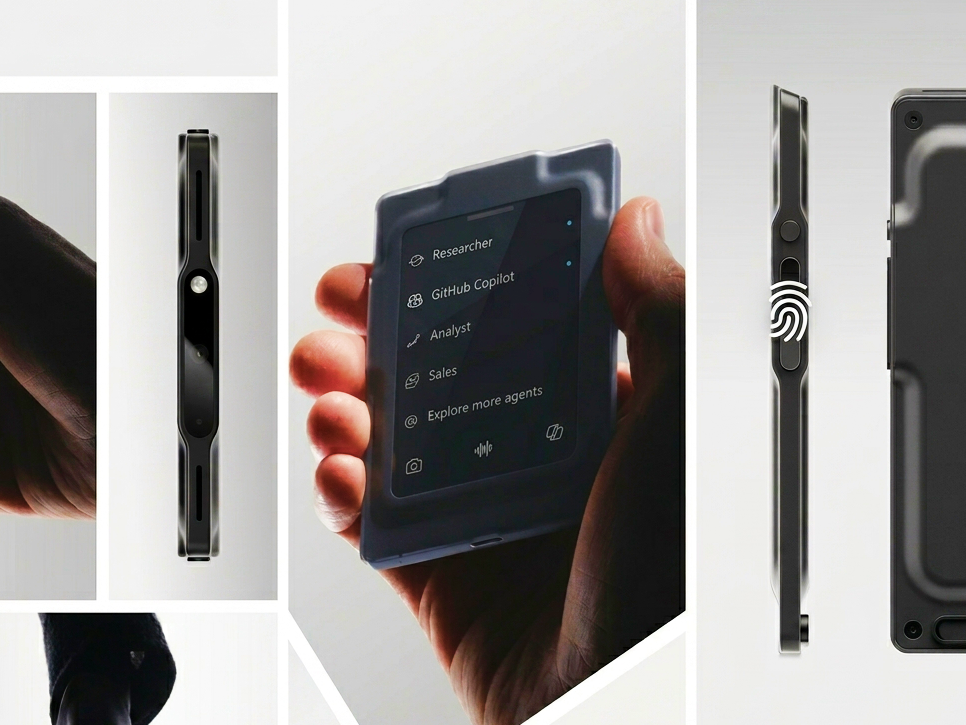
Microsoft reveals Android-based AI device to rival iPhone: Qualcomm SoC, top-facing camera, small display, 5G
Microsoft has revealed Project Solara, and the concept smart badge, a wearable device designed to replace traditional app-based smartphones with an agent-first AI interface. As Microsoft initiates internal testing and prepares for enterprise pilots, it enters a critical race against OpenAI’s... www.notebookcheck.net
- Related coverage: marketscreener.com
Loading…
www.marketscreener.com
- Official source: commandline.microsoft.com

Composing a new platform for agent-first devices - Command Line
New interaction technology enables new types of computers. Learn more about Microsoft’s Project Solara.commandline.microsoft.com - Related coverage: gamespot.com
Xbox "Must Have Exclusive Content," CEO Says
Asha Sharma looks ahead to her next 100 days as Xbox CEO while addressing exclusivity and the steps needed to make Microsoft's console #1.www.gamespot.com - Official source: news.microsoft.com

Microsoft Build Live
The home for real-time coverage of the news as it is announced from Microsoft Build, June 2-3, 2026. news.microsoft.com
- Related coverage: techmymoney.com

Microsoft Project Solara Is Built for Agent-First Devices
Microsoft Project Solara is a Build 2026 platform for agent-first devices, starting with enterprise desk and badge concepts. techmymoney.com
- Related coverage: que.es
Loading…
www.que.es - Related coverage: gigazine.net

Microsoft has announced 'Project Solara,' a new platform for AI agent-dedicated devices, creating an agent-centric system using an Android-based OS rather than Windows. - GIGAZINE
At its developer event, ' Microsoft Build 2026, ' held in San Francisco, USA on June 2, 2026, Microsoft announced ' Project Solara, ' a new device platform that operates primarily with AI agents. Microsoft positions Project Solara not merely as an OS, but as a 'chip-to-cloud' platform spanning...gigazine.net - Official source: blogs.windows.com

Introducing a powerful new chapter for Windows PCs, accelerated by NVIDIA RTX Spark
Today at NVIDIA GTC, Microsoft and NVIDIA announced the world’s most powerful and efficient thin-and-light Windows PCs ever. Accelerated by NVIDIA RTX Sparkblogs.windows.com