

Microsoft’s May 19, 2026 Surface announcements introduced new Surface Laptop and Surface Pro hardware for business buyers, but the rollout arrived through blog posts and briefings rather than a flagship event, leaving even committed Windows watchers to discover the news after the fact. That is not just a marketing footnote. It is the clearest signal yet that Surface, once Microsoft’s loudest argument for what Windows hardware could become, is now being managed like a procurement catalog. The machines may be competent, even excellent in places, but the brand around them has lost the sense of occasion that made Surface matter.
There was a time when a Surface launch felt like Microsoft taking the stage to argue with the entire PC industry. The original Surface was not merely a tablet with a kickstand; it was a rebuke to the idea that Windows hardware had to be beige, plastic, and compromised. The Surface Book’s detachable display, the Surface Studio’s gravity-defying hinge, and the early Surface Pro experiments all carried the same message: Microsoft would build the thing OEMs were too cautious to attempt.
The 2026 Surface launch did not feel like that. Microsoft announced Surface Laptop for Business 8th Edition, Surface Pro for Business 12th Edition, and related business-focused hardware with Intel Core Ultra Series 3 chips, display refinements, haptic improvements, security positioning, and AI PC language. On paper, that is a perfectly legitimate product refresh. In practice, it landed with the emotional force of a firmware changelog.
That matters because Surface has never competed purely on price or raw performance. The line has always depended on story. Buyers paid extra because Surface represented Microsoft’s own idea of a premium Windows machine: restrained industrial design, unusually good input hardware, clean Windows integration, and a sense that the platform owner was showing the rest of the ecosystem where to go next.
A quiet launch does not automatically mean a bad product. But when a premium hardware brand stops behaving like it has something to prove, customers notice. So do reviewers, IT departments, and rival OEMs that are now more than happy to occupy the territory Surface once claimed as its own.
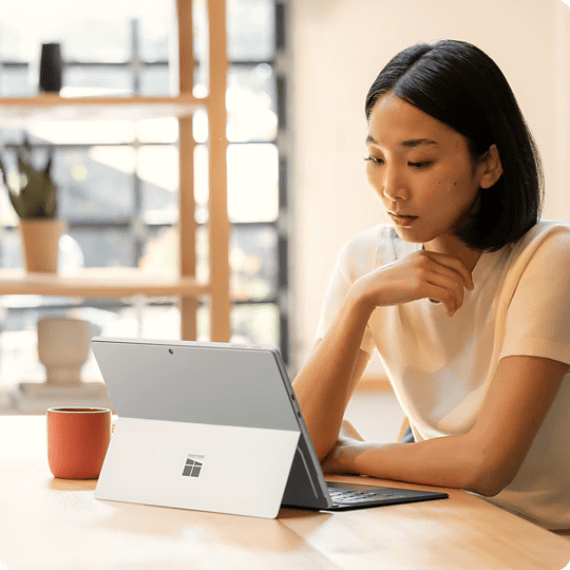
The Surface Pro for Business refresh also fits Microsoft’s long-standing pitch to enterprise buyers. It is a 2-in-1 designed for workers who move between desks, meeting rooms, field sites, and airports. In that context, features such as cellular connectivity, pen support, repairability considerations, manageability, and security tooling matter more than whether a consumer YouTube channel finds the device exciting.
The new Intel Core Ultra Series 3 chips are part of the broader 2026 AI PC push, and Microsoft is plainly trying to position these Surface models as business-ready Copilot+ machines rather than enthusiast toys. That is a coherent strategy. Enterprises want devices that can be deployed, secured, managed, serviced, and justified on a spreadsheet.
But coherence is not the same as charisma. Surface used to be one of the few PC brands that could make component upgrades feel like part of a larger design argument. This year, Microsoft seemed content to let the specs speak for themselves, even though specs are the one language where Surface is most vulnerable to cheaper, louder, and increasingly polished competitors.
The problem is that Surface’s public identity was never built by procurement managers alone. It was built by enthusiasts, students, developers, journalists, designers, and Windows loyalists who wanted Microsoft to make hardware worthy of the operating system’s ambitions. Those people may not buy fleet quantities, but they create the aura around the brand.
When Microsoft announces business models first and tells everyone else to wait for consumer variants later, it fragments the story. Buyers hear that the “real” lineup is incomplete. Reviewers compare expensive business SKUs against consumer laptops from Lenovo, HP, Asus, Samsung, Dell, and Apple. Fans see another staggered rollout and conclude that even Microsoft does not know how to present Surface as a unified family.
That staggered approach is especially awkward in 2026 because the Windows laptop market is no longer waiting for Microsoft to lead. Qualcomm’s Snapdragon X platform has matured, Intel’s AI PC roadmap is now central to Windows marketing, and OEMs have learned how to build thin, premium machines with better battery life and more aggressive pricing. Surface cannot rely on being the default premium Windows answer anymore.
That split may make sense internally. Intel business devices and Snapdragon consumer devices target different buying cycles, software compatibility assumptions, and deployment preferences. Enterprises often move cautiously around Arm PCs, even when compatibility is much improved, while consumers may be more receptive to battery life and fanless designs if the price is right.
But customers do not experience roadmaps the way product managers do. They see Surface Laptop here, Surface Laptop later, business models now, consumer models eventually, Intel today, Snapdragon soon, 8GB configurations reportedly returning to hit lower prices, and a brand that already has a history of confusing names and overlapping editions. That is not a launch strategy. It is a filing system.
The naming problem compounds the issue. Surface Pro and Surface Laptop once had a reasonably clear rhythm. Now the line is layered with business editions, numbered generations, inch-based identities, processor splits, and consumer/business timing gaps. For IT administrators, that may be manageable with SKU sheets. For everyone else, it makes Surface feel less like a flagship and more like a matrix.
The 2026 pricing conversation is harsher because the broader market is harsher. Windows laptops have improved dramatically. Lenovo’s Yoga and ThinkPad lines, Asus’s Zenbook machines, HP’s Spectre and EliteBook families, Dell’s premium XPS and business systems, and Samsung’s Galaxy Book devices all attack parts of Surface’s old territory. Some are thinner, some are cheaper, some have better port selections, and some are simply more exciting.
Apple remains the shadow comparison whether Microsoft likes it or not. MacBook Air has trained mainstream buyers to expect silent or near-silent performance, excellent battery life, strong displays, and long support at prices that often undercut high-end Surface configurations. Surface does not need to become a MacBook clone, but it does need to make the Windows alternative feel deliberate rather than defensive.
This is where Microsoft’s low-key launch did real damage. If a company wants customers to pay flagship prices, it has to behave like it is selling a flagship. A blog post can distribute information. It cannot create conviction.
But AI is not yet a substitute for product identity. Many users still do not know which Copilot+ features they will use daily, which ones depend on hardware, which ones depend on cloud services, and which ones are blocked by configuration choices. If Microsoft itself ships or plans lower-memory Surface variants that do not fully fit the Copilot+ story, the message becomes even harder to sustain.
For IT buyers, AI PC positioning may become important over the life of a deployment cycle. A machine bought in 2026 may need to run local AI features in 2028. In that sense, Microsoft is right to push hardware acceleration and modern silicon.
For enthusiasts and ordinary consumers, however, “AI PC” is not yet a reason to love a laptop. It is a label. Surface used to sell the physical experience first: the hinge, the pen, the keyboard, the magnesium chassis, the screen ratio, the way Windows adapted to the form factor. In 2026, Microsoft risks leading with a corporate slogan while the tactile reasons to choose Surface fade into the background.
That specificity is important. The best Surface features have usually solved real physical computing problems. The kickstand solved lap and table positioning for a tablet PC. The detachable keyboard made the Surface Pro concept legible. The Surface Dial, even as a niche accessory, reflected a willingness to rethink input. The Studio hinge made a desktop PC feel like a drafting table.
The privacy screen belongs to that tradition more than another AI marketing badge does. It says Microsoft still knows how to build business hardware around actual use cases. But even here, the execution reportedly comes with caveats, including configuration tradeoffs that prevent customers from combining every desirable feature in a single model.
That is the kind of thing Surface fans find maddening. Premium buyers do not want to learn that the best display option excludes another connectivity option they need. They want Microsoft to present the definitive version of the device and then let price, not artificial segmentation, be the only painful choice.
Lenovo can make a thin Arm laptop with excellent battery life. Asus can build striking OLED machines with aggressive pricing. HP and Dell can produce enterprise notebooks with mature manageability and service programs. Samsung can integrate Windows laptops into a broader device ecosystem. Qualcomm and Intel now fight to be the star of the Windows hardware story.
That leaves Surface in a more complicated role. If Microsoft tries to out-OEM the OEMs, it often loses on price, configuration variety, and channel reach. If it tries to build experimental hardware, it risks niche appeal and uneven execution. If it retreats into business refreshes, it protects revenue but weakens the brand’s public imagination.
The best version of Surface has always lived between those extremes. It should be polished enough for professionals, ambitious enough for enthusiasts, and opinionated enough to influence the market. The 2026 launch showed polish. It did not show ambition.
That audience is not asking Microsoft to reinvent computing every May. They are asking for signs of life. A more coherent launch, a clearer Intel-and-Arm story, fewer feature tradeoffs, more competitive consumer pricing, and one genuinely surprising hardware idea would go a long way.
Instead, Microsoft’s message this year was essentially: here are the business machines, the consumer machines are coming later, the AI story continues, and please read the blog. That might be adequate for a channel partner briefing. It is not enough for a brand with Surface’s history.
The danger is not that Surface will disappear tomorrow. Microsoft has enough enterprise demand, internal use cases, and strategic reasons to keep making PCs. The danger is that Surface becomes just another Microsoft hardware line: competent, managed, expensive, and culturally invisible.
From that angle, Microsoft’s quieter approach may even look mature. Business buyers do not need a keynote to know whether a device fits their fleet. They need documentation, availability, pricing, support, and a stable roadmap. Surface for Business can succeed in that channel even if Reddit and tech media yawn.
But Surface’s enterprise credibility and consumer prestige have historically reinforced each other. The device on the executive’s desk looked desirable because it was also the device in the launch video. The tablet in the sales team’s bag felt premium because Microsoft had spent years telling the world Surface represented the best of Windows.
If that prestige fades, business Surface becomes easier to compare against ThinkPads, EliteBooks, Latitudes, and corporate MacBooks on purely practical terms. That is dangerous territory for Microsoft. In procurement math, romance is not the whole argument, but it helps.
There are reasons this could happen. Memory prices have been volatile, and lower entry prices matter if Microsoft wants consumer Surface models to avoid looking absurdly expensive. Plenty of everyday Windows users can still browse, stream, write, and live in Office on 8GB, especially with disciplined workloads and fast storage.
But Surface is not supposed to be the device that merely clears the minimum. It is supposed to be Microsoft’s example of what a Windows PC should be. In 2026, that example should not make buyers wonder whether they are purchasing into the future or buying a compromised machine designed to hit a marketing price.
The issue is not RAM alone. It is the pattern. Staggered launches, split silicon, business-first pricing, feature gatekeeping, confusing names, and possible low-memory compromises all point to a Surface organization trying to satisfy too many constraints without presenting a clean argument to the market.
The immediate problem is conviction. Microsoft could have made this launch feel stronger without inventing a new category. It could have announced the Intel business machines and the Snapdragon consumer roadmap together. It could have explained exactly who should buy each model. It could have shown why Surface hardware remains the best expression of Windows in an AI PC era.
It also could have staged the launch like a company proud of its work. Not every product needs a stadium keynote, but Surface deserves more than a whisper. A short livestream, focused demos, side-by-side silicon positioning, real-world battery and performance narratives, and candid discussion of business versus consumer differences would have changed the tone immediately.
The point is not spectacle for its own sake. The point is that premium hardware requires trust, and trust is built through clarity. Microsoft’s current Surface strategy asks customers to infer too much.
In 2026, Windows itself is more diffuse. Some of the best Windows experiences may come from OEMs that are faster, cheaper, or more willing to experiment with displays, batteries, materials, and form factors. Microsoft’s own hardware must now compete not only with Apple, but with the Windows ecosystem it helped improve.
That is a good problem for Windows users. It means buyers have options. It means Surface does not have to carry the entire platform’s premium ambitions alone. But it also means Microsoft must stop treating Surface as if its relevance is guaranteed.
The company’s next consumer Surface launch will matter more than this business refresh because it will answer a simple question: does Microsoft still know how to make ordinary people want a Surface, not merely approve one for deployment?
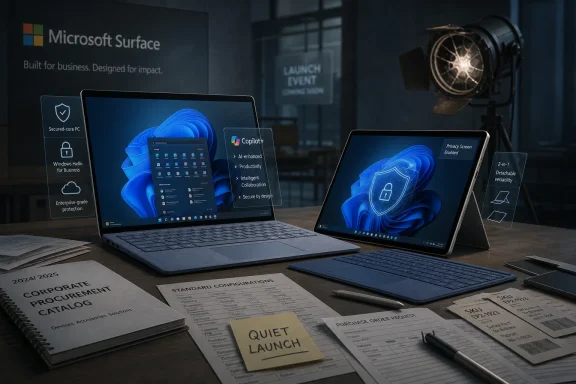 Microsoft Turns Surface Week Into a Spec Sheet
There was a time when a Surface launch felt like Microsoft taking the stage to argue with the entire PC industry. The original Surface was not merely a tablet with a kickstand; it was a rebuke to the idea that Windows hardware had to be beige, plastic, and compromised. The Surface Book’s detachable display, the Surface Studio’s gravity-defying hinge, and the early Surface Pro experiments all carried the same message: Microsoft would build the thing OEMs were too cautious to attempt.The 2026 Surface launch did not feel like that. Microsoft announced Surface Laptop for Business 8th Edition, Surface Pro for Business 12th Edition, and related business-focused hardware with Intel Core Ultra Series 3 chips, display refinements, haptic improvements, security positioning, and AI PC language. On paper, that is a perfectly legitimate product refresh. In practice, it landed with the emotional force of a firmware changelog.
That matters because Surface has never competed purely on price or raw performance. The line has always depended on story. Buyers paid extra because Surface represented Microsoft’s own idea of a premium Windows machine: restrained industrial design, unusually good input hardware, clean Windows integration, and a sense that the platform owner was showing the rest of the ecosystem where to go next.
A quiet launch does not automatically mean a bad product. But when a premium hardware brand stops behaving like it has something to prove, customers notice. So do reviewers, IT departments, and rival OEMs that are now more than happy to occupy the territory Surface once claimed as its own.
The Hardware Is Better Than the Launch Suggested
The irony is that Microsoft did announce real upgrades. The new Surface Laptop for Business is not an empty badge refresh. Reviews have pointed to strong performance, a crisp display, a better touchpad experience, and an optional privacy screen that is genuinely useful for mobile professionals.The Surface Pro for Business refresh also fits Microsoft’s long-standing pitch to enterprise buyers. It is a 2-in-1 designed for workers who move between desks, meeting rooms, field sites, and airports. In that context, features such as cellular connectivity, pen support, repairability considerations, manageability, and security tooling matter more than whether a consumer YouTube channel finds the device exciting.
The new Intel Core Ultra Series 3 chips are part of the broader 2026 AI PC push, and Microsoft is plainly trying to position these Surface models as business-ready Copilot+ machines rather than enthusiast toys. That is a coherent strategy. Enterprises want devices that can be deployed, secured, managed, serviced, and justified on a spreadsheet.
But coherence is not the same as charisma. Surface used to be one of the few PC brands that could make component upgrades feel like part of a larger design argument. This year, Microsoft seemed content to let the specs speak for themselves, even though specs are the one language where Surface is most vulnerable to cheaper, louder, and increasingly polished competitors.
The Business-First Strategy Has a Consumer Cost
Microsoft’s decision to lead with business hardware is understandable. Enterprise buyers generate predictable revenue, tolerate higher prices, and care about support commitments that rarely show up in consumer reviews. Surface for Business devices also come with features and service expectations that make more sense in managed environments than on a Best Buy shelf.The problem is that Surface’s public identity was never built by procurement managers alone. It was built by enthusiasts, students, developers, journalists, designers, and Windows loyalists who wanted Microsoft to make hardware worthy of the operating system’s ambitions. Those people may not buy fleet quantities, but they create the aura around the brand.
When Microsoft announces business models first and tells everyone else to wait for consumer variants later, it fragments the story. Buyers hear that the “real” lineup is incomplete. Reviewers compare expensive business SKUs against consumer laptops from Lenovo, HP, Asus, Samsung, Dell, and Apple. Fans see another staggered rollout and conclude that even Microsoft does not know how to present Surface as a unified family.
That staggered approach is especially awkward in 2026 because the Windows laptop market is no longer waiting for Microsoft to lead. Qualcomm’s Snapdragon X platform has matured, Intel’s AI PC roadmap is now central to Windows marketing, and OEMs have learned how to build thin, premium machines with better battery life and more aggressive pricing. Surface cannot rely on being the default premium Windows answer anymore.
The Snapdragon Split Makes the Message Muddier
The most telling absence from this launch was not a foldable, a new Surface Studio, or some speculative future device. It was the simultaneous consumer story. Microsoft reportedly has Snapdragon X2-based Surface Pro and Surface Laptop models coming later in the year, but announcing the Intel business machines without that consumer counterpart made the lineup feel half-present.That split may make sense internally. Intel business devices and Snapdragon consumer devices target different buying cycles, software compatibility assumptions, and deployment preferences. Enterprises often move cautiously around Arm PCs, even when compatibility is much improved, while consumers may be more receptive to battery life and fanless designs if the price is right.
But customers do not experience roadmaps the way product managers do. They see Surface Laptop here, Surface Laptop later, business models now, consumer models eventually, Intel today, Snapdragon soon, 8GB configurations reportedly returning to hit lower prices, and a brand that already has a history of confusing names and overlapping editions. That is not a launch strategy. It is a filing system.
The naming problem compounds the issue. Surface Pro and Surface Laptop once had a reasonably clear rhythm. Now the line is layered with business editions, numbered generations, inch-based identities, processor splits, and consumer/business timing gaps. For IT administrators, that may be manageable with SKU sheets. For everyone else, it makes Surface feel less like a flagship and more like a matrix.
Premium Pricing Needs Premium Theater
Surface has always been expensive. That was defensible when the devices felt like Microsoft’s best shot at defining the category. A high price is easier to justify when the product is visibly special, when the launch creates desire, and when the customer understands exactly why this machine exists instead of a cheaper rival.The 2026 pricing conversation is harsher because the broader market is harsher. Windows laptops have improved dramatically. Lenovo’s Yoga and ThinkPad lines, Asus’s Zenbook machines, HP’s Spectre and EliteBook families, Dell’s premium XPS and business systems, and Samsung’s Galaxy Book devices all attack parts of Surface’s old territory. Some are thinner, some are cheaper, some have better port selections, and some are simply more exciting.
Apple remains the shadow comparison whether Microsoft likes it or not. MacBook Air has trained mainstream buyers to expect silent or near-silent performance, excellent battery life, strong displays, and long support at prices that often undercut high-end Surface configurations. Surface does not need to become a MacBook clone, but it does need to make the Windows alternative feel deliberate rather than defensive.
This is where Microsoft’s low-key launch did real damage. If a company wants customers to pay flagship prices, it has to behave like it is selling a flagship. A blog post can distribute information. It cannot create conviction.
The AI PC Pitch Is Not Enough to Carry the Brand
Microsoft’s Surface messaging now leans heavily on AI acceleration, Copilot+ PC capabilities, neural processing units, and enterprise productivity. That is inevitable given Microsoft’s broader corporate strategy. Windows, Office, Azure, GitHub, and Surface are all being pulled into the same AI narrative.But AI is not yet a substitute for product identity. Many users still do not know which Copilot+ features they will use daily, which ones depend on hardware, which ones depend on cloud services, and which ones are blocked by configuration choices. If Microsoft itself ships or plans lower-memory Surface variants that do not fully fit the Copilot+ story, the message becomes even harder to sustain.
For IT buyers, AI PC positioning may become important over the life of a deployment cycle. A machine bought in 2026 may need to run local AI features in 2028. In that sense, Microsoft is right to push hardware acceleration and modern silicon.
For enthusiasts and ordinary consumers, however, “AI PC” is not yet a reason to love a laptop. It is a label. Surface used to sell the physical experience first: the hinge, the pen, the keyboard, the magnesium chassis, the screen ratio, the way Windows adapted to the form factor. In 2026, Microsoft risks leading with a corporate slogan while the tactile reasons to choose Surface fade into the background.
The Privacy Screen Shows What Surface Still Can Do
The optional privacy screen on the new Surface Laptop for Business is a useful reminder that Surface is not out of ideas. It is a practical feature aimed at people who work in public spaces, on planes, in cafes, in hospitals, in client offices, and in open-plan workplaces. It is not glamorous, but it is specific.That specificity is important. The best Surface features have usually solved real physical computing problems. The kickstand solved lap and table positioning for a tablet PC. The detachable keyboard made the Surface Pro concept legible. The Surface Dial, even as a niche accessory, reflected a willingness to rethink input. The Studio hinge made a desktop PC feel like a drafting table.
The privacy screen belongs to that tradition more than another AI marketing badge does. It says Microsoft still knows how to build business hardware around actual use cases. But even here, the execution reportedly comes with caveats, including configuration tradeoffs that prevent customers from combining every desirable feature in a single model.
That is the kind of thing Surface fans find maddening. Premium buyers do not want to learn that the best display option excludes another connectivity option they need. They want Microsoft to present the definitive version of the device and then let price, not artificial segmentation, be the only painful choice.
Surface Lost the Stage Because Windows Found Other Stars
The decline of Surface as an event brand is partly Microsoft’s own doing, but it also reflects a changed Windows ecosystem. In the early 2010s, Microsoft had to embarrass its OEM partners into taking tablets, touch, pens, and premium industrial design seriously. Today, many of those partners no longer need the lesson.Lenovo can make a thin Arm laptop with excellent battery life. Asus can build striking OLED machines with aggressive pricing. HP and Dell can produce enterprise notebooks with mature manageability and service programs. Samsung can integrate Windows laptops into a broader device ecosystem. Qualcomm and Intel now fight to be the star of the Windows hardware story.
That leaves Surface in a more complicated role. If Microsoft tries to out-OEM the OEMs, it often loses on price, configuration variety, and channel reach. If it tries to build experimental hardware, it risks niche appeal and uneven execution. If it retreats into business refreshes, it protects revenue but weakens the brand’s public imagination.
The best version of Surface has always lived between those extremes. It should be polished enough for professionals, ambitious enough for enthusiasts, and opinionated enough to influence the market. The 2026 launch showed polish. It did not show ambition.
Fans Are Not Angry Because They Hate Surface
The frustration around Surface is sharper than ordinary product disappointment because many of the loudest critics are former believers. They remember when Surface felt like Microsoft’s hardware manifesto. They bought Surface Pro devices despite thermal compromises, paid extra for Type Covers, defended Windows on tablets, and treated every new hinge or form factor as evidence that Microsoft still had hardware nerve.That audience is not asking Microsoft to reinvent computing every May. They are asking for signs of life. A more coherent launch, a clearer Intel-and-Arm story, fewer feature tradeoffs, more competitive consumer pricing, and one genuinely surprising hardware idea would go a long way.
Instead, Microsoft’s message this year was essentially: here are the business machines, the consumer machines are coming later, the AI story continues, and please read the blog. That might be adequate for a channel partner briefing. It is not enough for a brand with Surface’s history.
The danger is not that Surface will disappear tomorrow. Microsoft has enough enterprise demand, internal use cases, and strategic reasons to keep making PCs. The danger is that Surface becomes just another Microsoft hardware line: competent, managed, expensive, and culturally invisible.
Enterprise Buyers Will Care Less About the Drama
It is worth separating enthusiast disappointment from enterprise reality. A CIO evaluating Surface for Business is not necessarily looking for theater. They care about Windows Autopilot, firmware management, security baselines, warranty handling, replaceable components, device consistency, and whether the machines can survive a three- or four-year deployment cycle.From that angle, Microsoft’s quieter approach may even look mature. Business buyers do not need a keynote to know whether a device fits their fleet. They need documentation, availability, pricing, support, and a stable roadmap. Surface for Business can succeed in that channel even if Reddit and tech media yawn.
But Surface’s enterprise credibility and consumer prestige have historically reinforced each other. The device on the executive’s desk looked desirable because it was also the device in the launch video. The tablet in the sales team’s bag felt premium because Microsoft had spent years telling the world Surface represented the best of Windows.
If that prestige fades, business Surface becomes easier to compare against ThinkPads, EliteBooks, Latitudes, and corporate MacBooks on purely practical terms. That is dangerous territory for Microsoft. In procurement math, romance is not the whole argument, but it helps.
The 8GB RAM Shadow Falls Across the AI Pitch
One of the more uncomfortable reports around this Surface cycle is the expected return of an 8GB RAM Surface Laptop configuration to lower the starting price. If that model ships without qualifying for Copilot+ PC features, Microsoft will have created a strange contradiction: a Surface line marketed in the age of AI PCs that includes a modern machine below the threshold of Microsoft’s own AI branding.There are reasons this could happen. Memory prices have been volatile, and lower entry prices matter if Microsoft wants consumer Surface models to avoid looking absurdly expensive. Plenty of everyday Windows users can still browse, stream, write, and live in Office on 8GB, especially with disciplined workloads and fast storage.
But Surface is not supposed to be the device that merely clears the minimum. It is supposed to be Microsoft’s example of what a Windows PC should be. In 2026, that example should not make buyers wonder whether they are purchasing into the future or buying a compromised machine designed to hit a marketing price.
The issue is not RAM alone. It is the pattern. Staggered launches, split silicon, business-first pricing, feature gatekeeping, confusing names, and possible low-memory compromises all point to a Surface organization trying to satisfy too many constraints without presenting a clean argument to the market.
Microsoft Does Not Need a Gimmick, It Needs Conviction
The easy response is to demand a wild new Surface device: a foldable, a dual-screen revival, a modular laptop, a new Studio, or some kind of AI-first hardware experiment. Microsoft may eventually need another swing like that. But the immediate problem is not the absence of a gimmick.The immediate problem is conviction. Microsoft could have made this launch feel stronger without inventing a new category. It could have announced the Intel business machines and the Snapdragon consumer roadmap together. It could have explained exactly who should buy each model. It could have shown why Surface hardware remains the best expression of Windows in an AI PC era.
It also could have staged the launch like a company proud of its work. Not every product needs a stadium keynote, but Surface deserves more than a whisper. A short livestream, focused demos, side-by-side silicon positioning, real-world battery and performance narratives, and candid discussion of business versus consumer differences would have changed the tone immediately.
The point is not spectacle for its own sake. The point is that premium hardware requires trust, and trust is built through clarity. Microsoft’s current Surface strategy asks customers to infer too much.
The Surface Brand Now Has to Earn Its Own Premium
Surface can no longer coast on being Microsoft’s PC. That used to be enough. It meant clean Windows, thoughtful design, and a device that felt closer to the operating system’s center of gravity than anything else on the shelf.In 2026, Windows itself is more diffuse. Some of the best Windows experiences may come from OEMs that are faster, cheaper, or more willing to experiment with displays, batteries, materials, and form factors. Microsoft’s own hardware must now compete not only with Apple, but with the Windows ecosystem it helped improve.
That is a good problem for Windows users. It means buyers have options. It means Surface does not have to carry the entire platform’s premium ambitions alone. But it also means Microsoft must stop treating Surface as if its relevance is guaranteed.
The company’s next consumer Surface launch will matter more than this business refresh because it will answer a simple question: does Microsoft still know how to make ordinary people want a Surface, not merely approve one for deployment?
The Quiet Launch Said More Than the Spec Sheet
The most important lesson from this Surface cycle is not that Microsoft announced bad hardware. It is that Microsoft announced decent hardware in a way that made the entire brand feel smaller. That is fixable, but only if Microsoft treats communication, pricing, and lineup coherence as part of the product.- Microsoft’s May 2026 Surface announcements were real hardware updates, but their blog-first rollout made them feel routine rather than flagship.
- The business-first strategy may serve enterprise buyers, but it leaves enthusiasts and consumers with an incomplete story.
- Staggering Intel and Snapdragon models weakens Microsoft’s ability to explain why each Surface exists and who should buy it.
- Premium Surface pricing is harder to defend when rival Windows laptops and MacBooks offer stronger value narratives.
- The AI PC message cannot replace the older Surface promise of distinctive hardware design, clear configuration choices, and visible platform leadership.
- Microsoft can still repair the brand, but it needs a unified consumer launch that shows confidence rather than caution.
References
- Primary source: Windows Central
Published: Sun, 24 May 2026 14:00:00 GMT
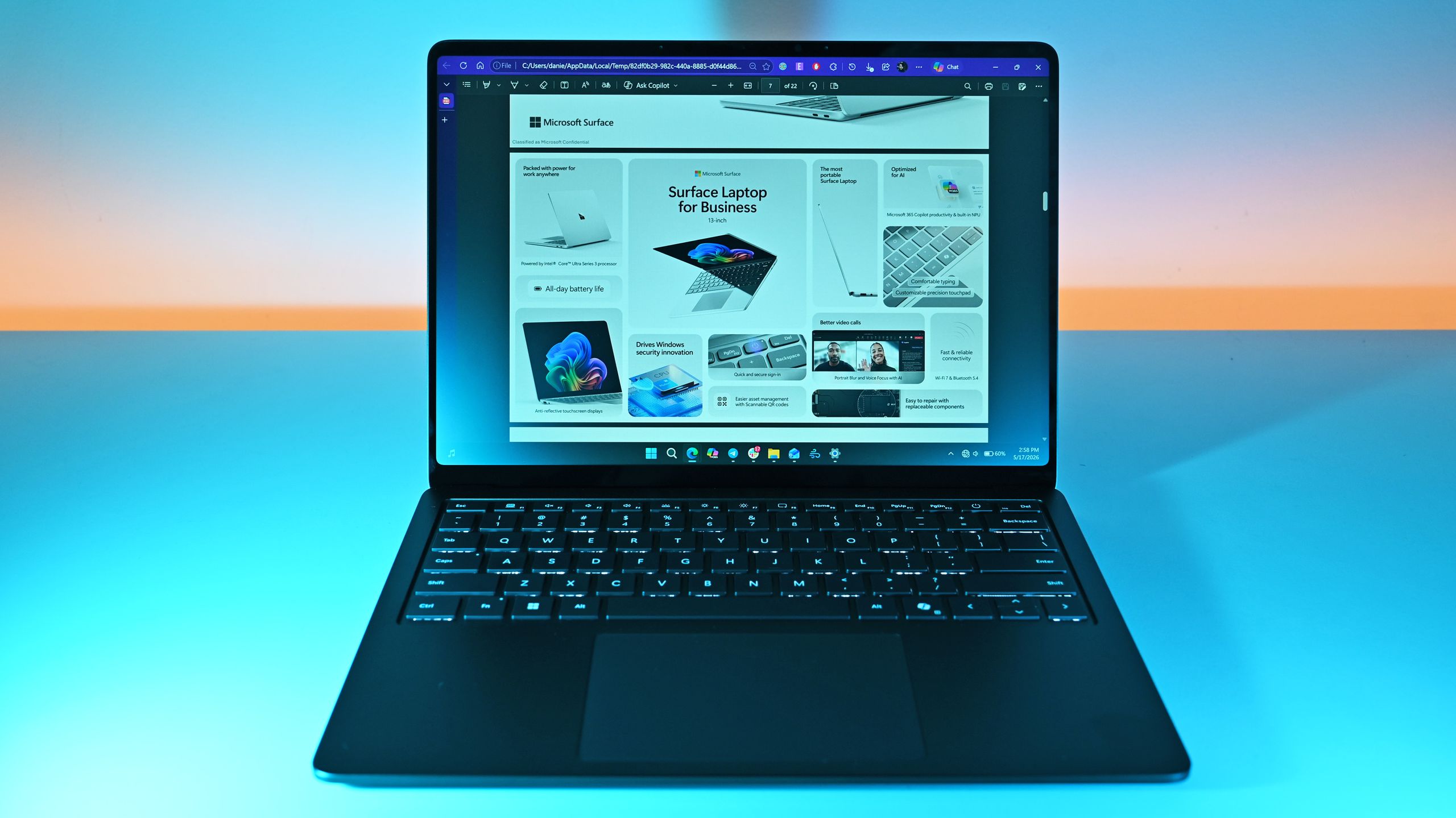
Surface week used to matter. This year, it barely registered.
Microsoft dropped new Surface hardware with no event, no energy, and no clear plan. Staggered releases and split features continue to drag the brand down. www.windowscentral.com
- Related coverage: tomshardware.com

New Microsoft Surface for Business PCs pair Panther Lake chips with as little as 8GB of RAM — 13-inch Surface Laptop goes light on memory but still starts at $1,299
The AI gold rush crimps the local AI ambitions of the cheapest business-focused Surfacewww.tomshardware.com
- Related coverage: itpro.com
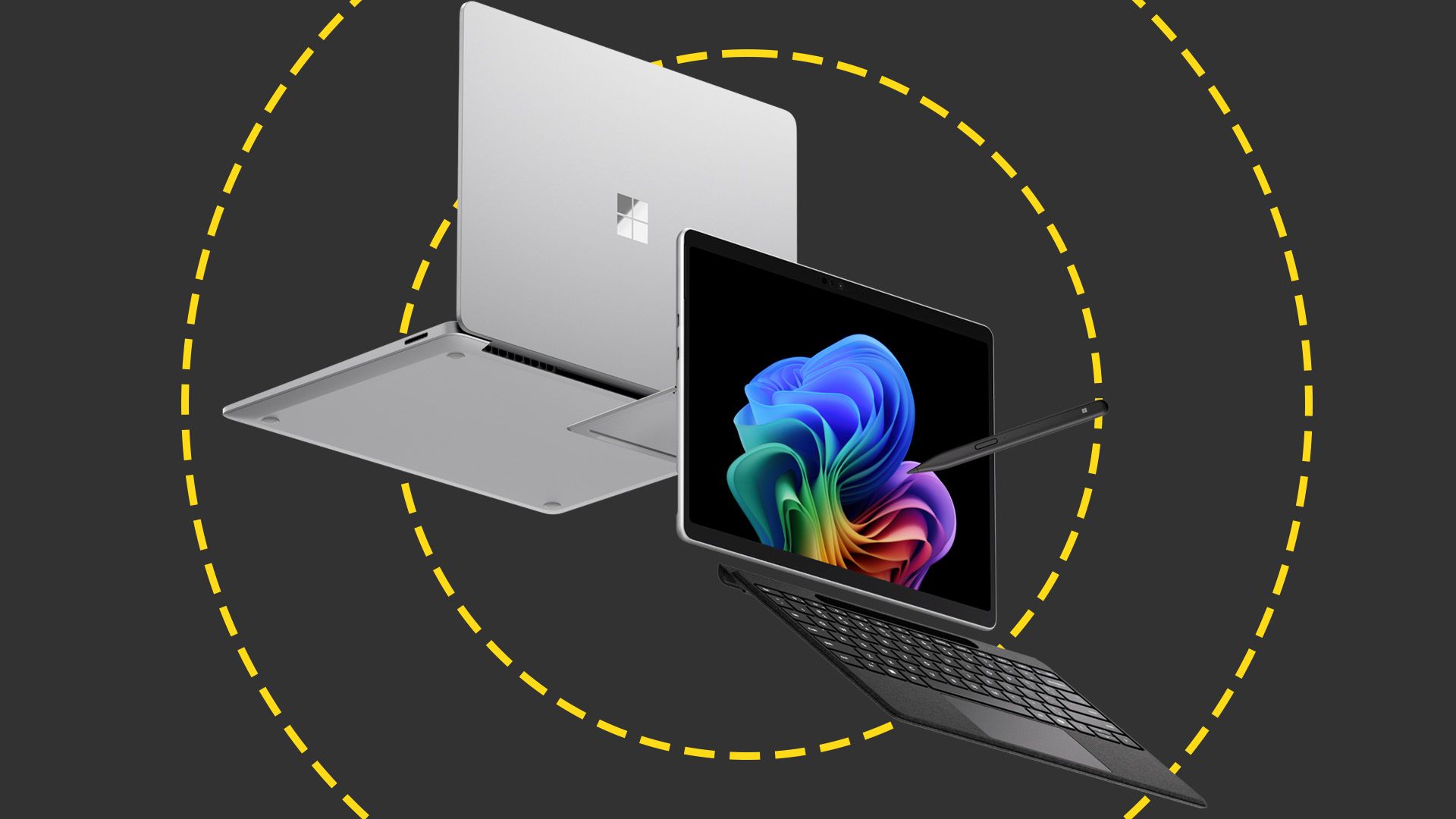
Microsoft reveals Surface Pro and Surface Laptop for Business with Intel Core Ultra 3 series processors
New 13in Pro and Laptop claim big performance improvements and vast AI capabilities www.itpro.com
- Related coverage: tomsguide.com
- Official source: blogs.windows.com

Introducing new Surface devices built for business and AI acceleration
Every IT leader and partner we work with is navigating the same challenges: AI is changing the demands of how teams work, security threats are growing more sophisticated and agents are changing investment decisions for the future. All under greater s blogs.windows.com
- Related coverage: notebookcheck.net

Microsoft releases new Surface Pro 12 with 64 GB RAM and cellular connectivity
Microsoft has finally released the Surface Pro 12. Available globally with Intel Panther Lake processors, the 'for Business' model also comes with optional cellular connectivity, up to 64 GB RAM and a 120 Hz OLED display. www.notebookcheck.net
- Related coverage: techradar.com

Microsoft unveils new Surface for Business laptops and Surface Pro for Business 2 in 1 device
Microsoft wants your next work laptop or PC to be a Surface - and has a host of new devices to convince you.www.techradar.com
- Related coverage: winbuzzer.com
- Related coverage: hardware.slashdot.org

Microsoft Launches Surface Pro 12, Surface Laptop 8 With Intel Chips - Slashdot
Microsoft is launching three new Intel-powered Surface devices for businesses: the Surface Pro 12, Surface Laptop 8, and a smaller 13-inch Surface Laptop model. These new machines come equipped with newer Intel chips, a few business-focused upgrades, and notably higher starting prices. "The high...hardware.slashdot.org - Related coverage: petri.com
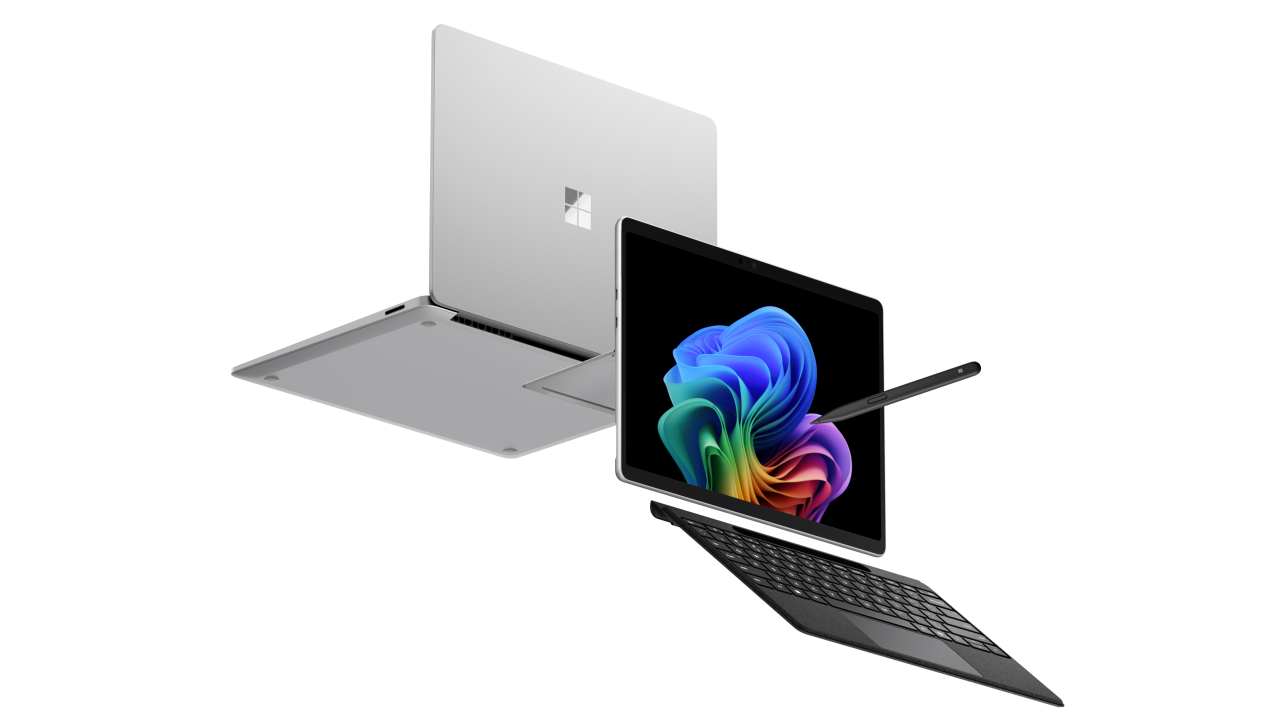
Microsoft Announces Surface Pro 12 and Surface Laptop 8 for Business with Intel Chips
Microsoft updates Surface Pro and Laptop for Business with Intel Core Ultra chips, adding AI performance and enterprise features. petri.com
- Related coverage: ubergizmo.com
Microsoft Launches Surface Pro 12 And Laptop 8 With Intel Core Ultra SoCs
Microsoft has officially introduced the Surface Pro 12 and Surface Laptop 8, focusing primarily on the business market. Moving away from an exclusive... www.ubergizmo.com
- Related coverage: theregister.com

Microsoft refreshes Surface for Business lineup, starts AI PC upsell at $1,499
Latest hardware adds Intel’s newest AI-focused processors as Redmond continues pushing enterprises toward Copilot+ PCswww.theregister.com
- Related coverage: tecnogeek.com
- Official source: microsoft.com
- Related coverage: dandh.com
