

Satya Nadella’s simple assurance — “For me, we’re long on gaming. We’ll continue to invest, and we’ll always do so.” — landed like a deliberate corrective: a public, top‑down pledge that Microsoft’s new gaming era will be defended at the very highest level of the company. That message arrived during an internal Q&A hosted by Xbox’s incoming CEO, Asha Sharma, where Nadella framed gaming as one of Microsoft’s enduring “core identities” and explicitly tied the future of Xbox hardware and creativity back to Microsoft’s broader platform ambitions. The exchange came as Microsoft revealed Project Helix — a codename for what Sharma described as a next‑generation console that will natively run both Xbox and PC games — and followed a sweeping leadership change that saw long‑time Xbox boss Phil Spencer retire. The combination of leadership turnover, a hardware pivot toward a console‑PC hybrid, and Nadella’s public recommitment creates a clear narrative: Microsoft wants to reassure gamers and developers that Xbox still matters — but the real test will be execution, not rhetoric.
Microsoft’s gaming business has been through several major shifts in recent years: expanding Game Pass into a subscription juggernaut, pursuing a massive acquisition strategy to bulk up first‑party studios, and integrating cloud streaming and PC storefront ambitions into Xbox’s DNA. That history is the backdrop for the most consequential change in early 2026: Phil Spencer’s retirement after nearly four decades at Microsoft and the promotion of Asha Sharma to lead Microsoft Gaming. The internal reshuffle also included Sarah Bond’s departure and the elevation of Matt Booty to chief content responsibilities — decisions that signal both continuity and a new strategic emphasis.
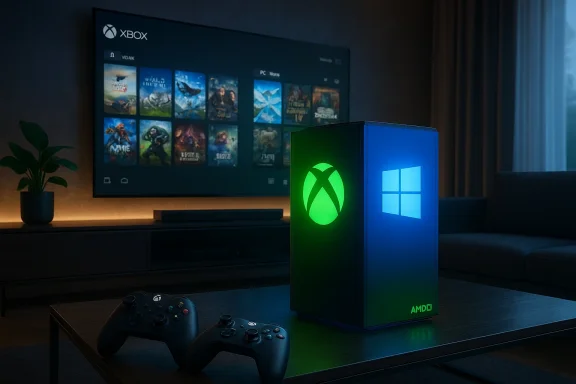
Sharma’s early public messaging has focused on three pillars: recommitting to console as the reference experience, delivering great games, and rethinking how Xbox can bridge console and PC ecosystems. The most tangible expression of that thesis so far is Project Helix, which Sharma confirmed will “lead in performance and play your Xbox and PC games,” a positioning that purposely blurs the historical line between a closed console and an open Windows PC. Industry outlets and Microsoft’s own internal coverage have amplified that announcement in the days following Sharma’s initial teaser.
When Nadella said “we’ll continue to invest, and we’ll always do so,” the line carried two important signals:
Tom’s Hardware’s reporting included a timing note from AMD leadership indicating that AMD’s semi‑custom SoC work for Microsoft is progressing to support a potential 2027 launch window — an important engineering milestone but not a firm ship date. Independent outlets such as PC Gamer and GamesRadar have likewise covered Sharma’s initial reveal and the hybrid positioning.
Two important technical vectors to watch:
But there are three reasons why a CEO’s promise is not enough by itself:
But pledge and promise are only the beginning. The real measure of Microsoft’s renewed commitment will be the next 24 months of decisions: concrete hardware roadmaps, developer contracts that respect creative autonomy, marketing campaigns that rekindle consumer excitement, and the hard engineering work needed to make a hybrid console dependable and delightful.
Microsoft has the balance sheet, platform advantages, and internal talent to make a meaningful return to form in gaming. It also faces a series of hard choices that will define whether Xbox becomes a premium, widely available hybrid platform — or an intriguing but niche experiment. The leadership tone has shifted; now the organization needs the discipline, product clarity, and cultural humility to match it. The industry will be watching closely.
Source: Windows Central Microsoft's CEO to Xbox: We will "always" invest in gaming.
 Background / Overview
Microsoft’s gaming business has been through several major shifts in recent years: expanding Game Pass into a subscription juggernaut, pursuing a massive acquisition strategy to bulk up first‑party studios, and integrating cloud streaming and PC storefront ambitions into Xbox’s DNA. That history is the backdrop for the most consequential change in early 2026: Phil Spencer’s retirement after nearly four decades at Microsoft and the promotion of Asha Sharma to lead Microsoft Gaming. The internal reshuffle also included Sarah Bond’s departure and the elevation of Matt Booty to chief content responsibilities — decisions that signal both continuity and a new strategic emphasis.Sharma’s early public messaging has focused on three pillars: recommitting to console as the reference experience, delivering great games, and rethinking how Xbox can bridge console and PC ecosystems. The most tangible expression of that thesis so far is Project Helix, which Sharma confirmed will “lead in performance and play your Xbox and PC games,” a positioning that purposely blurs the historical line between a closed console and an open Windows PC. Industry outlets and Microsoft’s own internal coverage have amplified that announcement in the days following Sharma’s initial teaser.
The Q&A: What Nadella Actually Said — and Why It Matters
Reassurance from the top
Satya Nadella’s presence at an Xbox all‑hands — wearing an Xbox hoodie, no less — is more than symbolic theatre. In the internal conversation, Nadella argued that gaming is a foundational identity of Microsoft, on par with being a platform and developer company. He explicitly linked gaming to technological advances across Microsoft: DirectX’s role in the GPU revolution, games as an accelerator for cloud and Windows capabilities, and gaming’s unique capacity to be emotionally resonant and consumer‑facing. Those remarks were documented and circulated internally, and were reported in detail by outlets that reviewed the verified Q&A transcript.When Nadella said “we’ll continue to invest, and we’ll always do so,” the line carried two important signals:
- A financial and strategic commitment from Microsoft’s highest executive.
- Permission — and pressure — for the Xbox organization to act boldly while delivering tangible results.
The core of the message
Nadella’s framing was twofold. First, he positioned gaming as an engine of technological innovation — a justification for corporate investment that goes beyond pure market share. Second, he emphasized the cultural and emotional value of games: storytelling, craftsmanship, and the “joy” of active engagement versus passive attention economies. That latter point is explicitly rhetorical but important: it stakes a claim about the kind of company Microsoft wants to be for players — one that prizes craftsmanship over purely algorithmic scale.Project Helix: What Microsoft Has Announced (and What It Hasn’t)
What we know
Asha Sharma has publicly confirmed the codename Project Helix and described it as a next‑generation Xbox that will “play your Xbox and PC games.” Multiple outlets that reviewed Sharma’s public messaging and related reporting corroborated the hybrid positioning: the machine is being described as a living‑room device with Windows‑adjacent capabilities that can run full PC titles in addition to Xbox console first‑party and third‑party games. Industry reporting has also tied Project Helix to Microsoft’s strategic relationship with AMD, which is co‑engineering custom silicon to be used across a family of devices.Tom’s Hardware’s reporting included a timing note from AMD leadership indicating that AMD’s semi‑custom SoC work for Microsoft is progressing to support a potential 2027 launch window — an important engineering milestone but not a firm ship date. Independent outlets such as PC Gamer and GamesRadar have likewise covered Sharma’s initial reveal and the hybrid positioning.
What we don’t know — and must watch
- Exact hardware specifications and how the SoC will balance PC compatibility and console power.
- The operating system experience: will Helix run a customized, console‑first Windows variant, a bespoke Xbox OS with Windows compatibility layers, or a full Windows stack?
- Storefront and DRM/anti‑cheat mechanics: how will Helix authenticate and run PC games from third‑party stores while preserving console‑grade stability?
- Pricing and global availability: analysts are already projecting a premium price if Helix genuinely bridges console and PC feature sets — an outcome with clear tradeoffs for market penetration.
The AMD Partnership and Timeline Realism
Microsoft’s reported multi‑year relationship with AMD is the engineering bedrock for Helix. AMD’s role is reportedly to deliver a semi‑custom SoC tailored to Microsoft’s hybrid ambitions, and the company’s leadership has publicly signaled engineering timelines that make a 2027 availability plausible. That still leaves ample risk: SoC development cycles, foundry constraints, yields, software optimization, and supply chain logistics all have to align across multiple years. Past console launches show how fragile those paths can be when parts shortages, thermal tradeoffs, or software readiness slip.Two important technical vectors to watch:
- Driver parity and GPU feature compatibility: running PC titles — especially esports and heavily modded titles — will require regular driver updates and a commitment to standards that typical console lifecycles rarely tolerate.
- Anti‑cheat and matchmaking: PC anti‑cheat stacks are notoriously intrusive; hybrid hardware will need a consistent, low‑latency path to support both console‑grade matchmaking and PC anti‑cheat demands without fragmenting the player base.
Why Nadella’s Pledge Is Strategically Important — and Not a Magic Bullet
Satya Nadella’s pledge solves a short‑term political problem inside Microsoft: it signals to teams, partners, and public audiences that gaming is not being deprioritized. That alleviates immediate fears among studio leads and hardware engineers who were concerned about a shift toward platformization or AI‑first rationales without a commitment to entertainment. It also helps repair, in part, brand perception among gamers who have worried about Xbox’s direction following leadership disruption.But there are three reasons why a CEO’s promise is not enough by itself:
- Execution risk: Software and creative production are high‑variance businesses. Nadella’s words create accountability, but they do not reduce the creation risk that Satya acknowledged — games are expensive, slow, and uncertain investments.
- Market dynamics: The console market is intensely competitive, and Microsoft must balance premium hardware aspirations with market realities (price sensitivity, global footprint, and regional retail channels).
- Developer trust: Studios care more about roadmap clarity, marketing support, and studio autonomy than topline promises. Microsoft must translate investment pledges into concrete developer terms: IP stewardship, marketing spends, and sandboxed autonomy for creative teams.
Strengths: Where Microsoft Has Real Advantages
- Platform integration: Microsoft has a unique ability to blur Windows and Xbox capabilities, and Helix — if delivered — could leverage that integration into features competitors find hard to match. This is strategic differentiation, not just incrementalism.
- Deep pockets and corporate scale: Microsoft can sustain multi‑year investments in studios and hardware in ways smaller players cannot. Nadella’s pledge makes it clear the balance sheet is on the table.
- Talent and institutional memory: The Xbox organization still contains a deep bench of long‑tenured engineers and creatives; internal reports noted that a significant fraction of staff have decades of Xbox experience. That cultural memory matters for execution and continuity.
- Game Pass and services leverage: Microsoft’s subscription platform remains a strong lever to acquire and retain players across devices — a powerful distribution advantage for both first‑party and curated third‑party titles.
Risks and Fault Lines: Why the Road Ahead Is Fraught
- Community trust deficit: A long period of strategic ambiguity and perceived neglect has created a vocal segment of Xbox fans convinced the brand is weakened. Words will not restore trust; predictable product timelines, meaningful exclusives, and marketing investments will.
- Exclusive content confusion: Reporting and commentary have suggested a debate inside Microsoft about first‑party exclusives and where classic franchises should live. Some coverage and community speculation have framed this as Microsoft “divesting” content, a claim that lacks clear public evidence and should be treated cautiously — there is no public record that Microsoft has sold core franchises to PlayStation or comparable rivals. Any change to franchise availability would be an enormous commercial and cultural decision requiring transparent rationale. Flagged as unverifiable until Microsoft provides clearer details.
- Hardware and software complexity: Building a box that is both a best‑in‑class console and a first‑class PC is technically ambitious. Performance tradeoffs, driver complexity, and QA cycles all multiply as the codebase grows. The console market historically rewards focused, well‑polished experiences; diluting that focus risks alienating both console purists and PC enthusiasts.
- Pricing and market segmentation: Analyst commentary already suggests Project Helix could be a premium product. If Helix is priced too high, it may become niche; priced too low, it could compress margins and lengthen the path to profitability in an already capital‑intensive segment.
- Regulatory and competitor response: Any move to tightly integrate Xbox's console and Windows ecosystems will invite scrutiny about platform leverage and neutral treatment of third‑party stores and publishers. Microsoft must thread compliance and antitrust considerations into product planning.
The Exclusives Debate — Revisited and Clarified
There’s active debate about whether Xbox should retain exclusive games as a core differentiator. Here are the key dimensions to the debate, stripped of rumor and framed as a strategic question:- Market positioning: Exclusives historically give consoles a reason to exist — they are the anchor experiences that drive platform purchases and cultural identity.
- Services dynamics: Microsoft has partially offset the need for strict exclusivity with Game Pass distribution, which changes how exclusivity drives revenue and retention.
- Developer economics: Exclusive deals can finance longer development cycles, but they also limit audience reach and can anger fanbases when franchises are siloed.
What This Means for Developers, Players, and the Market
For developers
- Expect new engineering targets and potential new certification criteria if Helix aims to be a cross‑platform machine. Studios should anticipate a heavier emphasis on cross‑compatibility testing, driver coordination, and possibly new pipelines for anti‑cheat and DRM.
- Budgeting and timelines may shift if Microsoft channels more funding to platform blends; studios will want clarity on autonomy and creative control.
For players
- The promise of a single box that runs both PC and console games is attractive — but players will judge Microsoft on execution: input latency, stability, performance parity, and a coherent UI flow across PC and console titles.
- Gamers will also be watching marketing: Microsoft has to rebuild public-facing excitement for Xbox hardware and games, something that has been sporadic in recent cycles.
For the market
- Project Helix, if it ships as advertised, would be a structural shakeup for the living room: it would nudge the industry toward greater convergence between PC and console offerings and would force competitors to clarify their own platform strategies.
- If Microsoft mishandles pricing, developer support, or global rollout, the project could be relegated to a niche product that satisfies enthusiasts but fails to move the needle in market share.
Four Things Microsoft Must Get Right
- Clear product definition: Ship a console that knows what it is — a hybrid is fine, but the user experience cannot be a compromise between two imperfect paradigms.
- Developer certainty: Publish studio‑friendly roadmaps, marketing commitments, and clarity on IP stewardship to rebuild trust.
- Quality over speed: Prioritize QA, anti‑cheat stability, and driver support; the hybrid architecture multiplies sources of failure.
- Transparent communication: Treat the community as a partner. Ambiguity creates rumor; clarity reduces it.
Conclusion
Satya Nadella’s pledge that Microsoft will “always” invest in gaming is a deliberate strategic signal: gaming matters at the core of Microsoft’s identity, and project teams now have corporate permission and expectation to invest accordingly. Asha Sharma’s early moves — especially the Project Helix reveal and the emphasis on console as a reference experience — show a clear product thesis: rebuild Xbox’s hardware credibility while leveraging Microsoft’s PC and services strengths.But pledge and promise are only the beginning. The real measure of Microsoft’s renewed commitment will be the next 24 months of decisions: concrete hardware roadmaps, developer contracts that respect creative autonomy, marketing campaigns that rekindle consumer excitement, and the hard engineering work needed to make a hybrid console dependable and delightful.
Microsoft has the balance sheet, platform advantages, and internal talent to make a meaningful return to form in gaming. It also faces a series of hard choices that will define whether Xbox becomes a premium, widely available hybrid platform — or an intriguing but niche experiment. The leadership tone has shifted; now the organization needs the discipline, product clarity, and cultural humility to match it. The industry will be watching closely.
Source: Windows Central Microsoft's CEO to Xbox: We will "always" invest in gaming.