

Capcom’s latest look at Monster Hunter Stories 3: Twisted Reflection centers on a surprisingly deep and modern character creator, one that promises customization on a scale usually reserved for mainline Monster Hunter entries — and it arrived packaged with footage from Gamescom Asia and a follow-up clip posted to the franchise’s official social channels. The reveal not only shows an unexpectedly robust suite of sliders, presets and cosmetic accessories, but it also raises fresh questions about Capcom’s cosmetic economy after years of microtransaction-driven content in its flagship titles.
Monster Hunter Stories 3: Twisted Reflection is the next major installment in Capcom’s turn-based, creature-collecting JRPG offshoot. It was announced during 2025 partner showcases and is scheduled for a cross-platform launch on March 13, 2026, arriving on Nintendo Switch 2, PlayStation 5, Xbox Series X|S and PC via Steam. This positioning marks Stories 3 as both the first main Stories entry built for the next Nintendo hardware generation and as a multiplatform release intended to reach the widest possible audience. Capcom’s recent promotional push included a Gamescom Asia segment and additional clips distributed through the Monster Hunter social channels. One of those clips focuses entirely on the game’s character creation tools; the footage is a relatively lengthy walkthrough of options that range from body types and facial features to hairstyle components and monster-derived “Monster Hair” presets. Multiple outlets picked up the footage, and Capcom’s official post amplified it for global audiences.
However, the demo also serves as a reminder that aesthetics and economics are inseparable in modern AAA publishing. Capcom’s past use of paid layered armor and cosmetic passes in mainline games means players should remain cautiously optimistic about the Wyverian ears and similar items appearing in Stories 3. Until Capcom provides a clear post-launch plan for cosmetics, the presence of an item in a demo video is not definitive proof of a generous post-sale policy.
Monster Hunter Stories 3 is building excitement for good reasons: polished visuals, clear franchise DNA, and a more sophisticated character creator than the spin-off has ever had. If Capcom pairs that design ambition with a consumer-friendly cosmetic strategy, Stories 3 could set a new standard for how creature-collecting JRPGs handle player identity — and how publishers balance monetization with fan goodwill. Until then, the footage is a compelling tease and a useful data point for an evolving conversation about cosmetics, platform parity, and player agency.
Monster Hunter Stories 3: Twisted Reflection is scheduled for release on March 13, 2026; the coming months will be the time to scrutinize technical specs, DLC plans, and whether the developer turns a fan-favorite accessory into an earned in-game reward rather than paid content.
Source: Windows Central Capcom unveils Monster Hunter Stories 3: a closer look at the game’s enhanced character creator
 Background / Overview
Monster Hunter Stories 3: Twisted Reflection is the next major installment in Capcom’s turn-based, creature-collecting JRPG offshoot. It was announced during 2025 partner showcases and is scheduled for a cross-platform launch on March 13, 2026, arriving on Nintendo Switch 2, PlayStation 5, Xbox Series X|S and PC via Steam. This positioning marks Stories 3 as both the first main Stories entry built for the next Nintendo hardware generation and as a multiplatform release intended to reach the widest possible audience. Capcom’s recent promotional push included a Gamescom Asia segment and additional clips distributed through the Monster Hunter social channels. One of those clips focuses entirely on the game’s character creation tools; the footage is a relatively lengthy walkthrough of options that range from body types and facial features to hairstyle components and monster-derived “Monster Hair” presets. Multiple outlets picked up the footage, and Capcom’s official post amplified it for global audiences. What Capcom showed: a feature-by-feature breakdown
The big-picture design
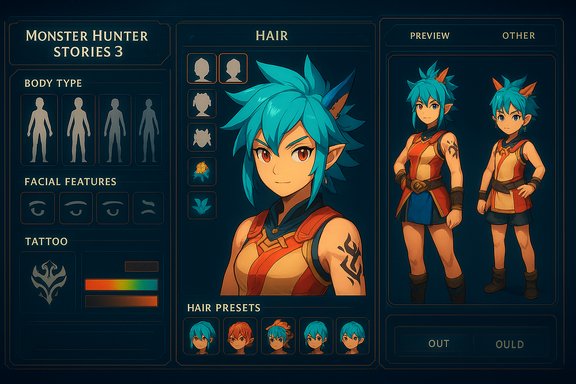
The character creator demo plays like a modern RPG toolkit rather than the lightweight editors of past Stories titles. It shows:- Body type selection with distinct silhouettes rather than a single “gender” toggle.
- Extensive facial customization, including eyebrow, eyelash, iris size and separate color choices for multiple facial elements.
- A tiered hair system: standard presets, a Custom Style mode that separates front and back hair components, and a Monster Hair category that borrows silhouettes from familiar monsters.
- A full cosmetics and accessory suite, with earrings, glasses, tattoos and special items such as Wyverian ears (a race-evocative cosmetic).
Notable UI and workflow touches
Capcom’s footage highlights a few small but meaningful UX choices:- A live preview of a younger/childhood version of your avatar that reflects the adult choices in real time.
- Color pickers that apply across multiple categories — not just hair and eyes but makeup and tattoos.
- A separate Other tab for accessories and unlockable-style items, which suggests a persistent cosmetic inventory model rather than only session-limited vanity choices.
“Monster Hair” and the stylistic link to the franchise
A standout detail is the inclusion of Monster Hair presets: hair and ornamentation clearly inspired by franchise creatures, similar to the approach from Monster Hunter Stories 2. These are a smart design mirror of the series’ central appeal — players can literally wear the world’s iconography on their heads, blending monster fandom with player identity.Confirmed facts and official timeline
- Release date and platforms: March 13, 2026 on Nintendo Switch 2, PlayStation 5, Xbox Series X|S, and PC (Steam). Multiple industry trackers and Capcom-focused news outlets confirm the date and platform list.
- Capcom’s promotional activity: Capcom showcased gameplay — including the character creator segment — at Gamescom Asia and later uploaded a standalone clip to the official Monster Hunter social account. Outlets that covered the segment pulled the same clip and embedded it for readers.
- Amiibo and associated tie-ins: Capcom announced three amiibo connected to Stories 3 (Ratha, Ratha V, Rudy) timed to the game’s launch. Ancillary merchandising is planned alongside the game’s release.
Why this character creator matters — and where it sits in Capcom’s strategy
A cross-pollination with mainline design
Historically, the Stories games have used relatively modest customization, favoring cute, anime-influenced presets over the granular sliders seen in Monster Hunter World and other recent mainline releases. The new footage, however, shows an editor clearly borrowing design goals from those mainline systems: componentized hairstyles, layered color customization, and a broader range of facial adjustments. That likely signals Capcom’s intent to make Stories 3 feel as modern and socially shareable as its bigger-budget brothers.Player identity and social shareability
A deep character creator does more than let players personalize avatars — it increases the chance players will share screenshots, cosplay, and social media content. For a title that’s cross-platform and coming to a new Nintendo console generation, that organic visibility is valuable marketing. Capcom’s post of a stand-alone character creator clip reflects an awareness that cosmetic reveal can drive preorders and wishlist activity in ways trailers sometimes don’t.The Wyverian ears controversy: context and economics
One of the flashpoints in coverage has been the Wyverian ears accessory visible in the character creator demo. In past mainline releases — most notably Monster Hunter Rise and Capcom’s most recent mainline entries — Wyverian-style ears and similar race-evocative cosmetics have frequently been distributed as paid DLC or bundled into cosmetic passes. Store entries from Capcom’s own storefronts and major digital storefronts clearly list Wyverian items and similar layered armor as purchasable content. That history makes the appearance of Wyverian ears as a baseline cosmetic in Stories 3 notable. Coverage has framed it as a positive shift — players who previously had to pay extra to approximate a Wyverian look may be able to access a similar aesthetic simply by buying Stories 3. However, that interpretation requires care: official messaging hasn’t explicitly promised all Monster Hunter–style cosmetics will be free in Stories 3, only that the character creator clip shows them in the base menu. The presence of one accessory in the demo does not rule out future post-launch DLC or premium bundles.Why the community reaction matters
Players have repeatedly signaled resentment about having to pay extra for basic visual identity items. Forums and social feeds frequently show frustration when race-defining cosmetics are gated behind paid passes or deluxe editions. Capcom’s inclusion of Wyverian ears in the base Stories 3 creator — even if only demonstrative — has been read by many fans as a potential corrective to those monetization practices. But a single clip cannot fully rewrite an established business model; only post-launch inventories or Capcom’s store decisions will confirm whether Stories 3 truly buckles the trend.Critical analysis: what’s promising — and what to watch out for
Strengths and opportunities
- Modernized customization: The editor’s componentized approach (front/back hair, monster hair presets, varied iris and eyelash controls) is a clear upgrade over earlier Stories entries. This should increase player agency and make each Rider feel distinct.
- Design fidelity: The demo’s cosmetics align with the franchise’s visual identity while enabling player creativity; that blend is essential for a series that balances narrative JRPG mechanics with Monster Hunter aesthetics.
- Marketing value: Releasing a character creator clip independent of the usual gameplay trailer is a savvy move. It encourages social sharing and gives the community something tangible to dissect and celebrate while the full game is still months away.
Risks and unresolved questions
- Monetization uncertainty: While the demo shows Wyverian ears in the base creator, Capcom’s track record for cosmetic DLC in mainline games is mixed; several flagship titles sold similar items as paid layered armor or part of premium bundles. Until Capcom provides an explicit post-launch plan, it’s prudent to expect a blend of free-and-paid cosmetics.
- Unverified “double the options” claim: Some coverage frames Stories 3’s editor as offering “double the customization options” compared to prior Stories games. That phrasing appears to be an editorial estimate rather than a Capcom-verified numeric claim. It’s safe to say customization is notably expanded, but the exact multiplier is not officially documented. Flagged as unverifiable without developer confirmation.
- Accessibility and performance: Deep editors can increase hardware demands, especially on a portable-first platform like the Switch line. Capcom has not published specific rendering targets for Switch 2 or PC performance metrics tied to character preview fidelity; those details will matter for players with lower-end hardware. Watch for official tech specs and PC system requirements in the months before launch.
Community reaction & social dynamics
The character creator clip generated rapid and energetic discussion across forums and social platforms. Common reaction vectors:- Excitement about expanded hairstyle options and Monster Hair presets.
- Relief mixed with skepticism regarding Wyverian ears appearing in the base menu.
- Discussion about body-type toggles and whether the editor’s choices align with players’ expectations for gender representation.
Where Stories 3 sits in the creature-collector landscape
Monster Hunter Stories has long filled the niche of a Monster Hunter-flavored creature-collector JRPG — think Pokémon by way of Capcom’s monster roster. Stories 3’s investment in a robust character creator matters for the subgenre because:- Creature collectors now live and die by personal identity — players collect creatures but increasingly want to present a distinct rider persona.
- A shareable, expressive avatar raises the perceived value of each captured moment, increasing the game’s shelf life in social feeds and content creation channels.
- Capcom’s decision to borrow mainline cosmetic mechanics (monster hair presets, layered appearance items) signals a merging of the company’s design philosophies across subseries, with potential benefits for long-term IP cohesion.
Recommendations for players and watchers
- Wishlist and follow official channels — the official Capcom Monster Hunter feeds will be the first place to confirm whether accessories shown in a demo are part of the base game or tied to future DLC.
- Play the earlier entries to prepare — the first two Stories games are useful primers. If you haven’t tried them, recent sales and ports make it easier to see the series’ baseline systems.
- Watch for monetization disclosure — keep an eye on pre-order pages and Capcom store listings for details on deluxe editions, cosmetic passes, and amiibo tie-ins; those listings typically reveal what is held back behind premium tiers.
Final verdict: a cautious, optimistic outlook
The new character creator footage for Monster Hunter Stories 3 is a welcome sign that Capcom is taking player expression seriously across its subseries. The editor’s depth — from separate front/back hair components to monster-inspired presets — promises a level of personalization that matches contemporary AAA expectations. That’s a positive for both long-time Riders and newcomers attracted to visual customization.However, the demo also serves as a reminder that aesthetics and economics are inseparable in modern AAA publishing. Capcom’s past use of paid layered armor and cosmetic passes in mainline games means players should remain cautiously optimistic about the Wyverian ears and similar items appearing in Stories 3. Until Capcom provides a clear post-launch plan for cosmetics, the presence of an item in a demo video is not definitive proof of a generous post-sale policy.
Monster Hunter Stories 3 is building excitement for good reasons: polished visuals, clear franchise DNA, and a more sophisticated character creator than the spin-off has ever had. If Capcom pairs that design ambition with a consumer-friendly cosmetic strategy, Stories 3 could set a new standard for how creature-collecting JRPGs handle player identity — and how publishers balance monetization with fan goodwill. Until then, the footage is a compelling tease and a useful data point for an evolving conversation about cosmetics, platform parity, and player agency.
Monster Hunter Stories 3: Twisted Reflection is scheduled for release on March 13, 2026; the coming months will be the time to scrutinize technical specs, DLC plans, and whether the developer turns a fan-favorite accessory into an earned in-game reward rather than paid content.
Source: Windows Central Capcom unveils Monster Hunter Stories 3: a closer look at the game’s enhanced character creator
