

Greg Coulthard’s latest fan remaster has dropped: the full map of The Elder Scrolls III: Morrowind has been reconstructed inside Unreal Engine 5.6 and a free, playable demo is available through the creator’s Discord — a technical showcase that recreates Vvardenfell as a walkable UE5 world rather than a playable, quest-driven remake.
Greg Coulthard has become a well-known figure in the fan‑remaster scene for porting classic Bethesda worlds into Unreal Engine workflows using custom tooling. This Morrowind project continues that pattern: Coulthard built a C++ ESM parser to read the original game’s data and automated landscape and object placement inside UE5, then packaged the result as a downloadable demo distributed via Discord. The release is explicitly positioned as a technical exercise — a demonstration of feasibility and pipeline — not a commercial product or a finished game. Multiple outlets reported the release (and the demo’s availability on Coulthard’s Discord), confirming that the assets shown come from the original game and that the project can currently be explored as a world‑only experience without quests or NPC systems.
Source: DSOGaming The Elder Scrolls III: Morrowind Unreal Engine 5.6 Fan Remaster Released
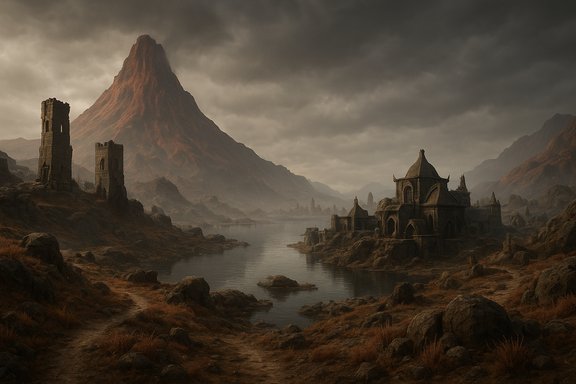 Background
Greg Coulthard has become a well-known figure in the fan‑remaster scene for porting classic Bethesda worlds into Unreal Engine workflows using custom tooling. This Morrowind project continues that pattern: Coulthard built a C++ ESM parser to read the original game’s data and automated landscape and object placement inside UE5, then packaged the result as a downloadable demo distributed via Discord. The release is explicitly positioned as a technical exercise — a demonstration of feasibility and pipeline — not a commercial product or a finished game. Multiple outlets reported the release (and the demo’s availability on Coulthard’s Discord), confirming that the assets shown come from the original game and that the project can currently be explored as a world‑only experience without quests or NPC systems. Overview: what the remaster is — and what it isn’t
This fan remaster is best thought of as a high‑fidelity, engine‑level conversion of Morrowind’s world geometry and assets into Unreal Engine 5.6. Key facts:- The entire terrain and object placement for Vvardenfell have been ported into UE5 using a custom ESM parser.
- All in‑project assets are reported to be the original game assets (with optional HD texture packs included as extras).
- The demo is not a playable remake: there are no quest systems, NPC AI, or full game mechanics — it’s a walkthrough / tech demo.
Technical deep dive: Unreal Engine 5.6, Nanite, and Lumen
Unreal Engine 5.6 brings iterative improvements to the rendering and runtime architecture that are relevant to map conversions of this scale. The official 5.6 release notes highlight targeted optimizations in both Lumen (global illumination and reflections) and Nanite (virtualized geometry), alongside renderer parallelization and other RHI improvements that make very large scenes more tractable on modern hardware. These improvements are the backbone that lets a continent‑scale world stream and render with fewer pop‑ins and less stutter than would have been possible in older UE releases. What this means for the Morrowind project:- Nanite handles dense geometry and prevents visible pop‑in by using virtualized mesh data and fine‑grained instance culling; this is especially useful when porting many small architectural assets and props from the original game. The UE5.6 notes include Nanite improvements for culling and instance handling that specifically benefit large streaming scenes.
- Lumen provides real‑time global illumination and reflections without the bake‑heavy pipelines of older engines. UE5.6 contains Lumen performance and quality upgrades (including HWRT optimizations) that scale better for open worlds, which is why the demo can present cohesive lighting across wide vistas without the precomputed lightmaps of the original engine.
- Renderer parallelization and RHI improvements in UE5.6 reduce single‑thread renderer bottlenecks, helping high‑end systems sustain better frame pacing in massive scenes.
Performance: reported results and a cautious interpretation
DSOGaming’s hands‑on test reported strong results on an extremely powerful test rig: an AMD Ryzen 9 7950X3D CPU, 32 GB DDR5‑6000, and an NVIDIA RTX 5090 running Windows 10 with driver 581.80. Using that setup, the site reported an average of roughly 110 FPS at 1440p/Ultra, and an average of ~70 FPS at native 4K/Ultra — with minimums and higher settings varying by screen mode and the use of fullscreen vs. fullscreen windowed. The site also noted that the demo currently does not support NVIDIA DLSS 4 or AMD FSR 3.0, and that some fullscreen/windowed resolution inconsistencies require switching to exclusive Fullscreen for correct native outputs. Two important caveats apply to those numbers:- The performance figures are a single‑source laboratory measurement from one tester’s system and configuration. They should be treated as indicative rather than definitive; real‑world performance depends on CPU/GPU generations, driver versions, background tasks, capture software, and the particular scene or camera motion.
- The demo was described as being captured inside the editor in other coverage, and editor captures can differ from packaged‑build performance because editor overhead and shader compilation behavior vary. Expect packaged builds to behave differently and to require updated drivers or engine tweaks for optimal results.
Visual extras: HD texture packs and fidelity tradeoffs
Coulthard’s Morrowind demo reportedly includes optional HD texture packs (the community “VanillaPlus” pack was cited by some outlets as an example), which improve visual fidelity beyond the vanilla assets while still preserving the original geometry and art direction. That approach—original assets plus optional higher‑res textures—keeps the project faithful while giving players a choice between authenticity and modern polish. Pros of the texture‑pack approach:- Preserves original models, animations (where applicable), and world composition.
- Lets users toggle visual fidelity to match VRAM and performance budgets.
- Retains the recognizable look and atmosphere that long‑time fans expect.
- HD textures increase disk and VRAM pressure; on smaller systems they can cause texture streaming stutter or increased GPU memory paging.
- Visual fidelity gains from textures are limited by unchanged geometry; some fans may prefer full asset reworks rather than just higher‑resolution bitmaps.
Installation, distribution, and community access
The demo is distributed through Greg Coulthard’s Discord server where interested users must join to access the download links posted by the developer. Reporting outlets have avoided reposting direct MEGA or Drive links, encouraging readers to support the developer by joining his Discord instead. This distribution model is common among fan‑remakes and small experimental demos because it allows direct control over versioning and user communication. Installation notes (community‑oriented, high level):- Join the creator’s Discord to find pinned links and installation instructions.
- Read the provided README before launching — the project may require specific GPU drivers or engine runtimes and may have modes (Editor vs. packaged) that behave differently.
- If you use HD texture packs, confirm available VRAM and storage; scale back textures if you encounter stutters or out‑of‑memory conditions.
Legal and ethical issues: fan remasters in a grey zone
Fan remasters that use original game assets sit in a precarious legal and ethical position. The Coulthard Morrowind demo reportedly uses the original Morrowind assets, and while the project is non‑commercial and distributed freely, the underlying IP and assets remain Bethesda’s property. Key points:- Copyright ownership remains with the original rights holder; making and distributing derivative works can attract rights owner scrutiny even when non‑commercial. The developer is clearly distributing the demo as a hobby/technical project and not monetizing it, which reduces commercial risk but does not remove IP exposure.
- Community norms often favor preservation and experimentation, and many studios tolerate or tacitly accept fan projects that do not compete commercially. However, tolerance levels vary, and fan projects have been shut down historically.
- Preservation value: projects like this often serve archival and educational purposes—demonstrating how old content maps to modern engines, highlighting preservation pipelines, and informing future remaster or official remake efforts. Those community benefits are real even if legal status remains uncertain.
Why this matters: preservation, tooling, and future remakes
There are broader implications beyond the novelty of seeing Morrowind in UE5:- Preservation and tooling: Coulthard’s ESM parser demonstrates a credible pipeline for translating legacy data into modern engines. That tooling is valuable to preservationists, modders, and anyone interested in porting or studying older game worlds.
- Proof of scale: Porting an entire open‑world map is nontrivial. Demonstrating a streaming, shardless conversion of Vvardenfell shows that large‑scale content can be migrated and iterated upon in modern engines without rebuilding everything from scratch.
- Catalyst for community work: When the community sees a full‑map conversion, it can spur texture packs, lighting pass experiments, or future attempts at adding scripted systems — potentially accelerating fan projects that add NPCs, quests, or gameplay reintegrations.
Practical risks and limitations for end users
Enthusiasm should be tempered with practical warnings:- Performance variance: The DSOGaming numbers were recorded on a top‑end rig. Expect dramatically different results on mainstream hardware; packaged builds, driver versions, and shader compilation states can materially change frame rates.
- No gameplay systems: Those hoping for a drop‑in, modernized Morrowind replacement will be disappointed — the demo is a world only, with no quests, NPCAI, or the scripted content that makes the game playable.
- Compatibility and updates: Fan projects distributed via Discord may receive frequent updates or fixes; users should expect to re‑download or patch and to possibly troubleshoot shader compile times or driver-related issues.
- Legal uncertainty: While the community generally supports preservation, the project’s reliance on original assets leaves its legal status formally unresolved. Respect for takedown requests and avoidance of monetization remains essential.
How the community can benefit — and how developers of official remakes might learn
This demo functions like a public research prototype: it shows what’s possible when legacy data is parsed and fed into modern render pipelines. Benefits:- Modders can study the ESM parser approach to automate other conversions or to extract map and object placement logic for different engines.
- Texture pack authors can test their packs in a modern pipeline and iterate for better LOD/streaming behavior.
- Official studios can observe community work as a form of crowd‑sourced technical exploration that points at priorities (lighting, streaming, LOD management) for any official remaster or remake.
Final assessment: strengths, weaknesses, and what to watch next
Strengths- Ambitious scale — porting a full Morrowind map into UE5.6 is a notable technical achievement and a useful test case for modern engine streaming.
- Modern engine advantages — the project benefits from Nanite and Lumen improvements in UE5.6, which reduce pop‑in and improve lighting fidelity across large scenes.
- Community value — the demo is a living example that preservation and experimentation remain active and productive in the modding scene.
- Not a full game — no quests, NPCs, or scripted systems; it’s a technical demo, not a replacement for the original.
- Legal grey area — reliance on original assets means the project remains exposed to IP enforcement risk.
- Single‑source performance reporting — reported FPS numbers come from one review; treat them as an illustration rather than an expectation guarantee.
- Community patches or community‑built NPC/quest modules that reintroduce gameplay systems.
- Any public release of the ESM parser or additional tooling that other modders can adopt.
- Official responses from the rights holders if commercial or high‑profile community work begins to appear.
Conclusion
Greg Coulthard’s UE5.6 Morrowind demo is a technically impressive proof of concept that spotlights what modern rendering systems can do for legacy open worlds. It is a vivid demonstration of Nanite and Lumen’s capacity to tame a large, streamed environment, and it offers value to preservationists, engine hackers, and texture artists. At the same time, it is not a playable remaster — it lacks quests and NPCs — and it exists in a legal and practical grey area that all community members should respect. For fans who want to explore Vvardenfell in a modern engine, the demo is a rare and rewarding curiosity; for those hoping for a full remake, it is a promising early step but not the destination.Source: DSOGaming The Elder Scrolls III: Morrowind Unreal Engine 5.6 Fan Remaster Released

