

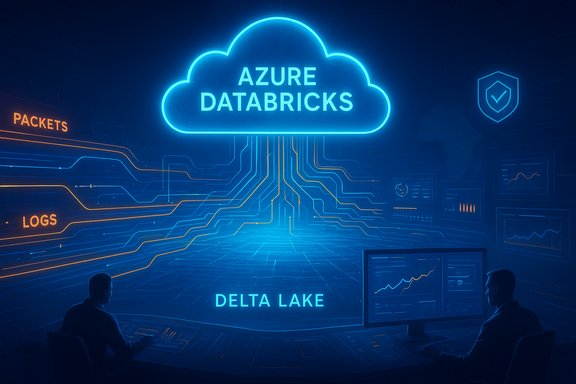
MTN has completed a major modernisation of its Enterprise Value Analytics (EVA) platform by migrating EVA to Microsoft Azure — a move MTN and its partners present as a cloud-native re‑engineering that delivers faster analytics, wider scale and a repeatable blueprint for telco data platforms across Africa and the Middle East.
Background / Overview
MTN’s EVA platform has been central to the operator’s analytics and operational transformation for several years. Under a multi‑year strategic partnership with Microsoft (announced in 2022) and a formal programme called Project Nephos, MTN set out to migrate and modernise key OSS/BSS and analytics workloads to Azure while building an internal Cloud Centre of Excellence to scale skills and governance. That strategic context is confirmed in MTN’s own newsroom and Microsoft’s customer materials describing the partnership and migration objectives. The recently announced deployment — publicised as EVA 3.0 — is presented as a cloud‑native re‑implementation running on Azure Databricks with security controls provided by Microsoft’s Defender family. MTN describes EVA 3.0 as processing extremely large daily volumes of telemetry, running hundreds of analytics workflows and ingesting more than a thousand feeds, while enabling near‑real‑time detection of network issues, faster root‑cause analysis and more personalised customer experiences. These architecture choices align with mainstream lakehouse patterns for large analytic workloads on Azure, where Databricks provides a Spark‑centric compute fabric and Delta Lake semantics enable reliable incremental processing.What MTN Says it Built (EVA 3.0 in brief)
- A cloud‑native analytics lakehouse built on Azure Databricks and Delta Lake semantics for storage and schema evolution.
- Integrated security with Microsoft Defender and Azure identity/ governance (Azure AD/Entra, catalog/lineage tooling).
- Operational scale metrics reported by MTN: roughly 22 billion records processed per day, 800+ analytic workflows, and ~1,700 data feeds. These figures have been repeated across trade coverage but are presented as MTN‑reported operational metrics rather than independently audited telemetry.
- A platform intended to shorten detection‑to‑remediation timelines, enable closed‑loop automation and surface customer trends sooner for relevant product design and personalised offers.
Why the architecture makes sense for a telco
Telco analytics is defined by high event velocity, large volumes of streaming telemetry, and strict latency/availability constraints. Building EVA 3.0 on Databricks + Delta Lake is a well‑tested pattern because:- Databricks scales Apache Spark for both streaming and batch jobs, enabling high throughput and parallelism.
- Delta Lake provides ACID‑style table semantics, time‑travel and schema evolution useful for evolving telecom datasets.
- Native Azure integration (ADLS Gen2, Azure AD, Power BI/Synapse) reduces integration friction for an operator standardising on Microsoft cloud services.
Technical Anatomy: Expected Components and How They Work
EVA 3.0’s public description maps to a modern lakehouse stack. The following outlines the components and operational expectations for this class of deployment.Ingestion and transport
- High‑throughput collectors for network telemetry (packet/flow probes, CDRs), OSS/BSS events, application logs and external business feeds.
- Streaming transport typically uses Kafka/Event Hubs or managed equivalents to handle the velocity and retention demands of telco telemetry.
- A combination of streaming and micro‑batch ingestion ensures near‑real‑time visibility while enabling robust back‑pressure handling.
Storage and semantics
- Durable storage on Azure Data Lake Storage Gen2 holding Delta Lake tables for incremental processing, time‑travel and schema enforcement.
- Use of columnar formats (Parquet) and partitioning strategies to optimise hot/warm/cold tiers for cost and query performance.
Compute and orchestration
- Azure Databricks provides autoscaling Spark clusters for streaming ETL, batch processing, ML training and model scoring.
- Orchestration via Databricks Jobs, possibly augmented by Azure Data Factory, Azure Synapse pipelines or third‑party workflow engines to coordinate hundreds of dependent jobs and retries.
Security, governance and responsible AI
- Identity and access control driven by Azure AD / Entra and role‑based policies.
- Threat and workload protection from Microsoft Defender for Cloud/Endpoint plus SIEM integration for threat hunting and response.
- Data governance, cataloguing and fine‑grained access control via Unity Catalog or equivalent metadata/lineage tooling to meet regulatory audit requirements.
- Model registries, explainability tooling and monitoring for responsible AI, with staged rollouts and human‑in‑the‑loop controls for high‑impact customer actions.
Scale & Performance: The Claimed Numbers and What They Imply
MTN’s public statements and subsequent trade coverage report EVA 3.0 handling massive telemetry: approximately 22 billion records per day, ingesting ~1,700 feeds and running 800+ analytic workflows. If these figures are representative of steady‑state traffic rather than peak bursts, they imply a highly parallelised architecture with aggressive autoscaling, robust back‑pressure handling, sophisticated schema evolution and mature operational observability.A few practical implications of that scale:
- Large ingest volumes require careful partitioning and compaction strategies to avoid small‑file problems and maintain query performance.
- Cost governance becomes critical — unbounded autoscaling or inefficient job designs can multiply monthly cloud spend rapidly.
- Observability must include end‑to‑end SLAs, percentiles for latency, pipeline failure rates and cost-per-event metrics to make the platform operable and investable.
Security and Compliance: What MTN Has Said — and What to Watch
MTN emphasises that EVA 3.0 is protected by Microsoft Defender and Azure governance tooling. These controls form a sound baseline but must be operated and tuned as part of a mature security programme.Key security controls expected in a telco lakehouse:
- Zero Trust posture with strong identity controls (MFA, conditional access), role‑based access and least-privilege for data consumers.
- Data classification, tokenisation or pseudonymisation for personally identifiable information (PII) and customer location telemetry.
- Continuous monitoring: Defender for Cloud workload alerts, integration into a SIEM/SOAR (e.g., Microsoft Sentinel) and proactive threat hunting.
- Network isolation for sensitive feeds via ExpressRoute or private peering and clearly defined egress policies.
- Telco data carries special regulatory weight in many African and Middle East jurisdictions — data residency, lawful interception and cross‑border transfer rules must be covered contractually and operationally.
- MTN’s Cloud Centre of Excellence and the reported spate of Azure certifications are positive steps toward operationalising these controls, but certifications alone do not guarantee compliance without documented residencies, audit trails and contractual SLAs.
Business Impact: Faster Insights, Personalisation, and New Revenue Paths
MTN frames EVA 3.0 as enabling earlier visibility into service performance, faster fault detection and remediation, and richer data for personalising offers. For customers this should translate to more reliable services and contextually relevant experiences; for MTN it creates opportunities to:- Reduce mean time to repair (MTTR) with near‑real‑time detection and automated remediation.
- Increase Average Revenue Per User (ARPU) via targeted campaigns informed by telemetry + CRM signals.
- Launch analytics‑as‑a‑service offerings for enterprise customers using anonymised network insights as a product.
Strengths: Why This Move Is Significant
- Platform standardisation: Consolidating telemetry and analytics into a repeatable lakehouse reduces integration drift across markets and accelerates new feature rollouts.
- Hyperscaler partnership leverage: Deep ties with Microsoft provide access to engineering, co‑development and incentive programmes that speed enterprise feature parity and support.
- Skilling & operations: MTN reports a concentrated effort to certify staff on Azure technologies (over 1,250 certifications reported in 2025), which materially reduces the skills gap that often undermines large cloud programmes.
- Blueprint potential: A well‑documented EVA 3.0 can be configured as a reference architecture across MTN’s operating companies, enabling faster rollouts and lower duplicated engineering effort where local constraints permit.
Risks, Trade‑offs and Open Questions
No cloud transformation at telco scale is risk‑free. The most important trade‑offs to weigh include:- Vendor lock‑in and portability: Heavy use of managed Azure services, Databricks as a managed service, and Unity Catalog/Defender integrations increases exit complexity. Operators should insist on canonical data formats and export procedures to preserve optionality.
- Regulatory and sovereignty risk: Cross‑border data flows, residency and lawful access obligations vary widely. Contracts must explicitly cover region‑of‑storage, audit access and egress.
- Operational complexity at scale: Billions of daily events require rigorous SRE discipline — on‑call rotations, playbooks, automated recovery and runbooks. Without that, pipeline failures and cost surprises are likely.
- Cost governance: Large autoscaling fleets and inefficient job designs can lead to runaway spend. FinOps practices, tagging and cost‑per‑event metrics are essential.
- Verification of headline metrics: The 22 billion records/day and related metrics are presented as MTN’s operational figures; independent benchmarks or published case studies would strengthen confidence for customers and partners. Those numbers should be validated during procurement or pilot phases.
EVA 3.0 as a Replicable Blueprint: Realistic or Aspirational?
MTN positions EVA 3.0 as a blueprint other operating companies can adapt. The blueprint is credible where backend systems, regulatory regimes and product models align, but replication depends on:- Local compliance regimes and data residency constraints.
- Local skills and run‑rate to operate cloud‑native platforms.
- Network topology and latency constraints that can affect ingest/egress patterns.
- Commercial and procurement terms with the hyperscaler and integrators.
Recommendations for IT Leaders Considering a Similar Migration
- Start with a narrow, high‑impact MVP (for example, proactive fault detection) and measure both technical and commercial KPIs.
- Require vendors to demonstrate data exportability and an exit plan as part of procurement.
- Institutionalise FinOps and observability from day one — cost must be a first‑class operational metric.
- Build SRE practices for data pipelines (on‑call rotations, playbooks, automated remediation).
- Enforce a staged AI deployment: pilot → controlled rollout → wide release with governance gates at each stage.
- Include legal, compliance and network engineering in the core decision group to address sovereignty, egress and latency constraints.
- Use a Cloud Centre of Excellence to codify best practices and accelerate adoption while allowing local customisation.
Verification and the Evidence Gap
Multiple independent trade outlets echoed the headline claims about EVA 3.0’s architecture and business benefits, and MTN’s own newsroom confirms the partnership and the broader Project Nephos programme that includes skilling and migration goals. Microsoft’s customer stories likewise document the strategic relationship and examples of collaboration. These sources independently corroborate the platform choices and the strategic intent behind the migration. However, the precise operational metrics (22 billion records/day; 800+ workflows; 1,700+ feeds) are presented in MTN/Microsoft‑led coverage and trade reporting and are best regarded as company‑reported figures until independent audit or a published technical case study is released. Procurement teams and engineering leaders should request access to proof‑of‑value metrics (latency percentiles, ingest reliability, cost per million events and SLO attainment) during pilot phases before committing large programs.How This Matters for Africa’s Digital Infrastructure
A successful, repeatable telco analytics blueprint deployed at scale can materially strengthen digital infrastructure across the continent. By centralising telemetry, operationalising AI responsibly and investing in local skills, MTN is advancing a model that can:- Improve service reliability and customer experience across markets.
- Reduce time‑to‑market for new digital services and enterprise analytics offerings.
- Create a talent multiplier effect where local engineers gain cloud certifications and operational practice, building an ecosystem of skilled operators and integrators.
Conclusion
MTN’s migration of EVA to Azure Databricks — presented as EVA 3.0 — is a consequential milestone in telco cloud modernisation for Africa. The architectural choices align with modern lakehouse patterns and the partnership with Microsoft provides both technical integration and commercial levers to accelerate adoption. Reported scale metrics are impressive and, if validated, demonstrate that telco‑grade analytics at cloud scale is attainable for operators willing to invest in platform engineering, governance and skilling.At the same time, the move amplifies familiar trade‑offs: vendor lock‑in, regulatory complexity, operational maturity requirements and cost governance. Practical success will depend less on headlines and more on measurable KPIs, transparent governance, auditable compliance guarantees and sustained investment in people and run‑book maturity. Organizations contemplating a similar journey should demand proof‑of‑value, insist on portability controls and institutionalise FinOps and SRE practices before scaling to mission‑critical workloads.
MTN has set a high bar with EVA 3.0 — the next phase will be watching whether the blueprint proves repeatable across MTN’s markets, how independent verification of the platform’s scale emerges, and whether the industry uses this example to build secure, cost‑efficient and locally governed digital infrastructure across the continent.
Source: The Fast Mode MTN Completes Major Data Platform Modernisation with Microsoft Azure Migration
