

Planned Parenthood’s online booking and telehealth options are increasingly being promoted across the web — including in a recent aggregator post that urges readers to “start your wellness journey” by booking a Planned Parenthood appointment online — but the reality behind that simple call-to-action is more nuanced: availability varies by state and affiliate, services differ between in-person and telehealth visits, and privacy and access trade-offs deserve careful attention.
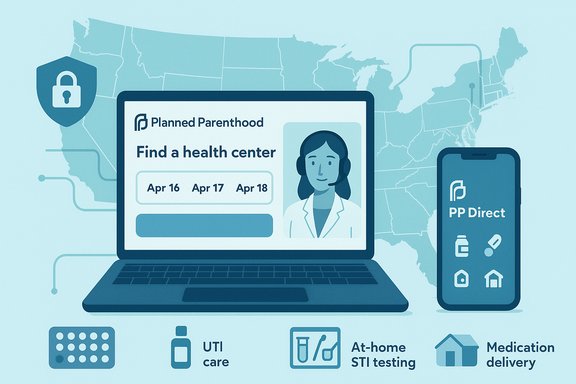
Planned Parenthood has expanded digital channels for care in recent years, offering both scheduled virtual visits through local affiliates and on-demand services through the Planned Parenthood Direct platform. These channels can provide convenient access to birth control, UTI care, at-home STI testing, medication abortion in some states, and gender-affirming services, among others. The national “get care online” portal and regional affiliate pages explain that users can book online, call a central number, or use the PP Direct app to request services — but the precise services, age limits, and payment/insurance rules depend on the state and the affiliate. The aggregator article hosted on ArtFixDaily presents a friendly call to action and an image gallery, but it offers very little substantive detail about service availability, eligibility, or how the booking process actually works. That makes it useful for discovery but insufficient as an authoritative how-to or a source of verified, actionable information. Readers should treat such posts as signposts rather than as replacements for official guidance from Planned Parenthood affiliates or the Planned Parenthood Direct service.
Source: artfixdaily.com Start Your Wellness Journey: Book Your Planned Parenthood Appointment Online Today - artfixdaily.com
 Background / Overview
Planned Parenthood has expanded digital channels for care in recent years, offering both scheduled virtual visits through local affiliates and on-demand services through the Planned Parenthood Direct platform. These channels can provide convenient access to birth control, UTI care, at-home STI testing, medication abortion in some states, and gender-affirming services, among others. The national “get care online” portal and regional affiliate pages explain that users can book online, call a central number, or use the PP Direct app to request services — but the precise services, age limits, and payment/insurance rules depend on the state and the affiliate. The aggregator article hosted on ArtFixDaily presents a friendly call to action and an image gallery, but it offers very little substantive detail about service availability, eligibility, or how the booking process actually works. That makes it useful for discovery but insufficient as an authoritative how-to or a source of verified, actionable information. Readers should treat such posts as signposts rather than as replacements for official guidance from Planned Parenthood affiliates or the Planned Parenthood Direct service. What the ArtFixDaily piece says — and what it leaves out
The ArtFixDaily post titled “Start Your Wellness Journey: Book Your Planned Parenthood Appointment Online Today” is short, visually driven, and dated November 17, 2025. It functions largely as a promotional snippet and image gallery rather than a detailed resource. The post’s tone encourages readers to take action — to “book online today” — but it does not link to a concrete scheduling flow, specify regional limitations, or identify which services are available via telehealth versus in-person. That lack of detail is important because Planned Parenthood organizes care at the affiliate level, and services differ across regions.- Strength: The piece may help readers remember they have an online option, lowering the friction to seek care.
- Weakness: It lacks the operational details people need to make informed choices (service lists, age restrictions, insurance/payment guidance, privacy controls, and telehealth versus in-person distinctions).
How to actually book a Planned Parenthood appointment online — step-by-step
Booking processes vary slightly by affiliate, but the common online flows are consistent. Here’s a practical step-by-step that applies across most Planned Parenthood online and telehealth options:- Visit the Planned Parenthood national site or your local affiliate’s website and choose “Find a health center” or “Get care online.”
- Enter your zip code to locate nearby health centers and check each center’s online booking widget for available in-person or telehealth slots. Many affiliates display a booking tool above the fold.
- If you prefer on-demand or medication delivery services, open the Planned Parenthood Direct web app or mobile app, create an account, and answer the health questionnaire for the service you need. A provider typically reviews the request within about one business day.
- If telehealth is offered, select a video or telephone visit slot and complete any pre-visit intake forms. You will receive instructions for joining a secure video room or a phone call at your appointment time. Regional pages recommend using headphones and a private space for the visit.
- Pay online if required (some online-only services do not accept all insurance types), or confirm insurance acceptance at the time of booking. Many online orders (PP Direct prescriptions or mailed medications) require online payment; Medicaid may be available for mail-in prescriptions in some states.
- After the visit, follow the provider’s next steps — this can include picking up medication at a local pharmacy, mailing in a test sample, or scheduling an in-person follow-up if an exam is necessary.
What services can you expect to book online or via telehealth?
Planned Parenthood and its affiliates divide services between telehealth/online channels and in-clinic services. Common online/telehealth services include:- Birth control counseling, prescriptions, and refills (pill, ring, patch, and in some programs Depo-Provera self-injection guidance).
- Emergency contraception (ella or levonorgestrel) through PP Direct or telehealth counseling.
- UTI diagnosis and treatment delivered via telehealth in many affiliates.
- At-home STI testing kits or telehealth STI consultation and treatment pathways.
- Medication abortion where legal and available via telehealth or pharmacy delivery (subject to state law and age restrictions). This is offered through some affiliates and via PP Direct in select states.
- Gender-affirming care consultations and certain follow-ups via telehealth in many regions.
Privacy, data security, and the legal landscape
Online reproductive and sexual health care introduces specific privacy and safety concerns. The conversation ranges from practical device-level precautions to active legislative proposals that would restrict how private companies may use reproductive health data.- Planned Parenthood emphasizes secure video platforms and account-based access for telehealth visits, and regional guides recommend private spaces and headphones for appointments. However, telehealth inevitably produces digital traces — appointment logs, clinician notes, billing entries, and, in some models, securely stored intake questionnaires. For mail-order prescriptions or at-home testing, shipping labels and pharmacy records can also create metadata trails.
- At the policy level, there is growing momentum to legislate stronger protections for reproductive health data. For example, the “My Body, My Data” bill was introduced in Congress to restrict the collection, retention, and use of personal data related to reproductive health unless strictly necessary to provide a service — a legislative response to documented incidents where digital records were used in legal actions. This national-level debate is directly relevant to anyone using online reproductive health services.
- Independent privacy analyses of digital family-planning and telehealth apps highlight recurring technical risks: excessive data collection, insecure local storage on shared devices, location metadata (clinic locators), and unclear integration points with government or administrative monitoring systems. These analyses recommend data minimisation, strong encryption for local and server-stored data, app-level authentication options (PIN/biometrics), granular consent controls, and independent security audits — best practices that users should look for in provider privacy documentation and that organizations should adopt by design.
Cross-referencing claims: what’s verified and what needs caution
- Verified: Planned Parenthood operates telehealth services and the Planned Parenthood Direct platform that can deliver birth control, UTI treatment, at-home tests, and, in participating states, medication abortion. Multiple affiliate pages and the national PP Direct portal outline these functions. These are active services offered today by affiliates across many states.
- Verified: Booking options include online appointment widgets on affiliate sites, a central phone line (1-800-230-PLAN in many regions), and the PP Direct app or web portal for online requests and direct services, depending on the affiliate.
- Caution: Broad claims of “nationwide” uniform availability should be treated cautiously. Access varies by state and affiliate. Clinic closures and affiliate consolidations are happening in some states, which directly affect local access and available services. Recent reporting demonstrates affiliate closures and regional consolidation, which may change where and how care is provided. Confirm local availability before assuming any service is provided in your state.
- Unverifiable from the ArtFixDaily post alone: any statement implying that all services and age groups can use telehealth nationwide or that payment and insurance will be accepted identically across platforms. The ArtFixDaily piece lacks affiliate-level detail and therefore should be supplemented with direct information from Planned Parenthood or the relevant affiliate.
Practical privacy and safety tips when booking online
- Use the official Planned Parenthood sites or the PP Direct app to book care; avoid third-party aggregators for sensitive health appointments unless they link you directly to the affiliate’s booking flow.
- Create strong account credentials and enable multi-factor authentication (if available) for any online patient portal or app. Use a unique password manager-generated password for healthcare accounts.
- Prefer private network connections for telehealth (avoid public Wi‑Fi), and join video visits from a personal device where you control device access. Use headphones and secure the room to prevent eavesdropping.
- Review privacy and data-handling statements before completing the intake form. Look for explicit commitments on what is stored, how long it is retained, whether location data is collected, and whether data will be shared with third parties. If documentation is unclear, call and ask a clinic representative.
- Consider the legal risks in your jurisdiction; where reproductive-care criminalization or investigation is a real risk, minimize unnecessary metadata (e.g., don’t save appointment reminders on shared calendars, or use an email account you control exclusively for sensitive care). Legislative developments such as federal or state bills may alter the risk calculus; keep informed.
Technical and operational considerations for telehealth visits
Telehealth visits depend on a secure video platform, reasonable broadband, and reliable device audio/video:- Test your device (camera, microphone) before the appointment and install any recommended app or browser extension ahead of time. Regional affiliate pages typically include checklist items for successful visits.
- Expect clinical triage: some remote consultations may be sufficient to prescribe treatment; others will trigger an in-person follow-up (for example, when an exam or sample collection is necessary). The clinician will explain next steps during the visit.
- Payment and insurance: many online services require online payment and may not accept the same insurance coverage as in-clinic visits. Mail-order prescriptions through PP Direct may accept Medicaid for mail only in some states. Confirm payment options before completing the booking.
Risks, inequities, and structural limits
Digital access is not a universal solution. Telehealth improves convenience but can widen inequities if not designed inclusively:- The digital divide matters: people without smartphones, reliable broadband, or private space may be left behind. Affiliates often retain phone and in-person scheduling to preserve access, but geographic clinic closures and state-level policy changes can still create service deserts.
- Safety in coercive relationships: telehealth and app traces on shared devices can create risk for people in controlling relationships. Privacy features such as “quick-exit” screens or account delinking are useful mitigations but are not universally implemented.
- Policy fragility: ongoing legal and political pressures have resulted in affiliate closures and shifts in service portfolios in certain states. This means access may change rapidly; rely on affiliate communications for the current picture.
Recommendations for users and for policymakers
For users:- Verify services through your local affiliate’s website or PP Direct before booking.
- Practice basic digital hygiene (unique passwords, private networks, minimum metadata on shared devices).
- If you have safety or privacy concerns, ask the clinic about anonymised contact options, opt-out data settings, or alternative communication channels.
- Mandate clear privacy notices and retention schedules for telehealth and app-based reproductive services. Independent audits and transparency reports build trust.
- Fund alternative access channels (phone lines, community clinics) so telehealth augments rather than replaces in-person care.
- Consider legal protections that limit the non-essential collection, sale, or retention of reproductive-health metadata — a national policy conversation is already underway and should be informed by privacy and public-health expertise.
Final assessment
The ArtFixDaily article acts as a useful reminder that digital routes exist to schedule Planned Parenthood care, but it is not an authoritative how-to guide. For actionable steps, users should go directly to Planned Parenthood’s official pages, the PP Direct platform, or their local affiliate, and confirm the services they need are available in their state or region. The convenience of online booking and telehealth is real — and backed by Planned Parenthood’s growing virtual health infrastructure — but so are real privacy, access, and legal complexities that must be navigated carefully. Planned Parenthood’s telehealth options and the PP Direct platform significantly lower barriers to care for many people. At the same time, users should balance convenience with privacy best practices, confirm affiliate-level availability, and stay informed about evolving legal protections for reproductive health data. Those steps will ensure that “starting your wellness journey” online is both practical and prudent.Source: artfixdaily.com Start Your Wellness Journey: Book Your Planned Parenthood Appointment Online Today - artfixdaily.com
