

Microsoft’s October 2025 Game Development Kit (GDK) update is a clear nudge — and for some teams, a shove — toward a single engineering model for Xbox and Windows. The release bundles a unified input API, cross‑store cloud saves, a new packaging desktop app, and a consolidated PlayFab SDK so studios can target consoles, PCs and handheld Windows devices from a much smaller set of tools. These changes are deliberate: Microsoft wants development to look and behave more like Windows development while preserving a console-grade frontend and certification path for living‑room devices.
Microsoft has been nudging Xbox and Windows closer together for several years, but the October 2025 GDK update is the most visible product‑level expression of that strategy so far. The company is shipping controller‑first Windows experiences on OEM handhelds (the ROG Xbox Ally family being the most public example) and adding hooks in Windows 11 to support a console‑like shell, an aggregated game library, and controller‑native behavior. Those platform moves form the context for the GDK changes: make the developer surface predictable across Windows and Xbox so studios spend less time juggling toolchains and more time shipping features. Microsoft’s official materials frame the October GDK as a productivity and cross‑platform play update rather than a single dramatic platform pivot. The release notes and blog post spell out practical developer features — GameInput, PlayFab Game Saves (preview moving to GA in early November), Xbox Game Package Manager (XGPM), and the PlayFab Unified SDK — while also calling out samples and new installer layouts that make multi‑architecture builds easier. These are incremental, coordinated engineering moves that add up to a materially different day‑to‑day for studios that ship on Xbox and Windows.
That said, the runtime is not a magic wand. Anti‑cheat middleware, DRM constraints and storefront policies are still the limiting factors on a title‑by‑title basis. Microsoft explicitly notes that the use of Xbox services on non‑Microsoft storefronts may require permission from storefront owners. This is a pragmatic design: Microsoft provides the hooks, but publishers and store operators still control access when native clients or kernel drivers are involved.
Source: Digital Trends Xbox dev becoming more Windows-like, prepping devs for the future of the console
 Background
Microsoft has been nudging Xbox and Windows closer together for several years, but the October 2025 GDK update is the most visible product‑level expression of that strategy so far. The company is shipping controller‑first Windows experiences on OEM handhelds (the ROG Xbox Ally family being the most public example) and adding hooks in Windows 11 to support a console‑like shell, an aggregated game library, and controller‑native behavior. Those platform moves form the context for the GDK changes: make the developer surface predictable across Windows and Xbox so studios spend less time juggling toolchains and more time shipping features. Microsoft’s official materials frame the October GDK as a productivity and cross‑platform play update rather than a single dramatic platform pivot. The release notes and blog post spell out practical developer features — GameInput, PlayFab Game Saves (preview moving to GA in early November), Xbox Game Package Manager (XGPM), and the PlayFab Unified SDK — while also calling out samples and new installer layouts that make multi‑architecture builds easier. These are incremental, coordinated engineering moves that add up to a materially different day‑to‑day for studios that ship on Xbox and Windows. What shipped in the October 2025 GDK — the essentials
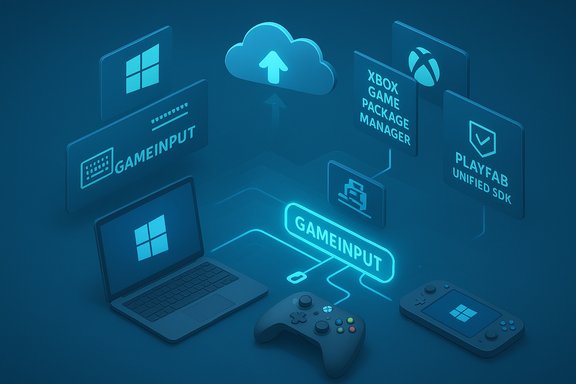
- GameInput: a single, modern input API that unifies keyboard, mouse, Xbox gamepad, advanced haptics and custom devices across Xbox and Windows, with low‑latency and thread‑safe semantics for polling and event callbacks. This lets studios write one input layer instead of separate Xbox and Windows input glue.
- PlayFab Game Saves (Preview → GA): PlayFab’s cross‑platform save synchronization service now supports Xbox and Steam and handles sync, conflict resolution and offline play. Microsoft positioned the service as the canonical cross‑progression path for studios that want their saves to follow players across storefronts and devices.
- Xbox Game Package Manager (XGPM): a desktop packaging and upload app that replaces older command‑line flows (MakePkg, PackageUploader), builds XVC/MSIXVC from loose files and provides browser‑auth upload into Partner Center for multi‑tenant teams. This addresses a chronic pain point in packaging and certification.
- PlayFab Unified SDK: PlayFab components are now bundled and modernized in a single modular SDK with consistent async patterns, automatic token refresh, and smaller integration surfaces for teams. This reduces SDK drift and version skew across PlayFab features.
- Cross‑Platform Gaming Runtime & Social: runtime hooks let third‑party storefront builds (e.g., Steam) use Microsoft features—Xbox sign‑in, presence, invites—and leverage PlayFab Game Saves for progression continuity. There are caveats around platform rules and DRM, but the primitives are now available.
Deep dive: GameInput — why one input layer matters
What GameInput delivers
GameInput collapses multiple platform‑specific input stacks into a single API surface for keyboard, mouse, controllers, motion sensors and advanced haptics. Its design goals are explicit: low latency, thread safety (suitable for render threads) and both polling and event semantics so engine teams can integrate on their own terms. That reduces per‑platform edge cases where, for example, controller metadata or button mapping differs between Xbox and Windows.Practical developer gains
- Less engine branching: one input backend reduces code duplication and QA permutations.
- Predictable behavior on handhelds: Windows handhelds with controller‑first shells now see the same mapping and rumble behavior as Xbox, improving player muscle memory.
- Faster fixes: a centralized API that Microsoft can update and ship via the GDK lets studios receive input fixes without coordinating multiple platform updates.
Caveats and test points
- Latency matters: studios must measure GameInput latency against existing in‑game loops; migrating menu handling first is the recommended low‑risk path.
- Middleware and remappers: third‑party remappers and vendor drivers (e.g., for non‑standard controllers) can still introduce edge cases that need per‑title testing.
PlayFab Game Saves: cross‑progression that actually ships
What it is and how it works
PlayFab Game Saves is a cloud save service designed to make progression tied to the game rather than the device or storefront. The service manages synchronization, conflict resolution and offline play, and supports Xbox and Steam identities at launch, with more platform integrations planned. Titles request access through PlayFab Game Manager and can opt into the preview or GA flow. Microsoft has positioned Game Saves as a managed backend that relieves teams from building custom cross‑store save logic.Player-facing benefits
- True cross‑progression: players can switch from Xbox to Steam (or to a Windows handheld) and keep their saves without manual file exports.
- Fewer broken sessions: built‑in conflict resolution reduces the common failure modes where simultaneous offline play corrupts progression.
- Official telemetry and diagnostics: PlayFab’s tooling provides a standardized way to monitor sync errors and rollbacks.
Developer tradeoffs
- Onboarding: titles must integrate with PlayFab Game Saves and potentially update authentication flows to support Steam and publisher identities.
- Permissions: using Microsoft cross‑platform services in non‑Microsoft storefronts may require permission from the storefront owner; anti‑cheat and DRM interactions remain a title‑by‑title constraint.
Xbox Game Package Manager (XGPM): packaging, less pain
Packaging and certification are recurring sources of release delays. XGPM’s goals are modest and precise: replace older command‑line tooling with a desktop app that builds standardized packages (XVC/MSIXVC) from loose files, handles browser‑based authentication, and supports team workflows with multi‑tenant management.- For small teams and subcontractors the UX matters: a localized GUI and smart defaults reduce human errors that cause certification rejections.
- For larger teams, scriptability and MSBuild integration remain supported, but the desktop app removes the “long tail” of packaging errors that plague last‑minute submission windows.
Cross‑Platform Gaming Runtime and social features
One of the subtler but strategically important parts of the October GDK is the cross‑platform gaming runtime. It exposes identity, presence, invites and social primitives so games built for Steam or other PC storefronts can surface Xbox social features (profiles, friends, invites) and interoperate with Xbox services. Combined with PlayFab Game Saves, this creates a true cross‑device social and progression experience.That said, the runtime is not a magic wand. Anti‑cheat middleware, DRM constraints and storefront policies are still the limiting factors on a title‑by‑title basis. Microsoft explicitly notes that the use of Xbox services on non‑Microsoft storefronts may require permission from storefront owners. This is a pragmatic design: Microsoft provides the hooks, but publishers and store operators still control access when native clients or kernel drivers are involved.
What this means for the next Xbox hardware and Windows alignment
Microsoft’s October GDK release fits into a larger set of platform signals: the company is shipping Windows handhelds that boot to an Xbox‑focused shell (ROG Xbox Ally), expanding Xbox PC app features, and publicly discussing co‑engineering silicon with AMD. Taken together, these moves make a Windows‑centric or hybrid Xbox (console shell running on top of a Windows core) a plausible, even likely, engineering path for premium future hardware. But the timeline, pricing and final architecture remain unconfirmed. Important clarifications and unverifiable items:- Reports that the next home Xbox will ship as a retail device running a full, unmodified Windows 11 desktop by default remain unverified. Microsoft has demonstrated a layered shell approach on handhelds, but a retail living‑room strategy may still use a curated, console‑grade surface on top of a Windows kernel. Treat claims that Microsoft will default to an unrestricted Windows retail image as speculative until Microsoft confirms specifics.
- High‑end silicon rumors (so‑called “Magnus” APUs) and specific memory or NPU TOPS figures remain leaks; these numbers are not officially confirmed by Microsoft or AMD and should be handled cautiously.
Risks and unresolved technical challenges
Anti‑cheat and DRM
Anti‑cheat is the most immediate technical constraint on native cross‑store parity. Many multiplayer titles rely on kernel‑mode drivers or vendor middleware that may not function identically across architectures (x86 vs Arm) or under emulation. Microsoft’s approach — validate compatibility, use cloud streaming where necessary, and accept publisher exceptions — is pragmatic, but not all titles will be eligible for seamless cross‑platform local play at launch. The cross‑platform runtime is a major step forward, but anti‑cheat vendor timelines and technical constraints will determine how many high‑profile titles benefit.Hardware variability and optimization
A Windows‑centric device family increases hardware variance compared with the fixed console model. Developers will need to account for handheld thermal limits, Arm builds, and different GPU/CPU profiles unless Microsoft provides clear reference hardware and dev kits. The GDK addresses build tooling and multi‑architecture packaging, but testing and optimization costs could rise if the platform fragments.Certification, policy and storefront negotiations
Running multiple storefronts and services on a living‑room device creates policy complexity: who controls DRM, who enforces parental controls, and how do revenue splits or discovery rules apply when aggregated in a single launcher? Microsoft’s cross‑platform primitives are powerful, but they create new business and legal conversations that must be resolved with storefront partners and publishers.Developer costs and economics
A non‑technical but material risk is cost: Microsoft has increased the price of Xbox developer kits, and console, subscription and hardware prices across the ecosystem have risen — moves that have drawn criticism and could raise barriers for smaller studios. Higher dev kit costs plus a premium hardware strategy could shrink the pool of developers willing or able to commit to the platform without subsidized support. Independent reporting highlights a recent dev kit price hike to $2,000 (from $1,500), which is a meaningful increase for indies.What studios should do now — practical roadmap
- Prioritize integration plans
- Evaluate GameInput for your engine and migrate non‑critical input paths (menus, UI) first to measure latency and behavioral parity.
- Audit authentication: plan how your title will support Xbox, Steam and publisher identities if you want cross‑progression via PlayFab Game Saves.
- Update build systems
- Test the October‑style GDK folder layout and adjust CI scripts for the new platform‑centric installer structure.
- Try XGPM in your packaging pipeline to reduce manual packaging errors.
- Validate anti‑cheat and DRM
- Engage middleware vendors early to test compatibility on Windows handhelds and across architectures.
- Prepare cloud‑streaming fallbacks in cases where local anti‑cheat prevents native execution.
- Plan QA for hardware variance
- Obtain targeted dev kits for reference hardware and add handheld/Arm targets to test matrices.
- Use PlayFab telemetry to monitor save sync, conflict rates, and auth failures during preview.
- Budget for costs
- Factor in dev kit price changes and potential certification iterations into timelines and budgets.
- Make use of ID@Xbox and publisher programs where possible to offset tooling costs.
What players should expect
- Smoother cross‑device progression: saves that follow you between Xbox and Steam are becoming a first‑class feature for titles that adopt PlayFab Game Saves.
- More consistent controls: titles that adopt GameInput will feel more uniform between living room consoles, Windows desktops, and handhelds.
- Mixed availability: not every title will support every service or storefront at the same time due to middleware, DRM and publisher choices.
- Premium hardware experiments: expect Microsoft and partners to ship higher‑end Xbox‑branded devices (handhelds and premium living‑room SKUs) that blur console/PC boundaries; these may cost more and target a different buyer than the Series S/X generation.
Assessment — the strengths and the risks
Strengths
- Developer productivity: fewer platform‑specific branches and a single input API reduce complexity and shrink QA matrices.
- Player continuity: PlayFab Game Saves and cross‑platform runtime create materially better cross‑device experiences for players.
- Tooling modernization: XGPM and the PlayFab Unified SDK reduce packaging and integration friction, especially for smaller teams.
Risks
- Anti‑cheat & DRM constraints remain the decisive limiter for native parity on third‑party storefronts.
- Hardware variance increases testing overhead unless Microsoft provides strong reference platforms and dev kit support.
- Economic friction: higher dev kit prices and a premium hardware posture could raise barriers for indies and narrow the installed base.
Conclusion
The October 2025 GDK is an important engineering milestone: it reduces tooling friction, introduces a single input model, and supplies official cross‑store save infrastructure — all concrete steps toward a future in which Xbox experiences behave more like Windows games and scale more easily to handhelds and other devices. For developers this is a productivity story; for players it promises fewer surprises when switching from couch to laptop to handheld. For Microsoft the update is strategic: it lowers barriers to delivering a consistent Xbox‑branded experience across a broader family of devices, even as it leaves the hard policy, anti‑cheat and economic questions unresolved. These technical building blocks are real and shipped; the rest — the retail OS baseline for a next‑gen living‑room console and the ultimate silicon choices — remain to be formally confirmed. Proceed with cautious optimism: the tools are better, the vision is clearer, and the work of turning a platform strategy into a universally smooth player experience is only beginning.Source: Digital Trends Xbox dev becoming more Windows-like, prepping devs for the future of the console
