

OpenAI’s latest acqui‑hire brings the three co-founders of Convogo into its ranks while Convogo’s product is being wound down — a talent-first acquisition that underscores OpenAI’s continued focus on building out AI cloud capabilities and accelerating enterprise adoption, even as it leaves a gap in the market for leadership-assessment and executive-coaching software.
Convogo launched as a niche, B2B SaaS aimed at automating leadership assessments, 360 feedback, and report generation for executive coaches, HR teams, and professional services firms. The founders built the product around a simple proposition: use generative AI to remove repetitive report-writing work so coaches can concentrate on human-to-human development. Over its run the company marketed itself to coaching networks and leadership-development consultancies and described its user base in broad terms as “thousands” of coaches and partnerships with major leadership firms — claims that originate with the company and are not independently verifiable in full.
This week’s transaction is structured as an acqui‑hire: OpenAI is hiring Convogo’s core team — the three co‑founders — but is not taking ownership of Convogo’s intellectual property or product. The Convogo service will be discontinued as the team transitions in. The deal is reported to be an all‑stock arrangement and is consistent with a string of talent-focused acquisitions the company has executed over the past year.
What the deal does not include is Convogo’s codebase, data assets, or intellectual property. The startup’s product will be wound down, which means customers and partners will need to look elsewhere for continuity. The founders will instead be embedded in OpenAI teams focused on cloud and infrastructure efforts.
That roadmap includes multi‑billion‑dollar cloud commitments and partnerships that have reshaped how OpenAI deploys compute. Those large infrastructure agreements — including major multi‑year arrangements with multiple cloud providers — mean OpenAI is not building a public cloud of its own so much as orchestrating compute across partner platforms, and hiring teams that understand real‑world workflows helps in that orchestration.
While many headlines have framed OpenAI’s cloud initiatives around a single provider, the reality is more nuanced: OpenAI maintains strategic relationships across multiple hyperscalers and signs bespoke, multi‑year capacity deals. That means engineers and product designers who know how to build experiences that can run on those clouds — with appropriate observability, security, and compliance layers — are critical.
Enterprise software sales teams should move quickly with targeted outreach and migration offers. The logic is simple: customers who depended on Convogo are now in-market and receptive to change — particularly if the migration is framed as a low‑friction, high‑value upgrade.
That strategy has trade‑offs. It accelerates technical progress and unifies experience design, but it leaves business customers exposed when their vendor is shut down. The winners in this environment will be vendors that combine domain expertise, clear migration paths, and independent sustainability.
The market reaction will be practical and fast: HR tech vendors and consultancies that offer migration, integration, and governance will pick up displaced customers. Meanwhile, enterprises considering AI integrations should demand clear portability, contractual exit protections, and technical roadmaps that prioritize stability over novelty.
This transaction underscores a broader industry dynamic: as model development accelerates, the companies that win enterprise trust will be those that combine advanced models with operational reliability, transparent governance, and migration safety nets for customers caught in the churn of rapid consolidation.
Source: Tech in Asia https://www.techinasia.com/news/ope...ind-us-business-software-startup-convogo/amp/
 Background
Convogo launched as a niche, B2B SaaS aimed at automating leadership assessments, 360 feedback, and report generation for executive coaches, HR teams, and professional services firms. The founders built the product around a simple proposition: use generative AI to remove repetitive report-writing work so coaches can concentrate on human-to-human development. Over its run the company marketed itself to coaching networks and leadership-development consultancies and described its user base in broad terms as “thousands” of coaches and partnerships with major leadership firms — claims that originate with the company and are not independently verifiable in full.This week’s transaction is structured as an acqui‑hire: OpenAI is hiring Convogo’s core team — the three co‑founders — but is not taking ownership of Convogo’s intellectual property or product. The Convogo service will be discontinued as the team transitions in. The deal is reported to be an all‑stock arrangement and is consistent with a string of talent-focused acquisitions the company has executed over the past year.
What OpenAI is buying — and what it is not
Talent, not IP or a product roadmap
OpenAI’s move here is explicitly about people and applied domain expertise rather than acquiring a turnkey product. The founders bring deep knowledge of leadership assessment workflows, HR tech integrations, and the day‑to‑day needs of executive coaches. That applied experience is valuable to any organization trying to make advanced models useful in real workflows.What the deal does not include is Convogo’s codebase, data assets, or intellectual property. The startup’s product will be wound down, which means customers and partners will need to look elsewhere for continuity. The founders will instead be embedded in OpenAI teams focused on cloud and infrastructure efforts.
“AI cloud efforts” — what that phrase likely means
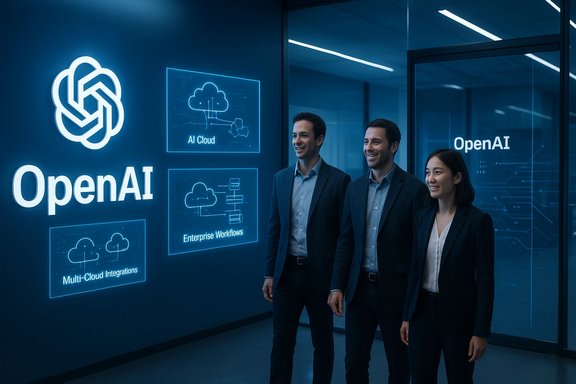
The Convogo team is being assigned to OpenAI’s AI cloud efforts. In practice, that phrase usually covers a combination of:- Building production‑grade integrations between OpenAI’s models and hyperscale cloud platforms.
- Designing resilient orchestration and inference systems for enterprise workloads.
- Building product experiences and tooling that let customers deploy and manage AI features at scale.
Why this acquisition matters (and the broader context)
OpenAI’s acquisition pattern and enterprise playbook
Over the last year OpenAI has executed multiple acquisitions and acqui‑hires. Many of these have been talent captures where the acquired product was discontinued or absorbed into broader engineering efforts. This pattern signals a playbook focused on: rapidly scaling internal teams with domain expertise, collapsing time‑to‑market for enterprise features, and ensuring product development aligns tightly with the company’s strategic infrastructure roadmap.That roadmap includes multi‑billion‑dollar cloud commitments and partnerships that have reshaped how OpenAI deploys compute. Those large infrastructure agreements — including major multi‑year arrangements with multiple cloud providers — mean OpenAI is not building a public cloud of its own so much as orchestrating compute across partner platforms, and hiring teams that understand real‑world workflows helps in that orchestration.
Enterprise sales and the Azure question
OpenAI’s close working relationship with major cloud providers affects how it brings products to enterprise customers. Large cloud partners provide channel access, sales relationships, and contractual frameworks that make enterprise rollouts smoother. A team experienced in translating model outputs into operational, auditable workflows is valuable when negotiating product integrations, compliance, and procurement with large buyers.While many headlines have framed OpenAI’s cloud initiatives around a single provider, the reality is more nuanced: OpenAI maintains strategic relationships across multiple hyperscalers and signs bespoke, multi‑year capacity deals. That means engineers and product designers who know how to build experiences that can run on those clouds — with appropriate observability, security, and compliance layers — are critical.
Immediate impact on Convogo customers and the HR tech market
Short‑term pain for buyers and partners
With Convogo’s product being wound down, active customers will face an immediate migration problem. For executive coaches and leadership firms that baked Convogo into their coaching operations and reporting workflows, the shutdown creates friction around:- Data export and continuity of client reports.
- Replacing automated report generation and templating.
- Reconfiguring integrations with HRIS, LMS, or scheduling tools.
Opportunity for HR tech vendors and consultancies
The exit creates a door for adjacent vendors and newcomers to capture stranded users. Vendors that can offer:- Fast migration tooling,
- Prebuilt templates for leadership assessments and 360s,
- Integrations with calendar, HRIS, and learning systems,
- Clear privacy and compliance controls,
Enterprise software sales teams should move quickly with targeted outreach and migration offers. The logic is simple: customers who depended on Convogo are now in-market and receptive to change — particularly if the migration is framed as a low‑friction, high‑value upgrade.
How software vendors should respond (practical playbook)
- Audit overlap: Map product features to Convogo’s core value points (report templates, question banks, scoring algorithms, export formats).
- Create migration bundles: Offer a short‑term discount, migration assistance, and onboarding sessions specifically tailored to former Convogo workflows.
- Build “OpenAI‑compatible but standalone” integrations: Provide hooks that keep integrations with OpenAI models optional and reversible so customers aren’t locked to a single provider.
- Publish migration guides and quick templates: Fast utility wins enterprise trust during disruptions.
- Coordinate with channel partners and coaches: Use coaching networks to source testimonials and rapid pilot customers.
Strategic benefits for OpenAI
Shortening the model → product gap
One persistent challenge for model makers is the last mile — turning raw model capabilities into reliable features people can use day to day. Hiring experienced product builders from verticalized startups helps close that gap. Teams that previously shipped domain‑specific experiences (like leadership reports) understand user mental models, edge cases, and regulatory sensitivity in ways that pure research teams may not.Faster enterprise readiness
Enterprise buyers require audit trails, data residency, explainability, and predictable performance. Bringing in domain practitioners accelerates efforts to design enterprise controls, productized SLAs, and integration patterns that align with procurement timelines and security reviews. Those capabilities are important as OpenAI pushes further into business applications and API‑driven offerings.Risks, ethical questions, and unanswered issues
Customer disruption and vendor trust
Repeated patterns of acquistions followed by product shutdowns can erode trust among business customers. When startups sell to enterprise users and then shut down the product, customers — often mid‑contract — face operational headaches. That dynamic creates market opportunity but also increases wariness among buyers who might delay procurement decisions or require stronger exit guarantees.Data portability and compliance concerns
When a service is wound down, questions about data portability, deletion, and retention arise. Enterprise customers must verify that their employee and client data are exported cleanly and that any PII is properly handled. The absence of IP transfer suggests Convogo’s data practices, contractual terms, and data exports must be scrutinized carefully by impacted customers.Concentration of talent and platform lock‑in
There’s a structural tension when the leading model developer hires domain specialists from dozens of vertical startups. While consolidating talent can accelerate feature development, it also concentrates expertise inside a single vendor that controls both models and the channels to deliver them. This can raise competitive concerns and increase the strategic leverage of the model owner in enterprise negotiations over pricing, distribution, and product direction.Unverified claims and cautionary notes
Some statements associated with Convogo’s user counts and partner roster come directly from company communications and are not independently verified. Similarly, details of private deal economics and contractual terms with cloud providers are often disclosed in summary form and may be subject to interpretation. These items should be treated as company claims unless independently audited or published in formal filings.Competitive and market implications
For cloud providers
OpenAI’s approach to cloud means hyperscalers will compete not just on price and raw capacity but on the quality of managed infrastructure for inference, custom hardware deployments, and the developer experience for integrating models into business workflows. Firms that can provide bespoke, enterprise‑grade GPU clusters, compliance tooling, and rapid onboarding will be attractive.For HR tech and coaching software vendors
Vendors that previously built features around human workflows — assessments, narrative feedback generation, customizable templates, and coach dashboards — can outflank any gap left by Convogo if they:- Emphasize data portability and vendor stability,
- Offer plug‑and‑play generative AI integrations that respect data governance,
- Build transparent pricing and SLAs for enterprise customers.
For investors and acquirers
The recurring pattern of talent captures with product shutdowns increases the premium for businesses that can demonstrate defensible IP, sticky workflows, and diversified go‑to‑market channels. Investors should account for the possibility of an acqui‑hire exit that leaves customers seeking continuity elsewhere.Practical advice for affected customers
- Export everything now: Immediately request full data exports in machine‑readable formats and verify the completeness of exported reports and metadata.
- Secure transition plans: Ask the vendor for a migration timeline, contact points, and, if necessary, a temporary service extension to allow orderly changeover.
- Document integrations: Create an inventory of integrations (HRIS, LMS, calendaring, SSO) to inform replacement vendor selection.
- Prioritize compliance: Confirm how long historical data will be retained and whether any personal data will persist after the shutdown.
- Evaluate alternatives with a migration lens: Select vendors that provide migration tooling, template parity, and coach onboarding packages.
What this signals about OpenAI’s near‑term priorities
This talent acquisition is emblematic of a larger strategy: scale productization by bringing in domain specialists, accelerate enterprise readiness through cloud engineering, and remain flexible about hosting partners while focusing on model and product experience. The company appears to prefer hiring vertical experts and integrating their knowledge into centralized product and infrastructure teams rather than maintaining a sprawling roster of boutique B2B apps.That strategy has trade‑offs. It accelerates technical progress and unifies experience design, but it leaves business customers exposed when their vendor is shut down. The winners in this environment will be vendors that combine domain expertise, clear migration paths, and independent sustainability.
Conclusion
OpenAI’s acquisition of Convogo’s founding team is another data point in a sustained pattern: talent‑driven purchases aimed at closing the gap between cutting‑edge models and dependable enterprise experiences. For OpenAI, the deal strengthens the company’s ability to craft AI cloud features and scale those features across major cloud platforms. For Convogo’s customers, coaches, and partners, it creates an urgent need to migrate and reassess vendor risk.The market reaction will be practical and fast: HR tech vendors and consultancies that offer migration, integration, and governance will pick up displaced customers. Meanwhile, enterprises considering AI integrations should demand clear portability, contractual exit protections, and technical roadmaps that prioritize stability over novelty.
This transaction underscores a broader industry dynamic: as model development accelerates, the companies that win enterprise trust will be those that combine advanced models with operational reliability, transparent governance, and migration safety nets for customers caught in the churn of rapid consolidation.
Source: Tech in Asia https://www.techinasia.com/news/ope...ind-us-business-software-startup-convogo/amp/
