

Reltio’s recent Microsoft Azure certification is more than a marketing feather in its cap — it’s a practical acceleration point for enterprises looking to feed high‑quality, governed data into AI and analytics workloads on Azure, and it changes the procurement and deployment calculus for data teams building enterprise AI. ([pressreleasehub.paeleasehub.pa.media/article/reltio-achieves-microsoft-azure-certification-accelerating-trusted-data-delivery-for-enterprise-ai-and-digital-transformation-65963.html)
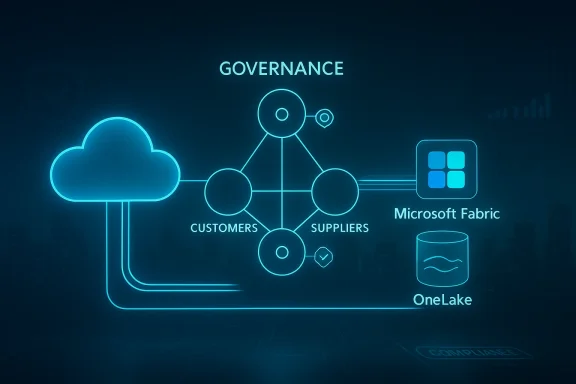
Reltio has positioned itself as a cloud‑native, SaaS data unification and master data management platform that provides a "single source of truth" for customer, product, supplier, and related enterprise data. In 2025 the vendor announced deeper technical integration with Microsoft platforms — including a zero‑copy integration to Microsoft Fabric — and has since publicized a Microsoft Azure certification that signals validated compatibility and marketplace readiness.
Microsoft’s partner and certification landscape has evolved into a two‑tier model that combines broad Solutions Partner designations with more prescriptive, auditable "Certified Software for Azure" or "Solutions Partner with certified software" badges that target Azure‑deployed SaaS. These certified‑software designations aim to give enterprise buyers clearer signals about operational readiness, security posture, and integration quality for cloud‑native software on Azure. The program also unlocks specific marketplace and co‑sell benefits for vendors.
For customers, the practical effect is twofold: more ready‑made options for assembling AI stacks on Azure, and a marketplace that increasingly favors Azure‑native workflows. This is advantageous for teams that have already invested in Microsoft identity, governance, and analytics tooling.
Strengths:
Reltio’s certification advances the market reality that modern AI programs are primarily data programs — and that vendors who can prove a secure, governed, and efficient path from operational systems into analytics engines will be preferentially adopted. For enterprise buyers, the sensible posture is opportunistic: leverage the certification to accelerate pilots and procurement, but validate end‑to‑end governance, portability, and cost under realistic production conditions before committing to large‑scale rollouts.
Source: CDP Institute Reltio Achieves Microsoft Azure Certification, Accelerating Trusted Data Delivery for Enterprise AI and Digital Transformation | CDP Institute
 Background
Reltio has positioned itself as a cloud‑native, SaaS data unification and master data management platform that provides a "single source of truth" for customer, product, supplier, and related enterprise data. In 2025 the vendor announced deeper technical integration with Microsoft platforms — including a zero‑copy integration to Microsoft Fabric — and has since publicized a Microsoft Azure certification that signals validated compatibility and marketplace readiness.Microsoft’s partner and certification landscape has evolved into a two‑tier model that combines broad Solutions Partner designations with more prescriptive, auditable "Certified Software for Azure" or "Solutions Partner with certified software" badges that target Azure‑deployed SaaS. These certified‑software designations aim to give enterprise buyers clearer signals about operational readiness, security posture, and integration quality for cloud‑native software on Azure. The program also unlocks specific marketplace and co‑sell benefits for vendors.
What this certification actually means — the practical mechanics
Microsoft certifications for SaaS vendors typically require a combination of technical validation, security attestations, marketplace readiness checks, and customer success metrics. For enterprise buyers and architects, the useful outcomes are:- Technical compatibility: The software has been tested for predictable deployment and operation on Azure services and patterns.
- Security and compliance checks: The vendor is assessed for common cloud security configurations, identity integration, and often evidence of third‑party audits or compliance frameworks.
- Marketplace/Procurement readiness: Certified products are easier to discover and procure through Azure Marketplace and eligible for certain co‑sell and go‑to‑market benefits.
- Operational expectations: There is an implied baseline for SLAs, instrumentation, and integration patterns that make the product usable in enterprise landscapes.
Why it matters for enterprise AI and digital transformation
AI projects fail or stall far more often because of data problems than because of model issues. Reltio’s certification pushes two immediate advantages into that risk equation:- Faster time to reliable training data: Reltio’s platform is designed to provide consolidated, governed, and deduplicated entity views (customers, products, suppliers). Feeding consistent entity graphs and interaction histories into model training pipelines materially reduces noisy labels and improves feature quality.
- Lower operational friction with Azure analytics stack: Reltio’s announced zero‑copy integration to Microsoft Fabric means enterprises can supply Reltio’s governed data directly into Fabric‑based engines (Databases, Data Engineering, Power BI, etc.) without constant, manual replication. That both speeds iteration and reduces surface area for drift between operational systems and analytics.
- improved model accuracy and fairness from better entity resolution and lineage,
- faster experiment cycles because data is accessible and analytics‑ready,
- stronger governance and explainability because lineage and stewardship are enforced at the data layer.
Technical strengths and notable features
Reltio’s Azure posture and feature set that most strongly influence adoption include:- Zero‑copy integration with Microsoft Fabric — enables Reltio Data Cloud to provide governed data into OneLake and Fabric engines without duplicating data, reducing ETL complexity and storage costs. This is especially valuable for low‑latency analytics and AI that need near‑real‑time entity and interaction data.
- Cloud‑native SaaS running on Azure — designed for multi‑tenant scale, high availability, and the operational practices expected by enterprise cloud teams. Certification confirms this alignment to Microsoft’s technical expectations.
- Enhanced governance and lineage integrations — Reltio’s integration with Microsoft Purview and similar tools supports enterprise requirements for data lineage, stewardship workflows, and regulatory compliance. This improves model explainability and auditability for AI systems.
- New capabilities oriented to AI operations — Reltio’s roadmap includes features such as AgentFlow (autonomous agents built on Model Context Protocol), Observability Hub, and unstructured data extraction that together lower the manual effort for preparing AI‑consumable data. Buyers should match these capabilities to their MLOps requirements.
Commercial and procurement implications
The certification affects vendor selection and contracting in three meaningful ways:- Procurement signal: Azure certification reduces due‑diligence time. IT procurement teams often treat Microsoft‑certified suppliers as lower risk on first pass, which shortens vendor evaluation and legal review cycles.
- Marketplace advantages: Certified products are more easily discoverable via Azure Marketplace and are positioned for co‑sell and joint go‑to‑market initiatives, which can accelerate vendor delivery timelines and create bundled commercial offers.
- Commercial levers at integration time: With certification, buyers can more confidently ask for reference architectures, deployment guides, and Azure‑native templates (ARM/Bicep/Terraform) that reduce integration effort and vendor professional services spend.
Risks, caveats, and the buyer’s checklist
While certification is valuable, it is not an assurance of perfect fit. IT leaders must regard certifications as one input among many. Key risks and questions to surface:- Certification is a signal, not a guarantee. Microsoft validation reduces uncertainty but does not eliminate integration projects, especially in heterogeneous landscapes or regulated industries. Ask for the validation scope — which environments, regions, or Azure services were tested?
- Data residency and sovereignty constraints. Certification does not change legal obligations related to cross‑border data transfers. Verify where Reltio will store backups, logs, and derivatives of governed data.
- Operational telemetry and observability gaps. Confirm that logs, metrics, and tracing integrate with your enterprise monitoring tools (Azure Monitor, Log Analytics, SIEM) and that PII is not inadvertently captured in logs.
- Cost and long‑term TCO. Zero‑copy integrations reduce storage duplication costs, but there are tradeoffs in compute and egress patterns. Model training at scale can still be expensive; require cost modeling for realistic production workloads.
- Vendor lock‑in and portability. Azure‑native integrations deliver performance gains but increase coupling. Evaluate abstractions (e.g., OneLake connectors, cross‑cloud data fabrics) if multicloud portability is a long‑term requirement.
- The certification documentation and scope of testing from Microsoft (what was tested, what was excluded).
- Architecture diagrams for zero‑copy Fabric integration and a migration playbook for common sources.
- Evidence of third‑party audits or compliance certifications relevant to your industry (e.g., HITRUST, SOC2) and their dates.
- Sample cost model for a representative production workload (ingest, transformation, model training).
- Runbook and run‑time observability (what metrics and logs will be forwarded to Azure Monitor / your SIEM).
How to operationalize Reltio + Azure for AI: recommended architecture patterns
Enterprises that want to move from a pilot to production should consider the following patterns:- Hybrid ingestion and governance layer
- Use Reltio to unify and enrich entity graphs, then expose analytics‑ready views into Fabric’s OneLake using the zero‑copy pattern. This preserves lineage and ensures a single authoritative source for entity resolution.
- MLOps pipeline integration
- Feed Reltio views into Azure Machine Learning or Fabric Data Engineering jobs. Use reproducible feature stores and ensure model snapshots reference the exact Reltio dataset version and lineage metadata.
- Secure model serving and inference
- Serve models in Azure Kubernetes Service or Azure Container Apps with secrets in Azure Key Vault. Ensure request/response telemetry obfuscates PII and is subject to the same governance policies as training data.
- Observability and drift detection
- Integrate Reltio Observability Hub outputs and Fabric metrics into Azure Monitor. Establish drift detection for entity distributions and deploy automatic alerts for drift that could invalidate model inputs.
Governance, privacy, and data protection — practical considerations
AI that consumes profile and interaction data raises privacy, consent, and compliance questions. Reltio’s enterprise focus and Microsoft certification improve the baseline, but programmatic controls are required:- Centralized consent and attribute masking: Implement consent‑aware attribute views in Reltio so downstream ML pipelines automatically exclude or pseudonymize data where required by consent policies.
- Automated DSAR (Data Subject Access Request) workflows: Certification and Purview integrations help, but ensure Reltio is part of your DSAR automation so model training datasets can be scoped or redacted when required.
- Cookie and tracking hygiene for training data: When bringing web interaction or behavioral data into Reltio, ensure cookie‑level identifiers are handled appropriately. For example, standard Google Analytics cookies like _ga and _gid have known lifetimes (_ga — 2 years, _gid — 24 hours after last activity) and are frequently used to stitch sessions; treat them as ephemeral identifiers that need mapping to persistent enterprise identities only when consented. (Review cookie retention and consent controls carefully for GDPR and CCPA compliance.)
The privacy‑telemetry example: Google Analytics cookies and model inputs
Web analytics cookies are often the raw tether between user behavior and enterprise records. Typical cookie lifetimes illustrate the ephemeral nature of these identifiers:- _ga — used to identify users; typical expiry ~2 years.
- _gid — used to identify users; expiry ~24 hours after last activity.
- _gali / _gat / __utmt — used for event tracking or throttling analytics requests with short lifetimes (seconds to minutes).
- utma / utmz / __utmv — legacy analytics cookies with longer windows for session and campaign attribution.
Competitive and market context
Reltio’s certification follows a broader trend of data and analytics vendors obtaining Microsoft validations as the Azure ecosystem matures. Competitors and peers are similarly pursuing Azure certified‑software and Solutions Partner statuses, positioning their products for easier procurement into Azure‑centric stacks. This alignment reduces friction for enterprises that standardize on Microsoft for cloud and AI services, but it also raises the bar for interoperability and negotiated terms.For customers, the practical effect is twofold: more ready‑made options for assembling AI stacks on Azure, and a marketplace that increasingly favors Azure‑native workflows. This is advantageous for teams that have already invested in Microsoft identity, governance, and analytics tooling.
Recommendations for IT leaders and architects
- Treat certification as a meaningful procurement accelerant but require proof points: ask for test results, compliance artifacts, and production references.
- Run a short, well‑scoped pilot that validates data lineage, consent handling, and model reproducibility using Reltio views exposed into Fabric. Inclue a cost and performance measurement plan.
- Insist on deployment automation and Azure‑native templates so production rollout is repeatable and auditable.
- Validate observability and incident response playbooks across Reltio and Azure services. Confirm that data‑plane and control‑plane telemetry are integrated with your SIEM and change‑management processes.
- Include legal and privacy teams early to map data flows, cookie usage, and DSAR mechanics into the contract and operational plan.
Final analysis: strengths, risks, and the strategic trade‑off
Reltio’s Microsoft Azure certification is a practical win in the accelerating market for enterprise AI infrastructure. The combination of zero‑copy integrations, governed entity graphs, and Azure validation lowers engineering friction for many organizations and provides a credible path to production for data‑centric AI.Strengths:
- Rapid path to enterprise AI through validated integrations and governance.
- Procurement and operational acceleration because certification reduces initial vendor friction.
- Feature alignment for AI operations with observability, AgentFlow, and unstructured data capabilities that reduce manual data preparation.
- Certification is not a turnkey promise. Integration complexity, cost, and operational dependency remain project realities.
- Data governance and regulatory concerns are not resolved by certification alone — they require programmatic controls and legal‑operational processes.
- Potential vendor lock‑in to Azure‑native features that, while performant, reduce portability.
- For Azure‑centric enterprises, the benefits of lower integration friction, marketplace access, and co‑sell dynamics likely outweigh the portability concerns — particularly when speed to value on AI projects is a priority.
- For organizations that need multicloud portability or have strict data residency constraints, weigh the operational and contractual guarantees carefully and require clear portability and exit provisions.
Reltio’s certification advances the market reality that modern AI programs are primarily data programs — and that vendors who can prove a secure, governed, and efficient path from operational systems into analytics engines will be preferentially adopted. For enterprise buyers, the sensible posture is opportunistic: leverage the certification to accelerate pilots and procurement, but validate end‑to‑end governance, portability, and cost under realistic production conditions before committing to large‑scale rollouts.
Source: CDP Institute Reltio Achieves Microsoft Azure Certification, Accelerating Trusted Data Delivery for Enterprise AI and Digital Transformation | CDP Institute
