

Secure Boot stops unsigned or tampered code from running before Windows loads, and enabling it on a Windows 11 PC is one of the highest‑impact security steps you can takeye — but it must be done in the right order with careful preparation to avoid data loss or BitLocker lockouts.
Secure Boot is a UEFI firmware feature that enforces cryptographic signatures for early‑boot code (firmware drivers, bootloaders, and the OS loader). When Secure Boot is active the platform will only execute boot components that present valid, trusted signatures, which dramatically reduces the risk of boot‑level malware and rootkits. Windows 11’s platform baseline expects UEFI + Secure Boot capability alongside TPM 2.0 for a supported upgrade path, so enabling Secure Boot is often necessary both for security and compatibility.
This article gives a thorough, vendor‑agnostic, step‑by‑step guide to safely enabling Secure Boot on Windows 11 PCs, explains the technical prerequisites (UEFI/GPT/TPM), shows the exact commands and firmware actions you’ll likely use, and flags the real world risks and troubleshooting steps if things go wrong. The process emphasizes backup, BitLocker handling, and validated conversion tools so you avoid common pitfalls.
However, the process is not risk‑free. The largest operational hazards are BitLocker recovery lockouts, unbootable systems after an improper MBR→GPT conversion, and blocked legacy drivers or dual‑boot setups. These are avoidable with careful preparation: full backups, suspending BitLocker, validating with
If your system already reports UEFI + Secure Boot = On + GPT + TPM 2.0, you’re already in the desired configuration and no changes are needed. If not, follow the validated sequence above, and when in doubt, prefer the supported Microsoft path (mbr2gpt for conversion) and vendor firmware guidance.
Enabling Secure Boot is a small but powerful investment in platform resilience; when performed with the proper prechecks, backups, and BitLocker care it delivers meaningful protection without disrupting normal PC use.
Source: HowToiSolve How to Enable Secure Boot in Windows 11 - Full Step-by-Step Guide
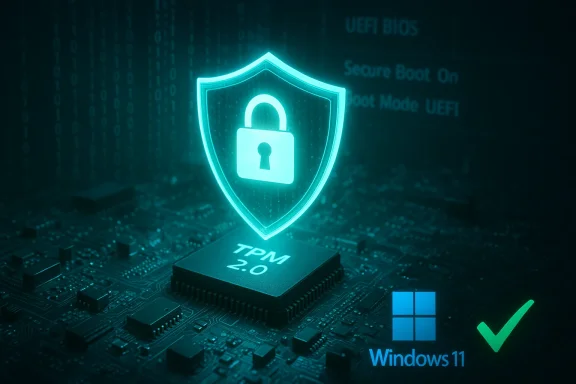 Background / Overview
Secure Boot is a UEFI firmware feature that enforces cryptographic signatures for early‑boot code (firmware drivers, bootloaders, and the OS loader). When Secure Boot is active the platform will only execute boot components that present valid, trusted signatures, which dramatically reduces the risk of boot‑level malware and rootkits. Windows 11’s platform baseline expects UEFI + Secure Boot capability alongside TPM 2.0 for a supported upgrade path, so enabling Secure Boot is often necessary both for security and compatibility.This article gives a thorough, vendor‑agnostic, step‑by‑step guide to safely enabling Secure Boot on Windows 11 PCs, explains the technical prerequisites (UEFI/GPT/TPM), shows the exact commands and firmware actions you’ll likely use, and flags the real world risks and troubleshooting steps if things go wrong. The process emphasizes backup, BitLocker handling, and validated conversion tools so you avoid common pitfalls.
Why Secure Boot matters for Windows 11 and modern software
Secure Boot provides early‑boot integrity by validating signatures before any OS code runs. This capability:- Prevents unsigned or modified bootloaders and pre‑OS components from running.
- Works with TPM‑backed measured boot signals to support BitLocker and attestation.
- Is increasingly required by anti‑cheat, DRM, and some enterprise policies.
Preflight checklist — do this before touching firmware
Before you make any firmware or partition changes, complete these non‑negotiable steps:- Full backup: Create a full disk image if possible, plus separate copies of critical files off‑device.
- Export BitLocker recovery keys and suspend BitLocker if it’s active. Firmware or partition changes commonly trigger BitLocker recovery; suspend protection or ensure recovery keys are accessible. Typical suspend methods include the BitLocker control panel or PowerShell/manage-bde commands.
- Confirm current state in Windows: run System Information (Win+R → msinfo32), open TPM management (Win+R → tpm.msc), and check Disk Management for partition style. Look for:
- BIOS Mode = UEFI (or Legacy if you’re in the old mode)
- Secure Boot State = On / Off / Unsupported
- Partition style = GPT or MBR
- TPM present and Specification Version = 2.0.
Quick verification commands (authoritative checks)
Use these quick checks inside Windows before you proceed:- msinfo32: Press Win + R, type
msinfo32, and confirm Secure Boot State and BIOS Mode on the System Summary page. - PowerShell: Run
Confirm‑SecureBootUEFIin an elevated PowerShell — it returns True if Secure Boot is active, False if supported but disabled, or an error on legacy BIOS. - TPM check: Run
tpm.mscto verify TPM presence and Specification Version = 2.0. - Disk partition type: Open Disk Management → right‑click the system disk → Properties → Volumes tab → Partition style = GPT or MBR. Alternatively use
diskpartandlist disk(look for the GPT column).
Step‑by‑step: How to enable Secure Boot in Windows 11 (safe route)
Below is a conservative, supported sequence that minimizes the risk of an unbootable system.1. Backup and suspend BitLocker (if enabled)
- Create a full disk image and separate file backups.
- Export or record BitLocker recovery keys (Microsoft account, USB, printed copy).
- Suspend BitLocker using the GUI (Control Panel → BitLocker Drive Encryption → Suspend protection) or PowerShell/manage-bde:
- Check status:
manage-bde -status - Suspend protectors:
manage-bde -protectors -disable C:(run as admin)
Suspending BitLocker prevents an immediate recovery prompt when firmware or boot settings change.
2. Confirm current state (again)
Runmsinfo32, tpm.msc, and Disk Management to reconfirm BIOS Mode, Secure Boot State, TPM version, and Partition style. If all are already UEFI + Secure Boot = On + GPT + TPM 2.0, no firmware changes are necessary.3. Convert MBR → GPT (only if your system disk is MBR)
If Disk Management shows the system disk as MBR, you must convert it to GPT before enabling UEFI‑only boot and Secure Boot. Use Microsoft’s supported, non‑destructive toolmbr2gpt.exe (shipped with Windows):- Open an elevated Command Prompt (Run as Administrator).
- Validate (replace X with the disk number, usually 0):
mbr2gpt.exe /validate /disk:X /allowFullOS- If validation succeeds, convert:
mbr2gpt.exe /convert /disk:X /allowFullOS
mbr2gpt enforces strict preconditions (partition counts, BCD health, space for GPT headers). If validation fails, address the specific errors or plan a clean UEFI reinstall. Always keep backups and suspend BitLocker before conversion.4. Reboot into UEFI/BIOS firmware settings
There are two reliable ways to enter firmware:- Use Advanced startup: Settings → System → Recovery → Advanced startup → Restart now → Troubleshoot → Advanced options → UEFI Firmware Settings → Restart.
- Or press the vendor key during POST (common keys: DEL, F2, F10, F12, Esc). Manufacturer firmwares differ; consult your manual if unsure.
5. In UEFI: enable TPM (if applicable), set UEFI mode, disable CSM, and enable Secure Boot
Inside the firmware interface:- Enable TPM (or firmware TPM) under Security/Advanced. Vendor labels vary: Intel PTT, AMD fTPM, or simply TPM. Do not clear TPM unless you understand the consequences — clearing can destroy keys and lock BitLocker volumes.
- Set Boot Mode to UEFI (or “Windows UEFI Mode”) and disable CSM/Legacy (Compatibility Support Module). CSM is a legacy compatibility layer that prevents Secure Boot from functioning properly if left enabled.
- Locate Secure Boot (usually under Boot, Security, or Authentication) and set it to Enabled. If prompted, choose Standard/Default for Secure Boot Mode unless you have a reason to manage custom keys.
- If the Secure Boot option is greyed out, many firmwares require you to Restore Factory Keys or set an administrator/supervisor password before you can enroll default platform keys. After restoring/installing default keys, the Enable option should become editable.
6. Verify success in Windows
After boot:- Run
msinfo32and confirm Secure Boot State = On and BIOS Mode = UEFI. - Optionally run PowerShell
Confirm‑SecureBootUEFI— it should return True.
Common pitfalls and troubleshooting (real problems and fixes)
Secure Boot can fail to enable or cause boot issues for several common reasons. Below are the typical symptoms and fixes.Secure Boot option is greyed out
- Cause: Firmware still in Legacy/CSM mode, or disk still MBR, or Secure Boot keys not enrolled.
- Fixes:
- Convert the disk to GPT (use
mbr2gptafter validation). - Disable CSM / set Boot Mode to UEFI.
- In firmware, choose “Restore Factory Keys” or set a supervisor password to allow key enrollment.
BitLocker recovery prompt after firmware changes
- Cause: TPM/boot configuration changed while BitLocker was active.
- Fixes:
- Use the recovery key to regain access.
- Suspend BitLocker before making firmware or partition changes in future. Export and store your BitLocker key in multiple safe places before attempting conversions.
Windows won’t boot after switching to UEFI
- Possible causes: mbr2gpt conversion failed or boot entries weren’t created, storage controller mode mismatch (RAID/IRST vs AHCI), or missing UEFI boot files.
- Fixes:
- Boot Windows recovery media and run Automatic Repair.
- Use
bcdbootto recreate UEFI boot files: from WinRE Command Prompt, assign the EFI partition and runbcdboot C:\Windows /l en-us /s S: /f UEFI(adjust drive letters as needed). - If using Intel RST/RAID, follow vendor guidance — you may need vendor drivers available during repair.
Old unsigned kernel drivers stop working
- Cause: Secure Boot enforces signature checks on kernel‑mode drivers.
- Fixes:
- Update drivers to vendor‑signed versions, remove legacy kernel agents (old AV), or contact vendor for signed drivers. This is normal Secure Boot behavior.
Dual‑boot Linux or custom bootloaders fail after Secure Boot
- Cause: Unsigned GRUB or kernels blocked by Secure Boot.
- Fixes:
- Use a signed shim (mainline Linux distributions provide a signed shim executable).
- Advanced: enroll your own keys in firmware (not recommended for casual users).
Advanced notes and enterprise considerations
- Firmware variability: UEFI menu layouts and naming differ by vendor and model. Always consult the motherboard or OEM manual for exact menu paths and required steps to enroll keys or enable TPM/PTT/fTPM. Firmware updates from the vendor sometimes add or clarify TPM/Secure Boot options — update firmware only from the vendor support page.
- Managed devices: Corporate devices may ship with TPM or Secure Boot disabled by policy. Modifying firmware on corporate machines can violate IT policy. Coordinate with IT for managed fleets.
- Virtual machines: Secure Boot and vTPM support depend on the hypervisor. For VMs you may need to enable “Secure Boot” and attach a virtual TPM explicitly.
Safety, recovery and rollback strategies
If you run into trouble, use these conservative recovery options:- Keep a full disk image so you can restore the system to its prior state if conversion or firmware changes cause an unrecoverable failure.
- Keep a Windows installation USB that matches the installed Windows version — this lets you boot to WinRE and run repairs or
bcdboot. - Have BitLocker recovery keys accessible offline (don’t rely solely on the Microsoft account sync if you suspect connectivity issues).
- If mbr2gpt validation fails, do not force changes. Address the validator’s specific errors (partition rework, BCD repair) or perform a clean UEFI install after backing up.
Short, copyable command checklist
- Check current state:
msinfo32(GUI) — look for BIOS Mode and Secure Boot State.tpm.msc— confirm TPM 2.0.- If MBR → validate/convert:
mbr2gpt.exe /validate /disk:0 /allowFullOSmbr2gpt.exe /convert /disk:0 /allowFullOS(only after successful validation).- Suspend BitLocker:
manage-bde -statusmanage-bde -protectors -disable C:(run as admin).- Confirm Secure Boot after firmware change:
- PowerShell (Admin):
Confirm-SecureBootUEFI— should return True once enabled.
Final analysis: strengths, trade‑offs and recommended approach
Enabling Secure Boot on a Windows 11 PC significantly raises platform security: it reduces the attack surface for persistent boot‑level malware, enables stronger BitLocker key protection through TPM attestation, and aligns the device with Microsoft’s modern platform baseline used by many vendors. For most modern consumer and business PCs, the steps amount to a short firmware toggle — provided the disk is GPT, TPM is enabled, and CSM is disabled.However, the process is not risk‑free. The largest operational hazards are BitLocker recovery lockouts, unbootable systems after an improper MBR→GPT conversion, and blocked legacy drivers or dual‑boot setups. These are avoidable with careful preparation: full backups, suspending BitLocker, validating with
mbr2gpt first, and following vendor firmware instructions. For enterprise fleets, plan a staged rollout with recovery plans and key escrow.If your system already reports UEFI + Secure Boot = On + GPT + TPM 2.0, you’re already in the desired configuration and no changes are needed. If not, follow the validated sequence above, and when in doubt, prefer the supported Microsoft path (mbr2gpt for conversion) and vendor firmware guidance.
Enabling Secure Boot is a small but powerful investment in platform resilience; when performed with the proper prechecks, backups, and BitLocker care it delivers meaningful protection without disrupting normal PC use.
Source: HowToiSolve How to Enable Secure Boot in Windows 11 - Full Step-by-Step Guide
