

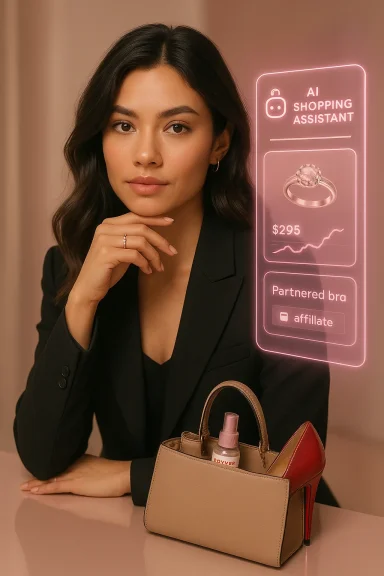
For our column this week, Fashionista’s short profile of Serena Page — in which the Love Island USA season‑6 winner confesses to shopping for pinky rings and eyeing a pair of Christian Louboutin ballerina heels while carrying a travel‑size Tower 28 SOS Spray in her purse — is a small, glossy window into a much larger story about modern influencer commerce: authenticity as currency, micro‑moments of aspiration, and the software scaffolding that now connects a celebrity’s wish list to the checkout cart.
Background
Serena Page rose from reality‑TV fame to mainstream influence after winning Love Island USA Season 6 with partner Kordell Beckham; the pair’s victory accelerated Page’s media visibility and brand deals, and she has since built a cross‑platform public profile that now includes representation by major talent agencies.The Fashionista piece is a compact Q&A — part of a recurring “Payment Processing” column — that trades in the small confessions that make fans imagine themselves owning the same objects as their favorite on‑screen personalities: a pinky ring, Christian Louboutin ballerina heels, a Tower 28 SOS spray, and a loyalty to a childhood grooming spot (European Wax Center). The article also lists several of Page’s commercial alignments — CoverGirl, SheaMoisture, Clarins, Pepsi, and, notably, Microsoft Copilot — and quotes Page on the principle that she “only do[es] partnerships and collabs with brands and people that I’ve grown up using or have a type of relationship or history with.”
That last line — about selective brand alignment — is what turns a quick fashion Q&A into a worthwhile signal for anyone who follows influencer marketing, platform commerce, or digital retail: Serena Page’s shopping preferences are not just taste notes; they are branded choices that feed content, sponsorship negotiation, and the commerce tech stack that now sells the objects she mentions.
Why a quick fashion Q&A matters to the commerce ecosystem
The interview as a commerce primitive
A celebrity’s offhand remark — “I want a pinky ring” — is microcontent with macro implications. For fans, it’s a moment of connection and aspiration; for brands, it’s an opportunity to be attached to that aspiration; and for platforms, it’s a data point that can be acted upon by algorithms and shopping assistants.- For talent and agencies, short features like Fashionista’s are low‑friction tools to keep an influencer top‑of‑mind between bigger product launches or tours. Serena Page’s rapid pivot into partnerships after Love Island follows this playbook: visibility begets endorsement offers, and representation by a major agency (CAA in Page’s case) helps convert those offers into deals.
- For brands, the mention itself can justify incremental spend on influencer partnerships; SheaMoisture’s recent campaign with Page — launched months after her Love Island win — is a clear example of a brand turning a cultural moment into a paid creative collaboration.
- For platforms, a named product or brand in a high‑engagement text or video furnishes signals for catalogs, affiliate networks, and agentic shopping assistants (more on those below).
Authenticity is now a commercial filter
Page’s line about preferring brands she “grew up using” is not a throwaway PR quote. It’s a defensive posture in an era when influencer authenticity determines long‑term commercial value. Consumers — especially Gen Z audiences — rapidly detect transactional incoherence: a creator who promotes anything for a fee loses credibility. By anchoring brand deals in prior, genuine use, Page is signaling authenticity, which raises the dollar value of each endorsement and reduces audience churn.This mode of selective alignment has margins: it limits the number of deals an influencer can credibly accept, but increases the conversion rate and shelf life of the deals they do accept. Agencies and talent managers increasingly price authenticity, not just reach.
The tech side: from mention to money
Mentioning a product is only the first step. Today’s commerce stack has become an assembly line that turns mentions into purchases — and it does so faster than it used to.Copilot, shopping assistants, and the rise of agentic commerce
Microsoft’s Copilot integration into the Edge browser has consolidated shopping features — price comparison, price history charts, price tracking, and cashback notifications — into an AI assistant that can proactively surface deal opportunities while you shop. That technical capability matters when a creator names a brand or product; search and shopping assistants can pick up that signal and close the loop from inspiration to basket. Microsoft itself has documented the integration of shopping features into Copilot in Edge, and tech outlets reported the feature's rollout to U.S. users late last year.Why this is relevant to a Fashionista Q&A: when a public figure says “I love Tower 28 SOS Spray” or “I’m eyeing Christian Louboutin ballerina heels,” modern shopping assistants — whether in a browser, a social app, or a voice assistant — can do more than surface stores. They can:
- Pull price histories and recommend whether to wait or buy now.
- Show lower‑priced sellers and cashback opportunities.
- Offer “track price” alerts so a fan can be notified when an item drops.
- Translate the mention into an affiliate click or an in‑app checkout.
The affiliate economy and disclosure friction
Fashion media still uses affiliate links. Fashionista’s own site notes the use of affiliate links does not affect editorial decision‑making — but the presence of an affiliate ecosystem is how a simple “I want” can be monetized. That monetization raises editorial and ethical tensions: media that publishes taste lists and influencer roundups may receive commissions on referrals, and platforms that surface product cards (like Copilot in Edge) can participate in that revenue stream.The technical plumbing — catalogs, product identifiers, affiliate tags, tracking pixels — is what converts Page’s private wishlist into measurable revenue.
Cross‑checking claims and the limits of verification
A responsible reader should ask: which claims are independently verifiable?- Serena Page’s origin story and Love Island win are corroborated by multiple outlets and public records; the win remains a core part of her brand narrative.
- Page’s partnerships with brands such as SheaMoisture and CoverGirl are documented in trade and brand coverage; SheaMoisture’s “Yes, And” campaign featuring Page provides a clear example of a recent, on‑the‑record collaboration.
- The Fashionista Q&A attributes a list of partnerships to Page, including “Microsoft Copilot.” We were able to verify many of Page’s brand alignments independently, but public confirmation of a direct paid partnership between Serena Page and Microsoft Copilot outside of Fashionista is not readily discoverable in press releases or brand posts at the time of this writing; therefore that specific tie should be treated as unverified beyond Fashionista’s reporting. It may be accurate, but it lacks independent public corroboration in the brand or agency trail available today. Exercise caution before citing that specific partnership as established fact.
What Serena Page’s shopping notes reveal about consumer behavior
Desire, aspiration, and the “buy‑the‑look” impulse
A pinky ring or Louboutin ballerina heels are more than objects; they are short symbolic narratives — small status markers or fashion tropes fans can emulate. Retailers and platforms exploit that aspirational impulse: show the product, show the person, then show a path to buy.Affordability anchors and product ladders
The mention of Tower 28 SOS Spray (a mid‑market skincare pick) alongside Christian Louboutin heels (a high‑luxury splurge) is instructive. Effective influencer commerce plays on a laddered approach:- Low‑cost, high‑frequency items (drugstore mascara, travel‑size sprays) create repeat purchase cycles and frequent social posts.
- Middle‑tier everyday staples (ingrown hair serum, denim staples) build trust and keep audiences engaged.
- High‑ticket aspirational buys (designer heels, luxury jewelry) generate traffic spikes and high lifetime value when conversions occur.
The business of authenticity: what Page says (and what it costs)
Page’s public insistence that she partners only with brands she grew up using is a protective strategy that preserves authenticity — a scarce commodity in the creator economy.- Strength: This stance helps sustain higher conversion rates and longer‑term brand equity, because recommendations feel credible and personal.
- Cost: It reduces the volume of potential revenue streams; Page (and similar creators) are selective, and that selectivity must be monetized at higher per‑deal rates to match the earnings of less‑selective influencers.
Platform responsibilities and privacy risks
When shopping assistants proactively read open tabs, browser history, or saved credentials to “do” shopping for you, privacy tradeoffs appear.- Microsoft has integrated shopping features into Copilot in Edge, and those features require explicit permissions to access browsing context and personalization. The company documents the shift of Edge’s shopping tools into Copilot and warns that region, account sign‑in, and explicit permissions affect availability.
- Independent reporting has pointed out potential reliability and privacy concerns with agentic features: experimental modes that can act on a user’s behalf sometimes fail or mis-execute tasks, and they require careful consent flows. Tech outlets documenting Copilot Mode’s rollout flagged these reliability and permission issues for users to consider.
- Who benefits from the referral data? (Creator, publisher, platform, affiliate network, or retailer?)
- How transparent are the commission relationships that monetize those clicks?
- What data is shared with adtech and commerce partners when a user opts into proactive shopping?
Practical takeaways for readers and for IT/commerce managers
For readers and fans
- If you want to buy something you saw in a Q&A or a TikTok, check multiple retailers and set price alerts if possible — Copilot in Edge and other assistants now offer price history and tracking features to help you decide when to buy.
- Remember that not all reported partnerships are independently verified; a brand name in a profile may reflect an emerging commercial tie that hasn’t been publicly announced elsewhere. Treat singular mentions with mild skepticism until a brand or agency confirms.
For brands and commerce platform managers
- Consider the laddered commerce strategy: optimize for immediate, low‑friction buys while keeping aspirational items visible to drive traffic spikes.
- If you’re integrating affiliate or agentic commerce features, design consent flows to be explicit about what is read and shared from a user’s device. Prioritize reversible permissions and clear privacy prompts — a best practice to avoid regulatory or reputational risk as assistants become more agentic.
For talent managers and creators
- Authenticity is a marketable asset. Price it. Agencies that can credibly securitize an influencer’s authenticity (fewer, higher‑quality deals) will continue to capture premium margins.
Strengths and opportunities revealed by the Fashionista profile
- The piece demonstrates how fashion editorial remains a powerful cultural amplifier. A short Q&A can keep a talent narrative active between larger premieres and product launches while generating search interest and discovery. As tiny as a pinky‑ring confession is, it’s content that can be repurposed across social channels and monetized through affiliate networks or brand campaigns.
- The interview also reveals a win for brands that prioritize long‑term relationships: European Wax Center’s on‑the‑record history with Page is an example of a brand that cultivated a long‑term consumer relationship and can credibly convert that into an ambassador role. This kind of continuity is valuable in a noisy sponsorship market.
- From a technology perspective, the existence of shopping assistants that can react to such mentions — surfacing price history, cashback, or “where to buy” — is a clear opportunity for publishers to increase conversion and for creators to sharpen their activation funnels.
Risks and vulnerabilities
- The consolidation of shopping features into agentic assistants creates a concentration risk: platforms that control the assistant can shape which retailers win, and small merchants may be disadvantaged unless catalog integrations are broadly inclusive. Microsoft’s Copilot in Edge unifies shopping features, which is convenient for users but also consolidates influence over discovery and purchase nudges.
- Privacy and consent remain unresolved flashpoints. When assistants request permission to read open tabs or history, users must be able to understand in plain language what’s being accessed and how it will be used. Failure to do so risks regulatory scrutiny and user backlash.
- Influencer authenticity can be gamed. Brands may try to “stack” sponsored mentions across outlets to manufacture perceived organic interest. Readers and compliance teams should always look for independent confirmation if brand‑talent relationships are material to coverage or investment decisions. As noted above, one of the partnerships listed in the Fashionista profile (Microsoft Copilot) lacked independent corroboration at the time we checked; that’s the sort of detail editors should flag.
Final analysis: what Serena Page’s pinky ring confession tells us about the future of shopping
At first glance, Fashionista’s Q&A is a light read: a list of little loves and wants from a public figure. But read it as a commercial event and it becomes a micro‑case study in how culture, commerce, and code now work together to monetize taste.- Creators produce micro‑content that generates cultural attention.
- Publishers amplify that attention and capture the referral moment through editorial and affiliate mechanics.
- Platforms (browsers, assistants, social apps) convert that attention into purchase flows — increasingly via agentic assistants that can do more than present options; they can act, with permission.
- Brands negotiate authenticity and access through selective partnerships; talent managers commodify trust.
If you care about the intersection of fashion, influence, and commerce technology, watch for three things in the months ahead:
- How creators and agencies document and disclose partnerships, particularly around cross‑platform activations.
- How platforms operationalize consent in agentic shopping features and whether they provide clear, reversible permissions.
- How publishers balance affiliate economics with editorial independence — and whether readers continue to accept editorial commerce as a normative part of product discovery.
Note: This article verified Page’s win on Love Island and several brand partnerships in independent reporting; we flagged one partnership named in the Fashionista piece (Microsoft Copilot) as not independently corroborated in public brand or agency announcements at the time of writing. Readers and industry professionals should treat single‑source partnership claims with caution and seek official confirmation from brand press statements or talent representation when those details are material.
Source: Fashionista https://fashionista.com/2026/02/serena-page-fashion-beauty-interview/
