Azure DevOps AZ-400: Ethics, Hands-on Prep, and How to Avoid Exam Dumps

  • Thread Author
The Server Side’s take on Azure DevOps Expert Exam Dumps and AZ‑400 “braindumps” is a clear-eyed, practical admonition: shortcutting certification with leaked question banks may yield a fast pass, but it risks revocation, reputation damage, and, most importantly, the absence of durable, on‑the‑job skill that employers actually need.

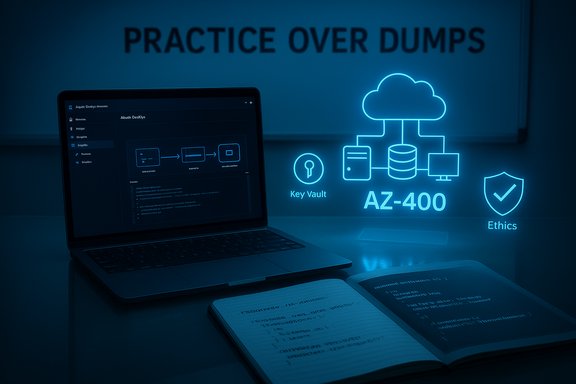
A laptop and notebook glow with neon-blue cloud and vault icons for AZ-400 ethics.Background / Overview​

Microsoft’s role‑based Azure certifications are designed to measure integrated, operational capability rather than rote memorization. The Server Side coverage frames the current market for practice materials—official vendor content, reputable third‑party practice tests, and a parallel underground for “actual exam” question banks—and urges candidates and employers to treat those channels very differently. The practical guidance emphasizes mapping vendor‑published exam objectives to hands‑on labs, using scenario questions to sharpen architecture and troubleshooting judgment, and avoiding exam dumps that promise verbatim questions.
This discussion is immediately relevant to Azure DevOps and AZ‑400 candidates because the exam tests cross‑cutting skills: pipelines, infrastructure as code, release strategies, observability, and governance. The Server Side and allied community material recommend a study strategy that couples Microsoft Learn modules, timed practice tests from reputable vendors, and small public projects to demonstrate applied competence.

What The Server Side reported — concise summary​

The Server Side piece lays out three central points:
  • Practice tests are legitimate and useful when they emulate exam phrasing, provide high‑quality explanations, and are transparently produced. They help with pacing, expose knowledge gaps, and focus remediation work.
  • Exam dumps and leaked “actual exam” banks are dangerous. They often advertise implausible pass rates, may violate Microsoft’s candidate agreement, and expose users to retroactive invalidation, credential revocation, and career risk. The article advises treating such materials as red flags.
  • Durable preparation means hands‑on labs and mapped remediation. Candidates should map each missed practice question back to Microsoft Learn or documentation, fix the gap with a lab, and publish small artifacts or repos employers can inspect.
That practical scaffolding—learn, lab, test, remediate—forms the backbone of the recommended study plans for AZ‑104, AZ‑204, AZ‑400, and other Azure role exams described in the coverage.

Why the distinction between practice tests and dumps matters​

The design of role‑based exams​

Microsoft’s role‑based exams (including AZ‑400 for DevOps engineers) prioritize scenario reasoning, trade‑offs, and operational knowledge. Unlike purely factual quizzes, Microsoft’s objectives require candidates to integrate identity, networking, CI/CD patterns, security, and monitoring in context. Passing via memorized questions fails to prove that integrative skill.

Forensic detection and enforcement​

Certification vendors and exam delivery partners run a range of security mechanisms—proctoring rules, statistical forensics, post‑exam investigations—that can detect anomalous patterns associated with leaked content. Microsoft’s candidate agreement and exam security policies explicitly treat brain dumps and distribution of exam content as misconduct with possible consequences: score cancellation, credential revocation, and bans on future testing. These enforcement mechanisms mean a short‑term pass can turn into long‑term damage.

The true cost of a “fast pass”​

A memorized pass can create a brittle skill profile: the candidate can pass an exam but fail in job interviews or on day‑one tasks. Employers are increasingly aware of this risk and are adapting hiring practices—verifying badges and asking for short take‑home tasks or live demos to confirm operational ability. The Server Side explicitly recommends that hiring managers treat a certification as just one signal among several, and to require artifacts or live tests to validate competence.

Technical clarifications and practical takeaways for AZ‑400 candidates​

The Q&A and sample material distilled by The Server Side contains many practical clarifications that are immediately useful for a DevOps engineer studying for AZ‑400. These are not trivia—they are operational tradeoffs you’ll need in scenario questions.

Eventing and serverless pipelines: Event Grid vs Service Bus vs Event Hubs​

  • When to choose Azure Event Grid: subscription‑based routing, advanced filtering, managed retries, and dead‑lettering make Event Grid the right router for event distribution across services (Logic Apps, Functions, webhook endpoints) when fine‑grained routing and long‑retry semantics are required.
  • When to choose Azure Service Bus: use Service Bus for FIFO and ordered, guaranteed, point‑to‑point delivery with sessions or sequencing. It’s the right choice for message queuing semantics that demand ordered processing.
  • When to choose Event Hubs: Event Hubs is optimized for high‑throughput telemetry and stream ingestion (telemetry pipelines, big data ingestion), not for point‑to‑point ordered processing or advanced subscription management.
Understanding these distinctions will help you choose the correct service in scenario questions on AZ‑400 that mix reliability, scale, and integration requirements.

Managed identities and secrets​

The recommended pattern is to prefer managed identities (system‑assigned for resources tied to a single lifecycle; user‑assigned when the identity must be reused across resources) instead of hard‑coded secrets or long‑lived service principals. The Q&A explains the operational advantages—reduced secret‑rotation work, fewer leaked credentials, and simplified RBAC flows—which are commonly examined in security and pipeline questions.

Observability and diagnostics​

The Server Side material stresses enabling and using the right Application Insights features:
  • Live Metrics Stream for near‑real‑time performance insight.
  • Profiler and Snapshot Debugger for low‑impact, correlated call stacks across instances.
  • Telemetry initializers to enrich telemetry with deployment/environment metadata.
These details are precisely the kind of operational knowledge that separates a candidate who memorized facts from a candidate who can design resilient pipelines and explain how to diagnose production faults.

CLI and tooling tips​

Practical, exam‑aligned command knowledge shows up in the Q&A: for example, streaming App Service logs via the Azure CLI is done with az webapp log tail; knowing such commands and how to use diagnostic settings in pipelines is useful in timed practice and hands‑on labs.

Ethical, legal, and career risks of exam dumps​

  • Policy violation: Microsoft’s candidate agreement defines exam content as confidential and prohibits copying, publishing, or otherwise disclosing exam items. Breach can trigger score cancellation and credential revocation.
  • Forensic detection: Statistical and behavior analysis used by vendors can lead to retroactive action. The diplomatic effect: a revoked badge can sink an offer or damage a career.
  • Market degradation: Widespread reliance on dumps erodes the marketplace’s trust in certifications, potentially forcing vendors to harden or change exam delivery in ways that raise cost and friction for honest candidates.
These risks are not speculative—the coverage collates community cases and vendor policy language that make the warning concrete and practical.

A practical, ethical study plan mapped for busy candidates​

The Server Side and community recommendations converge on a practical schedule that prioritizes hands‑on work, remediation, and measured practice. The following distilled plan is tailored for candidates preparing for Azure role exams like AZ‑400, AZ‑204, or AZ‑104.

Ten‑week practical roadmap (compressed / adaptable)​

  • Weeks 1–2: Foundations and mapping
  • Map the official exam skills outline to Microsoft Learn modules.
  • Set up a small lab (trial subscription or sandbox).
  • Weeks 3–5: Core hands‑on practice (identities, pipelines, storage)
  • Implement managed identities, Key Vault integration, basic CI/CD pipelines (GitHub Actions/Azure Pipelines).
  • Build or deploy a small app with IaC (Bicep/ARM/Terraform) and a release pipeline.
  • Weeks 6–7: Compute, networking, and security hardening
  • Deploy VM/AKS/Container Apps, configure VNets and NSGs, and practice secure service‑to‑service authentication.
  • Week 8: Observability and disaster recovery
  • Configure Application Insights, set up alerts, and test recovery procedures for backups and failover.
  • Week 9: Timed practice and remediation
  • Use reputable timed practice tests to work pacing; convert every missed question into a lab ticket tied to Microsoft Learn modules.
  • Week 10: Final verification and artifact polish
  • Re‑run a full timed test, finalize a compact GitHub repo or README that demonstrates a small end‑to‑end deployment to show to recruiters.
This approach emphasizes doing and documenting work rather than memorizing answers.

Choosing practice providers—what to watch for​

  • Favor providers that explicitly declare original, vendor‑aligned content and publish methodology or change logs. These vendors turn practice into remediation rather than a cheat.
  • Avoid any provider promising “verbatim exam questions,” downloadable PDF banks labeled “actual exam,” or guaranteed pass rates without transparent audit. These are red flags.
  • Use practice tests as diagnostic tools: focus on the explanations and the mapping to official objectives. Treat each wrong answer as an invitation to a lab exercise.

How employers should respond​

Hiring managers should adapt to the market realities by treating certifications as one signal among many. The Server Side recommends a three‑part vetting approach:
  • Verify the candidate’s digital badge through official vendor verification.
  • Require short, role‑relevant take‑home tasks or live labs (30–90 minutes) that replicate job tasks like deploying a pipeline or configuring Key Vault‑backed secrets.
  • Ask for demonstrable artifacts (GitHub repos, runbooks) and walk candidates through their design choices in interviews. Candidates relying on leaked content should be probed more deeply.
This reduces false positives created by rote memorization and surfaces candidates with practical competence.

Flagging unverifiable and marketing claims​

Several third‑party vendors advertise remarkable pass rates (for example, “98% first‑try success”). The Server Side and community reporting flag such metrics as unverifiable marketing claims unless accompanied by transparent methodology or third‑party audit. Treat them with skepticism; the true quality of practice materials is measured by editorial transparency, update cadence, and how well incorrect answers teach the underlying concepts.
If a vendor claims to contain “actual exam” content, assume it is either violating vendor policy or is an inaccurate, stale aggregation that will mislead candidates. These assertions should be treated as suspect until independently corroborated.

Critical analysis — strengths and limitations of The Server Side approach​

Strengths​

  • Applied reasoning over rote learning. The coverage pushes candidates to choose services for the job, with operational reasons tied to latency, concurrency, retries, and failure modes—exactly the skills exams aim to measure.
  • Ethical clarity and practical defenses. The write‑up explains vendor enforcement policies and offers realistic employer-side measures to weed out misuse.
  • Actionable study scaffolding. The recommended mapping of exam objectives to labs and the remediation cycle (practice → lab → retest) is a high‑leverage approach for durable learning.

Limitations and cautions​

  • Not a substitute for hands‑on experience. While the Q&A clarifies design choices, actual operational muscle memory requires repeated live lab work. The Server Side material itself notes this limitation.
  • Staleness risk for third‑party materials. Practice banks and blogs can lag Microsoft’s change log; always verify exam objectives against Microsoft Learn and the exam skills outline.
  • Coverage focus. The Q&A is pragmatic but cannot cover every vendor nuance or every Azure service update; candidates must keep an eye on official docs for SDK, CLI, and API changes.

Closing guidance — what to do next​

  • Start with Microsoft Learn and the official exam skills outline as the authoritative map.
  • Build a small lab and produce demonstrable artifacts (deployments, IaC templates, runbooks) to prove applied skills.
  • Use reputable timed practice providers as diagnostics—ensure they publish methodology and explanations—then convert every wrong answer into a lab ticket.
  • Avoid dumps, leaked banks, or any provider claiming verbatim exam content. The short‑term gain is not worth the regulatory, legal, and career risk.
The Server Side’s treatment of the exam‑dump economy is a practical wake‑up call: certifications are market signals that must reflect skill. Ethical, vendor‑aligned preparation—backed by hands‑on labs and demonstrable artifacts—delivers a sustainable credential and the operational ability employers actually need.

Source: The Server Side Azure DevOps Expert Exam Dumps and AZ-400 Braindumps
 

The Server Side’s practical walkthrough of AZ‑400 practice exams reframes test prep as skill-building rather than score-chasing: the article emphasizes hands‑on labs mapped to Microsoft’s official blueprint, recommends reputable timed practice tests for pacing and remediation, and issues a clear warning about the legal, ethical, and career risks of memorizing leaked “exam dump” banks.

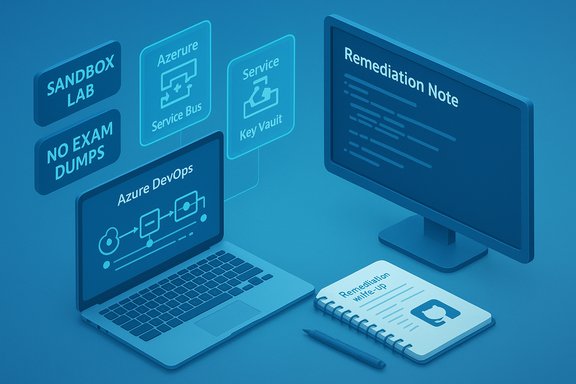
Tech setup illustrating Azure DevOps concepts with a laptop, monitor, and remediation notes.Background / Overview​

Microsoft’s AZ‑400 exam — Exam AZ‑400: Designing and Implementing Microsoft DevOps Solutions — is the gate for the Microsoft Certified: DevOps Engineer Expert credential. The exam’s domains and relative weights are published and were last updated in the English language on July 26, 2024; the skills measured include process and communications design, source control strategies, CI/CD pipeline design (the heaviest domain), security and compliance planning, and instrumentation. These facts are recorded on Microsoft Learn and reflected in the official AZ‑400 study guide. The Server Side piece positions itself as a pragmatic companion to Microsoft Learn: it supplies exam‑style questions and model answers designed to mirror wording and reasoning on the live test, and—crucially—advocates a study workflow that turns wrong practice answers into short remediation labs and documented notes so learning becomes reproducible and demonstrable.

Why this matters: certification vs. competence​

Earning a certification is a signal to employers, but only when that signal reliably correlates with applied competence. The Server Side argues that Microsoft’s role‑based exams test integration and decision‑making more than trivia — so the highest‑value preparation recreates real tasks (deploy → monitor → remediate) rather than encouraging rote recall. That practical posture underpins the recommended study path and explains why the article repeatedly discourages shortcuts such as leaked question banks.
Microsoft’s exam page and study guide make the same emphasis: AZ‑400 is broad but deliberately focused on a few deep areas (notably CI/CD pipelines), so your study should be tactical and hands‑on rather than purely theoretical. The certification also requires an Azure Administrator or Azure Developer associate prerequisite, signaling that baseline operational knowledge is expected.

What the Server Side recommends — a practical blueprint​

High‑level philosophy​

  • Use Microsoft Learn as the canonical map and pair it with a low‑cost sandbox subscription for labs.
  • Treat practice exams as diagnostics — time yourself, log mistakes, and convert each incorrect answer into a focused lab ticket with code, steps, and a short writeup.
  • Avoid any vendor or “bank” that claims to reproduce verbatim exam questions; these are described as marketing shortcuts that carry enforcement and career risks.

A 10‑week hands‑on schedule (practical and reproducible)​

  • Weeks 1–2 — Foundations and mapping: download the official skills outline, map each objective to Microsoft Learn modules, and provision a sandbox subscription.
  • Weeks 3–5 — Identities, governance, storage: labs for Entra (Azure AD) users/groups, RBAC across scopes, Key Vault and managed identities, and storage account scenarios.
  • Weeks 6–7 — Compute & networking: VMs, scale sets, App Service, slot swaps, VNets, NSGs, peering and VPNs.
  • Week 8 — Monitoring & resiliency: Application Insights, Log Analytics, alerts, Recovery Services vault for backups and failover.
  • Weeks 9–10 — Timed practice & remediation: full timed mock exams from reputable providers; every error becomes a lab and a documented remediation note.
That schedule is intentionally pragmatic: the emphasis is on reproducible artifacts (short GitHub repos, runbooks, or README-driven demos) you can show employers, not on memorized Q&A.

Technical clarifications the article highlights (short answers that matter)​

The Server Side Q&A decodes common exam design patterns — these are the kinds of “which service is right” choices you’ll see on scenario items:
  • Event routing and filtering with long retries → Azure Event Grid (subscription‑based routing, advanced filters, dead‑lettering).
  • FIFO, ordered point‑to‑point messaging → Azure Service Bus (sessions, sequencing).
  • Short‑lived, lifecycle‑tied identities → system‑assigned managed identity; cross‑resource identities → user‑assigned managed identity.
  • Near‑real‑time production diagnostics → Application Insights Live Metrics, Profiler, Snapshot Debugger for low‑impact stack traces.
These short verdicts are framed as design trade‑offs rather than unbreakable rules; the Server Side repeatedly reminds readers that production architecture often blends patterns (for example, Event Grid for routing combined with Service Bus for ordered replay).

Practice exams: how to choose legitimate providers​

The Server Side supplies clear selection criteria for practice vendors and exam simulators:
  • Insist the vendor declares their content is original and aligned to the Microsoft blueprint; avoid any vendor promising verbatim exam questions or “guaranteed” pass rates.
  • Prefer providers that include detailed explanations for each answer and provide analytics to focus remediation.
  • Use Microsoft’s free practice assessment and the sanctioned official practice tests (MeasureUp is Microsoft’s recognized practice‑test partner). The official practice assessment on Microsoft Learn is a good demo of question format and difficulty, and MeasureUp offers paid, editorialized practice tests that simulate the exam environment.
Practical checklist when evaluating a vendor:
  • Does the provider publish update cadence and methodology?
  • Are explanations mapped back to official docs or Microsoft Learn modules?
  • Does the provider avoid claims like “98% first‑try success” (treat such claims as marketing unless audited)?

Ethics, enforcement, and real risks​

The Server Side devotes significant space to the enforcement reality: Microsoft’s candidate agreement and exam security systems treat exam content as confidential, and vendors use forensic analytics and proctoring to detect anomalous answer patterns. Consequences include score invalidation, revocation of credentials, and bans from future exams. These are not theoretical—the enforcement framework and candidate agreements are explicit on these measures.
Practical career harms of using dump material:
  • A revoked certification can cost a job offer or a promotion and permanently damage credibility.
  • Memorizing leaked items produces brittle knowledge that frequently fails in interviews and production tasks.
The article’s guidance is unambiguous: avoid any source that markets “actual exam” content and instead focus on vendor‑aligned practice that teaches reasoning.

Converting practice mistakes into durable learning — the remediation loop​

The Server Side provides a practical workflow for turning each incorrect practice question into an actionable learning item:
  • Capture the question and the selected answer.
  • Identify the core concept being tested (e.g., identity flow, eventing semantics, consistency model).
  • Run a short lab in a sandbox that exercises the concept end‑to‑end (for example, wire Event Grid → Logic App to test filtering and dead‑lettering).
  • Write a 200–500 word remediation note in a personal study repo explaining the correct choice, failure modes, and operational trade‑offs.
  • Re‑test with a similar practice question after completing the lab.
This workflow is the heart of the article’s pedagogical claim: converting transient exam success into reproducible operational knowledge.

Exam‑day and pacing tips​

  • The official passing score for Microsoft exams is 700 (on the Microsoft scale). Practice tests should be used under timed conditions to normalize pacing and reduce exam‑day anxiety.
  • Use Microsoft’s free sandbox and the Learn practice assessment to demo timing and question types before buying a paid simulator.
  • Treat high‑difficulty scenario questions as architecture problems: read the requirements, list constraints, and eliminate distractors by mapping each option back to those constraints.

Critical analysis — strengths of the Server Side approach​

  • Emphasis on applied skills: The article focuses on labs, demonstrable artifacts (GitHub repos, runbooks), and remediation notes — not just passing a test. That aligns with employer expectations for operational competence.
  • Ethical clarity: Clear warnings about dumps and legal risks reduce candidate exposure to revocation and reputational harm.
  • Actionable study design: The 10‑week plan and the remediation loop provide a practical cadence for busy professionals, balancing depth and exam readiness.

What to watch out for — risks and limitations​

  • Staleness risk: Cloud services and exam blueprints change periodically. The Microsoft study guide explicitly lists a change log and versioned skills measured (for example, the July 26, 2024 update), so static third‑party PDFs can be misleading or obsolete. Always cross‑check the official skills page before trusting an older practice set.
  • Vendor marketing claims: Statements such as “98% first‑try success” are frequently cited by third‑party sellers; these are typically self‑reported marketing figures and are unverifiable unless a provider publishes auditing methodology. Treat such claims skeptically.
  • Over‑reliance on simulation: High‑quality practice simulators help with pacing and question phrasing, but they cannot substitute for repeatedly performing real operations in an actual Azure environment. The best ROI combines Microsoft Learn + sandbox labs + diagnostic timed tests.

Cross‑checking key facts (verification summary)​

  • Exam domains, weights, and the fact that the English AZ‑400 revision occurred on July 26, 2024 are documented on Microsoft Learn and the AZ‑400 study guide; these are the authoritative references for exam content and change logs.
  • Official practice assessments are available on Microsoft Learn and MeasureUp is a recognized partner for paid practice tests; choosing an official practice assessment is a defensible first step.
  • The Server Side’s practical study plan, remediation loop, and warnings about exam dumps are supported by community best practice and align with Microsoft’s guidance to favor hands‑on learning.
If any claim in external practice material cannot be independently confirmed against Microsoft’s published exam pages or recognized partners’ documentation, treat it as suspect and prioritize vendor transparency and update cadence.

Practical checklist for candidates preparing for AZ‑400​

  • Map the official AZ‑400 skills outline to Microsoft Learn modules.
  • Provision a low‑cost sandbox (free tier / student / trial) and build small labs that map to each exam domain.
  • Use Microsoft’s free practice assessment first, then select a reputable paid simulator that publishes original content, detailed explanations, and an update cadence.
  • Convert every incorrect practice item into a documented remediation lab and short write‑up.
  • Avoid any materials that claim to reproduce verbatim exam content or advertise guaranteed pass rates without transparent methodology.

Final verdict — how to use The Server Side material responsibly​

The Server Side provides a useful, practical complement to Microsoft Learn: compact Q&A sets, a clear remediation workflow, and a balanced study schedule that privilege hands‑on experience. Those strengths make it valuable as pedagogical scaffolding rather than as a short cut to certification. The article’s ethical stance and operational focus align with the officially published AZ‑400 structure and the Microsoft recommendation to treat practice tests as diagnostic, not directive.
There are real, verifiable risks around leaked exam banks and unverifiable vendor claims; candidates should default to transparent, vendor‑aligned providers and always cross‑check exam objectives and changes on Microsoft Learn. When used as intended — to sharpen reasoning, pace, and remediation — practice tests plus Server Side’s workflows form a defensible, high‑value path to both exam success and real job readiness.

The path from practice exam to productive engineer is simple in principle but deliberate in practice: map objectives, build the labs, convert mistakes into documented learning, and prove your work with short, reproducible artifacts. Follow that sequence and AZ‑400 becomes a milestone on a career narrative of evidence, not a checkbox on a résumé.

Source: The Server Side AZ-400 Microsoft DevOps Expert Practice Exams
 

The Server Side’s AZ‑400 DevOps Engineer Expert sample questions arrive as a practical, scenario‑driven study resource that stresses applied reasoning over rote memorization — and it comes with a persistent caveat: use these Q&A sets to build operational skill through hands‑on labs, not to shortcut learning with leaked exam content.

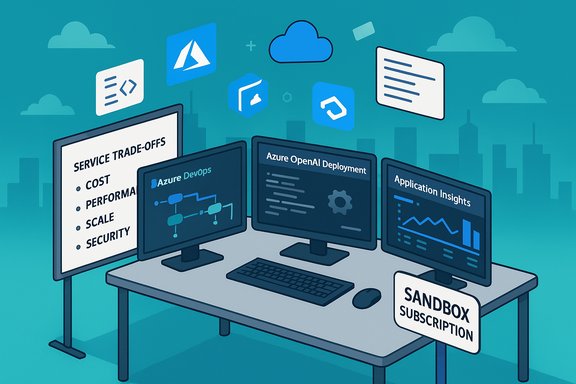
Azure DevOps workstation with deployment dashboards and a sandbox subscription.Background / Overview​

Microsoft’s role‑based exams reward engineers who can translate business requirements into maintainable Azure solutions, and the Server Side sample set is explicitly written to reflect that goal. The material organizes questions as micro‑case studies that require service selection, operational trade‑offs, and a working sense of SDKs, endpoints, and governance controls rather than isolated trivia. This approach aligns with the official guidance that exams measure integration and decision‑making as much as factual recall.
The Server Side guidance also pairs each Q&A with remediation advice and a suggested study cadence. A recurring theme is a 10‑week, hands‑on plan anchored in Microsoft Learn and a sandbox subscription: map objectives, build labs, iterate on practice tests, and publish demonstrable artifacts to GitHub. That study scaffolding is designed to convert practice mistakes into durable operational knowledge.

What the Server Side AZ‑400 Q&A Covers​

Scenario-first, role‑aligned questions​

The sample set prioritizes scenarios where you must choose a service or SDK class based on requirements like latency, ordering, durability, cost, and operational complexity. That means questions commonly test:
  • Service selection (Event Grid vs Service Bus vs Event Hubs).
  • Identity patterns (system vs user‑assigned managed identities).
  • Observability and diagnostics (Application Insights features).
  • Document and vision choices (Computer Vision Read vs Document Intelligence).

Operational details and SDK/CLI specifics​

The Q&A includes practical integration details you’ll encounter in real systems: which parameters an Azure OpenAI call requires (endpoint, API key or token, and deployment identifier), which SDK object supports continuous speech recognition (SpeechRecognizer), and which CLI command to use for live App Service log tails (az webapp log tail). These aren’t trivia; they’re the small operational facts that make an integration actually work.

Responsible AI and governance​

A meaningful portion of the content maps to governance concerns: PII detection categories, fairness/inclusiveness monitoring, content moderation, and approval/rollback workflows for model updates. The Server Side Q&A treats these as exam‑worthy operational controls rather than optional extras.

Verified Technical Clarifications (what you can trust)​

Below are representative technical claims the Server Side materials make, together with the practical implication candidates should internalize. These claims are presented as clear decision rules you can test in a lab.
  • Use SpeechRecognizer (Azure Speech SDK) for real‑time transcription scenarios because it supports continuous recognition and intermediate/final event callbacks that simplify streaming integrations.
  • Azure OpenAI calls require a resource endpoint, an API key (or managed identity token), and a deployment identifier; you target a deployed resource by name rather than an abstract model ID at request time. This matters for both SDK and REST examples.
  • Choose Computer Vision Read for photographic OCR and Document Intelligence (Form Recognizer) for structured forms (invoices, receipts, contracts). When adding a new layout to an existing Document Intelligence model, prefer retraining the model with representative samples rather than creating a separate model to avoid runtime routing complexity.
  • For event routing with subscription semantics, advanced filtering, long retry windows and dead‑lettering use Azure Event Grid; when you require strict FIFO, sessions, or ordered point‑to‑point delivery, use Azure Service Bus. These are design trade‑offs you should validate with labs.
These are operationally testable claims: provision a small sandbox, run the sample code or SDK examples, and confirm the behavior. The Server Side repeatedly urges readers to validate these behaviors against Microsoft Learn and live labs before assuming them immutable.

Strengths of the Server Side Approach​

  • Applied reasoning over rote recall. The Q&A forces candidates to weigh trade‑offs — latency vs durability, routing vs queueing, caching vs persistence — which builds transferable knowledge.
  • Actionable remediation workflow. Each wrong practice answer is treated as a remediation ticket: run a lab, document the failure mode, and re‑test. This transforms ephemeral practice gains into durable skills.
  • Ethical and pragmatic stance on exam integrity. The Server Side explicitly warns against exam dumps and “verbatim” banks, explaining the legal and career risks and urging vendor‑aligned practice providers and Microsoft Learn as the canonical sources.
  • Balanced study plan mapped to domain weights. The recommended schedule prioritizes identity, governance, compute and storage, reflecting domain weightings candidates should respect during study. This alignment avoids over‑investing in low‑leverage topics.

Risks, Blind Spots, and Where to Be Cautious​

No single Q&A set is a silver bullet. The Server Side materials themselves call out common hazards candidates must manage.
  • Staleness risk. Azure services, SDKs, CLI flags, and exam objectives change frequently. Answers that reference exact commands or versioned SDK classes should be validated against the latest Microsoft documentation before you treat them as gospel. The Server Side explicitly recommends Microsoft Learn as the canonical change log.
  • Over‑simplification of trade‑offs. Short exam answers often pick the best single service for a scenario; production systems sometimes need hybrid patterns (e.g., Event Grid for routing and Service Bus for ordered replays). Use sample Q&A as a starting point, not the final architecture.
  • Vendor practice variability. Practice tests vary widely in quality. Favor vendors that publish editorial methodology, show update logs, and provide deep remediation content rather than opaque pass‑rate claims. The Server Side warns against vendors that promise “verbatim exam” collections.
  • The exam‑dump legal and career risk. Using leaked or stolen exam content can lead to revocation, bans, and reputational damage. The Server Side documents that Microsoft and delivery partners use forensic analytics and contractual enforcement to police content misuse.
Where claims in the Q&A reference specific percentages, commands, or product behavior, treat them as guidance and verify with live tests and Microsoft’s official pages. If a claim cannot be reproduced in a sandbox or is inconsistent with Microsoft Learn, flag it as unverifiable and update your notes.

A Practical, 10‑Week Hands‑On Study Plan (actionable)​

The Server Side’s suggested schedule is practical and easily adapted to personal experience. Below is a refined, exam‑ready plan that translates the Q&A’s recommendations into weekly actions.
  • Weeks 1–2 — Foundations and mapping
  • Map the AZ‑400 skills outline to Microsoft Learn modules and identify gaps.
  • Provision a sandbox (free/credit/student) and confirm you can create resource groups, VNets, and basic role assignments.
  • Weeks 3–4 — Identity, governance, storage (high leverage)
  • Hands‑on: create Entra ID users/groups, test RBAC across subscription/resource group/resource scopes, configure Key Vault and managed identities.
  • Build storage accounts, test blobs vs file shares, SAS tokens, and access policies.
  • Weeks 5–6 — Compute, containers, networking
  • Deploy VMs, App Service, AKS/Container Apps, practice scale sets, and manage disks.
  • Configure VNets, subnets, NSGs, peering, and a simple VPN (point‑to‑site or site‑to‑site) to exercise hybrid connectivity.
  • Week 7 — Pipelines and CI/CD for DevOps
  • Build a small pipeline in Azure DevOps or GitHub Actions: build → containerize → deploy to Azure Container Registry and Container Apps.
  • Add IaC (Bicep/Terraform) to the workflow and test rollbacks.
  • Week 8 — Monitoring, resiliency, and automation
  • Enable Application Insights, configure alerts and action groups, use Profiler and Snapshot Debugger.
  • Create a Recovery Services vault and run a VM backup/restore test.
  • Week 9 — Timed practice and remediation
  • Use reputable timed practice tests for pacing. Every wrong answer becomes a remediation ticket; run a lab and record a 200–500 word remediation note in a study repo.
  • Week 10 — Final verification and demo artifacts
  • Revisit the skills outline, run a full mock exam, and prepare a two‑page demo pack (README + links to 2–3 GitHub repos) to show interviewers.
This plan reproduces the Server Side’s emphasis on hands‑on labs and remediation and converts practice mistakes into documented learning — a high‑ROI approach for the exam and for job interviews alike.

How to Use Practice Questions Responsibly​

  • Treat practice Q&A as diagnostic tools, not as a memory aid. Confirm every “correct” answer through labwork and by reading the corresponding Microsoft Learn module.
  • Favor practice vendors that publish update logs and editorial policies. If a vendor claims “actual exam” content, assume the content is either stolen or stale and avoid it.
  • Publish three demonstrable projects (small, focused repos) that cover: a CI/CD pipeline, a secure API using managed identity + Key Vault, and an observability demo with Application Insights. These artifacts are high‑value evidence to present during hiring.
  • Convert every incorrect answer into a short remediation ticket: reproduce the scenario, document the steps, and re‑test. This method is repeatedly recommended in the Server Side materials as the most durable path from practice to production capability.

Exam Ethics, Detection, and Consequences​

The Server Side covers how exam integrity programs work: candidate agreements, proctoring rules, and statistical detection mechanisms that can trigger credential revocation if leaks or cheating are detected. Use of exam dumps can result in revoked certificates, bans, and professional reputational harm — consequences that exceed the short‑term convenience of a leaked Q&A.
Hiring managers are advised to treat the certification as one signal among several and to require short practical tests or repo walkthroughs to reduce false positives from rote memorization. The Server Side provides a pragmatic vetting checklist employers can adopt.

Quick Reference: Common Exam Distractors and the Correct Instincts​

  • If the scenario requires subscription‑based events, filtering, long retries and dead‑lettering → think Event Grid.
  • If the scenario requires FIFO / sessions / ordered delivery → pick Service Bus.
  • If the app must not store secrets and the identity needs to persist beyond a resource lifecycle → use user‑assigned managed identity.
  • For low‑latency shared session state and TTLs → use Azure Cache for Redis, not a relational database.
These instincts reflect repeated patterns in the Server Side Q&A and are practical starting points for exam decision‑making. Always verify them through a quick lab.

Final Analysis and Verdict​

The Server Side AZ‑400 DevOps Engineer Expert question set is a high‑value study aid when used as the center of a disciplined, hands‑on study routine. Its strengths are clear: scenario focus, operational clarifications, remediation workflows, and an ethical stance against dumps. For motivated candidates, it accelerates the conversion of exam practice into production‑ready skill.
Yet it is not without limitations. The inherent risk of staleness in any third‑party resource means candidates must always confirm commands, SDK object names, and exam weightings against Microsoft Learn and live sandboxes. The Q&A sets are guidance, not gospel, and should be paired with demonstrable artifacts to maximize employer confidence.
If the goal is to pass AZ‑400 on the first try while building durable skills, follow this integrated recipe: Microsoft Learn as the backbone, Server Side Q&A as scenario drills, hands‑on labs for muscle memory, reputable timed practice for pacing, and published projects as proof. That combination protects the credential, strengthens operational competence, and reduces the career risk associated with short‑term shortcuts.

Actionable Checklist (what to do next)​

  • Build a sandbox subscription and confirm you can deploy basic resources.
  • Map the AZ‑400 skills outline to Microsoft Learn modules and pick three demo projects to publish.
  • Use the Server Side Q&A for scenario practice and ensure each wrong answer becomes a remediation ticket with a lab.
  • Avoid any vendor that claims “verbatim exam” content; verify vendor methodology and update cadence before purchase.
  • Run a final full‑length timed practice test and prepare a 2‑page demo pack for interviews.

The Server Side sample questions are most valuable when they form one pillar of a broader, evidence‑based study strategy: learn from the Q&A, test in a sandbox, document your remediation, and demonstrate your competence with published artifacts. That disciplined approach is the surest route to passing AZ‑400 and to becoming a capable, interview‑ready Azure DevOps Engineer.

Source: The Server Side AZ-400 DevOps Engineer Expert Questions and Answers
 

Back
Top