

SiRcom’s SMART Alert (SiSA) central control software contains a remote, high‑impact authentication bypass that — if left unmitigated — could let unauthenticated actors trigger or manipulate outdoor sirens and other emergency alerting actions from the network, with direct safety and public‑trust consequences for municipalities, campuses, and other civil infrastructure.
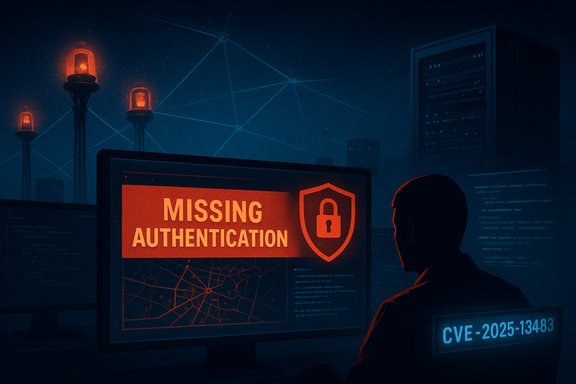
SiRcom markets the SiRcom SMART Alert (SiSA) platform as a full‑featured emergency mass‑notification and siren control suite, supporting on‑prem, cloud, and hybrid deployments and direct control of outdoor sirens, public address systems, IPAWS integration, SMS/voice/email, and more. The vendor’s product pages and datasheets emphasize remote activation and hardware control as core features of SiSA, which makes the product an attractive target when authentication or API protections fail. On the heels of coordinated vulnerability reporting, a formal ICS advisory described a Missing Authentication for a Critical Function in SiSA (reported under CVE‑2025‑13483). The advisory assigns a high/exploitability profile to the flaw and warns that an attacker with network reachability to affected SiSA instances can bypass the web login and invoke backend APIs that perform high‑value actions (for example, activating sirens). The advisory lists SiSA Version 3.0.48 as an affected release and reports a CVSS v3.1 base score of 9.1 and a CVSS v4 base score of 8.8, reflecting network attack vector, no required privileges, and high impact to integrity and availability. The advisory states no vendor coordination with CISA was obtained at publication and credits the original researcher for coordinated disclosure. (See Mitigations and Vendor Coordination sections below for practical follow‑ups. The public advisory text also explicitly warns that exploitation could remotely activate emergency sirens.
Because SiSA is used specifically to manage physical alerting equipment, the risk profile crosses from IT to physical safety — a distinction that increases operational urgency even if exploitation requires local network reachability or misconfiguration. Similar classes of missing‑authentication flaws in other ICS and mass‑notification products have produced vendor advisories scoring in the high/critical range and produced immediate mitigation guidance for network isolation and compensating controls.
Because the weakness is server‑side (an absence of authentication checks on critical endpoints) it cannot be fully mitigated by client‑side controls or by obscuring UI elements; the server must enforce identity and authorization. This pattern — UI-level gating plus unprotected backend endpoints — has been a recurring failure mode in ICS/edge devices.
Operators must act now to reduce exposure: isolate SiSA control networks, remove Internet reachability, harden access to management consoles, and prepare manual fallback operations. At the same time, procurement and program managers must press vendors for secure-by‑design assurances, timely patches, and transparent disclosure practices. The control plane for public warning systems must be subject to the same — or higher — security standards we expect for other safety‑critical systems; the consequences of failing to meet that standard can be measured in both social disruption and risk to life.
Source: CISA SiRcom SMART Alert (SiSA) | CISA
 Background / Overview
SiRcom markets the SiRcom SMART Alert (SiSA) platform as a full‑featured emergency mass‑notification and siren control suite, supporting on‑prem, cloud, and hybrid deployments and direct control of outdoor sirens, public address systems, IPAWS integration, SMS/voice/email, and more. The vendor’s product pages and datasheets emphasize remote activation and hardware control as core features of SiSA, which makes the product an attractive target when authentication or API protections fail. On the heels of coordinated vulnerability reporting, a formal ICS advisory described a Missing Authentication for a Critical Function in SiSA (reported under CVE‑2025‑13483). The advisory assigns a high/exploitability profile to the flaw and warns that an attacker with network reachability to affected SiSA instances can bypass the web login and invoke backend APIs that perform high‑value actions (for example, activating sirens). The advisory lists SiSA Version 3.0.48 as an affected release and reports a CVSS v3.1 base score of 9.1 and a CVSS v4 base score of 8.8, reflecting network attack vector, no required privileges, and high impact to integrity and availability. The advisory states no vendor coordination with CISA was obtained at publication and credits the original researcher for coordinated disclosure. (See Mitigations and Vendor Coordination sections below for practical follow‑ups. The public advisory text also explicitly warns that exploitation could remotely activate emergency sirens.Because SiSA is used specifically to manage physical alerting equipment, the risk profile crosses from IT to physical safety — a distinction that increases operational urgency even if exploitation requires local network reachability or misconfiguration. Similar classes of missing‑authentication flaws in other ICS and mass‑notification products have produced vendor advisories scoring in the high/critical range and produced immediate mitigation guidance for network isolation and compensating controls.
What the advisory says (concise executive summary)
- Product: SiRcom SMART Alert (SiSA) — Central control software.
- Affected versions: SiSA Version 3.0.48 (as published in the advisory).
- Vulnerability class: Missing Authentication for a Critical Function (CWE‑306).
- Identifier: CVE‑2025‑13483 (as assigned in the advisory).
- Impact: Unauthenticated remote access to backend APIs and bypass of the web UI login; unauthenticated actor can trigger sirens or otherwise manipulate alerts.
- Score(s): CVSS v3.1 base 9.1 (vector AV:N/AC:L/PR:N/UI:N/S:U/C:N/I:H/A:H) and CVSS v4 base 8.8.
- Researcher: Report credited to a named third‑party researcher via coordinated disclosure.
- Vendor coordination: The advisory reports the vendor did not respond to outreach prior to publication; CISA recommended defensive mitigations and network isolation.
Why this is different — the physical safety vector
Most IT vulnerabilities damage confidentiality, integrity, or availability in systems that remain purely informational. SiSA is different: it is an operational control plane for emergency alerting hardware. That structural difference raises three urgent consequences:- Direct physical action: The compromised control plane can cause sirens to sound (or be silenced) on demand. That is immediate, observable, and time‑sensitive. The advisory explicitly notes the ability to activate or manipulate emergency sirens when the authentication bypass is exploited.
- Public trust and legal fallout: Erroneous siren activation at scale can cause panic, false evacuations, economic disruption, or desensitization to future alerts. Conversely, tampering to suppress alerts can endanger lives.
- Regulatory / procurement exposure: Public agencies that operate SiSA installations are often subject to emergency‑management rules, procurement contracts, and public‑safety SLAs; compromise can trigger audit, regulatory, and contractual consequences that extend beyond IT remediation.
Technical analysis — how the bypass is described to work
1. Backend API exposure and login bypass
The advisory describes a web UI backed by REST‑style APIs where critical functions are implemented on server endpoints. Rather than enforcing server‑side authentication and authorization for those endpoints, the system allows unauthenticated calls that perform critical actions. Practically, an attacker can use browser developer tools or crafted HTTP requests to call the same backend endpoints the UI uses — without a valid session — and perform restricted operations.Because the weakness is server‑side (an absence of authentication checks on critical endpoints) it cannot be fully mitigated by client‑side controls or by obscuring UI elements; the server must enforce identity and authorization. This pattern — UI-level gating plus unprotected backend endpoints — has been a recurring failure mode in ICS/edge devices.
2. Exploitability and attack complexity
According to the advisory’s vector and scoring, exploitability is high because:- Attack vector = Network. No local physical access required if the device is reachable.
- Attack complexity = Low. No special conditions or privileged preauthentication required.
- Privileges required = None. The attacker can be unauthenticated.
- User interaction = None. The attack is fully automated once a reachable endpoint is found.
3. What the attack can do
Per the advisory, the unauthenticated API access maps to high‑impact operations such as:- Initiate or abort siren activations and voice broadcasts.
- Change alerting schedules, zones, or priority.
- Manipulate integration points (e.g., outgoing IPAWS messages, connected PA systems) that could cascade alerting actions.
Risk evaluation — who should worry most and why
At‑risk sectors
- Emergency services and municipal governments: primary operators of siren & community alerting systems.
- Education and campus operators: many universities use mass‑notification platforms for active‑shooter and emergency evacuations.
- Industrial, transportation, and critical‑facility operators: facilities that rely on local sirens or PA to manage protective actions.
Likely attack scenarios
- Automated discovery scanning of management ports identifies SiSA consoles reachable from the Internet or VPN.
- Attacker calls unauthenticated backend endpoints to activate sirens across a zone (mass false alarms).
- Attacker selectively silences or reprograms sirens in a targeted area during a real emergency to suppress warning.
- Attacker tampers with logs or scheduling to hide activity or delay detection.
Probability vs. impact
- Probability: Moderate-to-high for deployments with Internet or weak VPN exposure; lower for tightly segmented, air‑gapped installations.
- Impact: High to severe due to physical safety implications and public‑trust damage. Even if the vulnerability is not actively exploited in the wild, the potential consequences warrant urgent mitigation.
Verified facts and points needing confirmation
What is verified:- SiSA is a mass‑notification / siren control platform offering on‑prem and cloud deployments and direct hardware activation capabilities.
- The general failure mode — missing authentication on backend APIs — is a well‑documented ICS vulnerability class that frequently yields high CVSS scores and requires network segmentation and isolation mitigations.
- Public CVE/NVD entries or vendor‑published patch bulletins matching CVE‑2025‑13483 and SiSA v3.0.48 were not always present in mainstream vulnerability feeds at the time of sampling; the published advisory content must therefore be treated as the primary authoritative statement until vendor patch notes or NVD entries are published. Where public CVE/CNA databases differ, operators should rely on the advisory and vendor communication channels for tactical action. This article flags those data‑index gaps and urges validators to confirm via vendor support or CISA directly.
Immediate mitigations — short, urgent checklist
Operators running SiSA — or responsible for networks that host SiSA control stations — should act now to reduce exposure. The advisory recommended standard ICS defensive steps; these are presented here in prioritized, actionable form.- Inventory: Immediately identify all SiSA instances and record version, network location (IP), and whether the control station is Internet‑reachable or accessible from business networks.
- Isolate: Ensure SiSA control networks are segmented from corporate/business networks and end‑user VLANs. Place SiSA servers behind strict ACLs and firewall rules.
- Remove Internet reachability: If any SiSA management ports or consoles are reachable from the Internet, remove that exposure. Do not rely on obscurity (nonstandard ports) as a control.
- Restrict access to vendor remote maintenance: Allow vendor/third‑party access only through secured jump hosts or dedicated VPNs with MFA and session logging.
- Monitor and alert: Implement IDS/IPS rules to detect unusual API calls against the SiSA endpoints, anomalous siren activation events outside scheduled times, and spikes in management‑plane traffic.
- Apply defense‑in‑depth: Where remote access is required, use hardened VPNs, per‑host authentication (MFA), and mutual TLS for management channels. Recognize VPNs are not a panacea and must be kept patched.
- Hardening and logging: Confirm server‑side authentication enforcement, validate that administrative endpoints require authentication and role checks, and ensure logs are collected off‑device to a tamper‑resistant collector.
- Incident playbook: Prepare a response plan that includes ability to manually control sirens (local switches) if the central system is taken offline, and predesignate contact points for vendor and public‑safety partners.
Detection and response guidance (for SOCs and IR teams)
- Hunt for unexpected POST/PUT calls to management API URIs, especially when they appear without authenticated session cookies.
- Alert on out‑of‑hours siren activation events that do not match scheduled triggers.
- Correlate network flows: identify external IPs that established connections to SiSA servers recently and check for abnormal API invocation patterns.
- Preserve forensic artifacts: capture full packet captures around suspicious events, export SiSA server logs to a secure archive, and snapshot the server image for offline analysis.
- Be prepared to revert to manual exercise of sirens and communication channels until the central control plane is validated as secure.
Vendor coordination and procurement considerations
- Confirm with SiRcom whether vendor patches, firmware upgrades, or configuration hardening guidance are available. The advisory reported that SiRcom did not respond to initial coordination, but that status can change; operators must continue to attempt vendor engagement and ask for a timeline for a patch or recommended workaround.
- For new procurements or replacements, require secure development lifecycle attestations, proof of server‑side authentication and authorization controls for all critical APIs, and clear patching/maintenance SLAs.
- Consider contractual right‑to‑audit and secure update mechanisms as part of any new SiSA deployment or renewal.
Longer‑term remediation and architecture changes
- Move critical alerting controls to architectures that enforce mutual authentication and authorization checks for all management APIs. Server‑side enforcement is non‑negotiable.
- Implement redundant manual failover capability: organizations must be able to operate sirens and PA locally if the central system is compromised.
- Adopt defense‑in‑depth: network segmentation, zero‑trust access to management consoles, centralized logging/monitoring, and regular vulnerability assessments targeting both web UI and API endpoints.
- Demand vendor transparency: require vendors to document the security model (authentication flows, token handling, session management), deliver CSRF/anti‑replay protections, and publish a secure configuration guide.
What Windows‑centric admins need to know
Many SiSA control stations ship or run on Windows‑based servers or management consoles; Windows administrators should:- Verify firewall rules on Windows hosts: bind SiSA services to management interfaces only.
- Confirm Windows host hardening: remove unnecessary admin accounts, enable strong MFA for remote admin, and ensure Windows Event Logs and SiSA logs are forwarded to a central SIEM.
- Patch management: keep Windows servers patched and apply vendor hotfixes promptly when available. If SiRcom provides an update, validate the update on a staging host before broad deployment.
- Least privilege: run SiSA services under dedicated service accounts with limited privileges; avoid running management services as local SYSTEM where possible.
Limitations of public data and next steps for operators
- The published advisory provides a high‑confidence, actionable disclosure, but public CVE/NVD metadata sometimes lags vendor advisories. Operators should treat the advisory content as authoritative for immediate defensive action and verify vendor patch status directly. This article flags that independent indexing of CVE‑2025‑13483 may be incomplete in public aggregator feeds at the time of research.
- Treat every on‑site SiSA instance as in‑scope until proven hardened and inaccessible from untrusted networks.
- Implement the short checklist above and update incident playbooks to include manual alerting fallback.
- Continue vendor engagement; insist on a patch timeline and actionable configuration guidance.
- Share IOCs and suspicious events with public‑safety partners and national CERTs.
Conclusion
The SiRcom SMART Alert (SiSA) advisory highlights a textbook and dangerous ICS failure mode: server‑side missing authentication on critical control APIs. The consequences — the potential remote activation or silencing of public sirens and broad loss of alerting integrity — are not theoretical. They implicate life‑safety systems and public trust, and therefore demand immediate compensating controls even as vendor patching timelines are pursued.Operators must act now to reduce exposure: isolate SiSA control networks, remove Internet reachability, harden access to management consoles, and prepare manual fallback operations. At the same time, procurement and program managers must press vendors for secure-by‑design assurances, timely patches, and transparent disclosure practices. The control plane for public warning systems must be subject to the same — or higher — security standards we expect for other safety‑critical systems; the consequences of failing to meet that standard can be measured in both social disruption and risk to life.
Source: CISA SiRcom SMART Alert (SiSA) | CISA
