

Solution providers who still say “no” when a customer asks for something beyond their staple services are leaving money and influence on the table — and handing clients to competitors — according to TruNorth Dynamics CEO Ole Gjerde, who used a recent Channel Company XChange NexGen stage to press the case for structured partner-to-partner collaboration as a core business strategy. His message is simple but strategic: stop losing clients through refusal, put a vetted referral and co-sell process in place, and you can both protect accounts and open new recurring revenue streams by teaming with specialists.
The channel has been shifting from vendor-centric resale toward a services- and ecosystem-led model for several years. Partners that once differentiated on price and basic managed services now compete on the scope of outcomes they can deliver — and that scope increasingly requires multi-vendor, multi-disciplinary teams (ERP, security, devices, networking, and custom development). At CRN’s XChange events in 2025, speakers repeatedly underscored the same point: the partner that coordinates solutions across vendors is often the one who remains the trusted adviser and captures the largest share of customer wallet. Ole Gjerde framed TruNorth Dynamics’ approach as a playbook for partners that want to expand into business applications such as Microsoft Dynamics while retaining their role as the client’s primary technology adviser. This article unpacks that argument, assesses the practical mechanics of partner-to-partner (P2P) selling and co-selling with Microsoft, evaluates the commercial incentives and risks, and provides a pragmatic implementation playbook that solution providers can adopt to turn “no” into recurring revenue.
Source: CRN Magazine TruNorth Dynamics CEO: Partnerships Extend Solution Capabilities, Business Opportunities
 Background
The channel has been shifting from vendor-centric resale toward a services- and ecosystem-led model for several years. Partners that once differentiated on price and basic managed services now compete on the scope of outcomes they can deliver — and that scope increasingly requires multi-vendor, multi-disciplinary teams (ERP, security, devices, networking, and custom development). At CRN’s XChange events in 2025, speakers repeatedly underscored the same point: the partner that coordinates solutions across vendors is often the one who remains the trusted adviser and captures the largest share of customer wallet. Ole Gjerde framed TruNorth Dynamics’ approach as a playbook for partners that want to expand into business applications such as Microsoft Dynamics while retaining their role as the client’s primary technology adviser. This article unpacks that argument, assesses the practical mechanics of partner-to-partner (P2P) selling and co-selling with Microsoft, evaluates the commercial incentives and risks, and provides a pragmatic implementation playbook that solution providers can adopt to turn “no” into recurring revenue.Why “don’t say no” is high-stakes advice
The client-retention problem
When a partner declines a customer request — for a vertical ERP, a point-product security appliance, or a custom cloud integration — the customer doesn’t just file that as a failed ask. They form a narrative: “My trusted partner couldn’t help, so I had to seek help elsewhere.” That opening gives competitors and opportunistic vendors the chance to reset the relationship. Gjerde’s prescription is defensive and offensive: defend your client relationship by being the coordinator who either delivers the work or refers to a vetted specialist — and monetize that coordination where possible.Revenue and margin upside
There are three direct ways saying “yes” through partners can improve economics:- Immediate revenue-share on implementation and integration projects where the originating partner takes a fee or referral commission.
- Ongoing managed services and support contracts that follow implementations (the upstream partner often retains managed-services responsibility).
- Upsell and cross-sell pathways when the originating partner remains the trusted adviser, steering subsequent projects and add-ons.
How Microsoft’s partner model enables partner-to-partner co-selling
Principal mechanisms: deals, referrals, and co-sell
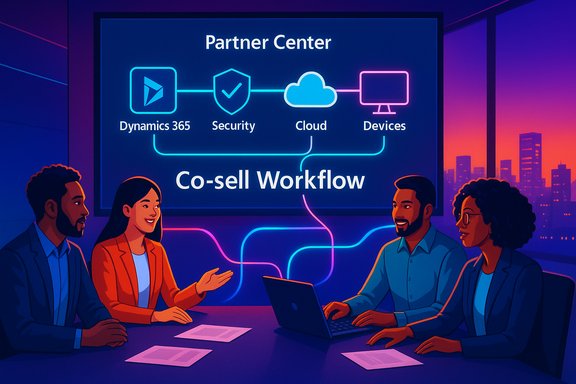
Microsoft has built partner-facing tooling that recognizes the collaborative nature of modern deals. Partner Center and associated co-sell programs allow partners to create and register deals, manage referrals, and coordinate with Microsoft field sellers and other partners on opportunities. There are defined roles (for example, referrals admin and referrals user) within Partner Center that enable partners to manage co-sell opportunities and invite teammates into a deal team. This tooling makes P2P co-selling operational rather than ad-hoc.When P2P makes the most sense
P2P co-selling is valuable when the partners’ offerings are complementary, not competitive. Consider these natural specializations:- Productivity and Microsoft 365 tooling specialists
- Security practices focused on Defender, Sentinel, and identity
- Business applications teams centered on Dynamics 365 and Business Central
- Device and workplace specialists managing Surface, Teams Rooms and peripherals
- Vertical specialists for industry-specific ERP or compliance tooling
What’s changed in Microsoft’s commercial incentives (and what matters to partners)
The incentive landscape: growth accelerators and strategic workload rewards
Microsoft’s partner incentives continue to evolve to push partners toward “strategic workloads” such as business applications, Modern Work, and Azure. Several partner-facing summaries and internal incentive guides for recent fiscal cycles show a renewed focus on growth accelerators that reward year-over-year net-new growth across targeted workloads. One commonly referenced change is a 7.5% growth accelerator that applies to strategic areas, intended to reward partners that expand revenue in those workloads. This accelerator has been highlighted in partner analysis and incentive deep-dive summaries during FY25/FY26 discussions.Caveat: incentive specifics move fast
Incentive percentages, qualification thresholds, and program mechanics can change between Microsoft fiscal cycles. Some public summaries and partner slides reproduce different numbers and program names depending on region, program year, and whether the document is an internal slide or a public guide. Consequently, partners must treat incentive figures as directional until verified in the current Partner Center incentive guide and their regional Partner Success Manager. Any headline claiming “Microsoft pays X% for Y” should be validated against the live Partner Center documentation for the relevant country and fiscal year. Where CRN and partner summaries reference incentives (for example, the 7.5% growth accelerator), they reflect the public conversation and internal partner slide decks circulating in 2025 — but should be double-checked before pricing or margin commitments.Unverifiable or shifting claims
Some published commentary — including trade reporting — has noted that Microsoft removed or altered previously available incentives (CRN referenced a previously available 20% incentive for activating Dynamics 365 for a net-new customer). That specific claim could not be reliably corroborated in public, permanent Microsoft documentation at the time of reporting and should be treated with caution: partners should consult their Partner Center resources or Microsoft representative for an authoritative, current answer. Flagging such statements as unverified prevents downstream confusion in pricing and contractual discussions.Practical benefits and business cases for building a partner network
Example: how Skyline IT Management used a partnership to win big
Skyline IT Management, a smaller MSP, landed a major client by agreeing to support a custom application that lay outside its direct expertise and by partnering with another company to migrate the client to Azure. That practical example demonstrates how an existing client conversation can turn into a substantial win when a partner already has vetted referrals ready to deploy. The tactical lesson: have the partnership playbook ready before the phone rings.Concrete benefits
- Faster time-to-value for customers because partners bring complementary domain expertise.
- Lower risk of poor implementations: by vetting partners, the originating partner reduces the chance of a low-quality vendor introducing problems the originator will have to fix later.
- New recurring revenue via managed services for delivered solutions (e.g., Business Central hosting/management, security monitoring).
- Marketing and GTM leverage from co-sell eligibility and Microsoft’s field-seller engagement when deals meet co-sell criteria.
Implementation playbook: build a simple, repeatable P2P referral and co-sell process
Getting started doesn’t require a large program — it requires process discipline.- Map the gaps
- Inventory the top 10 requests you decline most often (ERP, vertical accounting, heavy integrations, surveillance/camera installs, specialized security).
- Prioritize the three that cost you the most revenue or present the most client risk.
- Build a vetted Rolodex
- Identify 2–3 reliable partners for each priority gap.
- Assess them for technical competency, reference projects, delivery SLAs, and culture fit.
- Formalize basic referral agreements (commission range, responsibilities, communication expectations).
- Create a one-page referral playbook
- A short script for client conversations.
- A simple intake form to capture client needs and context.
- A handoff checklist to ensure clients don’t feel abandoned during transitions.
- Operationalize in Partner Center and CRM
- Use Partner Center deal and referrals workflows to register the opportunity and invite partners into the deal team where appropriate.
- Create a CRM pipeline stage for “Partner-referral – working with external partner” to keep ownership clear.
- Track referral success rates and NPS to refine partner selection.
- Align commercial terms
- Decide how referral fees or revenue shares are structured (flat fee vs. percentage of first-year services; management fee for ongoing support).
- Ensure contract transparency: who invoices whom, who provides first-line support, and how escalations are handled.
- Measure and iterate
- Monthly review of referral conversion rates, average deal size uplift, and client satisfaction.
- Replace partners that underperform and deepen relationships with those who consistently excel.
Risks and guardrails
Quality and brand risk
Referring clients to vendors who fail on delivery damages the originator. That’s the core reason for vetting and for putting a short SLA and NPS measurement on referred engagements. Gjerde emphasized the reputational risk of letting clients “go talk to random people.” A lightweight partner scorecard prevents this.Commercial complexity
Revenue-share agreements and co-sell arrangements can be operationally messy: invoicing, taxes, and liabilities must be clear. Use simple commercial templates and involve legal early for any higher-risk deals.Microsoft program compliance
Microsoft’s partner incentives and co-sell rules have eligibility gates and rules about who can claim what. Misrepresenting partner contributions to capture an incentive or co-sell credit risks program penalties. Always register deal teams and claims through Partner Center and validate incentive eligibility with Microsoft partner support.How to position Dynamics and GenAI opportunities
Dynamics 365 and Copilot investments are reshaping the workload landscape for business applications. Microsoft’s ongoing release waves and Copilot-first initiatives create clear product-led opportunities for partners to deliver business outcomes such as automated sales workflows, service-center assistance, and finance/operations automation. Partners that can bring Dynamics expertise — either in-house or via a trusted partner — are well placed to capture these modern workload migrations. TruNorth’s market positioning is to be that Dynamics specialist for other solution providers. Practical positioning:- For SMBs outgrowing accounting packages: position Business Central as a path to scale with staged implementation and predictable costs.
- For service organizations: adopt Dynamics + Copilot agents to reduce average handle time and automate routine case work.
- For data-led leaders: use Dynamics as the canonical system of record that integrates into Power Platform and Microsoft Fabric for analytics and automation.
A realistic path to scale P2P capability inside your firm
- Start with two clear verticals or workload types where demand is high and your team lacks depth (e.g., Dynamics implementations; physical security devices).
- Deploy one internal resource (a partner success manager) part-time to manage partner sourcing, onboarding, and performance metrics.
- Build standard SOW and referral contracts that you can reuse; automation reduces per-deal friction and speeds speed-to-revenue.
- Run a quarterly partner review with KPIs: deal conversions, project NPS, time-to-launch, and first-year recurring revenue retention.
Conclusion: Partnerships as a defensible growth strategy
Saying “no” to clients in a fragmented technological landscape is a growth inhibitor and a retention risk. The modern solution provider’s advantage is no longer simply what they build alone, but how well they orchestrate trusted vendors and manage outcomes across multiple domains. Ole Gjerde’s message to MSPs and solution providers — “stop saying no” — is an operational challenge and a commercial opportunity: build a simple partnering playbook, use Partner Center and co-sell workflows to formalize deals, and capture referral and recurring revenue while protecting client relationships. The incentives and tooling from Microsoft nudge partners toward this model, but the details and percent-level rewards change quickly, so partners should validate incentive claims in Partner Center and with Microsoft representatives before acting on them. When executed with governance and measured commercial terms, P2P collaboration is a low-friction way to scale capabilities, increase margins, and keep the client at the center of the relationship.Source: CRN Magazine TruNorth Dynamics CEO: Partnerships Extend Solution Capabilities, Business Opportunities
