Microsoft’s Smallest Surfaces Were Always Fighting the Wrong War
The Surface Go and Surface Laptop Go lines were born from an obvious premise: people liked the Surface industrial design, but many could not or would not pay Surface Pro and Surface Laptop prices. A smaller, cheaper Surface could be the gateway device — a Windows answer to Chromebooks, iPads with keyboards, and budget ultraportables that did not look like procurement leftovers.
The problem was that Microsoft never fully committed to what “cheap Surface” was supposed to mean. Surface Go was too small and underpowered to be a no-compromise laptop, but too Windows-bound to compete with the instant simplicity of an iPad. Surface Laptop Go was more traditional and more approachable, but it often achieved its lower price by cutting in places that reviewers and buyers noticed immediately: display quality, memory, storage, ports, or all of the above.
That tension mattered because Surface was never Dell Inspiron or Lenovo IdeaPad. Microsoft sold Surface as a standard-bearer — the clean, aspirational version of Windows hardware. A bargain Surface that felt compromised risked damaging the very halo it was meant to extend.
The reported end of Surface Go and Surface Laptop Go therefore reads less like a sudden cancellation than the final step in a long retreat. Microsoft tried to stretch Surface downward. The market kept reminding it that a premium brand has a hard time winning a price war without becoming less premium.
The Go Line Became a Niche Before It Became a Casualty
Surface Go had a clear emotional appeal. A tiny Windows tablet with a kickstand, pen support, detachable keyboard, and full desktop compatibility sounded like the perfect travel machine, student device, field tablet, or couch PC. For Windows enthusiasts, it was easy to want the idea even when the shipping product forced too many compromises.
The 10-inch and later 10.5-inch Surface Go form factor was charming, but Windows on a small screen has always been a negotiation. Desktop apps still assume precision input, generous display space, and more performance headroom than entry-level chips usually provide. Microsoft improved Windows touch over the years, but it never again had the tablet-first conviction it showed during the Windows 8 era.
By the time Surface Go 4 arrived in 2023, Microsoft had already narrowed its audience by making it a business-focused device. That decision was telling. The consumer pitch for a tiny Windows tablet had weakened, while business scenarios — point-of-sale, inventory, field service, clinical workflows, education fleets — still offered a reason for the form factor to exist.
But business niches are unforgiving. They care about lifecycle, accessories, manageability, serviceability, procurement pricing, and whether the device solves a specific operational problem better than an iPad, rugged Android tablet, Chromebook, or cheap Windows clamshell. If enterprise interest was not strong enough to support a Surface Go 5, as reported, then the product had nowhere obvious left to go.
Surface Laptop Go Could Not Stay Cheap Enough to Be the Cheap Surface
Surface Laptop Go had a cleaner job than Surface Go: be the friendly, compact, lower-cost Surface laptop. It looked good, felt good, and made sense for students, light office work, and buyers who wanted Microsoft’s hardware polish without paying flagship prices. In theory, it was the safer product.
In practice, it ran into the economics of modern PC hardware. A laptop that starts low on price has to cut somewhere, and those cuts become more visible every year. Low-resolution displays age badly. 8GB memory configurations look increasingly mean in a world where browsers, Teams, OneDrive sync, security agents, and AI-adjacent Windows features all want more headroom. Small SSDs feel cramped as soon as Windows Update, Office, and a few apps settle in.
The Laptop Go line also had a positioning problem. If it became too good, it risked cannibalizing the full Surface Laptop. If it stayed too limited, buyers could find better value from Windows OEMs or better simplicity from Chromebooks and iPads. Microsoft had to keep it both desirable and subordinate, which is a difficult place to build a long-term product family.
The Surface Laptop Go 3 especially showed the bind. It retained the attractive small-laptop concept, but its value proposition was under pressure from the moment it arrived. A budget device that no longer feels meaningfully budget-priced loses the one advantage that can excuse its compromises.
Microsoft Is Shrinking Surface Around the Devices It Can Defend
The reported discontinuation fits a broader Surface pattern: Microsoft has been cutting the branches that make hardware operations more complicated without clearly strengthening the brand. Surface Studio faded. Surface Book is gone. Surface Laptop Studio did not become the enduring MacBook Pro alternative some fans hoped for. Surface Duo, Surface Headphones, and Surface Earbuds became cautionary tales about Microsoft’s uneven appetite for consumer hardware categories.
What remains is simpler: Surface Pro, Surface Laptop, and a smaller number of specialized or business-oriented experiments. That lineup is easier to explain, easier to market, and easier to align with Windows’ current story. It is also more expensive.
This is the Surface brand becoming less of a broad hardware portfolio and more of a showcase. Microsoft does not need to sell every kind of PC. It needs enough devices to demonstrate what it believes Windows should feel like on modern silicon, modern displays, modern cameras, and modern management stacks.
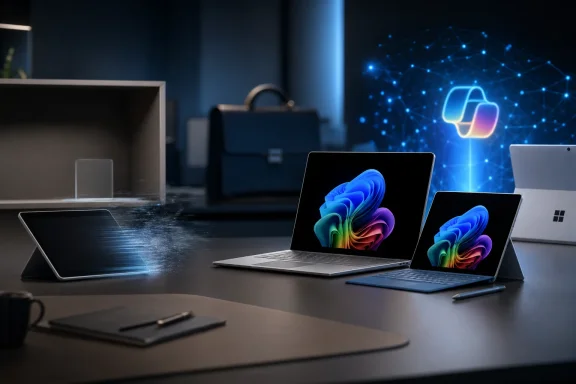
That is a very different mission from filling every price band. If Microsoft wants to push Copilot experiences, Arm PCs, neural processing units, better video conferencing, higher-end panels, and tightly integrated security, a $399 or $599 Surface is not the easiest canvas. It is the device most likely to expose the cost of the strategy.
The New “Small Surface” Is Not Really the Old Small Surface
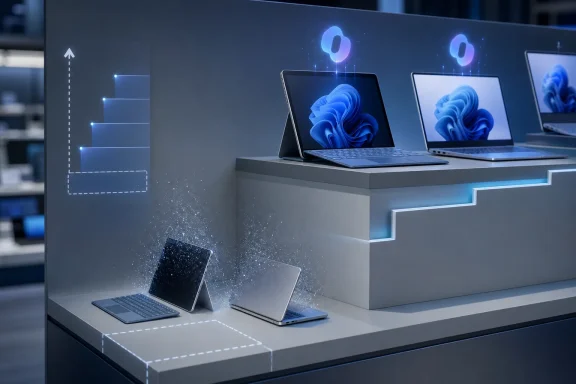
The reported absence of new Surface Go and Surface Laptop Go devices does not mean Microsoft has abandoned smaller PCs entirely. Instead, the company appears to be redefining the entry point upward. Smaller Surface Pro and Surface Laptop models now occupy the space that Go once tried to claim, but with a different price, different performance class, and different expectation.
That distinction matters. A 12-inch Surface Pro or 13-inch Surface Laptop can be “small” without being “budget.” It can carry a better display, more modern processor options, stronger battery claims, and a more coherent relationship to the rest of the Surface lineup. It can also command a price that gives Microsoft room to build the device it wants to build.
This is a familiar move in consumer technology. Companies do not always kill the low-end tier by saying they hate the low end. They redefine the low end as last year’s premium, a smaller premium model, or a configuration with less memory. The sticker price may fall relative to the flagship, but the buyer is still shopping in a premium aisle.
That strategy is cleaner for Microsoft, but it changes the bargain for users. The customer who wanted a cheap Surface-branded Windows device is not being handed a direct replacement. They are being invited to spend more, buy remaining inventory, or look elsewhere.
The Timing Makes the Value Story Harder
The Surface Go and Laptop Go reports land after a wave of Surface activity. Microsoft has recently pushed newer Surface Laptop and Surface Pro configurations, talked up newer processors, and adjusted some models with cheaper variants. On paper, that sounds like a normal portfolio refresh.
But the details tell a sharper story. The company can introduce lower-priced configurations of higher-end devices while still walking away from its dedicated budget lines. That means Microsoft is not necessarily trying to restore the old affordable Surface ladder. It is trying to create just enough entry-level access to keep the premium lineup from looking completely out of reach.
That is a defensive move as much as an offensive one. PC component pricing, memory requirements, AI hardware expectations, and premium display standards all put pressure on margins. If a cheap Surface has to be too compromised to protect margin, it becomes a bad ambassador for Windows. If it is built well enough to satisfy Surface standards, it may be too expensive to satisfy budget buyers.
This is where Microsoft differs from traditional PC OEMs. HP, Lenovo, Acer, Asus, and Dell can flood the zone with dozens of models and let retail segmentation do the work. Microsoft’s Surface portfolio is supposed to be curated. Every device says something about Windows. A weak cheap device says the wrong thing.
Enterprise Buyers Probably Decided the Go Line’s Fate
The most important detail in the reporting is not merely that successors are absent. It is the claim that Microsoft once hoped to release a Surface Go 5 with a low-end Snapdragon chip, only to pivot away after insufficient enterprise interest. That detail, if accurate, explains why the line died quietly rather than dramatically.
Consumer affection does not always save hardware. Forum enthusiasm, Reddit nostalgia, and reviewer fondness for a form factor cannot carry a device if the volume buyers are not signing purchase orders. For Surface Go, enterprise was the more plausible endgame, because businesses could deploy a tiny Windows tablet for specific workflows and absorb the accessory ecosystem as part of a broader fleet.
A Snapdragon-based Surface Go 5 would also have been strategically interesting. It could have offered better battery life, standby behavior, and thermals, potentially addressing long-running complaints about small Windows tablets. It might have made Surface Go feel less like a shrunken PC and more like a genuinely mobile Windows endpoint.
But Arm only solves the problem if the rest of the market wants that device. Enterprise buyers have to care enough to validate apps, manage driver differences, plan support, and retrain users around a form factor that is neither a normal laptop nor a mainstream tablet. Apparently, that case was not compelling enough.
Windows Loses a Symbolic Device Even If Most Buyers Do Not
It would be easy to overstate the practical impact. Most Windows users were not buying Surface Go. Most students looking for cheap machines were not choosing Surface Laptop Go over discounted mainstream laptops. Most corporate fleets were not built around tiny Surface tablets.
Still, the symbolic loss is real. Surface Go represented the dream that full Windows could scale gracefully from a pocket-adjacent tablet up to a workstation. Surface Laptop Go represented the hope that Microsoft could make an affordable PC that still felt like part of the Surface design language. Both ideas mattered to enthusiasts because they made Windows feel more flexible and more imaginative.
Their disappearance narrows the emotional range of Surface. The brand becomes more polished, more expensive, and more predictable. That may be good business, but it is less fun.
For a company that once used Surface to challenge PC assumptions, predictability is a complicated victory. The original Surface was not a safe product. Surface Book was not a safe product. Surface Studio was not a safe product. Even Surface Duo, flawed as it was, came from an old Microsoft instinct to build something strange and see if software could catch up.
The modern Surface lineup looks more disciplined. It also looks less willing to be weird.
OEMs Will Fill the Price Gap, But Not the Identity Gap
For buyers, the immediate advice is straightforward: do not assume a Surface Go 4 or Surface Laptop Go 3 sitting on a shelf is part of an ongoing line. If the reports are correct, remaining stock is the tail end, not the beginning of a refresh cycle. That affects warranty confidence, accessory planning, fleet standardization, and resale expectations.
Windows OEMs will happily absorb the demand for cheaper small PCs. Lenovo, HP, Dell, Asus, Acer, and smaller manufacturers already sell compact laptops, detachables, convertibles, and education devices across a much wider price range than Microsoft ever covered. Some are better values than Surface Go ever was.
But they are not Surface in the cultural sense. They do not carry the same role as Microsoft’s own expression of what Windows hardware should be. That is why the end of a small Surface line feels larger than its sales numbers might justify.
The remaining question is whether Microsoft wants Surface to inspire the broader PC ecosystem or simply occupy a profitable premium lane within it. Those goals overlap, but they are not identical. Inspiration sometimes comes from odd devices that do not maximize margin. Premium discipline usually comes from killing them.
The Cheap Surface Dream Ends in Inventory, Not a Keynote
There is a particular bluntness to hardware dying through stock depletion. No farewell event. No official retrospective. No executive standing on stage to say the market moved on. One day a device is merely hard to find; later, sources say production has stopped and the successor does not exist.
That is fitting for Surface Go and Surface Laptop Go because both lines spent years being useful but unresolved. They had fans, but they also had caveats. They solved some problems while creating others. They proved there was affection for smaller Surface hardware, but not necessarily a sustainable business at the prices and performance levels Microsoft could offer.
For IT administrators, the lesson is not simply “avoid discontinued hardware.” It is to treat niche Surface models as strategically fragile unless Microsoft clearly ties them to a long-term commercial roadmap. Surface Pro and Surface Laptop are safe bets because they are the spine of the brand. Everything else should be evaluated with a colder eye.
For consumers, the lesson is harsher: the Surface logo is no longer a reliable sign that Microsoft wants your budget-tier PC business. The company may offer cheaper configurations, discounts, or older models, but the dedicated affordable Surface family appears to be gone.
The Signal Microsoft Is Sending From the Low End
The cleanest reading of this move is that Microsoft wants fewer Surfaces, not more. It wants devices that can carry the cost of premium materials, AI-ready processors, better cameras, modern screens, and business support expectations. It wants to avoid building Windows hardware that wins only by being cheap.
That does not mean Microsoft is abandoning affordability altogether. It means affordability will likely arrive through configurations, sales, education channels, business discounts, and older models rather than through a distinct Surface Go-style identity. The cheapest Surface may now be a reduced version of a premium device, not a product designed from the start to be inexpensive.
That shift will frustrate exactly the people who loved the Go idea most: travelers, students, writers, field workers, hobbyists, and Windows fans who wanted a small machine with personality. But Microsoft is reading the market through a different lens. If the volume is not there, if enterprise buyers are not lining up, and if the hardware compromises hurt the brand, sentiment will not save the SKU.
The uncomfortable truth is that the PC market already has plenty of cheap Windows machines. What it has fewer of are cheap Windows machines that feel special. Surface Go and Surface Laptop Go tried to be that. Microsoft now seems to have decided that “special” and “cheap” no longer coexist comfortably inside Surface.
The Last Go Units Carry a Bigger Message Than Their Size
Before the remaining stock vanishes, the practical consequences are worth spelling out because this is where product strategy meets actual buying decisions.
- Surface Go 4 and Surface Laptop Go 3 should now be treated as end-of-line purchases rather than entry points into active product families.
- Organizations that standardized accessories, docks, keyboards, chargers, or service procedures around these models should begin planning alternatives instead of waiting for successors.
- Buyers who want a small Microsoft-made PC will likely be steered toward smaller Surface Pro and Surface Laptop models at higher prices.
- The reported cancellation of a Snapdragon-based Surface Go 5 suggests Microsoft considered a more mobile future for the line but did not see enough demand to justify it.
- The broader Surface portfolio is becoming more premium, more focused, and less experimental at the low end.
That is the real story hiding behind a small-device rumor. Microsoft is not just clearing old inventory. It is deciding which parts of the Windows hardware imagination are worth funding in the AI PC era.
The end of Surface Go and Surface Laptop Go, if confirmed in practice by empty shelves and no successors, will not leave Windows users without small PCs; it will leave them without Microsoft’s smallest argument for what a friendly, affordable Windows machine could be. The company may be right that Surface is stronger as a narrower, higher-end brand, but that strength comes with a cost: a little less reach, a little less whimsy, and one fewer reason to believe Windows can still surprise us at the edges.