

Microsoft’s latest Surface pricing story is that the 12-inch Surface Pro and newer Surface devices have become more expensive in 2026, even as reviewers continue to praise the form factor, battery life, and portability that make Surface one of Windows’ most distinctive PC lines. That is the awkward bargain now facing buyers: Microsoft may finally have the 2-in-1 hardware recipe right, but it is asking more people to pay premium money for it. The Surface line is no longer merely a showcase for Windows; it is becoming a test of how much Windows users will tolerate in the name of AI-era PC design. For enthusiasts and IT buyers, the question is not whether Surface is good. It is whether Surface is still good value.
The Surface Pro has always been an argument in magnesium and glass. Microsoft’s pitch was never subtle: the iPad was not enough, the laptop was not flexible enough, and Windows could be both tablet and workstation if the hardware stopped apologizing for the compromise. For years, that argument was easier to admire than to recommend.
The 12-inch Surface Pro changes the emotional temperature around that argument. A smaller, lighter Surface Pro with modern Arm silicon, long battery expectations, pen support, and a mature detachable keyboard ecosystem is exactly the kind of machine longtime Windows tablet optimists have been waiting for. It is portable in the way early Surface devices wanted to be, but without the same degree of performance and battery-life embarrassment.
That is why the price hikes sting. A device can be expensive and still make sense if it clearly occupies the top of a category. But Surface has always depended on a precarious equation: the tablet costs one thing, the keyboard costs another, the pen may cost another still, and the buyer is expected to mentally assemble a laptop out of separate line items.
At $799, the 12-inch Surface Pro looked like Microsoft finally understood the lower end of the premium 2-in-1 market. Once that entry point rises, or once practical configurations creep far above the advertised base price, the device stops looking like a more attainable Surface and starts looking like another boutique Windows machine with a clever hinge.
The appeal is physical. It is the kickstand, the 3:2 display, the detachable keyboard, the pen posture, and the fact that the device can move between couch, desk, meeting room, airplane tray, and note-taking session without becoming the wrong machine for the moment. The Surface Pro is one of the few PCs whose industrial design still expresses a strong idea about how people might work.
That idea has become more credible because Qualcomm’s Snapdragon X chips helped solve one of Surface’s oldest problems. Earlier Windows tablets often felt like engineering compromises: too hot, too slow, too thick, too short-lived away from power, or too awkward as tablets. The newer Arm-based Surface machines are not perfect, but they are much closer to the promise of a silent, efficient, instant-on Windows device that can still behave like a real PC.
For Windows enthusiasts, that matters. The Surface Pro is not just another laptop SKU. It is Microsoft’s proof that Windows can occupy a space Apple has split between iPadOS and macOS. If you want a single device that can run desktop Windows software, use a real file system, connect to conventional peripherals, and still work as a tablet, Surface remains the category’s most coherent answer.
That is especially true for the Surface Pro. A tablet without its keyboard is technically a complete device, but for most Windows users it is not a complete PC. Microsoft knows this, reviewers know this, and buyers know this. Yet the keyboard is still treated as an accessory rather than as part of the core price of the product.
This is where Surface pricing becomes less a premium strategy than a trust problem. If a Windows tablet is being sold as a laptop replacement, then the laptop-replacement price should be the price that dominates the conversation. Anything else makes the base number feel like a marketing artifact.
The same dynamic applies to storage and RAM. Windows users have learned the hard way that entry configurations age poorly. A 256GB SSD can be workable, but it is cramped once development tools, creative apps, offline files, virtual machines, games, and OneDrive sync behavior enter the picture. Sixteen gigabytes of memory is now the sane baseline for a premium Windows PC, not a luxury flourish.
But the consumer-facing story Microsoft wants to tell is not “components got more expensive.” It is “this is a Copilot+ PC.” That framing creates a higher burden of proof. If AI is part of the premium, AI has to feel like part of the value.
Right now, it often does not. Copilot+ features can be interesting, and on-device neural processing is a meaningful architectural shift. But for many users, the everyday value still comes from battery life, standby behavior, thermals, display quality, keyboard feel, webcam performance, and whether the apps they rely on run properly.
That does not mean the NPU is irrelevant. IT departments may eventually care deeply about local inference, privacy-preserving AI workflows, accessibility features, transcription, search, and endpoint-side automation. Developers may build software that makes today’s Copilot+ hardware look prescient. But consumers are being asked to pay today for a future software payoff that remains unevenly distributed.
Still, compatibility remains the quiet caveat behind every Arm-based Windows recommendation. Many mainstream apps now run well, and emulation has improved dramatically, but the Windows ecosystem is vast precisely because it is messy. VPN clients, device drivers, niche enterprise tools, anti-cheat systems, plug-ins, printer utilities, engineering software, and old line-of-business applications do not all move at Microsoft’s preferred pace.
For consumers, that can mean a game that does not launch or a peripheral utility that behaves strangely. For IT departments, it can mean weeks of validation before a device ever appears on an approved hardware list. A beautiful Surface Pro is still a Windows endpoint, and Windows endpoints live or die by compatibility with the boring software organizations actually use.
That is why price matters even more. Buyers are more forgiving of ecosystem edges when a machine is affordable, experimental, or clearly differentiated. They are less forgiving when the final cart price looks like a premium laptop and the device still asks them to think about processor architecture.
That simplicity is Surface’s enemy. A MacBook Air includes the keyboard because it is a laptop. It includes the trackpad because it is a laptop. It runs macOS on Apple silicon without the user needing to understand which apps are native and which are translated. Apple’s lineup has its own pricing frustrations, but the buying experience is less fragmented.
Surface counters with touch, pen, tablet posture, detachable flexibility, Windows software, and enterprise familiarity. Those are real advantages. But they are not equally valuable to every buyer, and they do not automatically justify a higher out-the-door price.
The danger for Microsoft is that Surface becomes a machine for people who already know they want Surface. That can sustain a premium niche, but it is a retreat from the original ambition. Surface was supposed to lead the PC industry by example, not become a luxury proof-of-concept for the faithful.
In that context, Microsoft’s premium Surface pricing is easier to understand. Surface is not trying to be the cheapest Windows hardware in the room. It is trying to be the most Microsoft-shaped Windows hardware in the room, the device that best aligns with Windows, Microsoft 365, Intune, Defender, Entra, Copilot, and the company’s broader endpoint-management worldview.
That alignment has value. A Surface fleet can be attractive for organizations that want clean Windows images, reliable firmware updates, modern security baselines, and devices built with Microsoft’s own roadmap in mind. The more Windows becomes an AI-assisted, cloud-managed, identity-driven operating environment, the more Surface becomes a reference endpoint for that strategy.
But the same strategy can alienate consumers. The Surface brand used to feel aspirational in a personal way: here was the cool Windows machine. Increasingly, it risks feeling aspirational in a corporate way: here is the endpoint Microsoft wishes your procurement department would standardize on.
The worst Surface configurations are the ones that make buyers ask why they should not just buy a conventional laptop. The best Surface configurations make that question irrelevant because the device is doing something a clamshell cannot comfortably do. The 12-inch Pro leans toward the latter.
There are tradeoffs. A smaller display is less comfortable for long spreadsheet sessions, side-by-side windows, and desk-bound productivity. Depending on configuration, buyers may give up display features, ports, or performance headroom compared with larger premium machines. The keyboard experience, while improved over the years, still cannot fully escape the physics of a detachable cover.
But the tradeoffs feel honest. A 12-inch Surface Pro is supposed to be a nimble PC-tablet hybrid, not a mobile workstation. If Microsoft can keep the price within reach, that honesty becomes a selling point. If the price climbs too high, the same tradeoffs become liabilities.
That is why price increases are being read as a referendum on the brand. A more expensive Surface would be easier to accept if Microsoft were also moving faster on repairability, included accessories, display upgrades across the stack, cellular availability, and clearer configuration value. Instead, buyers see a familiar pattern: attractive hardware, complicated pricing, and a sense that the best version costs much more than the headline suggests.
There is also a lingering anxiety that Surface has become cautious. The early line was weird, risky, and sometimes wrong, but it was rarely boring. Modern Surface hardware is more polished, yet the polish can make the lineup feel static unless Microsoft pairs it with aggressive value or unmistakable innovation.
The 12-inch Surface Pro is a reminder that Microsoft can still make interesting hardware. The pricing is a reminder that interesting hardware alone is not enough.
The Arm question should be handled with the same discipline. If an organization lives mostly in Microsoft 365, Edge, Teams, web apps, remote desktops, and modern productivity tools, Snapdragon-based Surface devices may be easy to justify. If the environment depends on legacy agents, specialized drivers, or old x86-only utilities, validation should come before enthusiasm.
Security teams may find the newer Surface pitch compelling. Local AI capabilities, modern firmware, secured-core concepts, Windows Hello, and tight management integration all point in the right direction. But security value is not the same as automatic fleet value.
The best Surface deployment is targeted. Put the devices where the form factor changes the work. Do not pay tablet premiums for users who need ordinary laptops, and do not pay AI premiums unless the organization has a credible plan to use the hardware beyond marketing demos.
That would not solve every complaint. Premium buyers would still debate storage tiers, OLED availability, repair options, and Arm compatibility. But it would address the recurring sense that Surface pricing is designed to look better in headlines than it feels at checkout.
Microsoft also needs to decide whether Surface is a halo brand, a mainstream premium brand, or a business-first endpoint brand. It can serve all three markets, but not with the same message. Consumers need value and delight. Enthusiasts need performance and possibility. IT departments need predictability and support.
The current pricing narrative muddies those audiences. A device that begins as “the affordable new Surface Pro” and quickly becomes expensive in realistic configurations is not just a pricing issue. It is a positioning issue.
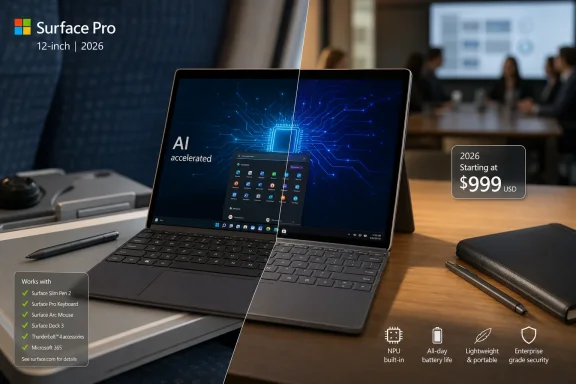 Microsoft Has Built the Windows Tablet Everyone Wanted, Then Priced It Like a Statement Piece
The Surface Pro has always been an argument in magnesium and glass. Microsoft’s pitch was never subtle: the iPad was not enough, the laptop was not flexible enough, and Windows could be both tablet and workstation if the hardware stopped apologizing for the compromise. For years, that argument was easier to admire than to recommend.The 12-inch Surface Pro changes the emotional temperature around that argument. A smaller, lighter Surface Pro with modern Arm silicon, long battery expectations, pen support, and a mature detachable keyboard ecosystem is exactly the kind of machine longtime Windows tablet optimists have been waiting for. It is portable in the way early Surface devices wanted to be, but without the same degree of performance and battery-life embarrassment.
That is why the price hikes sting. A device can be expensive and still make sense if it clearly occupies the top of a category. But Surface has always depended on a precarious equation: the tablet costs one thing, the keyboard costs another, the pen may cost another still, and the buyer is expected to mentally assemble a laptop out of separate line items.
At $799, the 12-inch Surface Pro looked like Microsoft finally understood the lower end of the premium 2-in-1 market. Once that entry point rises, or once practical configurations creep far above the advertised base price, the device stops looking like a more attainable Surface and starts looking like another boutique Windows machine with a clever hinge.
The Surface Pro Is Still Microsoft’s Best Hardware Argument
It is easy to be cynical about Surface because Microsoft invites cynicism. The company spent the last few years wrapping nearly every Windows hardware announcement in Copilot+ branding, neural processors, and a rotating cast of AI demos that rarely feel as essential as the silicon beneath them. Yet the Surface Pro’s appeal is not primarily about AI.The appeal is physical. It is the kickstand, the 3:2 display, the detachable keyboard, the pen posture, and the fact that the device can move between couch, desk, meeting room, airplane tray, and note-taking session without becoming the wrong machine for the moment. The Surface Pro is one of the few PCs whose industrial design still expresses a strong idea about how people might work.
That idea has become more credible because Qualcomm’s Snapdragon X chips helped solve one of Surface’s oldest problems. Earlier Windows tablets often felt like engineering compromises: too hot, too slow, too thick, too short-lived away from power, or too awkward as tablets. The newer Arm-based Surface machines are not perfect, but they are much closer to the promise of a silent, efficient, instant-on Windows device that can still behave like a real PC.
For Windows enthusiasts, that matters. The Surface Pro is not just another laptop SKU. It is Microsoft’s proof that Windows can occupy a space Apple has split between iPadOS and macOS. If you want a single device that can run desktop Windows software, use a real file system, connect to conventional peripherals, and still work as a tablet, Surface remains the category’s most coherent answer.
The Price Problem Is Really a Configuration Problem
Sticker shock in the Surface line rarely comes from a single number. It comes from the journey between the number Microsoft advertises and the number a sensible buyer actually pays. A base model can look competitive until storage, memory, keyboard, pen, warranty, and business manageability enter the conversation.That is especially true for the Surface Pro. A tablet without its keyboard is technically a complete device, but for most Windows users it is not a complete PC. Microsoft knows this, reviewers know this, and buyers know this. Yet the keyboard is still treated as an accessory rather than as part of the core price of the product.
This is where Surface pricing becomes less a premium strategy than a trust problem. If a Windows tablet is being sold as a laptop replacement, then the laptop-replacement price should be the price that dominates the conversation. Anything else makes the base number feel like a marketing artifact.
The same dynamic applies to storage and RAM. Windows users have learned the hard way that entry configurations age poorly. A 256GB SSD can be workable, but it is cramped once development tools, creative apps, offline files, virtual machines, games, and OneDrive sync behavior enter the picture. Sixteen gigabytes of memory is now the sane baseline for a premium Windows PC, not a luxury flourish.
Microsoft’s AI PC Story Has Not Earned Its Surcharge
The most charitable reading of Surface pricing is that Microsoft is selling into a more expensive component environment. Memory prices have been under pressure, AI infrastructure demand has affected supply chains, and premium PC makers are all looking for ways to preserve margins. There is a real market story here, not just corporate greed.But the consumer-facing story Microsoft wants to tell is not “components got more expensive.” It is “this is a Copilot+ PC.” That framing creates a higher burden of proof. If AI is part of the premium, AI has to feel like part of the value.
Right now, it often does not. Copilot+ features can be interesting, and on-device neural processing is a meaningful architectural shift. But for many users, the everyday value still comes from battery life, standby behavior, thermals, display quality, keyboard feel, webcam performance, and whether the apps they rely on run properly.
That does not mean the NPU is irrelevant. IT departments may eventually care deeply about local inference, privacy-preserving AI workflows, accessibility features, transcription, search, and endpoint-side automation. Developers may build software that makes today’s Copilot+ hardware look prescient. But consumers are being asked to pay today for a future software payoff that remains unevenly distributed.
Windows on Arm Is Better, But “Better” Is Not the Same as Invisible
The Snapdragon-era Surface devices have done more than any previous Microsoft hardware to normalize Windows on Arm. Battery life is competitive. Performance is credible. The machines wake quickly, run cool, and finally make Windows feel comfortable in thin-and-light hardware without Intel’s traditional power tradeoffs.Still, compatibility remains the quiet caveat behind every Arm-based Windows recommendation. Many mainstream apps now run well, and emulation has improved dramatically, but the Windows ecosystem is vast precisely because it is messy. VPN clients, device drivers, niche enterprise tools, anti-cheat systems, plug-ins, printer utilities, engineering software, and old line-of-business applications do not all move at Microsoft’s preferred pace.
For consumers, that can mean a game that does not launch or a peripheral utility that behaves strangely. For IT departments, it can mean weeks of validation before a device ever appears on an approved hardware list. A beautiful Surface Pro is still a Windows endpoint, and Windows endpoints live or die by compatibility with the boring software organizations actually use.
That is why price matters even more. Buyers are more forgiving of ecosystem edges when a machine is affordable, experimental, or clearly differentiated. They are less forgiving when the final cart price looks like a premium laptop and the device still asks them to think about processor architecture.
The MacBook Comparison Is Unavoidable and Uncomfortable
Microsoft does not sell Surface in a vacuum. Every premium Surface device exists in the shadow of the MacBook Air, which has become the default answer for many people who want long battery life, quiet performance, strong build quality, and predictable resale value. Surface can do things the MacBook Air cannot, but Apple has made the basic laptop proposition brutally simple.That simplicity is Surface’s enemy. A MacBook Air includes the keyboard because it is a laptop. It includes the trackpad because it is a laptop. It runs macOS on Apple silicon without the user needing to understand which apps are native and which are translated. Apple’s lineup has its own pricing frustrations, but the buying experience is less fragmented.
Surface counters with touch, pen, tablet posture, detachable flexibility, Windows software, and enterprise familiarity. Those are real advantages. But they are not equally valuable to every buyer, and they do not automatically justify a higher out-the-door price.
The danger for Microsoft is that Surface becomes a machine for people who already know they want Surface. That can sustain a premium niche, but it is a retreat from the original ambition. Surface was supposed to lead the PC industry by example, not become a luxury proof-of-concept for the faithful.
The Business Models Make More Sense, But Also Reveal the Strategy
Surface for Business often looks expensive compared with consumer PCs, but enterprise pricing follows a different logic. Commercial buyers care about serviceability, device management, security features, lifecycle stability, support channels, procurement consistency, and predictable configurations. A few hundred dollars matters, but downtime and fleet complexity matter more.In that context, Microsoft’s premium Surface pricing is easier to understand. Surface is not trying to be the cheapest Windows hardware in the room. It is trying to be the most Microsoft-shaped Windows hardware in the room, the device that best aligns with Windows, Microsoft 365, Intune, Defender, Entra, Copilot, and the company’s broader endpoint-management worldview.
That alignment has value. A Surface fleet can be attractive for organizations that want clean Windows images, reliable firmware updates, modern security baselines, and devices built with Microsoft’s own roadmap in mind. The more Windows becomes an AI-assisted, cloud-managed, identity-driven operating environment, the more Surface becomes a reference endpoint for that strategy.
But the same strategy can alienate consumers. The Surface brand used to feel aspirational in a personal way: here was the cool Windows machine. Increasingly, it risks feeling aspirational in a corporate way: here is the endpoint Microsoft wishes your procurement department would standardize on.
The 12-Inch Model Is the Most Interesting Surface Because It Is the Least Laptop-Like
The 12-inch Surface Pro matters because it stops pretending the Surface Pro is just a laptop with a removable keyboard. The smaller size makes it more plausible as a tablet, more natural for pen use, and more distinct from the 13-inch Pro and Surface Laptop. That distinction is important.The worst Surface configurations are the ones that make buyers ask why they should not just buy a conventional laptop. The best Surface configurations make that question irrelevant because the device is doing something a clamshell cannot comfortably do. The 12-inch Pro leans toward the latter.
There are tradeoffs. A smaller display is less comfortable for long spreadsheet sessions, side-by-side windows, and desk-bound productivity. Depending on configuration, buyers may give up display features, ports, or performance headroom compared with larger premium machines. The keyboard experience, while improved over the years, still cannot fully escape the physics of a detachable cover.
But the tradeoffs feel honest. A 12-inch Surface Pro is supposed to be a nimble PC-tablet hybrid, not a mobile workstation. If Microsoft can keep the price within reach, that honesty becomes a selling point. If the price climbs too high, the same tradeoffs become liabilities.
Surface Fans Are Not Angry Because Surface Is Bad
The frustration around Surface is sharper than ordinary gadget complaining because many of its critics want Microsoft to win here. Windows users have spent years watching Apple define battery-life expectations, iPad hardware quality, trackpad standards, and silicon transitions. Surface is one of the few Microsoft products that can make Windows feel equally intentional.That is why price increases are being read as a referendum on the brand. A more expensive Surface would be easier to accept if Microsoft were also moving faster on repairability, included accessories, display upgrades across the stack, cellular availability, and clearer configuration value. Instead, buyers see a familiar pattern: attractive hardware, complicated pricing, and a sense that the best version costs much more than the headline suggests.
There is also a lingering anxiety that Surface has become cautious. The early line was weird, risky, and sometimes wrong, but it was rarely boring. Modern Surface hardware is more polished, yet the polish can make the lineup feel static unless Microsoft pairs it with aggressive value or unmistakable innovation.
The 12-inch Surface Pro is a reminder that Microsoft can still make interesting hardware. The pricing is a reminder that interesting hardware alone is not enough.
Where IT Buyers Should Draw the Line
For administrators, the Surface decision should start with workload reality rather than brand affection. A Surface Pro can be an excellent executive, field, education, consulting, or note-heavy device. It can also be an expensive mismatch for users who spend all day docked to monitors with a keyboard and mouse.The Arm question should be handled with the same discipline. If an organization lives mostly in Microsoft 365, Edge, Teams, web apps, remote desktops, and modern productivity tools, Snapdragon-based Surface devices may be easy to justify. If the environment depends on legacy agents, specialized drivers, or old x86-only utilities, validation should come before enthusiasm.
Security teams may find the newer Surface pitch compelling. Local AI capabilities, modern firmware, secured-core concepts, Windows Hello, and tight management integration all point in the right direction. But security value is not the same as automatic fleet value.
The best Surface deployment is targeted. Put the devices where the form factor changes the work. Do not pay tablet premiums for users who need ordinary laptops, and do not pay AI premiums unless the organization has a credible plan to use the hardware beyond marketing demos.
Microsoft’s Premium PC Needs a More Honest Price Tag
The easiest improvement Microsoft could make is not a new chip, a brighter display, or a thinner chassis. It is a more honest bundle. A Surface Pro sold as a laptop replacement should have a mainstream bundle that includes the keyboard at a price Microsoft is willing to advertise without asterisks.That would not solve every complaint. Premium buyers would still debate storage tiers, OLED availability, repair options, and Arm compatibility. But it would address the recurring sense that Surface pricing is designed to look better in headlines than it feels at checkout.
Microsoft also needs to decide whether Surface is a halo brand, a mainstream premium brand, or a business-first endpoint brand. It can serve all three markets, but not with the same message. Consumers need value and delight. Enthusiasts need performance and possibility. IT departments need predictability and support.
The current pricing narrative muddies those audiences. A device that begins as “the affordable new Surface Pro” and quickly becomes expensive in realistic configurations is not just a pricing issue. It is a positioning issue.
The Surface Buyer’s Reality Check Before Checkout
Surface remains one of the few Windows hardware lines worth arguing about because it still represents a distinct vision of the PC. That vision is valuable, but the new pricing climate makes discipline more important than ever.- Buyers should calculate the real Surface Pro price with the keyboard, pen, storage, memory, warranty, and dock they actually need.
- The 12-inch Surface Pro is most compelling for people who will genuinely use tablet mode, pen input, and handheld portability.
- Snapdragon-based Surface devices deserve serious consideration, but app, driver, VPN, peripheral, and game compatibility should be checked before purchase.
- Copilot+ branding should be treated as a future-facing bonus rather than the main reason to upgrade today.
- Conventional Surface Laptop models may be better value for users who mostly want a premium Windows clamshell.
- IT departments should pilot Surface devices by workflow group rather than treating the lineup as a universal fleet replacement.
References
- Primary source: Digital Trends
Published: Tue, 16 Jun 2026 15:34:16 GMT
Loading…
www.digitaltrends.com - Independent coverage: Tom's Guide
Published: Tue, 16 Jun 2026 15:06:37 GMT
Loading…
www.tomsguide.com - Related coverage: macrumors.com

Microsoft Raises Prices for All Surface PCs, Making Them More Expensive Than Equivalent Macs
Microsoft increased prices for all of its Surface PCs this week, with most models priced hundreds of dollars higher than they were when launching. Windows Central highlighted the increases, which now see Microsoft's mid-range models priced above $1,000 and flagship models priced starting at...www.macrumors.com - Related coverage: windowscentral.com
Loading…
www.windowscentral.com - Related coverage: techradar.com
Loading…
www.techradar.com - Related coverage: arstechnica.com
Loading…
arstechnica.com
- Related coverage: phonearena.com

Microsoft is expanding the Surface Pro family with a smaller, lighter, and cheaper iPad Pro rival
Microsoft's latest Surface Pro model is smaller, considerably lighter, thinner, and cheaper than the 13-inch variant released last year, starting at a relatively affordable $799.99 price. www.phonearena.com
- Related coverage: notebookcheck.net

Microsoft releases new Surface Pro 12 with 64 GB RAM and cellular connectivity
Microsoft has finally released the Surface Pro 12. Available globally with Intel Panther Lake processors, the 'for Business' model also comes with optional cellular connectivity, up to 64 GB RAM and a 120 Hz OLED display. www.notebookcheck.net
- Official source: microsoft.com
Loading…
www.microsoft.com - Official source: blogs.windows.com
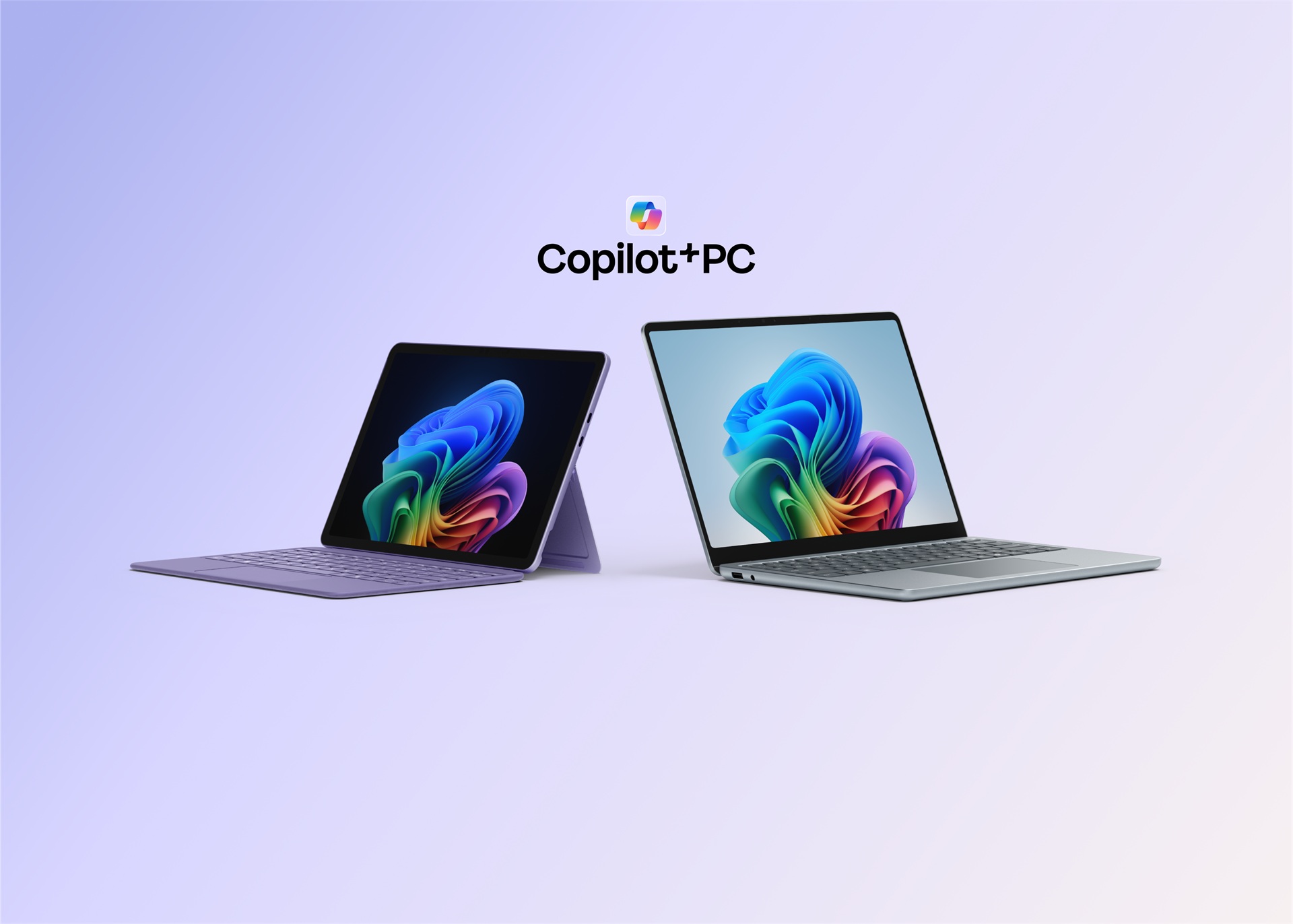
Introducing all-new Surface Copilot+ PCs: The Surface Pro, 12-inch and Surface Laptop, 13-inch
Copilot+ PCs continue to define the next wave of personal computing — fast, long lasting, secure PCs that are purpose-built to unlock AI experiences that empower us to get more done. Today, Microsoft and Surface expand the Copilot+ PC family with tblogs.windows.com - Related coverage: techrepublic.com
Loading…
www.techrepublic.com - Related coverage: tomshardware.com

New Microsoft Surface for Business PCs pair Panther Lake chips with as little as 8GB of RAM — 13-inch Surface Laptop goes light on memory but still starts at $1,299 | Tom's Hardware
The AI gold rush crimps the local AI ambitions of the cheapest business-focused Surfacewww.tomshardware.com