

Obesity has quietly become one of the defining public‑health failures of the past half‑century: rates have surged across every region, the number of adults carrying excess weight now reaches into the billions, and the consequences—ranging from Type 2 diabetes to cardiovascular disease, cancer risk, and deep social harms—are both profound and avoidable. The World Health Organization’s most recent communications underline the scale: in 2022 roughly 2.5 billion adults were overweight and about 890 million were living with obesity, and global prevalence continues to climb in many regions.
The global story is stark and consistent: adult obesity has more than doubled since 1990 while adolescent obesity has quadrupled, shifting the burden of non‑communicable disease (NCD) onto health systems already stretched by ageing populations and limited resources. The Global Burden of Disease analyses and major Lancet modelling projects show that without decisive policy change, a majority of adults worldwide could be living with overweight or obesity by mid‑century. Those rising numbers are not abstract—they translate directly into higher rates of Type 2 diabetes, heart disease, certain cancers, and escalating health‑care costs. At national levels the distribution varies. The United States’ most recent NHANES reporting shows adult obesity prevalence in the low‑forties percentage range (40.3% during August 2021–August 2023), while the United Kingdom’s Health Survey data reports about 29% of adults living with obesity in 2022. These national snapshots hide substantial subpopulation differences by income, education, race and region—patterns that matter for policy design.
This moment requires political courage: to tax unhealthy products, to limit persuasive marketing to children, to mandate honest labels, and to invest in equitable prevention and treatment. The technical evidence is clear that these policies reduce consumption, change industry behavior, and produce measurable health gains. The next step is operational and political: build coalitions across health, finance, education, urban planning and community leaders to deploy the tools at scale and close the gap between knowledge and implementation.
Evidence noted in this article includes WHO global fact sheets and analyses, national surveillance reports (CDC, NHS Digital), peer‑reviewed systematic reviews on SSB taxation, evaluations of Chile’s Law No. 20.606 (front‑of‑pack warnings and advertising restrictions), and recent economic and clinical assessments of novel anti‑obesity medications; the broader evidence base supports a package approach that prioritises population‑level interventions while keeping clinical care accessible and affordable. The data used here reflect the most recent authoritative reporting cycles; where national or global totals differ between studies, readers should check the original reports for definitions and dates to ensure apples‑to‑apples comparisons.
Source: WorldHealth.net Strategies for Battling the Global Obesity Epidemic - WorldHealth.net
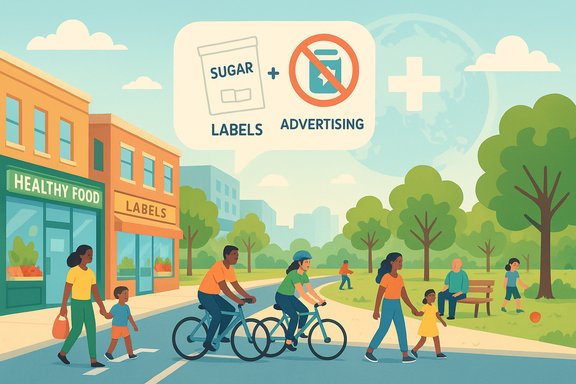 Background / Overview
The global story is stark and consistent: adult obesity has more than doubled since 1990 while adolescent obesity has quadrupled, shifting the burden of non‑communicable disease (NCD) onto health systems already stretched by ageing populations and limited resources. The Global Burden of Disease analyses and major Lancet modelling projects show that without decisive policy change, a majority of adults worldwide could be living with overweight or obesity by mid‑century. Those rising numbers are not abstract—they translate directly into higher rates of Type 2 diabetes, heart disease, certain cancers, and escalating health‑care costs. At national levels the distribution varies. The United States’ most recent NHANES reporting shows adult obesity prevalence in the low‑forties percentage range (40.3% during August 2021–August 2023), while the United Kingdom’s Health Survey data reports about 29% of adults living with obesity in 2022. These national snapshots hide substantial subpopulation differences by income, education, race and region—patterns that matter for policy design. Why rates climbed: the multifactorial drivers
The food environment and industry practices
Global dietary patterns have shifted toward energy‑dense processed foods and sugar‑sweetened beverages (SSBs). Highly profitable global food companies use advertising, promotions, and product design to shape preferences from a young age; the ubiquity and low price of ultra‑processed products make them default options for many households. The result is sustained excess energy intake that, sustained across populations, drives the epidemic. Commercial determinants of health are no longer an academic phrase; they are the practical explanation for much of the upward drift.Physical inactivity and built environments
Modern urban designs, reduced active transport, and decreased access to safe, green public spaces limit incidental physical activity. WHO and national guidelines point to at least 150 minutes of moderate‑intensity aerobic activity weekly plus muscle‑strengthening on two or more days as a baseline for adult health—yet many places make achieving that nearly impossible by design (unsafe sidewalks, car‑centric planning, lack of parks). Addressing urban design is therefore an obesity prevention strategy as much as a transport policy.Social determinants and inequality
Obesity is strongly patterned by socioeconomic status, education, job type and neighbourhood—those with lower income and less stable employment frequently have the highest risks. Food deserts, constrained incomes, and time pressures push families toward cheap, calorie‑dense choices. Effective responses must therefore incorporate equitable access to healthier options rather than only individual behaviour messaging.Biological and clinical factors
Genetics, early‑life nutrition, sleep, and stress all interact with the environment to shape individual susceptibility. The clinical picture is also evolving: the rise of effective pharmacotherapies (GLP‑1 receptor agonists and newer agents) is changing treatment options but creates access, cost, and long‑term management questions that policymakers cannot ignore.Policy levers that work (and the evidence behind them)
Public‑health success in chronic disease comes from population‑level interventions that change contexts, not just advice to individuals. The strongest evidence today points to a small set of structural tools that reduce exposure and shift choices.1) Taxes on unhealthy foods and sugar‑sweetened beverages
- Why it matters: Fiscal policies raise the real price of unhealthy options, discouraging purchases and generating revenue for health programmes.
- Evidence: WHO classifies SSB taxes among the recommended “best buys” for preventing NCDs; multiple systematic reviews and meta‑analyses document reduced purchases and lower sugar intake where taxes are implemented. Real‑world evaluations—Mexico’s pioneering soda tax, tiered levies in the UK, and other national/local policies—show consistent declines in purchases of taxed drinks and evidence of industry responses including reformulation. Fiscal measures also produce revenue that can be ring‑fenced for prevention.
- Rapid, measurable fall in taxed product purchases.
- Potentially progressive health gains if revenue funds targeted programmes for disadvantaged groups.
- Clear signaling to consumers and industry about social priorities.
- Concerns about regressivity (tax burden on low‑income households) can be mitigated if revenue is directed to health programmes or subsidies for healthy foods.
- Industry attempts to avoid taxes through price manipulation, product resizing, or cross‑border shopping require careful tax design and monitoring.
2) Restricting food marketing to children and tightening advertising rules
- Why it matters: Children are highly susceptible to advertising; early exposure shapes lifelong preferences.
- What works: Statutory restrictions on marketing of foods high in sugar, salt and saturated fat—applied across TV, digital platforms, packaging characters, in‑school promotions and point‑of‑sale—are the most protective approach. Chile’s Law No. 20.606 introduced front‑of‑package “high in” warning labels, bans on school sales of labeled products, and aggressive restrictions on advertising to children; evaluations show reduced exposure and shifts in purchasing. Broader comparative reviews find only a minority of countries have strong statutory protections, but those that do (Chile, some Nordic jurisdictions, Quebec historically) apply wide limits.
- Use nutrient‑profile models to define which products are restricted.
- Ban child‑directed marketing techniques (cartoon characters, toys, promotions).
- Apply limits across media including digital platforms and streaming; jurisdictions that tried time‑only TV rules found gaps as children’s viewing shifted online. The UK’s recent HFSS advertising restrictions and consultations illustrate how governments are attempting to future‑proof rules for online platforms.
3) Front‑of‑package (FOP) warning labels and reformulation mandates
- Why it matters: Simple warning labels change perception and purchasing; mandatory thresholds create strong incentives for reformulation.
- Case example: Chile’s black “ALTO EN” octagonal labels are among the clearest examples; the law’s staged tightening of thresholds has driven manufacturers to reformulate products to avoid labels, and the package warnings reduce consumer appeal. Global reviews find mandatory FOP schemes more effective than voluntary industry labels.
- Set clear, evidence‑based nutrient thresholds and tighten them over time.
- Combine labeling with restrictions on health and nutrition claims that mislead consumers.
- Offer technical support and incentives for manufacturers to reformulate toward less sugar, salt and saturated fat.
4) Urban planning, active transport and access to green spaces
- Why it matters: Environments that make daily physical activity easier are a low‑cost, long‑term preventive tool.
- Implementation options:
- Build walkable neighbourhoods and connected cycling networks.
- Prioritise safe routes to schools.
- Expand affordable, accessible public parks and sports spaces.
- Why it’s political: These investments deliver co‑benefits—reduced air pollution, improved mental health, and place‑based regeneration—and they can be packaged as transport, housing and climate policy wins as well as health interventions.
5) Clinical care, treatment access, and long‑term management
- Why it matters: For people living with obesity, clinical interventions—behavioural programs, structured weight‑management services, pharmacotherapy and, when appropriate, surgery—reduce complications.
- Recent advances: New incretin‑based medications (semaglutide, tirzepatide and others) yield clinically significant weight loss in trials. However, cost-effectiveness and access are major barriers: multiple economic analyses show these drugs are not cost‑effective at current prices for broad public coverage, and expanded use would generate substantial budgetary pressures without price negotiation or targeting strategies. Health systems, insurers and policymakers must weigh clinical benefits against equity, sustainability and long‑term management issues (weight regain after cessation, adherence, side effects).
Implementation challenges and unintended consequences
- Enforcement and cross‑border spillovers
- Digital advertising and cross‑border media create enforcement gaps. Time‑based TV rules (e.g., watershed) are less effective once children migrate online. Regulatory design must include platform obligations, measurement standards, and international cooperation to close loopholes.
- Industry resistance and legal risks
- Food and beverage industries frequently litigate, lobby and deploy public‑relations campaigns against regulation—arguing on freedom‑of‑choice or trade grounds. Policy framing that emphasises child protection, transparent evidence, and revenue re‑investment helps withstand pushback. Chile, Mexico and several EU countries faced intense industry opposition yet advanced robust rules.
- Regressivity perceptions and socio‑economic fairness
- Fiscal measures are sometimes portrayed as regressive. Two practical mitigations reduce that risk: (a) use revenues to subsidise healthy foods and fund community programmes in disadvantaged areas; (b) pair taxes with targeted social supports (school food programs, subsidies for fruit and vegetables). Modeling shows SSB taxes can yield proportionally greater health gains in lower‑income groups if revenues are invested equitably.
- Reformulation and substitution
- Industry may replace sugar with non‑nutritive sweeteners or shift marketing into untaxed categories. Regulatory design must therefore consider nutrient profiling across categories and monitor for substitution effects. Studies of tax and labeling policies consistently emphasise the need for surveillance and iterative policy tweaks.
- Medicalisation and stigma
- As pharmacotherapy becomes more visible, there is a risk of reframing obesity as only a medical problem to be “fixed” with pills while neglecting upstream prevention. Conversely, stigma and victim‑blaming persist in many policies and public narratives; successful strategies reduce stigma by acknowledging environmental drivers, promoting body‑inclusive health narratives, and providing non‑judgmental clinical services.
- Data and surveillance gaps
- Reliable, timely data are essential to design and evaluate policies. The recent uptick in global prevalence estimates, and the revisions embedded in GBD and WHO reporting, highlight how different methods and case definitions change headline numbers; policymakers should invest in routine surveillance systems and disaggregated data to target interventions effectively.
What a coherent national strategy looks like: a pragmatic roadmap
Policymakers need stacks of complementary interventions—no single measure is sufficient.- Set the strategic frame: treat obesity as a chronic disease with social and commercial determinants; embed targets in a national NCD strategy linked to measurable goals.
- Implement fiscal measures: introduce or increase taxes on SSBs and consider targeted levies on ultra‑processed foods while ring‑fencing revenue for prevention, school food and community programs. Design taxes to discourage substitution and to encourage reformulation.
- Tighten marketing rules: ban child‑directed marketing across media, remove child‑directed promotions and place restrictions in and around schools. Use nutrient‑profile models to define products in scope and apply rules to digital platforms.
- Mandate clear front‑of‑package labeling and limits on misleading health claims; enforce staged tightening of thresholds to spur reformulation. Chile’s phased implementation demonstrates this approach.
- Invest in environments for activity: safe walkable streets, cycle networks, school and community recreation facilities, and incentives for active commuting.
- Expand equitable clinical services: structured weight‑management programmes, behavioural interventions and supervised access to effective medications where clinically appropriate—while negotiating prices, prioritising high‑risk groups, and investing in long‑term adherence and monitoring.
- Strengthen monitoring and research: fund rigorous evaluations, independent surveillance, and rapid cycles of policy learning to adapt thresholds, tax levels, and marketing rules.
- Protect against unintended harms: protect lower‑income households by channeling tax revenue to healthy subsidies; combat stigma through public education campaigns that stress environmental causes and promote inclusive health.
Critical analysis: strengths, gaps and risks
- Strengths in current evidence and policy options:
- There is robust, multi‑country evidence that SSB taxes reduce purchases and that mandatory front‑of‑pack warning labels alter consumer choices and spur reformulation.
- Marketing restrictions targeted at children—when comprehensive—reduce exposure and power of industry tactics that shape preferences early in life. Chile is a practical, well‑documented model of integrated policy design.
- Important gaps and limits:
- Many countries still lack comprehensive statutory protections; where rules exist they are often partial (e.g., TV‑only, time windows) and quickly outpaced by digital marketing dynamics. Comparative reviews find only a fraction of jurisdictions have statutory marketing limits that meet evidence‑based criteria.
- New pharmacotherapies generate clinical optimism but create policy dilemmas: high prices, uncertain long‑term adherence, and the risk of widening inequities if coverage is uneven. Economic modelling demonstrates substantial population health benefits are possible, yet at present these drugs are not broadly cost‑effective at commercial prices without negotiation or targeting.
- Political and operational risks:
- Industry pushback is predictable and powerful; public‑health coalitions must prepare legal, economic and communications strategies.
- Poorly designed taxes or labeling systems can lead to substitution effects or regulatory capture; continuous evaluation and iterative policy refinement are essential.
Flagged claims and clarifications
- Broad statements that “Canada bans all forms of commercial food marketing to children” need nuance. Quebec has long had a comprehensive ban on advertising to children under 13, but Canada at the federal level does not currently impose a nationwide, all‑media prohibition; recent federal initiatives and debates have proposed stronger national rules but they remain contested. Similarly, some Nordic countries (Norway, Sweden) have historically strong limits on marketing to children, and Chile’s regulations are widely regarded as the global benchmark for comprehensive labeling and marketing restrictions. Policymakers and readers should note these legal distinctions and avoid conflating provincial/local rules with national law.
- Headlines about “billions of overweight people” depend on case definitions and the year of analysis. The WHO’s 2024–2025 fact sheets and the Lancet/GBD modelling use standardized definitions and recent data; when quoting global totals, always pair the number with the year and data source to avoid confusion.
Final verdict: what works, what to prioritize
A realistic and politically durable fight against the global obesity epidemic relies on packages of measures that alter the environment, not just the individual. The highest‑impact, evidence‑backed priorities are:- Fiscal measures that change price signals and raise prevention revenue;
- Strong marketing restrictions protecting children across all media;
- Mandatory front‑of‑package warning labels and nutrient thresholds to push reformulation;
- Investments in active built environments to normalize daily movement; and
- Equitable clinical access to proven therapies—combined with price negotiation and careful targeting to avoid unsustainable fiscal burdens.
This moment requires political courage: to tax unhealthy products, to limit persuasive marketing to children, to mandate honest labels, and to invest in equitable prevention and treatment. The technical evidence is clear that these policies reduce consumption, change industry behavior, and produce measurable health gains. The next step is operational and political: build coalitions across health, finance, education, urban planning and community leaders to deploy the tools at scale and close the gap between knowledge and implementation.
Evidence noted in this article includes WHO global fact sheets and analyses, national surveillance reports (CDC, NHS Digital), peer‑reviewed systematic reviews on SSB taxation, evaluations of Chile’s Law No. 20.606 (front‑of‑pack warnings and advertising restrictions), and recent economic and clinical assessments of novel anti‑obesity medications; the broader evidence base supports a package approach that prioritises population‑level interventions while keeping clinical care accessible and affordable. The data used here reflect the most recent authoritative reporting cycles; where national or global totals differ between studies, readers should check the original reports for definitions and dates to ensure apples‑to‑apples comparisons.
Source: WorldHealth.net Strategies for Battling the Global Obesity Epidemic - WorldHealth.net
