

Iran’s decade-old nuclear compact with world powers has formally reached its legal end: on October 18, 2025, United Nations Security Council Resolution 2231 — the resolution that endorsed the 2015 Joint Comprehensive Plan of Action (JCPOA) — reached its ten‑year “Termination Day,” and Tehran declared that all provisions and restrictions tied to the deal are terminated, even as the broader diplomatic and strategic contest over Iran’s nuclear program intensifies.
The JCPOA, agreed in 2015 between Iran and the P5+1 (China, France, Russia, the United Kingdom, the United States, plus Germany), was enshrined in UNSC Resolution 2231. The resolution tied the suspension and lifting of a series of UN sanctions to Iran’s compliance with strict limits on enrichment levels, centrifuge numbers, monitoring arrangements and uranium stockpiles. Those provisions were designed with explicit, time‑limited “sunset” triggers: a set of restrictions were to be phased out over defined intervals, and Resolution 2231 itself was scheduled to terminate ten years after its Adoption Day — on October 18, 2025. Why this legal expiry matters in practical terms is complicated. For nearly seven years the JCPOA’s original structure had been badly eroded: the United States unilaterally withdrew in 2018, reinstating broad unilateral sanctions; Iran responded by progressively rolling back compliance steps; and, in 2025, the three European signatories (France, Germany and the UK, the “E3”) invoked the JCPOA’s snapback mechanism to re‑impose UN sanctions — a chain of events that many analysts say rendered the formal “Termination Day” largely symbolic.
The net effect is a more fragmented, contested international environment: Iran claims newfound legal freedom to expand its civilian nuclear program subject to standard NPT safeguards; several Western and allied states continue to treat snapback‑reimposed restrictions as active instruments of pressure; and the IAEA remains the principal, though imperfect, verifier. The future will depend on whether diplomacy can stitch together a new political compact — one that combines credible verification, meaningful incentives and regional security measures — before miscalculation or covert confrontation produces irreversible strategic change.
The stakes are unambiguously high. The legal expiry of the JCPOA has closed one door; the real test is whether the international community can open another, more durable one that reduces proliferation risk, stabilizes the region and re‑establishes a workable framework for oversight and restraint. Until then, the world will watch technical reports, diplomatic offers and strategic signaling for clues about whether the next chapter deepens crisis or makes room for a negotiated return to confidence and control.
Source: The News International Iran officially withdraws from nuclear commitments as 10-year accord expires
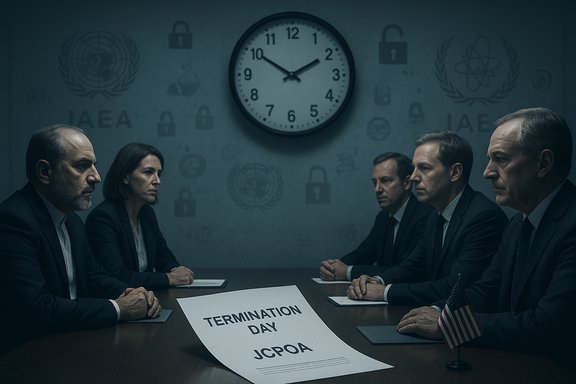 Background: what expired and why it matters
The JCPOA, agreed in 2015 between Iran and the P5+1 (China, France, Russia, the United Kingdom, the United States, plus Germany), was enshrined in UNSC Resolution 2231. The resolution tied the suspension and lifting of a series of UN sanctions to Iran’s compliance with strict limits on enrichment levels, centrifuge numbers, monitoring arrangements and uranium stockpiles. Those provisions were designed with explicit, time‑limited “sunset” triggers: a set of restrictions were to be phased out over defined intervals, and Resolution 2231 itself was scheduled to terminate ten years after its Adoption Day — on October 18, 2025. Why this legal expiry matters in practical terms is complicated. For nearly seven years the JCPOA’s original structure had been badly eroded: the United States unilaterally withdrew in 2018, reinstating broad unilateral sanctions; Iran responded by progressively rolling back compliance steps; and, in 2025, the three European signatories (France, Germany and the UK, the “E3”) invoked the JCPOA’s snapback mechanism to re‑impose UN sanctions — a chain of events that many analysts say rendered the formal “Termination Day” largely symbolic. The snapback complication: legal mechanics and political reality
How “snapback” works
The JCPOA’s snapback provision — embedded in UNSCR 2231 — allowed any participant state to notify the Security Council of alleged “significant non‑performance” by Iran. That notification triggered a 30‑day window: if the Council did not adopt a resolution to continue the suspension of UN sanctions, the earlier UN sanctions that had been lifted under the JCPOA would automatically be reinstated. This mechanism was designed to be veto‑proof — effectively ensuring a path to reimpose multilateral UN measures even if a permanent member tried to block them.What the E3 did in 2025
On August 28, 2025, France, Germany and the UK declared Iran to be in “significant non‑performance” and initiated the snapback process; after the 30‑day interval elapsed without a successful Security Council resolution to preserve the JCPOA arrangements, the UN measures that had been suspended were treated as reimposed and corresponding EU and allied national steps followed. European institutions and many U.S. partners treated that reimposition as effective in late September 2025 and began implementing related sanctions measures and restrictions. The E3 said the move was a last resort after repeated failures to return Iran to compliance and to revive the original deal.Why “Termination Day” still matters — and why it doesn’t
Legally, October 18, 2025 closed the formal window for the snapback mechanism itself: once 2231 terminates, the JCPOA’s special veto‑proof remedy also ends. That removal of the legal mechanism has two opposing effects:- On one hand, it strips away the multilateral, veto‑proof legal channel that the E3 used to reimpose pre‑2015 UN sanctions. That constrains future attempts to restore UN restrictions through the same unilateral route.
- On the other hand, the snapback process already reactivated a suite of sanctions and restrictions before Termination Day, which many states and institutions accepted as valid; this made the formal expiry less consequential in practical terms. As arms‑control experts noted, the “termination day” is of limited effect where snapback had already restored key measures.
What Iran announced and what it legally claims to gain
On October 18, Iran’s Foreign Ministry issued a statement saying that “all of the provisions [of the 2015 deal], including the restrictions on the Iranian nuclear programme and the related mechanisms are considered terminated.” Tehran emphasized that it remained committed to diplomacy, but insisted it would henceforth be treated like any other non‑nuclear‑weapon signatory to the Nuclear Non‑Proliferation Treaty (NPT), subject only to standard safeguards rather than the JCPOA’s special constraints. Iranian officials also called for the UN Security Council to remove the Iranian nuclear issue from its active agenda. Legally, Iran’s position rests on two pillars:- The literal expiration of Resolution 2231 on Termination Day, which ends the resolution’s specific restrictions and the formal UN framework tied to the JCPOA.
- The argument that the E3’s invocation of snapback was illegitimate or at least contested by Tehran; Iranian officials have repeatedly declared the European move “null and void.” Even where international responses disagree on legality, Iran views the termination as freeing it from JCPOA‑specific caps and mechanisms.
Key dates and the verified timeline
To anchor the debate, the following verified milestones are central to understanding the shift:- July 20, 2015 — UNSC adoption of Resolution 2231 endorsing the JCPOA (Adoption Day).
- October 18, 2015 — Adoption Day triggers the JCPOA implementation clock (commonly cited as Adoption Day’s legal start of the JCPOA timetable).
- May 2018 — The United States withdraws from the JCPOA and reimposes unilateral sanctions, initiating a years‑long unraveling of the agreement’s benefits.
- August 28, 2025 — France, Germany and the United Kingdom notify the UN and initiate the snapback mechanism, citing “significant non‑performance.”
- Late September 2025 — After the 30‑day snapback window, EU institutions and many partners treat earlier UN restrictions as reimposed and refresh corresponding national measures.
- October 18, 2025 — UNSC Resolution 2231 reaches Termination Day; Iran declares JCPOA provisions terminated and reiterates willingness to pursue diplomacy on new terms.
International reactions: fractured consensus and competing legal claims
Global responses have been split and predictable along geopolitical lines.- European governments that pulled the snapback lever argue that Iran’s ongoing nuclear escalations — including increased enrichment and reduced IAEA access — left them no choice but to restore pre‑2015 measures. They frame snapback as a legal, JCPOA‑authorized remedy to bring Tehran back to the negotiating table. The EU and the E3 simultaneously stress that sanctions must not end diplomacy and that they seek a “durable, comprehensive and verifiable” agreement.
- Iran insists the formal expiry frees it from JCPOA obligations and rejects the E3’s right to reimpose UN measures after Termination Day. Iranian leaders also underscore that any future talks must respect Iran’s sovereignty and enrichment rights under the NPT. Tehran has publicly reiterated openness to diplomacy under new terms — but only with reciprocal confidence‑building measures from the West.
- Some UN and non‑aligned states, plus several regional players, have urged caution and called for restraint, stressing that the collapse of the JCPOA raises risks of further arms proliferation and military escalation across the Middle East. A handful of countries have taken fresh domestic steps to reintroduce sanctions aligned with the E3’s action, while others question the legal basis for unilateral snapback reimposition after the termination window.
Immediate and medium‑term nuclear implications
The formal termination of JCPOA provisions opens a set of technical and programmatic options for Iran — some urgent, some incremental.- Enrichment ceilings: Under the JCPOA Iran had capped enrichment at 3.67% U‑235 for most civil uses. With JCPOA restrictions ended, Tehran can legally claim the right (by its view) to resume higher enrichment levels for peaceful purposes, though achieving weapons‑grade enrichment (90%+) requires additional technical steps and time. The IAEA’s verification status will be critical to assessing any breakout risk.
- Centrifuge fleet and sites: Iran long ago rebuilt and expanded centrifuge capacity after 2018. The removal of JCPOA limits would allow unfettered expansion, but practical constraints such as material supply chains, engineering expertise, and political cost will shape any acceleration.
- IAEA monitoring: Termination of JCPOA‑specific mechanisms complicates the status of enhanced inspections, but Iran remains an NPT member and thus subject to standard safeguards. The difference between enhanced JCPOA monitoring and baseline safeguards is material: less intrusive verification reduces transparency and raises uncertainty about undeclared activities. The IAEA’s relationship with Tehran, and whether Iran will accept the agency’s comprehensive safeguards or additional transparency arrangements, will be decisive.
Strategic and military risks: escalation dilemmas
The legal and diplomatic shifts increase several foreseeable security risks:- Regional arms and deterrence calculations: If Iran expands enrichment or weaponizes nuclear know‑how, regional rivals — notably Israel and potentially Saudi Arabia or others — will reassess deterrence balances. That could catalyze covert operations, stands‑off strikes, or an arms race in precision munitions and missile defenses. History shows escalation spirals often begin with competing security measures and miscalculation.
- Covert confrontation: The period following the formal JCPOA end may see an uptick in clandestine actions — cyber operations, sabotage of facilities, or targeted strikes — especially given the June 2025 strikes on Iranian sites that preceded the current diplomatic collapse. These actions create asymmetric incentives and risks of broader conflict.
- Nuclear proliferation pressure: The perception of Iran’s expanding program, diminished oversight, and serious doubts about the efficacy of existing non‑proliferation instruments could motivate other states to harden their own programs or seek alternative security guarantees — a classic proliferation multiplier.
Economic fallout, sanctions architecture, and trade consequences
The practical economic picture after termination is uneven: while the JCPOA’s unique sanctions‑relief mechanisms are legally over, the snapback action already placed reimposed UN measures back into circulation — and many states and entities have implemented or reinforced their own export controls and financial restrictions. The result is a patchwork regime rather than a single, coherent international framework.- Countries and banks remain risk‑averse toward Iranian oil and finance; some have re‑imposed or extended export controls and restrictions that will keep business and investment costs high for any third‑party partners.
- Firms that had explored re‑entry into Iranian markets under the earlier JCPOA now face compliance uncertainty; the regulatory and reputational costs of doing business with Iran increased after the snapback and remain elevated.
- Iran’s own economy, already strained by years of sanctions and domestic pressures, will continue to feel the pain of limited trade, restricted access to international markets and frozen assets — dynamics that shape Tehran’s negotiating posture and domestic politics.
Paths forward: diplomacy, legal options, and what a credible restart would require
With the JCPOA’s formal window closed and the snapback mechanism consumed, the diplomatic architecture must be reinvented if the goal is durable non‑proliferation and regional stability. There are several non‑exclusive paths:- Renewed multilateral negotiation that explicitly replaces the JCPOA with a fresh, politically negotiated agreement, possibly involving new security guarantees, phased sanctions relief, and stronger regional arms control measures. Such a deal would require heavy diplomatic investment and credible verification commitments.
- Bilateral or regional confidence‑building: incremental arrangements between Iran and major powers (or neighbors) that lower the immediate stakes — e.g., limits on enrichment in exchange for targeted economic relief, or military de‑escalation commitments. These would be fragile and require sustained monitoring.
- Legal and institutional reinforcement of IAEA safeguards: strengthening the agency’s access, technical tools and budgetary independence to provide the transparency the international community seeks, even absent a JCPOA framework. This would be helpful but cannot substitute for a political settlement.
- Diplomatic backchannels to reduce miscalculation risks: crisis hotlines, agreed‑upon red lines, and third‑party mediation can lower the chances that localized incidents spiral into broader military confrontations. These confidence mechanisms have precedents but require political will.
Strengths and weaknesses of the current international posture — critical analysis
Notable strengths
- The snapback tool, when invoked in 2025, demonstrated the JCPOA’s design resilience — a mechanism to restore multilateral pressure despite deep political differences. That action showed some capacity among European partners to act in defense of non‑proliferation norms without relying solely on U.S. leadership.
- The continued centrality of the IAEA as the world’s technical verifier provides a path to rebuilding confidence if Iran accepts more intrusive monitoring; technical verification remains the most objective yardstick for assessing nuclear intentions.
Significant weaknesses and risks
- The international consensus is fractured: the United States’ earlier withdrawal in 2018 and the political wrangling that followed eroded trust and created a catalogue of grievances that diplomacy must now overcome. Without a broad, durable consensus, any future agreement is vulnerable to partisan domestic politics.
- The snapback‑then‑termination sequence produced legal ambiguities and political contradictions: snapback reimposition came before Termination Day, forcing many states to choose whether to accept the reimposed measures. The resulting patchwork weakens the perceived legitimacy of multilateral law and complicates enforcement coherence.
- Verification erosion is real. The shift from JCPOA’s enhanced inspections to baseline IAEA safeguards reduces transparency. Less oversight raises strategic uncertainty and increases the risk of miscalculation — precisely the condition non‑proliferation arrangements are designed to avoid.
- Finally, the political domestic landscapes inside Iran and within key Western capitals constrain flexibility. Tehran faces domestic pressures that shape its bargaining posture; Western leaders confront public and parliamentary skepticism about any deal perceived as soft on proliferation. These constraints make the hard compromises required for a durable diplomacy less likely.
What readers should watch next — practical signals and timelines
Short and medium‑term indicators will reveal whether the current pattern hardens into a new status quo or opens to diplomacy:- IAEA reporting cadence and access: watch IAEA Board statements and inspection access updates for signs of resumed cooperation or further restrictions.
- Iran’s enrichment announcements and centrifuge deployments: any public technical steps to increase enrichment purity or capacity are immediate risk signals.
- Diplomatic initiatives from major capitals: substantive offers (not only rhetorical openings) tied to verifiable steps will matter most.
- Regional security incidents: a spike in covert operations, maritime interdictions or air strikes would indicate rising escalation risk.
Conclusion: legal closure, practical continuity, and a high‑stakes diplomatic test
October 18, 2025 marks a formal legal milestone — the scheduled termination of UNSC Resolution 2231 and the JCPOA’s special legal framework — but it is not an instant reset button that resolves the real challenges of Iran’s nuclear trajectory. In practice, the snapback process already reintroduced many UN‑era sanctions, leaving the world with a mixture of legal endings and political continuities.The net effect is a more fragmented, contested international environment: Iran claims newfound legal freedom to expand its civilian nuclear program subject to standard NPT safeguards; several Western and allied states continue to treat snapback‑reimposed restrictions as active instruments of pressure; and the IAEA remains the principal, though imperfect, verifier. The future will depend on whether diplomacy can stitch together a new political compact — one that combines credible verification, meaningful incentives and regional security measures — before miscalculation or covert confrontation produces irreversible strategic change.
The stakes are unambiguously high. The legal expiry of the JCPOA has closed one door; the real test is whether the international community can open another, more durable one that reduces proliferation risk, stabilizes the region and re‑establishes a workable framework for oversight and restraint. Until then, the world will watch technical reports, diplomatic offers and strategic signaling for clues about whether the next chapter deepens crisis or makes room for a negotiated return to confidence and control.
Source: The News International Iran officially withdraws from nuclear commitments as 10-year accord expires