

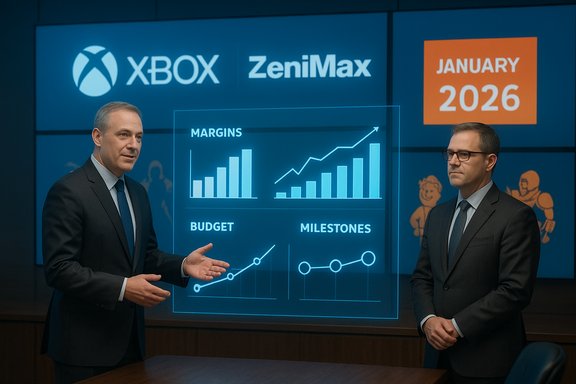
Tim Stuart, long-serving finance chief for Microsoft Gaming, is set to move from his role as Xbox CFO to become chief operating officer of ZeniMax Media in January 2026, while Xavier Pokorzynsk will assume the CFO duties for Microsoft Gaming — a change that tightens financial leadership across Xbox and embeds a finance-first mindset deeper into Bethesda’s parent company.
The reported leadership shuffle arrives at a turbulent moment for Microsoft’s gaming arm. Over the last year Microsoft Gaming has both released high-profile, well-reviewed titles and endured widespread studio restructuring, project cancellations and layoffs. External pressure to restore profitability in the face of rising costs, shifting hardware economics and a transformed subscription strategy has set the scene for moves that look designed to better align operations, finance and studio execution. This reorganization — reportedly effective January 2026 — sees Tim Stuart transition from his decade-long role overseeing Xbox finance into a direct operating role at ZeniMax Media, home to Bethesda Softworks and studios responsible for franchises like The Elder Scrolls, Fallout and DOOM. Concurrently, Xavier Pokorzynsk, a Microsoft corporate vice president within Microsoft Gaming, is slated to replace Stuart as the gaming division’s CFO. These personnel changes were first reported by Windows Central and picked up by multiple outlets.
Embedding a CFO into studio operations and elevating an internal finance leader to be the Xbox division CFO signal that Microsoft currently prioritizes predictable financial returns. Whether this calculus preserves the creative foundations that make franchises like Elder Scrolls and Fallout culturally enduring remains the central strategic question.
For enthusiasts, developers and investors, the leadership changes are a bellwether. They suggest Microsoft is doubling down on service monetization and fiscal discipline while ZeniMax, and by extension Bethesda’s franchises, will be managed more closely to corporate financial targets. Observers should watch the coming months for official role descriptions, studio roadmap edits and any further reorganizations that will reveal whether these changes are an efficiency play or a deeper cultural shift inside Microsoft Gaming.
Source: Windows Central https://www.windowscentral.com/gaming/xbox/xbox-leadership-tim-stuart-zenimax-2026/
 Background
The reported leadership shuffle arrives at a turbulent moment for Microsoft’s gaming arm. Over the last year Microsoft Gaming has both released high-profile, well-reviewed titles and endured widespread studio restructuring, project cancellations and layoffs. External pressure to restore profitability in the face of rising costs, shifting hardware economics and a transformed subscription strategy has set the scene for moves that look designed to better align operations, finance and studio execution. This reorganization — reportedly effective January 2026 — sees Tim Stuart transition from his decade-long role overseeing Xbox finance into a direct operating role at ZeniMax Media, home to Bethesda Softworks and studios responsible for franchises like The Elder Scrolls, Fallout and DOOM. Concurrently, Xavier Pokorzynsk, a Microsoft corporate vice president within Microsoft Gaming, is slated to replace Stuart as the gaming division’s CFO. These personnel changes were first reported by Windows Central and picked up by multiple outlets. What changed — the hard facts
- Tim Stuart, current chief financial officer (CFO) of Microsoft Gaming, expected to become chief operating officer (COO) of ZeniMax Media in January 2026.
- Xavier Pokorzynsk, currently corporate vice president of Microsoft Gaming, will take over as CFO of Microsoft Gaming.
- The moves are widely reported as internal reassignments rather than external hires; both principals have Microsoft tenure and deep exposure to the company’s gaming finance structures.
Why this matters: reading the organizational signal
A finance hand in operations — deliberate or pragmatic?
Promoting a longtime CFO to an operating role at ZeniMax is a meaningful signal. It places a senior finance executive directly into the operational epicenter of Microsoft’s most storied first-party studios. There are at least three plausible interpretations, none exclusive:- Operational consolidation and margin discipline. A CFO-turned-COO can accelerate cost rationalization, centralize budgeting and enforce profitability guardrails inside studios. That looks consistent with a broader corporate push for higher accountability targets inside gaming.
- Closer integration between studio pipelines and corporate finance. Embedding senior finance within studio leadership can help align release schedules, milestone payments and platform strategies with corporate financial targets. It makes studio decisions more finance-driven by default.
- Talent and experience redeployment. Stuart has overseen Xbox finance during big transitions (acquisitions, Game Pass growth); placing him at ZeniMax may signal the need for an experienced operator to steer Bethesda studios through their next phase. That interpretation fits a pattern of moving internal experts to high-friction units.
The 30% accountability margin context
This leadership change cannot be viewed in isolation. Bloomberg (as widely republished) reported that Microsoft set a company-wide “accountability margin” target of roughly 30% for the Xbox business — a far higher figure than the video game sector’s typical margins — and that this mandate has reshaped decisions across studios, from cancellations to price adjustments. That financial overlay frames the move of a CFO into an operational role as more than cosmetic: it indicates a company pushing to translate high-level margin requirements into studio-level operational discipline.The immediate industry context: prices, Game Pass and layoffs
2025 saw a series of aggressive commercial moves from Microsoft Gaming that commentators link to the margin push:- Game Pass pricing overhaul. Microsoft raised the top-tier Game Pass Ultimate price by roughly 50% (from $19.99 to $29.99/month), rebranded tier names, and expanded service promises like day-one releases and bundled subscriptions. Major outlets reported and analyzed that increase as part of Microsoft’s revenue-first recalibration for gaming.
- Console price increases. Microsoft applied multiple price increases to Xbox consoles in the U.S. during the year; those moves were widely attributed to rising production costs, supply-chain pressures and tariff uncertainty. Higher hardware prices, combined with Game Pass hikes, indicate a broader plan to raise per-user revenue.
- Studio cuts and cancellations. Across Microsoft Gaming, a string of layoffs and project cancellations has reshaped the first-party portfolio. Observers have tied these cuts to both a reorientation of priorities and to financial targets that raise the bar for continuing expensive projects.
ZeniMax Media under the microscope
ZeniMax Media, which oversees Bethesda Game Studios, Bethesda Softworks and several other studios, sits at the center of Microsoft’s creative IP engine. Placing a finance-savvy COO there carries operational implications:- Production oversight. A COO with CFO experience can speed investment reallocation, tighten QA and milestone budgets, and standardize delivery processes across multiple studios. For multi-studio franchises such as The Elder Scrolls or Fallout, that could mean more predictable schedules and clearer fiscal accountability.
- IP stewardship vs. margin pressure. Bethesda studios are historically creative-driven and development-intensive. Increased finance presence could compel prioritization of lower-risk projects, content-drops and expansions over bold, long-term bets — a trade-off that reshapes the studio’s creative DNA.
- Publisher-studio relationship. As ZeniMax’s operating lead, Stuart will be a key interface between Bethesda teams and Microsoft’s central finance and strategy. Expect tighter gating, more frequent financial reviews, and potentially faster moves to cut or rework projects that miss fiscal thresholds.
Who is Xavier Pokorzynsk — the new Microsoft Gaming CFO?
Xavier Pokorzynsk (sometimes styled as Pokorzynski in reporting) has held senior finance roles within Microsoft in recent years and has been part of the Microsoft Gaming finance team since 2023. His promotion signals continuity: Microsoft is elevating an internal finance leader rather than bringing in an external CFO, suggesting the company values internal institutional knowledge and wants a finance leader already versed in Xbox’s business model.- Strengths of an internal promotion: familiarity with Xbox’s revenue mix (hardware, services, first-party publishing, cloud), existing relationships with studio leaders, and understanding of prior budget and “accountability margin” expectations.
- Potential pitfalls: a CFO steeped in current finance orthodoxy may prioritize quicker returns and cost control, which can compound existing pressures on creative teams.
Strategic analysis — opportunities and risks
Opportunities
- Faster operational alignment. With a finance expert inside ZeniMax, resource allocation, milestone gating and cross-studio coordination can become more rigorous and predictable — a boon for investors and for portfolio-level risk management.
- Cost control and sustainability. Higher margins and tighter discipline can reduce long-term risk to the business model, especially in a market where hardware sales are volatile and development costs are soaring.
- Service monetization leverage. Microsoft’s willingness to reprice Game Pass and restructure tiers shows a broader ambition to make services carry more revenue — disciplined studios that can produce regular content are central to that strategy.
Risks
- Creative stagnation. Finance-first operations inside creative studios can lead to risk-averse decision-making, fewer experimental titles, and homogenized output — outcomes that erode long-term brand value.
- Talent attrition and morale. Developers often interpret finance-heavy oversight as a sign that long-term R&D and creative latitude will be trimmed. That environment increases the risk of key talent departures and recruitment challenges.
- Reputational cost with players. Aggressive price increases (Game Pass, Xbox consoles) combined with visible studio cuts risk alienating the user base and reducing community goodwill — an intangible but important asset in gaming.
What to watch next — measurable signals
- Official announcements and org charts. Microsoft’s formal communications and ZeniMax’s leadership pages should reflect the moves by January 2026; official job descriptions will indicate whether Stuart’s remit is operational leadership or fiscal triage.
- Studio roadmaps and canceled projects. Any new cancellations, delays or public revisions to Bethesda project roadmaps after the transition will illuminate how operational priorities have shifted.
- Developer kit and studio budget signals. Look for changes in developer kit spending, dev kit pricing and third-party publisher incentives: reductions or modernizations will signal a stricter cost posture.
- Game Pass cadence and retention data. If Game Pass price increases are paired with sustained or expanded day-one content and measurable retention improvement, Microsoft’s revenue-first playbook may be vindicated. Otherwise, subscriber churn will be a key early indicator of consumer pushback.
Practical implications for stakeholders
For developers inside Microsoft and ZeniMax
Expect more frequent fiscal checkpoints and clearer ROI expectations for projects. Studios should prepare tighter milestone plans, enhanced risk mitigation for multi-year titles and clearer justification for greenlighting creative risks.For employees
Short-term turbulence is likely. Those in non-core or less profitable projects should be prepared for role changes or redeployment, while teams working on IPs with steady monetization models may see more support.For investors
The move signals a stronger emphasis on profitability and operating leverage in gaming. Investors focused on margin expansion may view the leadership change favorably; those prioritizing long-term IP value should scrutinize whether short-term cuts undermine future franchise potential.For players
Gamers can expect a continued focus on subscription value propositions (day-one releases, cross-platform play) but should also monitor studio outputs: fewer high-risk, innovative projects could follow if finance trumps experimentation.Strengths and limits of the available reporting
The core leadership change is reported by credible gaming outlets and replicated across multiple platforms, giving it high confidence. However, the motivations behind these appointments — whether they were requested by studio leadership, pushed by central finance, or the result of longer-term succession planning — are less clear and remain speculative until Microsoft publishes an official internal rationale. Several follow-ups have already offered plausible strategic readings (margin discipline, operational tightening), but those remain interpretive. Readers should treat internal-intent explanations as informed analysis rather than confirmed fact. Note: public reports about internal margin targets and their effects draw heavily on Bloomberg reporting and court filings; while the existence of the 30% “accountability margin” has broad reporting support, the precise internal implementation and how it factors into every studio decision are emergent details that may shift as more documents and statements become available. Flagged claims of intent or causality should be read with caution.The strategic trade-off Microsoft faces
Microsoft’s position is a classic growth-versus-margin trade-off reframed for the modern games industry. On one side, aggressive margin goals, price adjustments and strict cost control can restore profitability and placate Wall Street. On the other, the video-game business historically rewards long-term franchise investment and cultural relevance — commodities that are earned by taking creative risks and sometimes accepting short-term losses.Embedding a CFO into studio operations and elevating an internal finance leader to be the Xbox division CFO signal that Microsoft currently prioritizes predictable financial returns. Whether this calculus preserves the creative foundations that make franchises like Elder Scrolls and Fallout culturally enduring remains the central strategic question.
Final assessment
The personnel moves reported for January 2026 are small in headcount but large in signal. They formalize a finance-led approach to operations inside the most creative arm of Microsoft’s gaming portfolio. That approach has immediate advantages — clearer budgets, faster decision-making, and better short-term margin prospects — but also structural risks: creative constraints, diminished long-term IP value and employee morale impacts.For enthusiasts, developers and investors, the leadership changes are a bellwether. They suggest Microsoft is doubling down on service monetization and fiscal discipline while ZeniMax, and by extension Bethesda’s franchises, will be managed more closely to corporate financial targets. Observers should watch the coming months for official role descriptions, studio roadmap edits and any further reorganizations that will reveal whether these changes are an efficiency play or a deeper cultural shift inside Microsoft Gaming.
Short checklist — what to monitor before January 2026
- Official Microsoft and ZeniMax leadership pages for role confirmations.
- Any Microsoft investor communications referencing gaming margin targets or structural changes.
- Public roadmap updates from Bethesda Game Studios or ZeniMax-subsidiary studios.
- Subscriber trends and churn data for Game Pass after the October price changes.
- Signals of further operational consolidation (shared dev tools, centralized pipelines, cross-studio resource pools).
Source: Windows Central https://www.windowscentral.com/gaming/xbox/xbox-leadership-tim-stuart-zenimax-2026/
