

Professional credentials still matter — but the rules have changed: certifications are now strategic signals that must be paired with demonstrable work, up‑to‑date hands‑on experience, and a clear alignment to the technologies employers actually use. That’s the central takeaway from a compact “Top 10” roundup originally circulated by Academia Mag and the industry threads that followed, and it frames the practical guide that follows. era defined by cloud migrations, escalating cyber risk, and the rapid operationalization of AI, a relatively short list of vendor and vendor‑neutral certifications continues to deliver the biggest career impact for IT professionals. That impact shows up in three concrete ways: easier screening past applicant tracking systems, higher salary bands for certified roles, and faster promotion into leadership or specialist teams when certificates are backed by demonstrable results.
This feature distills the practical value, up‑to‑date requirements, and realistic caveats for the ten certifications most frequently cited by employers and hiring reports in 2025–2026. For each credential I summarize who it’s for, the current technical or experience prerequisites you must meet, and the best ways to convert the certificate into a salary or role upgrade. Where official program rules changed recently (exam rewrites, new versions, or altered experience waivers), I call that out and point you to the authoritative guidance so you can verify before you pay for an exam.
Certifications are not magic. They are hiring signals that tell recruiters and hiring managers: “this candidate can perform certain tasks from Day One.” That signal is highest when:
Source: Academia Mag https://academiamag.com/career-guides/10-certifications-for-it-professionals/
This feature distills the practical value, up‑to‑date requirements, and realistic caveats for the ten certifications most frequently cited by employers and hiring reports in 2025–2026. For each credential I summarize who it’s for, the current technical or experience prerequisites you must meet, and the best ways to convert the certificate into a salary or role upgrade. Where official program rules changed recently (exam rewrites, new versions, or altered experience waivers), I call that out and point you to the authoritative guidance so you can verify before you pay for an exam.
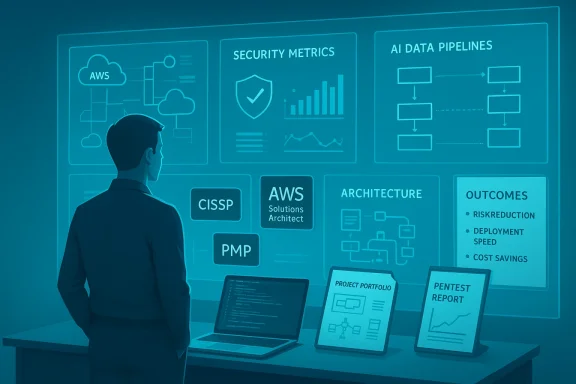 Why certifiand when they don’t
Certifications are not magic. They are hiring signals that tell recruiters and hiring managers: “this candidate can perform certain tasks from Day One.” That signal is highest when:- The certification maps to the employer’s tech stack (for example, AWS or Azure for cloud roles).
- The candidate demonstrates real work (deployments, GitHub repos, project write‑ups).
- The certification is recent and the exam version aligns with current product features (many cloud and security exams were updated to include AI or IaC topics in 2024–2026).
The Top 10 (practical, role‑alig need to know)
Below are the ten certifications that consistently appear on hiring radar screens and salary surveys in 2025–2026. Each entry contains the role fit, the current core eligibility or exam facts, and pragmatic advice for converting the credential into a job result.1. CISSP — Certified Information Systems Security Professional (ISC2)
- Best for: Senior security professionals, security managers, aspiring CISOs.
- Why it matters: CISSP is widely recognized as the managerial and architectural gold standard in information security.
- Requirements and notes: Candidates need a minimum of five years of cumulative, full‑time work experience across two or more CISSP domains; certain degrees or approved credentials may substitute for one year. You can still sit the exam without the experience and earn Associate of (ISC)² status until you acquire the required work history. These experience rules are enforced by ISC² and are critical to plan around.
- Caveat: ISC² adjusted its experience‑waiver policies in late 2025; several previously accepted credentials were removed from the waiver list effective April 1, 2026. If you were relying on a prior credential to shorten the CISSP experience requirement, check the current list before applying.
- How to maximize value: Pair CISSP with demonstrable program‑level outcomes (e.g., risk reductions, incident response metrics) and vendor‑specific cloud security credentials for technical credibility.
2. CEH — Certified Ethical Hacker (EC‑Council)
- Best for: Penetration testers, red‑teamers, security consultants beginning a path in offensive security.
- Why it matters: CEH teaches the mindset and techniques used by adversaries; it remains a widely recognized entry point into ethical hacking careers.
- Exam facts: The CEH program is now on versioned releases (v13 as of 2025/2026) and includes hands‑on labs, a multiple‑choice exam plus optional practical assessments in some pathways. EC‑Council documents the current syllabus and timing for practical challenges.
- Caveat: If your goal is elite offensive security roles, plan to progress from CEH to more technically rigorous, hands‑on certifications (for example, OSCP or eLearnSecurity certifications).
- How to maximize value: Build a portfolio of controlled pentest reports, writeups, or public CTF achievements to accompany the CEH badge.
3. AWS Certified Solutions Architect — Associate (SAA‑C03)
- Best for: Cloud architects, platform engineers, backend engineers working in AWS shops.
- Why it matters: AWS market share keeps these architects in high demand; the SAA associate validates design and operational knowledge aligned with the AWS Well‑Architected Framework.
- Exam facts: The SAA‑C03 exam targets candidates with at least one year of hands‑on AWS experience and tests design areas such as secure, resilient, high‑performing, and cost‑optimized architectures. The exam is scored on a scaled model and includes multiple‑choice and multiple‑response items; current domain weights are published in the AWS exam guide.
- Caveat: AWS updates services and exam blueprints periodically; always use the official AWS exam guide for domain coverage and supported services.
- How to maximize value: Build and document 2–3 real projects (VPC designs, multi‑AZ deployments, IaC templates) and include cost‑optimization and monitoring evidence.
4. Microsoft Certified: Azure Solutions Architect Expert (AZ‑305 pathway)
- Best for: Enterprise architects and engineers focused on Azure.
- Why it matters: Azure powers many large enterprise stacks; the AZ‑305 exam measures design across compute, networking, storage, monitoring, and security.
- Exam facts: AZ‑305 is the designated exam for Azure Solutions Architect Expert and requires experience across Azure administration, development, and DevOps practices. Microsoft periodically updates exam scopes — the AZ‑305 English exam was updated as recently as late 2024 and reviewed in January 2026 — so it’s essential to review the official exam page before scheduling.
- How to maximize value: Demonstrate migrations or hybrid designs, and highlight governance and cost‑control patterns.
5. CISM — Certified Information Security Manager (ISACA)
- Best for: Security managers, leaders responsible for governance, risk, and enterprise security programs.
- Why it matters: CISM focuses on management and strategy rather than hands‑on technical skills — a useful differentiator for those targeting managerial lanes.
- Requirements and facts: Passing the CISM exam is only step one. To gain the certification you must report five or more years of professional information security management experience across the CISM domains (with some substitution rules and a five‑year application window). ISACA’s certification guidance is explicit on the experience and continuing professional education rules.
- How to maximize value: If you’re early in your career, take the exam to learn the domain vocabulary but plan to demonstrate governance outcomes (policy, audit management, or risk reduction) to unlock leadership roles.
6. PMP — Project Management Professional (PMI)
- Best for: IT project managers, program leads, and technical managers who orchestrate cross‑functional delivery.
- Why it matters: PMP remains the widely recognized credential for formal project management; it signals mastery of structured delivery across methodologies.
- Recent update: PMI announced a significant update to the PMP exam structure and blueprint with a global rollout scheduled for July 9, 2026. The new exam increases focus on AI, sustainability, stakeholder engagement, and rebalanced domain weights (greater emphasis on business environment). If you plan to sit PMP, note the July 8, 2026 cutoff for the old exam version.
- How to maximize value: Choose the exam version that aligns with your timeline and complement PMP with a short portfolio of delivered IT projects showing measurable outcomes (cost, schedule, quality).
7. Certified Data Professional (CDP) — ICCP
- Best for: Data engineers, data architects, governance leads, and analytics professionals.
- Why it matters: The CDP (formerly CDMP) is one of the more flexible, role‑aligned credentials for data work — multiple specialization tracks and levels (Foundation → Executive Management).
- Who runs it: The Institute for Certification of Computing Professionals (ICCP) administers CDP and offers different role tracks (data governance, data warehousing, analytics, etc.). CDP remains a recognized choice for professionals who need a broad, vendor‑neutral validation of data management knowledge.
- Caveat: The CDP is broad; pick the specialization and level that aligns with your job title and desired pay band.
- How to maximize value: Pair CDP with demonstrable pipelines, data models, or governance artifacts; show measurable improvements in data quality or time‑to‑insight.
8. CCNA — Cisco Certified Network Associate
- Best for: Network engineers, systems administrators, and IT staff who manage on‑premises infrastructure and hybrid networking.
- Why it matters: Networking fundamentals remain essential; CCNA validates a solid practical base for routing, switching, basic security, and automation.
- Exam facts: The current CCNA (200‑301) is a 120‑minute exam covering network fundamentals, IP connectivity, security basics, and automation/programming fundamentals. Cisco’s official exam page lists the precise domains and exam characteristics.
- How to maximize value: Build an actual lab (virtual or physical), document troubleshooting cases, and demonstrate automation scripts for routine tasks.
9. Google Certified Professional Cloud Architect
- Best for: Cloud architects and platform engineers working with Google Cloud Platform (GCP), especially organizations that use Vertex AI, BigQuery, and Google’s managed services.
- Why it matters: GCP architecture certification is highly rated on salary surveys because it blends cloud design with data/ML considerations.
- Exam facts: The Professional Cloud Architect exam guide details domain weights (designing/planning, provisioning, security, optimization, reliability, and implementation). Google added exam updates in 2025 to include AI/Well‑Architected topics; check the official guide for the current case studies and exam format.
- How to maximize value: Deploy a production‑grade service on GCP (e.g., GKE service + Vertex AI pipeline) and document the full architecture, monitoring, and cost profile.
10. CompTIA Security+ (SY0‑701)
- Best for: Entry to mid‑level security roles, SOC analysts, and engineers who need a vendor‑neutral baseline.
- Why it matters: Security+ is the common first credential for cybersecurity careers and is broadly recognized by employers and government hiring schemes.
- Exam facts: CompTIA retired SY0‑601 and introduced SY0‑701 to align with modern threat patterns, cloud and hybrid operations, and hands‑on skills. SY0‑701 emphasizes practical security operations, zero trust, and automation, and includes performance‑based questions. Review CompTIA’s syllabus for the current objectives.
- How to maximize value: Combine Security+ with a cloud provider’s security associate credential or hands‑on monitoring/incident response artifacts.
Cross‑checking market value: what salary and demand data actually say
Multiple independent salary and market reports published in 2024–2026 consistently show cloud and security certifications commanding the highest pay premiums. Skill and salary surveys list credentials such as Google Professional Cloud Architect, AWS security tracks, CCSP/CCNP, and CISSP near the top of pay scales. That said, published salary averages are survey‑driven and should be treated as directional rather than precise guarantees — compensation varies by geography, seniority, employer, and the candidate’s demonstrable track record. Use salary reports as guideposts but validate with live job listings in your target market.Practical roadmaps: how to choose and prepare (step‑by‑step)
- Identify your target role and three real job postings you’d apply to.
- Choose the certification that appears in at least one of those postings (preferably more).
- Build a 1–2 project portfolio that mirrors the exam tasks (deployments, architecture diagrams, pentest reports, project metrics).
- Use official exam guides and vendor training as your syllabus (not only third‑party courses).
- Take practice tests under timed, proctored conditions and schedule your exam to create a firm deadline.
Risks, caveats, and common traps
- Exam churn: Vendors update exams (new versions, retired exams) frequently. Always confirm the current exam code, domain weights, and retirement dates on the vendor’s official page before buying training or vouchers. Examples include PMI’s PMP rewrite planned for July 2026 and CompTIA’s update to SY0‑701.
- Experience waivers and policy changes: Some vendors change eligibility or waiver lists with short notice. ISC² reduced its CISSP experience waiver list effective April 1, 2026; candidates relying on older waiver lists may find their plans disrupted. Verify waiver and substitution rules directly on the cert bodcissp.com]
- Credential stacking without depth: Holding many entry credentials without deep, demonstrable experience rarely leads to senior roles. Employers increasingly prioritize project impact, cloud portfolio evidence, and leadership over an indiscriminate badge collection.
- Cost vs. ROI: Certification costs include exam fees, required training, and lost time. Prioritize certificates that map to roles with measurable salary uplift in your region or that unlock internal promotion paths at your employer.
How employers view certifications in 2026
Hiring managers use certifications as filters for specific skills — especially for early‑career hires and career changers. For mid‑career roles, they expect either vendor‑neutral leadership credentials or clear project results. The best candidates merge both: authoritative certifications and concise portfolios demonstrating the skills the exam assesses. Recent employer guidance and industry threads recommend selecting a certification only after verifying that three job postings you would apply to list it as desirable or required.Final advice: a practical investment framework
- Short list: Choose 1–2 certifications that align tightly with your target role and employer geography.
- Build, don’t cram: Use hands‑on projects as study aids — the same work doubles as portfolio evidence.
- Verify policies: Confirm prerequisites, experience waivers, exam versions, and renewal requirements on the issuing body’s official pages before purchasing any voucher.
- Plan for currency: Certifications expire or require continuing education. Account for the renewal cycle and plan how the credential will continue to serve your career two years from now.
Conclusion
Professional certifications remain a highly effective way to accelerate an IT career — but their value now depends on fit and how you support them with demonstrable work. Cloud and security certifications continue to command the highest premiums, and managerial credentials like CISM and PMP open leadership lanes when backed by measurable outcomes. Before you invest, verify the current exam version and eligibility rules with the issuing organization, select one credential that maps directly to live job postings, and build a short portfolio that proves you can do what the certificate promises. That combination — credential plus evidence — is what gets interviews, offers, and promotions in today’s IT job market.Source: Academia Mag https://academiamag.com/career-guides/10-certifications-for-it-professionals/
