

At least 19 people were killed and dozens more injured after two adjacent four‑storey residential buildings collapsed overnight in the Al‑Moustakbal neighbourhood of Fez, Morocco, triggering a large‑scale search‑and‑rescue operation and renewed scrutiny of building safety in the country.
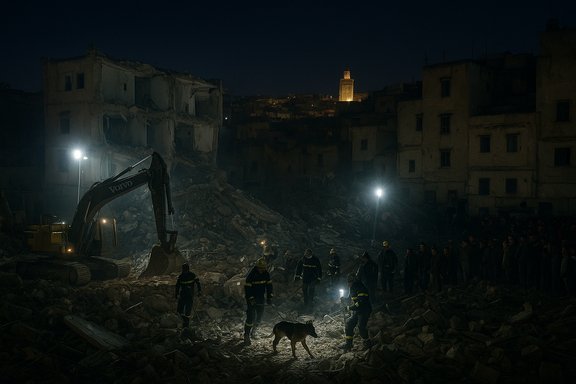
Fez is Morocco’s historic third‑largest city, famed for its medieval medina, dense neighborhoods and long‑standing pressure on housing stock as population growth and tourism intersect with aging infrastructure. The twin collapses in the Al‑Massira area occurred in the early hours of the morning and involved two adjoining structures that local authorities say were home to eight families. Emergency teams, including civil protection services and the Royal Armed Forces, mobilised heavy machinery and sniffer dogs as rescue work continued into the night. This tragedy comes amid a wider context of concern over building safety in Morocco, where rapid urban expansion, inconsistent enforcement of building codes, and the legacy of quake‑damaged or poorly maintained housing have periodically produced collapses and community outrage. Earlier this year a separate building collapse in Fez killed ten people, and local commentators have linked repeated incidents to inadequate inspections and illegal structural modifications.
Neighbourhood volunteers and rescuers were visible in early footage and reporting, highlighting both civic solidarity and the limits of formal emergency capacity in neighbourhoods that remain underserved. That communal response is a strength — but long‑term resilience will need institutional follow‑through.
Source: NationalWorld 19 people killed as two buildings collapse in popular destination
 Background
Fez is Morocco’s historic third‑largest city, famed for its medieval medina, dense neighborhoods and long‑standing pressure on housing stock as population growth and tourism intersect with aging infrastructure. The twin collapses in the Al‑Massira area occurred in the early hours of the morning and involved two adjoining structures that local authorities say were home to eight families. Emergency teams, including civil protection services and the Royal Armed Forces, mobilised heavy machinery and sniffer dogs as rescue work continued into the night. This tragedy comes amid a wider context of concern over building safety in Morocco, where rapid urban expansion, inconsistent enforcement of building codes, and the legacy of quake‑damaged or poorly maintained housing have periodically produced collapses and community outrage. Earlier this year a separate building collapse in Fez killed ten people, and local commentators have linked repeated incidents to inadequate inspections and illegal structural modifications. What happened: the immediate facts
- Time and place: Two adjacent four‑storey residential buildings collapsed in Fez’s Al‑Moustakbal neighbourhood (Al‑Massira district) in the early morning hours on December 10, 2025, according to state media and eyewitness reporting.
- Casualties: Moroccan state media and multiple international outlets report at least 19 people killed and 16 injured; one international wire reported a higher toll (22), highlighting an early discrepancy that is common in fast‑moving disasters. The injured were transferred to the University Hospital Centre in Fez. Rescue teams continued searching for survivors and unaccounted residents amid fears the death toll could rise.
- Buildings and occupancy: Local authorities said the pair of collapsing structures were four storeys high and housed a total of eight families. Reports and footage from the scene show emergency personnel carrying out body recovery and extraction efforts while neighbours and residents provided on‑site assistance.
- Investigation status: Officials opened inquiries to determine the cause; no definitive cause has been confirmed publicly, though journalists and local sources noted concerns about possible unauthorised additional floors and structural modifications in older buildings. Authorities evacuated nearby buildings as a precaution.
How reliable are the casualty figures?
Early reports from disasters often diverge as rescue teams balance extraction, identification and reporting under chaotic conditions. In this case:- Morocco’s official news agency (Maghreb Arabe Presse, as relayed by AFP and other wires) gave a provisional toll of 19 dead and 16 injured.
- The Associated Press initially published a higher figure (22 dead), which some outlets repeated before reconciling to the official state count. This illustrates how wire agencies and local sources can report different figures while authorities complete identifications.
Early signals on cause and structural history
Several early news reports made two recurring observations: that the buildings were older multi‑family structures in economically pressured parts of Fez, and that there were claims of unauthorised alterations or additional floors built beyond original permits. The AP specifically noted those buildings were originally permitted for fewer storeys and had been modified; that claim is being investigated. Independent outlets and local reporting point to deeper, structural issues that often underlie collapses in older urban neighbourhoods:- Weak enforcement of building codes in older sections of historic cities, particularly where informal construction or post‑permit additions occur.
- Decades of deferred maintenance combined with population pressure that increases occupancy and load on buildings.
- Historical damage from seismic events (regions of Morocco sustained strong earthquakes in recent years) which can leave a legacy of vulnerable structures if retrofitting is incomplete. This is relevant context but not definitive proof of causation for these collapses.
Human toll and immediate humanitarian response
Survivors described chaotic scenes as neighbours and first responders dug through rubble. Images from the scene show recovery teams working under floodlights and ambulances transporting the wounded. Hospitals in Fez reported receiving dozens of injured patients, some in critical condition. Authorities also secured and evacuated surrounding buildings to reduce the risk of additional collapses during rescue operations. The human impacts are layered:- Direct loss of life and injuries, often including children in multi‑family homes.
- Sudden displacement of neighbours and families, with immediate needs for shelter, food, medical care and psychosocial support.
- Local trauma in a community where prior collapses have already heightened anxiety about housing safety.
Broader infrastructure and governance implications
The Fez collapse cannot be divorced from systemic questions about urban planning, enforcement and maintenance across Morocco. Key structural issues that emerge from the coverage and past incidents include:- Building code enforcement: Multiple outlets and local commentators point to patchy enforcement, especially in older medina quarters where historic patrimony, dense parcels and informal construction complicate inspections.
- Illegal extensions and overloading: Journalists have repeatedly reported cases where ground‑up expansions or additional floors are added without proper reinforcement, which can overload load‑bearing elements not designed for extra stories. The AP’s note that buildings had been built with permission for only two floors but rose to four is consistent with this pattern in other Moroccan cities — but that specific claim remains under investigation.
- Resource allocation and political pressure: Public debate earlier in the year over investment priorities — stadiums and high‑profile projects versus basic services and housing upgrades — has intensified scrutiny of how municipal budgets address structural vulnerability and slum upgrading. Fez, like some other urban centres, faces competing demands in public works and preservation that complicate remedial action.
What forensic investigators will look for
When structural engineers and investigators begin formal enquiries, they will typically follow this sequence:- Scene stabilisation and evidence preservation: secure the perimeter, map debris and take photogrammetry for a permanent record.
- Material and component testing: sample concrete, mortar and steel reinforcement to determine whether materials met original design specifications or had degraded.
- Load path and structural analysis: reconstruct how loads were redistributed when elements failed — for example whether a column, wall or foundation gave way first.
- Permit and modification history: examine municipal files, contractor records and eyewitness testimony to identify unauthorised additions or alterations.
- Seismic/ground factors: assess whether ground subsidence, water infiltration or seismic shaking had a role.
- Human factors: inspect for signs of overloading (excess occupancy, heavy rooftop additions) or maintenance neglect (water penetration, corrosion).
Notable strengths of Morocco’s response — and gaps
Strengths:- Rapid mobilisation of civil protection units, local police and military support indicates a functioning emergency response capability in Fez, with access to heavy machinery and hospital transfer capacity.
- Media and social coverage have surfaced the scale of the disaster quickly, which can help expedite central government attention and resource allocation.
- Early, conflicting casualty reports highlight the challenge of crisis communications during fast‑moving events and the need for a centralised, verified reporting channel.
- Underlying regulatory weaknesses — if confirmed by investigators — will point to the need for systematic building assessments and targeted retrofitting programmes, which are costly and politically complex.
- Historic urban fabrics such as Fez’s medina present logistical and technical obstacles to large‑scale inspection or remediation, requiring specialist conservation skills and community engagement strategies.
Policy and practical recommendations (what should happen next)
Public policy choices after a catastrophic collapse must balance urgency with long‑term sustainability. The following are pragmatic priorities that would reduce future risk:- Immediate actions (0–30 days)
- Conduct an urgent audit of buildings in the same block and other high‑risk neighbourhoods, prioritising multi‑family structures with unauthorised modifications.
- Set up a single command for casualty identification and family reunification, with transparent daily updates to reduce misinformation.
- Provide temporary shelter, cash assistance and medical follow‑up for displaced families.
- Short to medium term (1–12 months)
- Launch a targeted structural safety programme for high‑risk zones combining technical inspections, emergency repairs and permits regularisation.
- Strengthen municipal building permit databases and digitise records to make historical design data accessible for forensic analysis and future planning.
- Create a subsidised retrofit fund for low‑income homeowners to encourage compliance without displacing residents.
- Long term (1–5 years)
- Invest in a national urban‑safety initiative combining seismic retrofitting, public education on maintenance and stricter enforcement of construction exceptions.
- Build local capacity for heritage‑sensitive engineering to maintain the medina’s fabric while making it safer.
- Tie major infrastructure spending to clear commitments on basic services and housing resilience to reduce political trade‑offs that leave vulnerable stock unattended.
Media reporting and the cautionary principle
Readers should treat early casualty and causation reports with caution. International wire services and state media may publish differing figures during rescue phases; the most responsible course is to rely on official consolidated statements for final casualty counts and to treat conjecture about causes as provisional until forensic teams publish results. In this case, the state agency reported 19 deaths while at least one wire initially cited 22 — both figures are circulating in the press pending official confirmation. Where outlets report unauthorised floor additions or permit irregularities, those are serious allegations that merit verification from municipal records. If confirmed, they point to policy and enforcement failures; if unproven, they risk misdirecting public anger away from legitimate systemic responsibilities.The human story: beyond numbers
Loss statistics, while essential, risk flattening the human dimension of this disaster. Families now face grief, medical crises and sudden homelessness. For a city like Fez — whose medina depends on dense communal life and multi‑generational housing — rebuilding will not be limited to bricks and mortar. It requires trauma services, transparent investigations that deliver accountability, and community participation in reconstruction plans.Neighbourhood volunteers and rescuers were visible in early footage and reporting, highlighting both civic solidarity and the limits of formal emergency capacity in neighbourhoods that remain underserved. That communal response is a strength — but long‑term resilience will need institutional follow‑through.
What to watch for next
- Official forensic report: the technical cause of the collapse and whether unauthorised modifications played a role.
- Final casualty and identification list from civil protection and hospital authorities.
- Government response package: whether Morocco’s central or municipal government announces an emergency rebuilding fund, retrofit programme or investigation commission.
- Local and national political reactions: whether the incident re‑energises demands for investment in housing and basic services rather than prestige projects.
- Legal outcomes: prosecutions or administrative penalties if negligence, illegal construction or corruption in permit processes are uncovered.
Conclusion
The collapse of two residential buildings in Fez is a human tragedy that exposes systemic vulnerabilities in urban housing — from ageing building stock and informal construction to the political choices that shape investment in basic services. At least 19 people have died and many more were wounded; rescue operations and investigations are ongoing. The event should prompt immediate humanitarian relief and a measured, evidence‑based investigation into causes, followed by sustained policy commitments to inspections, retrofits and enforcement that can prevent similar calamities. The path ahead must combine technical forensic clarity with social support for affected families and a genuine strategy for safer, more resilient cities.Source: NationalWorld 19 people killed as two buildings collapse in popular destination