

Microsoft now faces a landmark, potentially industry‑reshaping legal fight in the United Kingdom: a collective action accusing the company of using Windows Server licensing rules to penalize customers who run workloads on rival clouds — an approach that, claimants say, has the effect of steering businesses toward Azure and inflating competitors’ costs by hundreds of millions (and possibly billions) of pounds.
The claim was filed in the Competition Appeal Tribunal (CAT) by competition lawyer Dr Maria Luisa Stasi on behalf of thousands of UK organisations in what has been presented as an opt‑out collective action: eligible businesses are included automatically unless they expressly opt out. The filing alleges that Microsoft charged higher wholesale or migration prices for Windows Server when that software was run on third‑party cloud platforms such as Amazon Web Services (AWS), Google Cloud Platform (GCP) and Alibaba Cloud, compared with equivalent deployments on Microsoft’s own Azure.
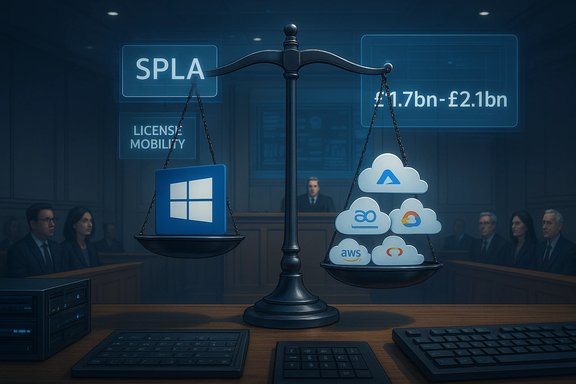
Initial press reporting quoted a damages figure at “over £1 billion” (≈$1.27 billion), while later claim documents and press follow‑ups expanded the aggregate damages estimate to a range between roughly £1.7 billion and £2.1 billion. Readers should note these are claimants’ quantifications — estimates driven by the claimant’s chosen methodology — and have not yet been tested or accepted by a court. A first procedural hearing to decide whether the action may proceed as a certified collective proceedings order (CPO) has been scheduled at the CAT; the tribunal has set key procedural deadlines and a CPO hearing date that will determine whether the case can be tried en masse. If a CPO is granted, the case could lead to multi‑year litigation or settlement negotiations.
Microsoft’s cloud licensing dispute has moved from policy debate into formal adjudication. The CAT’s certification decision and subsequent discovery will determine whether the action becomes a template for follow‑on private litigation in other jurisdictions or instead collapses under methodological or procedural hurdles. Either way, the proceedings will be watched closely by CIOs, cloud vendors and competition authorities around the world — because the case asks a simple but consequential question: how should market‑power incumbents price and structure licences when they also compete downstream as cloud providers?
Conclusion
The UK collective claim against Microsoft over Windows Server licensing is a test‑case at the intersection of enterprise IT procurement, cloud competition and competition law. It combines highly technical licensing mechanics with high‑stakes litigation economics and sits against a background of EU and UK regulatory scrutiny. The claimants have presented what they say is a multi‑billion‑pound quantification of harm; Microsoft has denied wrongdoing and will challenge the case on procedural and substantive grounds. The coming months — a CAT certification hearing, discovery, and parallel regulatory activity — will determine whether this fight becomes a defining moment for cloud licensing parity or a cautionary example of the difficulties in certifying large aggregate claims in complex tech markets.
Source: BetaNews Microsoft faces massive class action payouts in cloud computing pricing case
 Background
The claim was filed in the Competition Appeal Tribunal (CAT) by competition lawyer Dr Maria Luisa Stasi on behalf of thousands of UK organisations in what has been presented as an opt‑out collective action: eligible businesses are included automatically unless they expressly opt out. The filing alleges that Microsoft charged higher wholesale or migration prices for Windows Server when that software was run on third‑party cloud platforms such as Amazon Web Services (AWS), Google Cloud Platform (GCP) and Alibaba Cloud, compared with equivalent deployments on Microsoft’s own Azure.Initial press reporting quoted a damages figure at “over £1 billion” (≈$1.27 billion), while later claim documents and press follow‑ups expanded the aggregate damages estimate to a range between roughly £1.7 billion and £2.1 billion. Readers should note these are claimants’ quantifications — estimates driven by the claimant’s chosen methodology — and have not yet been tested or accepted by a court. A first procedural hearing to decide whether the action may proceed as a certified collective proceedings order (CPO) has been scheduled at the CAT; the tribunal has set key procedural deadlines and a CPO hearing date that will determine whether the case can be tried en masse. If a CPO is granted, the case could lead to multi‑year litigation or settlement negotiations.
Overview of the allegations
What claimants say Microsoft did
- The claimants allege two central practices that, together, produce a financial penalty for running Windows Server on non‑Azure clouds:
- SPLA pricing differentials (wholesale pricing abuse): Microsoft’s Service Provider License Agreements (SPLAs) for some provider classes are argued to impose higher wholesale prices on listed third‑party cloud hosters than the effective prices Microsoft charges its own Azure customers, which inflates rivals’ costs.
- Re‑licensing asymmetry (re‑licensing abuse): The claim asserts Microsoft allows on‑premises license holders to move workloads onto Azure without the fresh re‑licensing charges that would apply on a listed third‑party cloud — making Azure effectively cheaper for license mobility and disadvantaging competitors.
- The combined effect, claimants say, is to make alternative clouds materially more expensive for customers that rely on Windows Server‑based workloads — a pattern they label anticompetitive and seek to redress through damages and injunctive remedies.
Important legal mechanics: opt‑out and collective proceedings
- The claim has been advanced as an opt‑out collective action under the UK collective proceedings regime. This means eligible class members are included automatically unless they opt out before the tribunal’s opt‑out window closes; this structure substantially increases the number of represented organisations and concentrates procedural risk and potential damages in one certified vehicle.
- The CAT will first decide whether to grant a Collective Proceedings Order (CPO). The CPO certification requires the tribunal to be satisfied that there are common issues suitable for aggregate treatment, that the proposed class representative is suitable, and that a collective route is a proportionate and workable way of determining claims. If certified, the case proceeds to the merits and quantum stages (trial or settlement).
The regulatory context: why this is more than private litigation
This case sits amid a wider wave of scrutiny over cloud‑licensing practices in Europe and the UK.- The UK’s Competition and Markets Authority (CMA) has been probing the cloud market and specifically flagged licensing practices as a potential source of competitive harm. That regulatory context strengthens the political salience of any private litigation and means parallel regulatory remedies or findings could influence the civil case.
- Microsoft previously negotiated a settlement with CISPE (Cloud Infrastructure Services Providers in Europe) to resolve a complaint about licensing practices, agreeing to a memorandum of understanding and a product roadmap in mid‑2024 and paying a lump sum to CISPE as part of that agreement. That settlement did not include the largest hyperscalers (AWS and Google), and the dispute over whether the CISPE package was sufficient has continued in public debate. The CISPE deal and its monitoring mechanism are a visible regulatory backdrop to the UK claim.
- Separately, Google filed an EU antitrust complaint alleging Microsoft’s licensing terms lock customers into Azure; that complaint is part of the broader chorus of competitive concerns from rival cloud providers and trade groups. These parallel actions and complaints make this a cross‑jurisdictional flashpoint for cloud market regulation.
Who is behind the case?
Dr Maria Luisa Stasi is the proposed class representative. She is a competition lawyer and researcher associated with digital markets work and is described in claimant materials as head of law and policy for digital markets at a rights‑focused organisation; the legal team has instructed Scott+Scott UK LLP and has secured third‑party litigation funding for the project. The litigation funder and the claimant’s chosen counsel shape the commercial viability and strategy for a large‑scale collective action.Microsoft’s response and likely legal defences
- Public reporting shows Microsoft has denied the allegation that its licensing practices violate competition law, stressing that cloud markets are competitive and noting the company has engaged with trade bodies and regulators to address concerns (including the CISPE settlement). In press statements and filings, Microsoft is likely to attack the claimant’s proposed methods for quantifying aggregate loss and will contest whether the complaint fits the collective procedure. Expect Microsoft to argue that:
- The market is competitive and customers choose Azure on commercial merits.
- The claimant’s quantification model is inherently speculative or methodologically unsuitable for an aggregate award across heterogeneous businesses.
- Any price differences arise from legitimate commercial differentiation, not an abuse of dominance.
- Technical or contractual distinctions reflect product and support differences rather than anti‑competitive conduct.
- The claim also contains factual assertions that are, at this stage, allegations. For example, media reports of claimed performance differentials on non‑Azure platforms reflect allegations within the claim documents rather than independently validated technical audits; these should be treated as contested facts pending evidentiary proof. Caution is required when treating claim language as established fact.
The numbers: why the headline figure varies (and why it matters)
- Early coverage used a headline figure of “over £1 billion”, which matched initial aggregations highlighted by some outlets at filing. Other documents and later reporting set the claim’s quantified exposure between £1.7bn and £2.1bn — a higher estimate that reflects the claimant’s detailed quantification work and longer claim period in the filed materials. Those figures are claimant estimates produced to convince the tribunal of the seriousness and scope of the harm; they are not judicial findings.
- Why the variance matters:
- Damages magnitude affects litigation economics: funder interest, defendant settlement calculus, and counsel resourcing.
- A change from £1bn to ~£2bn signals a more aggressive quantification — which Microsoft will strongly contest at the certification and merits stages.
- The tribunal must be satisfied the proposed quantification is administerable across a large, varied class; showing a credible, workable method is often decisive in these certification phases.
Practical mechanics: how the licensing differences work (technical breakdown)
The claim rests on commercially technical licensing mechanics that matter to IT teams planning migrations.- SPLA (Service Provider License Agreement):
- SPLA is Microsoft’s licensing channel for hosters and some cloud providers. The claim says SPLA‑class agreements have had different price and migration structures than Microsoft’s direct Azure offers, creating a cost delta when workloads run on listed third‑party providers. This difference is the backbone of the “wholesale pricing” allegation.
- License mobility / re‑licensing:
- Some volume licensing programs allow license mobility or transfer in specific ways. The claim argues Microsoft structured those routes so that moving workloads to Azure triggered lower or no additional charges compared with moving to listed hosters, making Azure comparatively cheaper for license‑heavy customers. The legal argument treats that asymmetry as a structural advantage made possible by Microsoft’s vertical integration between software and cloud.
- These are contractual and commercial constructs rather than purely technical limitations: the central disputes will therefore hinge on contract texts, partner‑program rules and economic models, not only on server telemetry or benchmark runs.
Litigation strengths and strategic risks
Strengths for claimants
- Regulatory tailwinds: ongoing CMA and EU attention to cloud licensing strengthens the political and evidential context for alleging systemic harm.
- Large class and opt‑out structure: scale amplifies pressure on Microsoft to settle or to litigate robustly in the CAT.
- Readily identifiable common issues: pricing differentials and licensing rules are contractually based and thus lend themselves to common‑issue treatment if the tribunal accepts the claimant’s framing.
Weaknesses and legal risks for claimants
- Quantification and causation: aggregating damages across thousands of heterogeneous customers requires a robust, provable methodology. Microsoft is expected to attack the claimant’s models as speculative.
- Market definition and dominance proof: showing that Microsoft’s conduct was the but‑for cause of customers migrating or paying more — and that those effects amount to an “abuse” under competition law — is legally challenging.
- Certification hurdles: the CAT must be convinced an opt‑out collective action is the right procedural vehicle. The tribunal has in the past rejected opt‑out certification where common issues were insufficiently dominant.
Practical risk to Microsoft
- Reputational and commercial impact: prolonged litigation draws regulator and customer attention, which can accelerate alternative licensing and procurement strategies.
- Remedies and precedents: an adverse finding or heavy settlement could force wider contractual changes across Microsoft’s licensing programs, with knock‑on pricing and compliance costs.
What businesses and IT leaders should consider now
- Review your Windows Server licensing position: understand whether your licences were obtained via SPLA, volume licensing, or other channels; check any migration or re‑licensing costs you paid when moving to cloud hosts. Documentation will be critical if you are included in any classified claims.
- Track opt‑out deadlines carefully: if the tribunal certifies a CPO on an opt‑out basis, organisations that do not wish to be represented must register an opt‑out during the tribunal’s designated window. Missing that window may bind you to the class result.
- Reassess cloud strategy for negotiation leverage: whether through multi‑cloud strategies or vendor negotiations, organisations should quantify the incremental costs of hosting Windows Server on different clouds to inform procurement and migration decisions. The litigation underlines the importance of licensing‑aware cloud cost modelling.
Scenarios and likely timelines
- Certification (short to medium term): the CAT decides whether to issue a CPO. This step is pivotal — certification allows the case to proceed as a collective action. The tribunal has scheduled a procedural timetable and a CPO hearing date.
- Defence and quantification battles (months to years): if certified, extensive factual and economic evidence rounds will follow, with Microsoft likely to present detailed counter‑econometrics.
- Settlement or trial (1–3+ years): many large collective claims settle after discovery narrows the real exposure; however, a contested CAT trial on the merits and quantum could take multiple years and potentially result in appeals.
Critical analysis — what this case signals about cloud competition
- The suit crystallises the friction inherent in a market where product vendors also offer cloud infrastructure. Vertical ownership of both essential software (server OS) and cloud hosting creates structural incentives that can be commercially rational for the vendor but competitive‑risky for rivals and customers.
- The UK action follows and intersects with broader regulatory and industry activity (CISPE settlement, Google’s EU complaint, CMA work). That alignment increases the chance that litigation outcomes — or regulatory remedies — will push industry‑wide changes in licensing transparency and parity.
- The claim’s technical legalism — SPLA differentials and re‑licensing asymmetry — brings competition law into contact with the granular mechanics of enterprise licensing. Expect future disputes and regulatory work to focus on whether licensing differentials are justified by product feature differences, partner programs, or legitimate commercial segmentation — or whether they are, in legal terms, exclusionary.
Caveats and unverifiable claims
- Some press and claimant statements reference alleged technical behaviors — for example, assertions that Microsoft deliberately degraded performance on non‑Azure platforms. Those are severe allegations embedded in the claim but remain contested and are not independently verified in public reporting; treat such technical claims as allegations until tested in evidence.
- Aggregate damage figures are claimant calculations subject to challenge. The difference between headline figures (over £1bn) and later totals (up to c.£2.1bn) reflects different quantification methodologies and elapsed filing updates; none of these estimates is a judicially determined liability figure.
Bottom line: why Windows users and cloud buyers should care
- This litigation is about more than a single sum of money: it tests whether contract design in vertically integrated software/cloud ecosystems can create unlawful competitive effects. Its outcome could force major enterprise vendors to change licensing programs, improve parity across clouds, and make multi‑cloud migration more predictable and cost‑transparent for IT buyers.
- If you are a UK organisation that operated Windows Server on a third‑party cloud during the relevant period, preserve documentation and track opt‑out notifications. Whether you stand to recover compensation will depend on the tribunal’s certification decision and the later merits phase.
Microsoft’s cloud licensing dispute has moved from policy debate into formal adjudication. The CAT’s certification decision and subsequent discovery will determine whether the action becomes a template for follow‑on private litigation in other jurisdictions or instead collapses under methodological or procedural hurdles. Either way, the proceedings will be watched closely by CIOs, cloud vendors and competition authorities around the world — because the case asks a simple but consequential question: how should market‑power incumbents price and structure licences when they also compete downstream as cloud providers?
Conclusion
The UK collective claim against Microsoft over Windows Server licensing is a test‑case at the intersection of enterprise IT procurement, cloud competition and competition law. It combines highly technical licensing mechanics with high‑stakes litigation economics and sits against a background of EU and UK regulatory scrutiny. The claimants have presented what they say is a multi‑billion‑pound quantification of harm; Microsoft has denied wrongdoing and will challenge the case on procedural and substantive grounds. The coming months — a CAT certification hearing, discovery, and parallel regulatory activity — will determine whether this fight becomes a defining moment for cloud licensing parity or a cautionary example of the difficulties in certifying large aggregate claims in complex tech markets.
Source: BetaNews Microsoft faces massive class action payouts in cloud computing pricing case
