

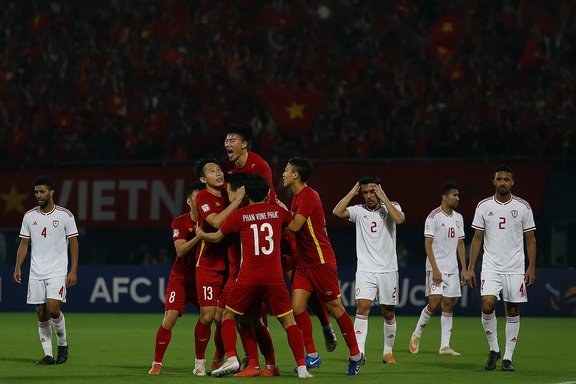
Vietnam produced a gritty, physically and emotionally draining performance to beat the United Arab Emirates 3-2 after extra time in the AFC U23 Championship quarter-final, booking a place in the semi-finals and extending a remarkable run of form for the South-East Asian side. The tie—decided by a late extra-time strike from Pham Minh Phuc—was a microcosm of modern U23 tournament football: tactical nuance, high tempo, VAR interventions and a momentum rollercoaster that kept both sets of supporters on edge until the final whistle.
For neutral football followers and talent scouts, the match offered a compact case study in how emerging football nations blend traditional strengths with modern conditioning and tactical discipline. Vietnam’s continued rise is not an accident; it is the result of sustained investment in coaching, endurance training and tactical maturity at youth levels. Yet the smallest margins—VAR calls, rebound finishes, and late substitutions—continue to decide destiny at knockout tournaments. The semi-finals will test whether Vietnam can translate this resilience into consistent championship-winning form, and whether other Asian powerhouses can match the discipline and hunger shown by this Vietnamese cohort.
Conclusion: Vietnam’s 3-2 extra-time win over the UAE was more than a single knockout victory; it was a statement of progress and intent at the U23 level. The performance combined tactical pragmatism, set-piece potency, and a winning mentality—qualities that will be necessary if they are to convert semi-final qualification into a genuine title challenge. Watch for lineup management, recovery reports, and the next tactical tweaks as Vietnam prepares for a semi-final date against Uzbekistan or China, with the region now watching closely to see whether this youthful side can complete the final steps to continental glory.
Source: MSN https://www.msn.com/en-ae/news/othe...ver-uae-in-afc-u23-quarter-final/ar-AA1Un41w]
 Background
Tournament stakes and setting
The 2026 AFC U23 Asian Cup in Saudi Arabia has been framed as a proving ground for the continent's next generation of internationals. A place in the semi-finals not only keeps a realistic path to the title alive but also typically carries Olympic qualifying implications at U23 level, depending on the tournament's structure and continental allocations. The Vietnam–UAE quarter-final was played in Jeddah at Prince Abdullah Al-Faisal Stadium, with both teams entering under contrasting narratives: Vietnam riding a long unbeaten run and confidence from regional triumphs, the UAE aiming to break through at a tournament stage that has historically been a barrier for them.Recent form and context
Vietnam's U23 team arrived in Jeddah in excellent shape, with momentum coming from success in regional competitions and qualifying rounds. That run, already the subject of domestic celebration, was extended by this victory—VnExpress reported that the win stretched Vietnam’s winning streak to an unprecedented 15 consecutive official matches for the age group. For the UAE, a talented but inconsistent side, the match represented a chance to clear a quarter-final hoodoo; the UAE have previously suffered multiple last-eight exits at recent U23 events. The contrast in narratives heighted the stakes: Vietnam the confident underdog with cohesion, UAE the talented opponent desperate for a breakthrough.How the match unfolded
First half: fast start, swift equaliser
Vietnam struck first through a composed finish after mounting pressure. Nguyen Le Phat’s goal—arriving late in the first half—gave Vietnam a deserved lead and illustrated their attacking balance between midfield runners and wide support. The lead, however, lasted barely minutes: the UAE responded quickly when Junior Ndiaye rose to head home from close range after a moment of confusion in the Vietnamese penalty area. The quick counterpunch underlined the match’s early theme—fluid transitions and clinical headers from set or cross situations. A notable early VAR intervention also affected the rhythm. An initial UAE effort that appeared to have found the net was overturned after a VAR review for handball, illustrating how off-the-ball decisions can influence momentum and add a layer of strategic caution to attacking play. Vietnam weathered the VAR storm well, showing composure when required.Second half: lead restored, equaliser again
Vietnam began the second half with energy and structure. Nguyen Dinh Bac (often written as Dinh Bac) again proved decisive—this time converting a clever header from a cross to restore Vietnam’s lead and reward the team’s sustained pressure. The goal showcased Vietnam’s aerial threat and the ability of their forwards to get in dangerous positions behind the defense. Yet the UAE were resilient. Six minutes after Dinh Bac's strike, Mansoor Al Menhali (reported alternately as Mansoor Saeed/Al Menhali in various match reports) leveled via another header. The recurring pattern of goals from crosses and set-piece situations became a clear tactical storyline: both teams were exploiting width and aerial routes into the box, while defensive lapses on both sides invited repeated danger.Extra time: the decisive moment
With the score locked at 2-2 after 90 minutes, extra time was settled early in the first period. Vietnam’s Pham Minh Phuc (referred to in some outlets simply as Minh Phuc) capitalized on a goalmouth scramble and a rebound to fire low and decisive into the net—his finish ultimately the match-winner. The moment was a product of sustained pressure and superior positioning inside the opponent’s box during the added period. Vietnam then shifted into a conservative management mode: substitutions to fortify the backline, time management, and tactical fouls to break play momentum—measures that helped them survive late UAE pushes and secure a 3-2 victory.Tactical analysis
Formations and structural themes
Both teams leaned on a compact midfield with emphasis on wing play and set-piece exploitation. Vietnam’s coach, Kim Sang-sik, is known for organizing teams with disciplined defensive transitions and rapid, vertical attacks. Against the UAE, Vietnam used:- A flexible 4-2-3-1 or 4-3-3 hybrid with compact midfield units to stifle central penetration.
- Full-backs providing width to create crossing opportunities for Dinh Bac and other forwards.
- Early pressing triggers to force inaccurate UAE build-up play and create turnovers high on the pitch.
Key players and match-winners
- Nguyen Dinh Bac: A constant attacking threat, his aerial movement and timing gave Vietnam two crucial goals. Dinh Bac’s ability to find small pockets of space in and around the six-yard area is an asset at this level.
- Pham Minh Phuc: The extra-time hero who converted from close distance after a scramble, evidencing good anticipation and composure in high-pressure situations.
- Junior Ndiaye (UAE): The French-born striker’s movement caused problems for Vietnam’s backline and his header was a key equaliser that kept UAE in the contest.
- Mansoor Al Menhali / Mansoor Saeed: Another aerial threat, whose equaliser demonstrated the UAE’s aerial plan and technical finishing at set moments.
Coaching chess match
Kim Sang-sik’s substitutions and mid-game adjustments were decisive. After regaining the lead in extra time, Vietnam withdrew attacking players in favour of defensive stability—an accepted trade-off at knockout stages. The UAE’s attempts to force set-pieces and long deliveries remained logical but predictable in the final quarter; Vietnam’s defensive reorganization effectively minimized clear-cut chances and shielded the goalkeeper in the closing minutes. The interplay of tactical conservatism and opportunistic attacking encapsulated a classic knockout match management approach.Strengths and weaknesses — a deeper look
What Vietnam did well
- Cohesion and endurance: The squad’s ability to maintain structure into extra time showed superior fitness planning and in-match discipline, crucial in back-to-back tournament schedules.
- Aerial presence: Despite being stereotyped as quick, ground-based Asian teams, Vietnam’s repeated use of headers and crosses paid off—illustrating tactical diversity.
- Composure under pressure: Surviving VAR decisions and quick UAE responses without collapsing showed psychological strength and clear in-game leadership.
Areas of concern for Vietnam
- Defensive lapses in transition: Both equalizers came from moments of indecision and aerial vulnerability; resolving these moments will be crucial against technically sharper semi-final opponents.
- Reliance on key individuals: Goals and decisive plays were concentrated among a few attackers; disruption to those players through injury or suspension could limit Vietnam’s options.
UAE positives and vulnerabilities
- Set-piece potency: UAE’s headed goals underline a clear strength in the box. Teams can exploit this by organizing zonal or man-marking plans specifically at dead-ball moments.
- Consistency under pressure: The UAE showed character in coming back twice, but they also left themselves open to counter attacks and lacked a clinical finisher to close matches when momentum shifted. This tournament pattern has been costly for them in prior editions.
Statistical and historical context
- Vietnam’s victory reportedly extended their U23 winning streak to 15 consecutive official matches, a record for the current generation and a significant statistical milestone for the national program. That streak has roots in regional success at the 2025 Southeast Asian U23 Championship and continued form through qualifying and regional multi-sport events.
- The win is also notable as Vietnam’s first-ever U23 victory over the UAE, after prior meetings did not result in success—marking not just a tournament progression but a small historical breakthrough in the head-to-head narrative.
- For the UAE, quarter-final exits have become a recurring theme at this level. Despite individual talent, their tournament history shows frustration at breaking past the last eight—an issue their federation and coaching staff will scrutinize.
What this win means for Vietnam
Short-term impact
- Vietnam’s semi-final berth is a tangible step toward continental recognition and a morale-boosting signal for the youth pipeline. Tournament success at U23 level often translates into accelerated senior-team integration and interest in players from regional and international clubs.
Long-term significance
- Sustained success at youth levels suggests structural improvements in talent identification, coaching, and conditioning. A 15-match winning streak—if maintained—could alter scouting patterns and highlight Vietnam as an emerging talent pool, with implications for player transfers and coaching exchange programs in Asia.
Risks and caveats
- VAR and officiating remain variables in tightly contested knockout matches; questionable interventions can swing momentum and outcomes. The overturned early UAE effort in this tie illustrates how a single review can change match dynamics and require mental resilience from both teams. Readers should be cautious interpreting single-match statistics as predictors for future knockout outcomes, given the sport’s small-sample variance at tournament stages.
- Injury fatigue is a real risk for teams progressing deep into tournaments. Extra-time wins increase recovery demands; medical and rotation strategies will be decisive as Vietnam prepares for the semi-final. Any emerging injury reports should be monitored ahead of the next fixture.
- Some match reports contain minor name and moment variations (rotating transliterations for Arab or Vietnamese names, and slight differences in minute marks across outlets). Where possible, match details were cross-checked against the AFC’s official match summary and leading regional outlets, but readers should allow for small discrepancies in early reporting windows. When a claim could not be conclusively verified from multiple outlets, it is marked as provisional in this analysis.
Three things to watch next
- Tactical evolution: Will Vietnam stick with their hybrid 4-2-3-1/4-3-3 structure or shift to more conservative modes against technically superior semi-final opponents? The team’s defensive transitions will be under particular scrutiny.
- Fitness and rotation: Extra-time fixtures tax squads. Watch for starting XI changes and the management of minutes for key forwards like Dinh Bac and Pham Minh Phuc.
- UAE recalibration: Expect tactical adjustments from the UAE in future campaigns—particularly set-piece marking and alternative attacking routes to avoid predictability from crosses and headers.
Final verdict and broader takeaways
This quarter-final exemplified the intensity and unpredictability of modern youth international football. Vietnam’s victory—earned through a mix of tactical acuity, aerial finishing, and mental resilience—raises the team’s profile across Asia and cements momentum for the senior pipeline. The UAE leaves with mixed lessons: clear attacking weapons yet defensible structural issues in transitions and decisive moments.For neutral football followers and talent scouts, the match offered a compact case study in how emerging football nations blend traditional strengths with modern conditioning and tactical discipline. Vietnam’s continued rise is not an accident; it is the result of sustained investment in coaching, endurance training and tactical maturity at youth levels. Yet the smallest margins—VAR calls, rebound finishes, and late substitutions—continue to decide destiny at knockout tournaments. The semi-finals will test whether Vietnam can translate this resilience into consistent championship-winning form, and whether other Asian powerhouses can match the discipline and hunger shown by this Vietnamese cohort.
Conclusion: Vietnam’s 3-2 extra-time win over the UAE was more than a single knockout victory; it was a statement of progress and intent at the U23 level. The performance combined tactical pragmatism, set-piece potency, and a winning mentality—qualities that will be necessary if they are to convert semi-final qualification into a genuine title challenge. Watch for lineup management, recovery reports, and the next tactical tweaks as Vietnam prepares for a semi-final date against Uzbekistan or China, with the region now watching closely to see whether this youthful side can complete the final steps to continental glory.
Source: MSN https://www.msn.com/en-ae/news/othe...ver-uae-in-afc-u23-quarter-final/ar-AA1Un41w]