

Season 01 Reloaded’s win‑streak camos have suddenly become one of Warzone’s most talked‑about cosmetics — not because they’re flashy, but because Raven Software’s own leaderboard snapshot shows one of them has been claimed by just 17 players so far, and that number has exposed a tangle of design, trust, and enforcement questions that deserve a measured look.
Since the Season 01 Reloaded update, Warzone added four Win Streak Camos as exclusive unlocks tied to consecutive wins in the live battle modes. The four rewards and their requirements are:
Practical next steps for Raven should be clear, rapid communication about telemetry integrity, targeted enforcement against boosting, at rules to close obvious loopholes. For players, the responsible route is to value proven achievements and avoid the marketplace of shortcuts — or accept that purchases and pilots will increasingly cloud the meaning of “earned” cosmetic prestige.
Warzone’s win‑streak camo experiment is an instructive case: rare cosmetics can drive engagement, but they must be paired with transparent enforcement and game design that anticipates market incentives. Without that, a tiny number of owners looks less like an elite achievement and more like a fracture in community trust. The only clean way to keep both the prestige and the players’ confidence is sustained, visible action — not just hard locks on the unlocks, but credible, ongoing proof that the system rewards play, not purchase.
Source: Windows Central Only 17 people have completed Call of Duty: Warzone's hardest challenge
 Background
Since the Season 01 Reloaded update, Warzone added four Win Streak Camos as exclusive unlocks tied to consecutive wins in the live battle modes. The four rewards and their requirements are:- Battle Royale — Neon Pulse: 10 consecutive wins.
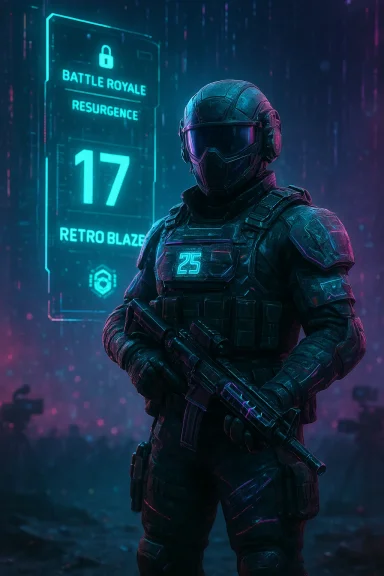
- Battle Royale — Retro Blaze (animated): 25 consecutive wins.
- Resurgence — Shock Rift: 30 consecutive wins.
- Resurgence — Inferno Loop (animated): 50 consecutive wins.
Why the numbers matter
On the surface, a prestige cosmetic that only 17 players own is a success by the studio’s own stated intent: make something exclusive, difficult, and therefore notable. But in practice, that level of exclusivity does three things at once:- It creates a high‑value status symbol that players covet and argue over.
- It encourages third‑party markets and services that profit from delivering exclusives quickly.
- It amplifies skepticism when community members suspect unfair play.
The rarity premium and signaling value
Humans assign social value to scarcity. An animated, exclusive camo that only a few players have becomes a visible achievement in lobbies and streams. For completionists and high‑visibility streamers, that’s a powerful carrot: show it once on your profile or in a highlyight and you’re automatically “someone who did that.” Game designers use scarcity for that exact reason — it creates a runway for aspirational goals and long‑term engagement. The official patch notes and community guides confirm the streak thresholds and the intent behind them.The market problem: boosting and account piloting
Where developers create extreme grind or niche exclusives, commercial boosting services appear quickly. Within days of the win‑streak camos going live, boost listings offering to run consecutive wins for clients were visible for sale. These services range from “guided coaching” to full account piloting (where the service logs into your account and completes the streak on your behalf). That creates a gray market that damages the social value of “only‑X players earned this” because ownership no longer necessarily correlates with skill or time invested — it can correlate with how much someone paid.Trust and the shadow of cheating
The smallest groups are easiest to scrutinize. A camo owned by 17 players invites questions: were those players exceptionally coordinate some use illicit software, lax anti‑cheat workarounds, or third‑party assistance? The community’s initial reaction — a mix of admiration, skepticism, and outright suspicion — is predictable given Warzone’s long history with cheating accusations. A number this low raises suspicion even when it isn’t warranted, because people naturally assume something extraordinary must have an extraordinary explanation. The reality is more nuanced, and the numbers alone don’t prove wrongdoing.Verifying the facts
Before reading too much into raw counts, it’s important to verify the core technical facts and the public record.- The camo unlock thresholds and the rule that casual modes do not count are confirmed in the Season 01 Reloaded patch notes on the official Call of Duty site. Those patch notes are the primary on‑record source for the mechanics of Win Streak Camos.
- Multiple reputable outlets summarized the same unlock thresholds and confirmed the camos’ names and mode partitions (Battle Royale vs Resurgence). Independent news and guide sites such as Dexerto, Gfinity, and esports.gg published guides with identical thresholds that confirms developer intent and public understanding of the rewards.
- Raven Software’s developer post (the social feed snapshot reported by Windows Central and reposted within the community) published counts for how many accounts had earned each camo at the snapshot time; the post is the direct source of the “17 players” figure for the Retro Blaze (25‑win BR) camo. That same post named higher totals for the Resurgence streaks, illustrating a clear split between mode difficulty/timing and how many players could complete them.
How plausible is a 25‑game Battle Royale streak?
A quick look at the numbers and game structure explains why that threshold is unusually brutal.- Battle Royale matches are long (often 20–40 minutes) and require 50+ unique interactions per match. One loss resets the streak.
- Resurgence’s shorter matches, regular respawns, and smaller match times make long straight‑win runs more tractable at scale; the higher Resurgence counts reflect that.
- To string 25 Battle Royale wins in a row, a squad would need exceptional skill, perfect matchmaking luck, persistent uptime, and reliable teammates — or they need to exploit predictable, repeatable conditions like private lobbies (if allowed) or boosting assistance. Gaining 25 consecutive public BR wins under live matchmaking is extremely difficult by design. Guides and early runs show how the shorter Resurgence streaks were more commonly achieved simply because the rounds reset faster and the environment is less swingy.
The anti‑cheat context: improvements, limits, and optics
Activision and Raven have been public about the varied anti‑cheat measures across Call of Duty and Warzone, including kernel‑level and driver‑level enforcement in earlier eras and the Ricochet system for console and PC. The Windows Central coverage and player reports suggest Ricochet shows improvement since Black Ops 7 launched, and Raven has rolled out platform changes like TPM 2.0 and Secure Boot requirements on PC which appear tied to more consistent detection and enforcement in some hands. Those platform‑level requirements can raise the bar for certain cheat vendors and make hardware‑based evasion more difficult. But there are real limits:- No anti‑cheat system is perfect. Detection catch rates vary by exploit type and vendor sophistication.
- The smaller the cheating community becomes, the harder it is to detect the remaining, highly targeted evasion techniques.
- False negatives, delayed detection, and the long tail of boosted accounts mean legitimacy will always be contested by parts of the community. Evidence gathered from streams and clipped matches has shown both legitimate masterful play and clear cheating in different hands; the present signal is mixed.
Design tradeoffs Raven faces
Raven’s choice to make these camos ultra‑rare is defensible from an engagement design standpoint, but it also amplifies negative externalities. The studio must balance three competing priorities:- Create aspirational goals that reward time and skill.
- Preserve fairness and competitive integrity.
- Avoid creating perverse incentives for boosting and account piloting.
Practical risks and how Raven (and players) could respond
Risks
- Boosting/Account Piloting: Paid services already advertise win‑streak runs; this undermines the “earned” signal.
- False accusations: Players may accuse owners of cheating without evidence, further corroding community trust.
- Telemetric errors: If server tracking misrecords wins, the optics of “only X people” become worse.
- Perception vs reality mismatch: The studio must manage how rare exclusives are framed to avoid inflaming suspicion.
Mitigations Raven could adopt
- Publish periodic, anonymized telemetry breakdowns (e.g., platform distribution, mode breakdown, and broad geographic distribution) to show that unlocks are spread across legitimate regions and platforms without identifying individual players. That would not be perfect, but it would blunt simple “must be cheating” claims.
- Add anti‑boosting technical checks: detecting improbable session patterns, identical IP/geo jumps across wins, or suspicious input timing signatures could help flag piloted runs.
- Limit or disallow certain session types (for example, disallow private matches from counting toward streaks if they become a vector for guaranteed wins). The studio already excludes Casual modes — targeted playlist restrictions are a logical next step if loopholes emerge.
- Communicate enforcement actions publicly when they happen (e.g., “X accounts sanctioned for boosting in last 72 hours”) to rebuild trust incrementally.
Mitigations players can adopt
- Report suspicious behavior with supporting clips and data; the fresh telemetry helps enforcement teams.
- Avoid third‑party boosting services; using them risks account bans and erodes the social value of exclusives.
- Use private lobbies and custom play responsibly and within the rules; if the studio adjusts what counts, having a record of legitimate play helps appeals.
A closer look at the ethics of exclusivity
Designing for spectacle around rare cosmetics has always been a tension between reward and inequality. Players who can commit huge time investments — or who have channels of influence like pro teams and streamers — will always be advantaged. A few best practices reduce negative side effects:- Pair rare cosmetics with paths that require diverse contributions (community events, time‑banked achievements, or seasonal metrics) so a single “extreme skill” gate does not entirely determine prestige.
- Time‑box ultrarare rewards so they can’t be sold as perpetual trophies on the boost market; limited‑time items reduce the long‑term ROI for boosters.
- Offer alternate, less‑exclusive variants so the game recognizes excellence at multiple levels rather than in a strict top‑X bracket.
Conclusion: signaling, enforcement, and the path forward
Raven Software succeeded in creating an object that signals extraordinary performance — but the studio also created a problem that demands active management. The Retro Blaze camo becoming a 17‑person club is simultaneously a triumph of design clarity (it’s impressively hard) and a social stress test (rare = valuable = contested). The data Raven published is a snapshot and should be treated as such, but it has already done what exclusive cosmetics are meant to do: it provoked conversation, content, and controversy.Practical next steps for Raven should be clear, rapid communication about telemetry integrity, targeted enforcement against boosting, at rules to close obvious loopholes. For players, the responsible route is to value proven achievements and avoid the marketplace of shortcuts — or accept that purchases and pilots will increasingly cloud the meaning of “earned” cosmetic prestige.
Warzone’s win‑streak camo experiment is an instructive case: rare cosmetics can drive engagement, but they must be paired with transparent enforcement and game design that anticipates market incentives. Without that, a tiny number of owners looks less like an elite achievement and more like a fracture in community trust. The only clean way to keep both the prestige and the players’ confidence is sustained, visible action — not just hard locks on the unlocks, but credible, ongoing proof that the system rewards play, not purchase.
Quick reference: what to remember
- Win‑Streak Camos and thresholds: 10 BR / 25 BR / 30 Resurgence / 50 Resurgence.
- Casual playlists do not count; Battle Royale and Resurgence track separately.
- Raven’s public snapshot reported 17 players had earned the 25‑win BR camo at the time of the post. Treat that as a snapshot, not an immutable final total.
- Boosting services were already advertising streak runs; these services complicate the social value of exclusives and risk account sanctions.
Source: Windows Central Only 17 people have completed Call of Duty: Warzone's hardest challenge