

Microsoft’s latest push to embed “agentic” AI into the flow of work reframes Copilot from a conversational helper into an operating layer that can plan, act, and be governed at enterprise scale—and with Wave 3, the company is pairing that capability with a new management plane and a premium suite to sell it to CIOs.
Wave 3 of Microsoft 365 Copilot ushers in a deliberate evolution: not just smarter suggestions, but agents that execute. At the center of the announcement are three tightly coupled moves: the introduction of Copilot Cowork, a managed integration of Anthropic’s agent technology into Microsoft 365; the general availability of Agent 365, a control plane for discovering, governing, and securing AI agents across an organization; and the launch of Microsoft 365 E7: The Frontier Suite, a premium bundle that packages Copilot, Agent 365, and advanced security tooling into a single, enterprise-priced offering.
Taken together, these elements reflect a distinct bet: the near-future of productivity is not documents plus AI prompts, but continuous, multi-step AI-driven workflows that live inside apps, chat, and a new layer of operational governance. Microsoft’s public roadmap sets concrete availability dates—Agent 365 and Microsoft 365 E7 are slated for general availability on May 1, 2026—and attaches list prices to those products. Wave 3 is already rolling into Word and Excel, with PowerPoint and Outlook following, and Copilot Cowork is being trialed with select customers as a research preview.
Key aspects and implications:
Competitors are responding in different ways: cloud and model providers are racing to package agent orchestration and governance, while enterprise software vendors weigh embedding agent experiences versus exposing APIs to agent platforms. The net effect: the next 12–24 months will be an arms race over agent reliability, auditability, and cost control, and the winner will be whoever balances useful automation with enterprise trust.
But the product roadmap creates a new frontier of operational responsibility. Organizations that adopt blindly risk exposure: data leaks, compliance failures, unexpected costs, and brittle automation that produces more work than it saves. Success will depend on disciplined pilots, a security-first governance posture, and careful cost modeling.
For IT leaders, the opportunity is substantial: agents that are discoverable, manageable, and auditable can transform repetitive knowledge work, accelerate decision cycles, and embed organizational context into every interaction. The path forward is to balance ambition with control: pilot aggressively, govern rigorously, and buy the right toolkit for the scale you plan to achieve.
Source: Microsoft Powering Frontier Transformation with Copilot and agents | Microsoft 365 Blog
 Background / Overview
Wave 3 of Microsoft 365 Copilot ushers in a deliberate evolution: not just smarter suggestions, but agents that execute. At the center of the announcement are three tightly coupled moves: the introduction of Copilot Cowork, a managed integration of Anthropic’s agent technology into Microsoft 365; the general availability of Agent 365, a control plane for discovering, governing, and securing AI agents across an organization; and the launch of Microsoft 365 E7: The Frontier Suite, a premium bundle that packages Copilot, Agent 365, and advanced security tooling into a single, enterprise-priced offering.Taken together, these elements reflect a distinct bet: the near-future of productivity is not documents plus AI prompts, but continuous, multi-step AI-driven workflows that live inside apps, chat, and a new layer of operational governance. Microsoft’s public roadmap sets concrete availability dates—Agent 365 and Microsoft 365 E7 are slated for general availability on May 1, 2026—and attaches list prices to those products. Wave 3 is already rolling into Word and Excel, with PowerPoint and Outlook following, and Copilot Cowork is being trialed with select customers as a research preview.
What Wave 3 actually delivers
From one-shot prompts to long‑running work
Traditional "assistant" models treat artifact creation—draft an email, produce a slide deck—as a single exchange. Wave 3 reframes those tasks as processes that unfold over time. Copilot Cowork and the new in‑app Agent Mode enable Copilot to:- Decompose a complex request into sequenced steps.
- Run multi‑step tasks across apps (Word, Excel, PowerPoint, Outlook) and services.
- Maintain visible progress, let humans steer or pause activity, and produce artifacts directly inside the native app environment.
- Preserve application semantics—formulas in Excel, layouts in PowerPoint, tracked changes and versions in Word—so outputs aren’t opaque blobs dropped outside the content ecosystem.
Chat as the entry point and the agent canvas
Wave 3 emphasizes Copilot Chat as more than conversation: it’s the launchpad for agentic workflows. From a single chat prompt you can spawn Word documents, Excel models, or trigger actions like scheduling meetings or drafting and sending emails. Microsoft frames chat-first experiences as the most natural way many workers start tasks—what begins as a question or an idea can be immediately converted into hands‑off work, with agents acting on behalf of users while remaining transparent and observable.App-native agents and connective standards
Microsoft is enabling app-native agents (Word, Excel, PowerPoint, Outlook) that operate within the app's native constructs, and it’s pursuing model‑interoperable experiences through open standards like the Model Context Protocol (MCP) and apps SDK. That promises the scenario where third‑party tools—CRM systems, design tools, or bespoke Power Apps—can present live, interactive agents inside Copilot Chat, reducing context switching.Copilot Cowork: Anthropic inside Microsoft, and what that means
Copilot Cowork is a managed integration that brings the agentic experience pioneered by Anthropic’s Claude Cowork into Microsoft 365 Copilot. Rather than building a Copilot anchored to a single model vendor, Microsoft’s approach is explicitly model diverse: Anthropic models and OpenAI models can both be used by Copilot based on task requirements—Microsoft’s “multimodel advantage.”Key aspects and implications:
- Copilot can pick the model best suited to a job without forcing end users to choose vendors.
- Cowork enables long‑running, multi‑step work that “unfolds over time” (for example: aggregate data, create slides, email stakeholders, and schedule prep time).
- The feature is being trialed as a research preview via Microsoft’s Frontier program; the timing and scope of broader availability will influence enterprise adoption.
Model diversity and the move away from single-vendor lock-in
One of Microsoft’s central claims is that Copilot is model‑diverse by design. That means:- Claude (Anthropic) and OpenAI models are available inside Copilot Chat.
- Copilot applies the “right” model to the right task without surfacing model selection to most users.
- Organizations can benefit from competition and innovation across model providers while retaining a single managed Copilot experience.
Agent 365: the control plane for hundreds of millions of agents
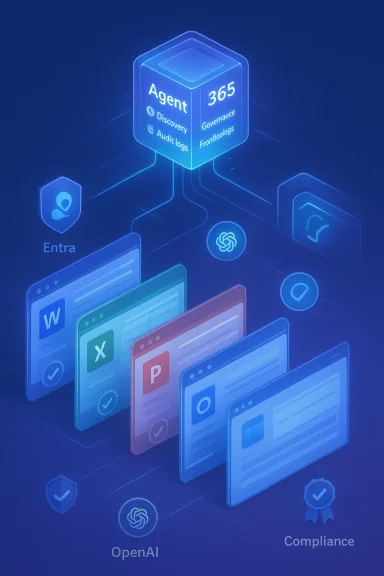
Agent proliferation is the central operational problem Microsoft aims to solve with Agent 365. As agents move from pilot to production, IT and security teams need a management plane that treats agents as first‑class identities and resources. Agent 365 promises:- Discovery and inventory of agents across the tenant (Agent Registry).
- Lifecycle management, role/permission controls, and enrolment of agents into existing identity frameworks (Entra).
- Security interoperability with Defender, Purview, and Microsoft’s other security controls—enabling logging, threat protection, and policy enforcement for agents.
- Observability dashboards and audit trail functionality so agent actions are traceable.
Microsoft 365 E7: packaging intelligence + trust
Microsoft 365 E7: The Frontier Suite bundles Copilot, Agent 365, and advanced security capabilities into a packaged SKU. Key takeaways:- Retail list price: $99 per user per month (general availability tied to May 1, 2026).
- E7 bundles Microsoft 365 E5, Microsoft 365 Copilot, Agent 365, Microsoft Entra Suite, and enhanced Defender/Intune/Purview capabilities.
- Microsoft pitches E7 as cost‑effective relative to buying the components à la carte and as a one-stop foundation for "Frontier Transformation."
Strengths — why this could work
- End‑to‑end integration. Embedding agentic execution inside Word, Excel, PowerPoint, and Outlook reduces context switching and ensures artifacts are created with native app fidelity (formulas, styles, versioning).
- Familiar operational model. Extending existing identity (Entra), security (Defender), and compliance (Purview) stacks to agents lowers the barrier for IT adoption—teams don’t need to reinvent governance for autonomous software actors.
- Model flexibility. Bringing Anthropic and OpenAI models under one Copilot experience reduces vendor risk and lets Microsoft take advantage of breakthroughs from multiple model providers.
- Commercial clarity. A single E7 SKU provides a purchasing path for enterprises wanting to enable Copilot + agent governance across users, simplifying licensing questions.
- Traceability and control. If Agent 365 delivers comprehensive logging, observability, and lifecycle controls, it will materially address a core enterprise concern: “Who — or what — did what, when, and why?”
Risks and open questions
While the product framing is strong, real‑world adoption will surface technical, operational, legal, and cultural risks.Security, governance, and data leakage
Agents often require access to data and systems to be useful. That raises immediate risks:- Misconfigured agents could access sensitive data beyond their purpose.
- Long‑running agents with elevated privileges create persistent attack surfaces.
- Local agent execution (as with Anthropic’s Cowork) complicates enterprise data flow models and DLP controls.
Compliance and auditability
Regulated industries will demand rigorous chains of custody for automated actions. Questions include:- Can an organization reliably prove that an agent followed a defined policy when making a decision?
- Do audit logs capture the underlying model version and prompt context that produced an outcome?
- How do sensitivity labels and tenant controls behave when agents interact with third‑party models or cloud endpoints?
Cost and licensing dynamics
E7’s $99 per user per month price and the $15/per‑user Agent 365 SKU present budgetary realities:- Large rollouts, especially for global enterprises, will be expensive. CIOs must calculate per‑user ROI carefully.
- Consumption patterns matter: long‑running multi‑step agent executions could carry substantial compute and metering costs beyond per‑user licenses.
- Organizations that want only governance for a small subset of agents might find the packaging overspecified or costly.
Operational complexity and agent sprawl
Microsoft cites huge numbers of agents appearing in previews and internal usage telemetry. That’s both an opportunity and a headache:- Tens of millions of agents in registries mean discovery and lifecycle management will be critical.
- Unchecked, sprawl can lead to shadow agents created outside IT processes, amplifying risk.
- Agent 365 must make it straightforward and low-friction for legitimate teams to create and manage agents without driving them to build “shadow” alternatives.
Model behavior, hallucinations, and reliability
Agentic systems compound the known weaknesses of LLMs:- A hallucination in a multi‑step, auto‑executing agent can propagate incorrect actions (e.g., sending an email with wrong financial figures).
- Autonomous agents may prioritize completing tasks rather than verifying results unless explicit guardrails are built.
- Enterprises need stronger verification steps, human‑in‑the‑loop checkpoints, and post‑action audits.
Practical guidance for IT and security leaders: a checklist to adopt responsibly
If your organization is considering Wave 3, Copilot Cowork, Agent 365, or E7, treat the rollout as an operational program—not a feature flip.- Define high-value use cases first
- Start with low-risk, high‑value tasks (meeting prep, document summarization, prioritized inbox triage).
- Avoid onboarding agents with access to regulated data until you validate controls.
- Pilot small, measure often
- Run a pilot with a bounded user group and explicit success metrics (time saved, error rate, user satisfaction).
- Track both agent outputs and downstream operational impacts (support tickets, remediation work).
- Strengthen identity and least privilege
- Enforce Entra Agent IDs and treat agents as identities with the same lifecycle policies as users.
- Use conditional access and time-bound credentials wherever possible.
- Harden data access and labeling
- Ensure sensitivity labels and tenant-level policies are applied and tested against agent workflows.
- Implement DLP enforcement for agent endpoints and for content generated by agents.
- Define verification and human oversight steps
- Require human verification on decisions that are high-impact or irreversible.
- Implement canned or enforced review checkpoints inside agent workflows.
- Monitor, log, and retain evidence
- Enable detailed logging of agent prompts, model versions, decisions, and actions.
- Store audit trails in a tamper-evident, searchable system for compliance.
- Cost monitoring
- Track agent compute consumption and model call volumes; build cost alerts into the billing process.
- Understand which workloads fit a per‑user license vs. a consumption pricing model.
- Educate and govern creators
- Create "guard rails" for citizen developer teams building agents via Copilot Studio or Power Platform.
- Define an approval and review process for published agents.
- Test model provenance and portability
- Validate how Copilot selects models and how model lineage is represented in logs.
- Ensure there are clear paths to switch model vendors without losing operational continuity.
Market context and competitive dynamics
Microsoft’s decision to integrate Anthropic technology while maintaining OpenAI model availability is strategic: enterprises want both capability and commercial reliability. Anthropic’s Cowork validated a compelling UX for agentic work; Microsoft commercializes that approach inside its productivity fabric and couples it with a governance narrative—Agent 365—that many enterprises demanded before deploying agents at scale.Competitors are responding in different ways: cloud and model providers are racing to package agent orchestration and governance, while enterprise software vendors weigh embedding agent experiences versus exposing APIs to agent platforms. The net effect: the next 12–24 months will be an arms race over agent reliability, auditability, and cost control, and the winner will be whoever balances useful automation with enterprise trust.
Legal, privacy, and regulatory considerations
- Data residency: Ensure agents and multi‑model calls respect regional data residency and export restrictions. Ask vendors how tenant data is grounded, cached, or shared with model providers.
- Accountability: Establish who is legally responsible when an agent acts (the organization, the developer, or the vendor). Contracts and SLAs must reflect agent behavior.
- Model audits: Demand transparency on model updates; changes in model behavior can alter risk profiles for regulated workloads.
- Privacy: Agents that access employee or customer data may implicate privacy laws. Ensure lawful bases and consent models are clear.
Final assessment: a practical, cautious endorsement
Microsoft’s Wave 3 is more than product iteration; it’s a platform play that stitches agents, models, identity, and governance together in a way that enterprises can actually buy and manage. That combination—intelligence + trust—is exactly what many CIOs asked for when pilots pushed beyond a few teams.But the product roadmap creates a new frontier of operational responsibility. Organizations that adopt blindly risk exposure: data leaks, compliance failures, unexpected costs, and brittle automation that produces more work than it saves. Success will depend on disciplined pilots, a security-first governance posture, and careful cost modeling.
For IT leaders, the opportunity is substantial: agents that are discoverable, manageable, and auditable can transform repetitive knowledge work, accelerate decision cycles, and embed organizational context into every interaction. The path forward is to balance ambition with control: pilot aggressively, govern rigorously, and buy the right toolkit for the scale you plan to achieve.
Action plan for the next 90 days
- Inventory current AI pilots and map which teams will benefit most from agentic workflows.
- Run a focused PoC with Copilot in Word or Excel to test agentic edits and formula generation; validate document fidelity and version control.
- Design an Agent 365 pilot around a narrowly scoped domain (e.g., HR onboarding or sales pipeline triage) and validate Entra Agent ID onboarding, least privilege, and logging.
- Build a cost model incorporating per‑user license fees and projected consumption for long‑running agent tasks.
- Convene a cross‑functional steering group (IT, security, legal, compliance, and a business sponsor) to set success criteria and approval gates.
Source: Microsoft Powering Frontier Transformation with Copilot and agents | Microsoft 365 Blog