

Windows 10’s rapid adoption did not translate into an immediate rebound in hardware demand: industry trackers reported continued year‑over‑year declines in third‑quarter PC shipments even as Microsoft’s new OS crossed the 100‑million‑device mark, illustrating a more complex, inventory‑and‑timing–driven market than headlines suggesting a simple “Windows 10 fixes PC sales” narrative.
The third quarter brought a paradox for the PC industry. On one hand, Microsoft’s Windows 10 showed one of the fastest consumer adoption curves in the company’s history, reaching a six‑figure milestone measured in the hundreds of millions of devices within a few months of launch. On the other hand, independent market trackers reported that global PC shipments continued to fall, with the magnitude of decline differing by methodology: one widely cited estimate showed a mid‑single‑digit decline, while another placed the drop closer to double digits.
This divergence captured an important truth: software momentum and hardware demand are related but not synonymous. A successful OS upgrade can delay new purchases — if consumers can extend the life of an existing PC by upgrading the OS for free, they often will — and product refresh cycles, component timing, and macroeconomic factors can mute the effect of any software‑driven stimulus.
Looking forward, the market’s recovery depends on several linked variables: OEMs’ ability to launch attractive new hardware at the right time, enterprise migration schedules, seasonal retail demand, and macroeconomic stability. If manufacturers time Skylake‑based launches and Windows 10 promotional efforts correctly, the fourth quarter and subsequent quarters can show meaningful sequential gains. However, the industry must navigate a narrow path: converting software adoption into device replacement without eroding margins in costly price wars.
The headline from the quarter is simple: installation numbers for an OS do not automatically translate to immediate hardware sales. The real work for OEMs and channel partners is turning platform momentum into differentiated, timely product offers that give consumers and IT buyers a compelling reason to replace rather than upgrade. Only then will shipment figures reflect the promise that Windows 10’s momentum suggests.
Source: Mashdigi Growth in Windows 10 updates hasn't boosted PC shipments yet
 Background
The third quarter brought a paradox for the PC industry. On one hand, Microsoft’s Windows 10 showed one of the fastest consumer adoption curves in the company’s history, reaching a six‑figure milestone measured in the hundreds of millions of devices within a few months of launch. On the other hand, independent market trackers reported that global PC shipments continued to fall, with the magnitude of decline differing by methodology: one widely cited estimate showed a mid‑single‑digit decline, while another placed the drop closer to double digits.This divergence captured an important truth: software momentum and hardware demand are related but not synonymous. A successful OS upgrade can delay new purchases — if consumers can extend the life of an existing PC by upgrading the OS for free, they often will — and product refresh cycles, component timing, and macroeconomic factors can mute the effect of any software‑driven stimulus.
Overview: The numbers at a glance
- Worldwide PC shipments for the quarter were reported in the low‑to‑mid 70‑million‑unit range.
- Year‑over‑year shipment declines were reported as approximately ‑7.7% by one leading tracker and ‑10.8% by another, reflecting different counting methodologies and geographic weighting.
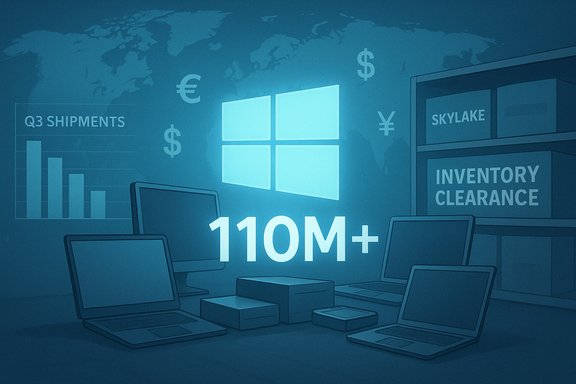
- Microsoft announced that Windows 10 was installed on more than 110 million devices within a few months of release, underscoring rapid OS adoption even while hardware demand softened.
- Vendor rankings remained broadly stable at the top, with Lenovo, HP, and Dell occupying the top three positions globally; Apple showed regional strength and moved up in some country‑level rankings; Acer and Asus experienced notable shipment declines in the quarter.
Why Windows 10’s strong install base didn’t boost PC shipments in Q3
1. Free upgrades deferred purchases
Microsoft’s decision to offer a free upgrade path for eligible Windows 7 and Windows 8.1 users materially changed buyer calculus. Instead of replacing a working machine, many consumers opted to upgrade their existing PCs to Windows 10.- Upgrading an existing device is often cheaper and faster than purchasing new hardware.
- The free upgrade path lowered the immediate necessity for a hardware refresh among casual and price‑sensitive users.
2. Currency effects and price inflation
Global pricing dynamics mattered. A stronger U.S. dollar during the period pushed up local currency prices in many markets. OEMs and channel partners faced an effective price increase that cooled demand in price‑sensitive regions.- Practical impact: sticker shock in emerging markets and delayed buying decisions in business and consumer segments.
- Outcome: even when OS momentum existed, affordability became a secondary gating factor for buyers.
3. Product refresh timing and component rollouts
Hardware refreshes are coordinated events that rely heavily on component availability and platform launches. Two timing issues were especially relevant in the quarter:- Intel’s new microarchitectures and chip releases (notably the 6th‑gen Skylake family at the time) were rolling into OEM roadmaps. The precise timing of OEMs’ access to those new parts meant some planned new‑model launches slipped into the next quarter.
- Several major brands cleared existing inventory ahead of shipping new‑spec machines, which reduced the number of new units shipped during the quarter.
4. Mobile device substitution remains structural
Smartphones and tablets continued to siphon away discretionary consumer spending, and for many users the PC is no longer a first‑line purchase. Even with Windows 10’s improvements, the competitive pressure from mobile devices kept a lid on overall refresh rates.Vendor rankings, winners and losers
Top‑line positions
- Lenovo retained the global lead in shipments.
- HP and Dell followed closely, with regional variations affecting order across quarters.
- Apple continued to grow its Mac shipments in several markets, gaining ground against some traditional Windows OEMs in specific country‑level breakdowns.
- Acer and Asus saw sharper declines versus peers — a symptom of exposure to price‑sensitive segments and Chromebooks/low‑end notebooks drag.
Notable dynamics
- Apple’s Mac growth demonstrated that premium differentiation and a lack of exposure to the low‑end price war can still produce gains even when the PC market contracts.
- OEMs with stronger enterprise channels (HP, Dell) were better positioned to offset consumer weakness due to ongoing refresh programs in business segments.
- Smaller or price‑focused vendors were most vulnerable to the combined effect of currency, platform timing, and a consumer preference to upgrade software rather than replace hardware.
The immediate shortfalls and manufacturer strategies
OEMs responded to the market contraction with familiar retail and supply‑chain tactics:- Inventory clearance: Moving older generation stock with aggressive promotions to clear shelves prior to new‑platform launches.
- Conservative production: Scaling back component orders and assembly runs to avoid channel overhang and margin erosion.
- Delayed launches: Postponing the rollout of new Skylake‑based models until supply and logistics aligned with demand windows, particularly holiday buying seasons.
Looking forward: why Q4 could look different
Several converging forces set the stage for a potential recovery in the fourth quarter:- Windows 10 handset, tablet, and OEM‑native devices: As partners launched hardware shipping with Windows 10 preinstalled, there was a renewed marketing push to buy rather than upgrade.
- Skylake availability: As Intel’s new mobile and desktop SKUs reached wider availability, OEMs could launch refreshed lines with better battery life, performance, and support for modern I/O — attributes that matter to enterprise buyers and premium consumers.
- Holiday buying season: The traditional bump from holiday sales and enterprise procurement cycles often concentrates replacement activity in Q4.
- Commercial migration tailwinds: Enterprises on longer lifecycle plans still needed to prepare to migrate from older Windows versions; Windows 10 readiness efforts could accelerate purchases.
Strengths and opportunities in the market
Strengths
- Software momentum is real. Rapid Windows 10 adoption demonstrates strong user interest in the platform and opens cross‑sell opportunities for Microsoft (Store, services) and OEMs (new‑device promotions bundled with Windows features).
- Premium segments are resilient. The Mac’s growth and premium Windows models’ steady demand show there’s room for growth where differentiation is meaningful.
- Enterprise replacement demand is predictable. Large organizations plan hardware refreshes on multiyear cadences; Windows 10’s security and management features are a tangible reason to accelerate replacement in corporate fleets.
Opportunities for OEMs
- Use OS upgrade momentum to sell value: bundle Windows 10 features (Windows Hello, Cortana, security enhancements) with new hardware to justify upgrades.
- Target enterprise management benefits: emphasize modern management, security posture, and long‑term servicing advantages to IT buyers.
- Optimize product mix: release premium, 2‑in‑1, and business models that take advantage of the Skylake platform improvements.
Risks and downside scenarios
- Upgrade cannibalization: Free OS upgrades can continue to postpone hardware purchases, creating a multi‑quarter drag that OEMs must manage through product differentiation and promotions.
- Channel inventory misalignment: Mistimed production or overcompensation for expected demand can lead to painful price competition and margin erosion.
- Component shortages or logistics shocks: The industry remains sensitive to wafer, display, and storage supply constraints. Any interruption in the supply chain can derail carefully timed launches.
- Macroeconomic headwinds: Currency fluctuations, credit conditions, or regional slowdowns can undermine consumer confidence and reduce discretionary replacement spending.
Tactical recommendations for manufacturers and channel partners
- Prioritize enterprise channels while nurturing consumer demand.
- Enterprises offer higher average selling prices and predictable refresh cycles. Tailor SKUs for manageability and security, while keeping consumer models attractive with clear upgrade benefits.
- Phase product launches to avoid channel clashes.
- Stagger SKUs across regions and price tiers to prevent inventory accumulation and seasonal cannibalization.
- Use targeted promotions tied to Windows 10 features.
- Bundled software, service trials, and clear messaging on Windows 10 advantages can convert upgrade‑hesitant users into buyers.
- Build flexible supply lines.
- Hedge component sourcing and use modular BOMs to shift production quickly between configurations if demand evolves.
- Avoid relying solely on price as a lever.
- Competing on price exacerbates margin pressure. Focus on differentiation — battery life, build quality, display fidelity, and enterprise software — where OEMs can legitimately claim value.
Advice for consumers and enterprise buyers
- Consumers with functional PCs can get solid value from upgrading to Windows 10 rather than buying new, particularly if they don’t need the latest Skylake performance gains.
- Power users and those with aging hardware (more than three to four years old) should evaluate new‑generation systems for meaningful improvements in battery life, integrated graphics, and modern connectivity.
- Enterprises should balance security and manageability with cost: consolidated migration projects can reduce long‑term support costs, but timing purchases to avoid holiday price spikes matters.
What the data really means: a measured conclusion
The third quarter’s drop in PC shipments amid rapidly growing Windows 10 adoption is not a contradiction so much as a market correction. Free OS upgrades and currency‑driven price movement delayed a portion of replacement demand, while product refresh timing and inventory strategies compressed shipments into later quarters. Major vendors with diversified channels — particularly those with strong enterprise relationships or premium models — were better insulated from the slump, while price‑sensitive OEMs bore the brunt.Looking forward, the market’s recovery depends on several linked variables: OEMs’ ability to launch attractive new hardware at the right time, enterprise migration schedules, seasonal retail demand, and macroeconomic stability. If manufacturers time Skylake‑based launches and Windows 10 promotional efforts correctly, the fourth quarter and subsequent quarters can show meaningful sequential gains. However, the industry must navigate a narrow path: converting software adoption into device replacement without eroding margins in costly price wars.
The headline from the quarter is simple: installation numbers for an OS do not automatically translate to immediate hardware sales. The real work for OEMs and channel partners is turning platform momentum into differentiated, timely product offers that give consumers and IT buyers a compelling reason to replace rather than upgrade. Only then will shipment figures reflect the promise that Windows 10’s momentum suggests.
Source: Mashdigi Growth in Windows 10 updates hasn't boosted PC shipments yet
