

Microsoft’s latest push to turn Windows into a proactive, AI-driven platform has ignited a fierce backlash from long-time users and developers alike, forcing the company to publicly acknowledge usability gaps even as it doubles down on an “agentic” vision for the operating system.
Background: what Microsoft announced and why it matters
In a short but consequential post on X, Pavan Davuluri — who now leads Microsoft’s Windows and Devices organization — described Windows as “evolving into an agentic OS,” pitching an operating system that combines devices, cloud services and AI to anticipate and act on user intent. The post was intended to tee up Microsoft Ignite announcements but instead became a focal point for a torrent of criticism about Windows’ current state and future direction. The phrase “agentic OS” is not marketing fluff: it points to a strategy where Windows hosts autonomous, goal-directed AI agents that can coordinate across apps and cloud services to complete complex, multi-step tasks. Microsoft’s roadmap for that future includes hardware certification (Copilot+ PCs with Neural Processing Units), local model execution, tighter cloud integration, and platform orchestration that treats the OS as the coordination layer for agents — not merely a container for apps. That approach promises productivity gains in the enterprise and new capabilities for consumers. But it also raises practical and philosophical questions: can the OS be trusted to act autonomously? Will that autonomy compromise performance, reliability, or control? And crucially for many, is Microsoft focusing on these ambitious agentic features while everyday problems remain unresolved?Overview: why the announcement provoked such a strong reaction
The social-media reaction to Davuluri’s post was striking both in volume and tone. Replies were overwhelmingly negative, and the discussion migrated quickly from what an agentic future could enable to long-standing grievances with Windows 11 — inconsistent UI elements, regressions in power-user features, perceived bloat and upselling, and a steady stream of bugs introduced through rapid update cycles. Some critical voices came from influential technologists who suggested that Microsoft’s direction is pushing developers toward macOS and Linux. The intensity of the response prompted Microsoft to limit replies on the original post as the conversation became unmanageable. This backlash is best understood as the intersection of two dynamics:- A strategic shift inside Microsoft that reorganized Windows engineering around AI-first goals, consolidating teams to reduce friction between platform primitives (kernel, drivers, NPUs) and surface features.
- A user base that has grown weary of repeated UI changes, telemetry debates, and features that appear to prioritize marketing or cloud integration over polish and autonomy for power users.
What Microsoft means by “Agentic OS”
The concept, in practical terms
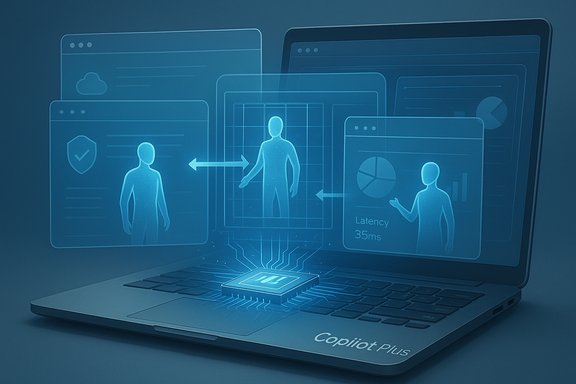
An agentic OS is envisioned as an operating system that does more than host programs: it coordinates them. That means:- AI agents will hold context across windows, files and apps.
- Agents can be granted limited autonomy to execute multi-step tasks (e.g., schedule travel, prepare a document bundle, or triage incoming email).
- The OS will decide — based on latency, privacy, and capability — whether to run inference locally on an NPU or route work to cloud models.
- A secure orchestration layer will manage agent permissions, memory (workflow history), and tool access.
Why Microsoft thinks the OS is the right level for agents
Proponents argue that only the OS can provide the consistent context, security model and cross-app hooks required for trustworthy agent orchestration. Applications and browsers can host agents now, but they are siloed. An OS-level agent framework promises:- Centralized policy and permissioning for agent actions.
- Persistent cross-app context (so agents aren’t starting from scratch per app).
- Efficient use of on-device accelerators and intelligent fallbacks to cloud compute.
- A platform benefit for Microsoft and hardware partners to build differentiated capabilities.
The user and developer backlash: concrete complaints
The reaction to Davuluri’s announcement crystallized multiple user complaints into a visible backlash. Those complaints fall into a few recurring themes.1) Reliability and polish versus speculative AI features
Long-time Windows users and many IT professionals said the OS feels less stable and consistent than it used to. Examples cited frequently include inconsistent dialog boxes, flaky search, and UI choices that felt half-finished. Critics asked: why push agents when core reliability still needs work? The tone was: fix the basics first.2) Power-user alienation
Developers and system tinkerers worry that Windows is moving away from being an OS that they can control and customize. Public comments from well-known engineering commentators framed the shift as a migration driver — developers may increasingly prefer macOS or Linux for their workflows if Windows becomes more opinionated about automation and cloud-first features. Those comments prompted a direct reply from Davuluri aimed at reassuring developers.3) UI regressions becoming symbols
Small UI decisions became totems for larger frustrations. A surprisingly resonant example: a Windows 11 update that made taskbar icons smaller without reducing the taskbar’s physical height. The mismatch produced an awkward visual result and became shorthand across forums for features that look done but feel unfinished. Community conversations and troubleshooting threads showed how many users felt these small regressions are emblematic of a broader quality problem.4) Concerns about privacy, control and monetization
Agentic features will necessarily access extensive context — files, calendars, messages — which raises legitimate privacy and security concerns. Some users framed agentic Windows as another vector for upsell, advertising, or cloud lock-in if Microsoft chooses convenience over opt-in, transparent controls.Microsoft’s response so far
Pavan Davuluri engaged publicly after the worst of the blowback, acknowledging that Windows has "rough edges" and that the team takes in a “ton of feedback” from product telemetry and direct user channels. He specifically highlighted developer experience and everyday usability as areas they are reviewing, and acknowledged that “words aren’t enough.” Davuluri’s messaging attempted to balance commitment to the agentic roadmap with a promise to improve reliability and developer-facing features. But acknowledgement is not the same as repair. Public sentiment hardened in part because many users perceive a multi-year pattern: features are introduced rapidly, sometimes rolled back, and foundational fixes lag behind. For a subset of Windows’ audience — system administrators, power users, and developers — promises of future AI benefits are not meaningful until the OS delivers predictable behavior today.Technical realities and constraints: why agentic functionality is hard
Turning an OS into a reliable orchestration layer for autonomous agents is non-trivial. The engineering challenges include:- Local vs. cloud inference trade-offs: running capable models locally demands specialized hardware (NPUs with tens of TOPS), but cloud execution introduces latency, cost, and privacy concerns.
- Orchestration and state: agents need persistent, searchable memory of workflows and context across apps — which requires fundamentally new platform services and storage models.
- Security and permissioning: agents must act safely and predictably; OS-level permission frameworks for autonomous actions are complex to design and easy to get wrong.
- Backwards compatibility and developer trust: introducing agents changes the security surface and developer mental model; maintaining compatibility with existing apps while offering new hooks is painstaking.
Where the strategy could pay off — and where it could fail
Possible strengths and advantages
- Productivity gains for knowledge workers. Properly implemented agents could automate repetitive, cross-app workflows and reduce cognitive load.
- Tighter device-cloud continuity. An OS that decides when to run a model locally vs. in the cloud could deliver speed and privacy advantages.
- Platform opportunity. Whoever controls the agent orchestration layer can shape developer ecosystems and monetize adjacent services — a powerful strategic prize.
- Hardware-software co-design. Copilot+ PCs and similar initiatives could unlock new capabilities that standard PCs can’t match, rewarding innovation in silicon.
Real risks and failure modes
- Trust erosion. If agents act poorly, make mistakes, or surface unexpected upsells, user trust will decline sharply.
- Fragmentation and gating. Requiring high-TOPS NPUs risks creating a two-tier Windows experience where advanced features only reach newer, more expensive hardware.
- Neglect of fundamentals. If Microsoft’s engineering prioritization skews toward agentic features at the expense of performance, reliability and power-user control, Windows could lose the constituency that has historically defended it.
- Security and compliance pitfalls. Autonomous agents increase attack surface and complicate governance for enterprises that must meet regulatory requirements.
How Microsoft might balance the trade-offs (a practical checklist)
To reduce friction and rebuild trust while pursuing an agentic future, a pragmatic sequence of actions would help:- Deliver measurable reliability improvements in the next two update cycles, with transparent metrics for:
- crash rates,
- boot times,
- search responsiveness,
- update rollback success.
- Publish a clear, machine-readable agent permission model and a developer sandbox for agent actions.
- Keep agent features opt-in by default; provide granular controls and audit trails for agent activity.
- Ship agent capabilities incrementally to Copilot+ certified hardware first, but provide lightweight fallbacks for mainstream devices.
- Strengthen developer tooling and documentation so that OS-level agents complement — not replace — developer control over runtime behaviors.
What power users and enterprises are saying (summary of sentiment)
- Many long-time Windows users feel that interface churn and telemetry-driven decisions have eroded the platform’s predictability.
- Developers worry about losing low-level control or being forced into paradigms that favor corporate-scale agents rather than modular tooling.
- Enterprises are interested in agentic automation but demand explicit compliance, auditing and rollback mechanisms before replacing human workflows.
The hardware angle: Copilot+ PCs and the 40+ TOPS threshold
A concrete example of how Microsoft’s agentic ambitions intersect with hardware is the Copilot+ PC program. Microsoft’s public guidance states that many advanced Windows AI features will depend on NPUs capable of running more than 40 TOPS. That spec is already shaping OEM roadmaps and determining which devices get the “Copilot+” designation. Early Copilot+ features (Recall, Cocreator in Paint, Windows Studio Effects, Live Captions) are specifically tuned to exploit local NPU acceleration for latency-sensitive tasks. That technical gating provides clear benefits (responsive local inference, improved privacy) but also creates friction: not all devices will qualify, and software parity will be a function of hardware parity. For a platform with billions of devices, staged rollout and fallback strategies are essential to avoid fragmenting the user experience.What to watch next: milestones that will matter
- Microsoft Ignite demos and technical sessions: will they show incremental reliability work alongside agentic demos, or will marketing outpace engineering?
- Update cadence and telemetry transparency: can Microsoft demonstrate repeated, measurable improvements in UX metrics?
- Developer tooling and agent APIs: early SDKs and sandboxing primitives will indicate whether Microsoft is serious about developer control.
- Enterprise controls and auditability: compliance features that let IT govern agent actions will determine enterprise uptake.
- Hardware availability: the breadth of Copilot+ certified devices will influence how rapidly agentic features reach mainstream users.
Final analysis: bold vision, fragile trust
Microsoft’s agentic OS vision is strategically bold and technically defensible: an OS that orchestrates autonomous agents could materially change productivity and platform economics. The company has already made concrete investments — both organizationally and technically — that signal commitment to this path. The reorganization of Windows engineering under a single leadership umbrella, explicit Copilot+ hardware requirements, and early agent-style features are real and deliberate steps. But the controversy exposes a fragile truth: platform transitions succeed only when trust is preserved during the change. For many Windows users today, that trust is thin. A mismatch between visionary PR and the day-to-day experience of the OS — buggy updates, inconsistent UI, and perceived erosion of user control — widens the credibility gap. In that context, the correct priority for Microsoft is not either/or but both/and: continue building agentic capabilities while delivering clear, measurable, and rapidly visible improvements to reliability, developer APIs, and user control.If Microsoft can demonstrate that agents are safe, optional, and meaningfully better — and if it fixes the “rough edges” that critics cite — the company can potentially reconcile its AI ambitions with the expectations of its most demanding users. If it fails to close that gap, the backlash may harden into migration choices for developers and the loss of faith for a segment of its user base.
Microsoft has signaled both intent and awareness; the coming months will show whether execution can match the rhetoric. The company’s ability to balance audacious AI-first design with the daily needs of millions of users will determine not only the fate of Windows 11, but whether the OS remains the platform of choice for builders, creators and enterprises in the agentic era.
Source: thedailyjagran.com Windows 11 Faces User Backlash As Microsoft Pushes Toward An ‘Agentic OS’
