

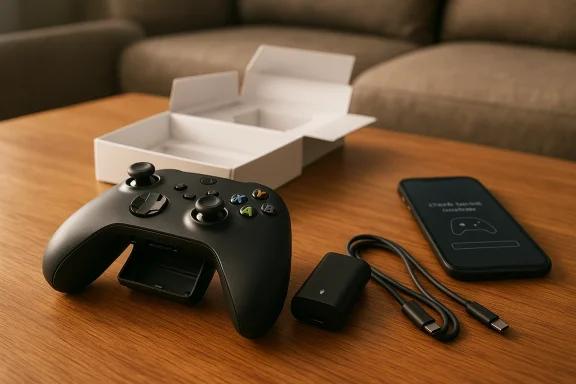
Microsoft’s latest Xbox accessory mistake is a small packaging error with an outsized public-relations sting. According to Xbox Support, a limited number of Xbox Wireless Controllers and Xbox Design Lab controllers have reportedly shipped without the usual batteries since December 2025, leaving some buyers unable to play out of the box until Microsoft steps in with a corrective kit. The company says affected customers can verify eligibility by serial number and request a rechargeable battery pack and USB-C cable as a remedy, though early user reports suggest the support flow has not been perfectly smooth. In a market where console hardware is increasingly judged on convenience, sustainability, and polish, even a missing pair of AA batteries can become a headline.
The most important detail in this story is not that Microsoft forgot a component. It is that the omission touches a product category where expectation and habit still matter a great deal. Xbox controllers have long arrived with AA batteries included, a choice that has always reflected Microsoft’s flexibility-first philosophy: users can swap in disposables, use rechargeables, or buy a Play & Charge kit later. That approach has been one of Xbox’s quiet differentiators, especially versus controllers that require charging packs or built-in batteries from day one.
This time, however, the company appears to have broken its own promise of immediate usability. When a controller lands on a customer’s desk without power, the product is not merely incomplete; it is unusable until the user finds a cable, a battery pack, or a workaround. For mainstream consumers, that is frustrating. For enthusiasts and Xbox loyalists, it is worse because it undercuts one of the brand’s longest-running convenience advantages.
Microsoft’s response is also revealing. Rather than treating the issue as a simple replacement or asking customers to buy their own accessories, the company is sending out a free rechargeable battery kit and cable to affected buyers. That suggests Microsoft wants to do more than acknowledge an error. It wants to convert a packaging mishap into a customer-retention gesture, even if the fix arrives after the unboxing experience has already been spoiled.
The fact that the issue reportedly dates back to December 2025 raises a second, subtler question: how many units were affected, and why did it take months for the problem to be publicly addressed? Microsoft has not framed this as a mass recall, which implies a limited batch or a process failure rather than a global manufacturing change. Still, the timeline matters because it shapes how seriously buyers will interpret the apology. A one-off slip is forgivable; a months-long oversight feels more like a systems problem.
The company has spent years trying to balance convenience with sustainability. On one hand, disposable batteries are easy to understand and reduce the need for a proprietary charging dock. On the other, Microsoft has repeatedly talked about reducing waste and improving repairability across Xbox hardware, including packaging changes and component support programs. The current error sits awkwardly between those goals: it deprives customers of the expected included power source, but the remediation package introduces a rechargeable path that Microsoft may view as more modern and less wasteful.
It is also worth remembering that Xbox has already been rethinking its accessory strategy. In recent years, Microsoft has emphasized design lab customization, accessibility, and controller variety, which means more products are flowing through more fulfillment paths. That increases complexity. The more packaging variants and sales channels a company supports, the greater the risk of a relatively mundane mistake becoming a customer-facing issue.
There is a competitive backdrop here too. Sony’s DualSense controller ships with a built-in rechargeable battery, while Nintendo has long used different battery and accessory conventions across its ecosystem. Xbox’s AA-battery approach is unusual enough that it stands out, but also familiar enough that buyers know exactly what to expect. When that expectation fails, the error feels more personal than if Microsoft had omitted a less visible accessory.
The affected models appear to include both standard Xbox Wireless Controllers and certain Xbox Design Lab controllers. That detail suggests the problem could have touched more than one fulfillment pipeline. Design Lab units, in particular, often involve extra customization steps, so even a small packaging discrepancy can be amplified across an already complex order chain.
Microsoft’s proposed fix is not a refund or a return label, at least not from the reports currently circulating. Instead, the company is sending affected users a rechargeable battery pack and a USB-C cable. In practice, that is a better goodwill gesture than a bare apology because it gives the buyer a more permanent power solution than the batteries they should have received in the first place.
This is especially problematic for gift purchases and impulse buys. If a parent buys a controller for a child, or a PC gamer buys one to pair with a new game, the expectation is immediate use. A missing accessory forces an awkward delay and creates the impression that Microsoft and its retail partners did not test the box contents properly.
The issue also lands differently depending on the customer’s hardware ecosystem. A console owner may already have spare batteries or a charging kit. A PC player purchasing an Xbox controller for the first time may not. In that case, the omission is more than inconvenient; it is a barrier to first-time adoption.
In reality, this kind of system only works if the eligibility check is clean. Early user reports indicate some people could not see the necessary service option, which is the sort of friction that turns a good remediation plan into a customer-service headache. If the goal is to restore trust, then the support experience has to feel simple, obvious, and fast.
The choice to include a USB-C cable is also practical. It allows the controller to be used while charging and gives the buyer a more reliable immediate path to power than hunting for spare cells. Microsoft is effectively nudging affected users toward a more modern setup while also offering a tangible apology.
This is the kind of error that can happen when a company is juggling multiple controller SKUs, regional bundles, custom orders, and retailer-specific inventory flows. A battery omission might originate in packaging design, supplier handoff, or a fulfillment center process that failed to catch the missing insert. The public usually sees only the end result, not the stage at which the process went wrong.
Microsoft’s challenge is that quality-control slips in hardware are disproportionately damaging because they are so easy to understand. A software bug can be abstracted into patch notes. A controller without batteries cannot be abstracted. The defect is physical, obvious, and embarrassing.
The irony in this case is that Microsoft’s old AA-battery approach is usually defended as a strength. Users can hot-swap batteries instantly, reuse rechargeables, or avoid battery degradation issues altogether. By shipping controllers without the included power source, Microsoft created a version of its own philosophy that feels like a bug instead of a feature.
Consumer goodwill is also fragile in the gaming hardware market because buyers have many choices. A controller is not an expensive system purchase, but it is a highly emotional one. Gamers talk about comfort, drift, responsiveness, and longevity with remarkable intensity, and a packaging failure can make people wonder what else might have been overlooked.
Enterprise and education buyers are a slightly different case. Organizations purchasing Xbox controllers for labs, accessibility setups, or Windows gaming stations may care less about the battery omission than about process consistency. A missing battery pack is annoying, but it is also a sign that procurement teams should double-check accessory included lists on receipt.
The broader point is that accessory defects can create hidden workload across the channel. Each complaint costs time, whether it lands with Xbox Support, a retailer help desk, or an internal IT department. That is why even a small packaging miss can have an outsized operational footprint.
What makes Xbox different is that Microsoft never fully locked itself into a rechargeable-only future. That flexibility is useful, but it also means a missing battery is a failure against a clearly communicated norm. Consumers know what an Xbox controller box is supposed to contain, and that predictability makes deviations more visible.
There is also a sustainability angle. Some users will argue that sending rechargeable kits is better than supplying disposable batteries. Others will say the company should simply get the bundle right and let customers choose how to power the controller. Both views are reasonable, and the tension between convenience and waste reduction is exactly what makes this story more interesting than it first appears.
The incident may even strengthen the case for tighter accessory standardization across Xbox packaging, which would reduce confusion for retail staff and buyers alike. If Microsoft uses the moment to improve warehouse verification and eligibility tracking, the operational benefits could outlast the headline cycle.
There is also reputational risk in the timing. Reports that the issue has been happening since December 2025 make the company look as though it let the problem linger far longer than it should have. Even if the affected population was small, months of silence can make a minor defect feel like a pattern.
Microsoft also has a chance to use the incident as a public example of its broader repair-and-sustainability messaging. That only works, though, if the company treats the issue as both a logistics problem and a trust problem. Consumers will forgive a lot more readily when they feel the fix is designed around their convenience rather than the company’s reputation.
Microsoft can recover from a missing-battery mistake, but only if it treats the correction as more than a courtesy shipment. The company has to prove that it understands the real issue: not the absence of two AA cells, but the breach of confidence that happened when a controller arrived incomplete.
Source: TechPowerUp Microsoft Apologizes for Battery-Less Xbox Controllers, Sends Rechargeable Kits To Correct | TechPowerUp}
 Overview
The most important detail in this story is not that Microsoft forgot a component. It is that the omission touches a product category where expectation and habit still matter a great deal. Xbox controllers have long arrived with AA batteries included, a choice that has always reflected Microsoft’s flexibility-first philosophy: users can swap in disposables, use rechargeables, or buy a Play & Charge kit later. That approach has been one of Xbox’s quiet differentiators, especially versus controllers that require charging packs or built-in batteries from day one.This time, however, the company appears to have broken its own promise of immediate usability. When a controller lands on a customer’s desk without power, the product is not merely incomplete; it is unusable until the user finds a cable, a battery pack, or a workaround. For mainstream consumers, that is frustrating. For enthusiasts and Xbox loyalists, it is worse because it undercuts one of the brand’s longest-running convenience advantages.
Microsoft’s response is also revealing. Rather than treating the issue as a simple replacement or asking customers to buy their own accessories, the company is sending out a free rechargeable battery kit and cable to affected buyers. That suggests Microsoft wants to do more than acknowledge an error. It wants to convert a packaging mishap into a customer-retention gesture, even if the fix arrives after the unboxing experience has already been spoiled.
The fact that the issue reportedly dates back to December 2025 raises a second, subtler question: how many units were affected, and why did it take months for the problem to be publicly addressed? Microsoft has not framed this as a mass recall, which implies a limited batch or a process failure rather than a global manufacturing change. Still, the timeline matters because it shapes how seriously buyers will interpret the apology. A one-off slip is forgivable; a months-long oversight feels more like a systems problem.
Background
Xbox controller packaging has always been a little different from the competition. Microsoft historically included batteries in many retail bundles, while also supporting rechargeable battery packs, USB charging, and standard alkaline replacements. That flexibility was practical, but it also created an expectation that a new controller could be used immediately after opening the box. In a living room or dorm room, that instant readiness matters as much as spec-sheet talk about latency or ergonomics.The company has spent years trying to balance convenience with sustainability. On one hand, disposable batteries are easy to understand and reduce the need for a proprietary charging dock. On the other, Microsoft has repeatedly talked about reducing waste and improving repairability across Xbox hardware, including packaging changes and component support programs. The current error sits awkwardly between those goals: it deprives customers of the expected included power source, but the remediation package introduces a rechargeable path that Microsoft may view as more modern and less wasteful.
It is also worth remembering that Xbox has already been rethinking its accessory strategy. In recent years, Microsoft has emphasized design lab customization, accessibility, and controller variety, which means more products are flowing through more fulfillment paths. That increases complexity. The more packaging variants and sales channels a company supports, the greater the risk of a relatively mundane mistake becoming a customer-facing issue.
There is a competitive backdrop here too. Sony’s DualSense controller ships with a built-in rechargeable battery, while Nintendo has long used different battery and accessory conventions across its ecosystem. Xbox’s AA-battery approach is unusual enough that it stands out, but also familiar enough that buyers know exactly what to expect. When that expectation fails, the error feels more personal than if Microsoft had omitted a less visible accessory.
What Microsoft Says Happened
Xbox Support’s explanation is straightforward: a limited number of controllers have been shipped without batteries since December. That wording matters because it suggests the issue is not a deliberate policy shift. Microsoft also says all controllers moving forward will include batteries, which implies the company is correcting a packaging or distribution problem rather than quietly revising the retail bundle.The affected models appear to include both standard Xbox Wireless Controllers and certain Xbox Design Lab controllers. That detail suggests the problem could have touched more than one fulfillment pipeline. Design Lab units, in particular, often involve extra customization steps, so even a small packaging discrepancy can be amplified across an already complex order chain.
Microsoft’s proposed fix is not a refund or a return label, at least not from the reports currently circulating. Instead, the company is sending affected users a rechargeable battery pack and a USB-C cable. In practice, that is a better goodwill gesture than a bare apology because it gives the buyer a more permanent power solution than the batteries they should have received in the first place.
The Language of a Limited Failure
The phrase limited number is doing a lot of work. It is broad enough to avoid overcommitting on scale, yet specific enough to admit that the problem is real. That is often how consumer hardware companies manage incidents when they want to correct the record without creating the impression of a full-blown recall.- Microsoft is acknowledging the defect rather than ignoring it.
- The company is framing it as a bounded packaging issue.
- Affected buyers are being steered into a support workflow.
- The remedy is an accessory kit rather than a product swap.
- The company says the mistake will not continue.
Why the Missing Batteries Matter
On paper, missing AA batteries in a controller may sound trivial. In practice, it is the kind of error that immediately surfaces the moment a customer opens the box. That is because controllers are expectation-sensitive products: people know exactly how they are supposed to feel, connect, and power on. A controller that fails at the first step feels broken, even if the hardware itself is fine.This is especially problematic for gift purchases and impulse buys. If a parent buys a controller for a child, or a PC gamer buys one to pair with a new game, the expectation is immediate use. A missing accessory forces an awkward delay and creates the impression that Microsoft and its retail partners did not test the box contents properly.
The issue also lands differently depending on the customer’s hardware ecosystem. A console owner may already have spare batteries or a charging kit. A PC player purchasing an Xbox controller for the first time may not. In that case, the omission is more than inconvenient; it is a barrier to first-time adoption.
The First-Use Test
Retail hardware is judged at the moment of unboxing, not after a week of use. If the first-touch experience is poor, the brand absorbs the damage before the customer has a chance to evaluate the controller’s actual performance.- Unboxing is a trust test.
- Missing essentials signal quality-control failure.
- The inconvenience is immediate and visible.
- Support friction multiplies the annoyance.
- Brand reputation takes the hit, not the packaging vendor.
Microsoft’s Remedy and Support Workflow
The company’s corrective approach is notable because it combines apology with logistics. Affected users are supposed to go through a dedicated support page, register a service request, and confirm eligibility using the controller’s serial number. Once verified, Microsoft sends the replacement kit. That is a sensible structure in theory because it helps prevent abuse and keeps the response targeted to real cases.In reality, this kind of system only works if the eligibility check is clean. Early user reports indicate some people could not see the necessary service option, which is the sort of friction that turns a good remediation plan into a customer-service headache. If the goal is to restore trust, then the support experience has to feel simple, obvious, and fast.
The choice to include a USB-C cable is also practical. It allows the controller to be used while charging and gives the buyer a more reliable immediate path to power than hunting for spare cells. Microsoft is effectively nudging affected users toward a more modern setup while also offering a tangible apology.
Why a Rechargeable Kit Is a Smart Fix
The company is not just replacing what was missing; it is improving the end state. That is a clever move because it reframes the error as a temporary inconvenience rather than a long-term loss.- It restores usability quickly.
- It reduces repeat support contacts.
- It avoids a full return-and-replace cycle.
- It creates a better customer story than an apology alone.
- It subtly reinforces Microsoft’s sustainability message.
Packaging, Fulfillment, and Quality Control
The most interesting part of this incident is not the missing batteries themselves. It is what the omission says about Microsoft’s packaging and fulfillment controls. Retail hardware is supposed to be boring in the best sense: the contents match the box, the accessory count is correct, and every unit is ready to go. When that routine breaks, it suggests a gap somewhere in the chain between assembly, packaging, and warehouse verification.This is the kind of error that can happen when a company is juggling multiple controller SKUs, regional bundles, custom orders, and retailer-specific inventory flows. A battery omission might originate in packaging design, supplier handoff, or a fulfillment center process that failed to catch the missing insert. The public usually sees only the end result, not the stage at which the process went wrong.
Microsoft’s challenge is that quality-control slips in hardware are disproportionately damaging because they are so easy to understand. A software bug can be abstracted into patch notes. A controller without batteries cannot be abstracted. The defect is physical, obvious, and embarrassing.
A Small Error With Systemic Implications
The bigger concern is whether this represents a one-off or a sign that accessory checks have become too loose. Large hardware companies routinely rely on automated scanning, batch audits, and packaging compliance rules to prevent exactly this sort of mistake.- Controller bundles must match regional expectations.
- Retail boxes should be audited before shipment.
- Serial-number tracking should map to known affected lots.
- Customer support should expose the fix cleanly.
- Packaging changes should not outpace verification.
The Xbox Brand and Consumer Expectations
Xbox has always sold itself as the accessible, flexible console ecosystem. The controller is central to that identity. It is the physical object most people touch every time they play, and it is often the first Microsoft accessory they buy for a PC as well. That means controller quality is not peripheral; it is core brand expression.The irony in this case is that Microsoft’s old AA-battery approach is usually defended as a strength. Users can hot-swap batteries instantly, reuse rechargeables, or avoid battery degradation issues altogether. By shipping controllers without the included power source, Microsoft created a version of its own philosophy that feels like a bug instead of a feature.
Consumer goodwill is also fragile in the gaming hardware market because buyers have many choices. A controller is not an expensive system purchase, but it is a highly emotional one. Gamers talk about comfort, drift, responsiveness, and longevity with remarkable intensity, and a packaging failure can make people wonder what else might have been overlooked.
What Buyers Expect From Xbox
Xbox customers generally expect three things from a new controller: comfort, compatibility, and readiness. When one of those is missing, the whole package feels less premium.- It should connect easily.
- It should power on immediately.
- It should work on console and PC.
- It should match the advertised bundle.
- It should not require extra troubleshooting at unboxing.
Enterprise, Retail, and Channel Impact
While this is mostly a consumer story, it has channel implications too. Retailers do not want a wave of buyers asking why their boxes are incomplete. Resellers do not want to absorb complaints about missing batteries in sealed new stock. And Microsoft’s support teams do not want every affected customer reaching out through a fragmented service pipeline that forces manual verification.Enterprise and education buyers are a slightly different case. Organizations purchasing Xbox controllers for labs, accessibility setups, or Windows gaming stations may care less about the battery omission than about process consistency. A missing battery pack is annoying, but it is also a sign that procurement teams should double-check accessory included lists on receipt.
The broader point is that accessory defects can create hidden workload across the channel. Each complaint costs time, whether it lands with Xbox Support, a retailer help desk, or an internal IT department. That is why even a small packaging miss can have an outsized operational footprint.
Channel Fallout
A problem like this can ripple outward long after the original batch has been corrected.- Retail staff handle more return questions.
- Support agents must verify serial numbers.
- Warehouse teams may need to inspect affected stock.
- Buyers may distrust sealed inventory.
- Resellers may preemptively over-check future shipments.
How This Compares With Industry Norms
Microsoft’s AA-battery model has always been unusual enough that it invites comparison with other controller ecosystems. Sony’s DualSense uses an internal rechargeable battery, so out-of-box charging expectations are different. Nintendo’s approach varies by device and accessory, while PC controller makers often mix built-in cells and replaceable batteries depending on price tier and ergonomics.What makes Xbox different is that Microsoft never fully locked itself into a rechargeable-only future. That flexibility is useful, but it also means a missing battery is a failure against a clearly communicated norm. Consumers know what an Xbox controller box is supposed to contain, and that predictability makes deviations more visible.
There is also a sustainability angle. Some users will argue that sending rechargeable kits is better than supplying disposable batteries. Others will say the company should simply get the bundle right and let customers choose how to power the controller. Both views are reasonable, and the tension between convenience and waste reduction is exactly what makes this story more interesting than it first appears.
AA vs Rechargeable: The Broader Debate
The missing-battery incident exposes the awkward middle ground in accessory strategy.- Disposable batteries are easy and familiar.
- Rechargeables are cleaner and more sustainable.
- Built-in cells reduce choice but improve simplicity.
- Missing accessories are never excused by policy arguments.
- User expectations remain shaped by the box, not the corporate roadmap.
Strengths and Opportunities
Microsoft still has some real upside in how it handles the issue. The company can turn a packaging failure into a demonstration of responsiveness if the support process is smooth, the replacement kits arrive quickly, and the communication stays clear. The fact that the remedy is a free rechargeable battery kit also gives Xbox a chance to reframe the story around convenience and sustainability rather than embarrassment.The incident may even strengthen the case for tighter accessory standardization across Xbox packaging, which would reduce confusion for retail staff and buyers alike. If Microsoft uses the moment to improve warehouse verification and eligibility tracking, the operational benefits could outlast the headline cycle.
- The company acknowledged the problem publicly.
- Affected users are promised a free corrective kit.
- The remedy upgrades customers to a rechargeable option.
- The support flow could improve serial-number tracking.
- Microsoft can reinforce its sustainability narrative.
- Xbox has an opportunity to tighten packaging QA.
- The episode may encourage clearer bundle labeling.
Risks and Concerns
The downside is obvious: this was avoidable, and avoidable mistakes are the ones customers remember. If the service request process is clunky or the serial-number verification fails, the goodwill Microsoft is trying to create will evaporate quickly. Worse, a fix that works only for some users will amplify frustration and make the company look inconsistent.There is also reputational risk in the timing. Reports that the issue has been happening since December 2025 make the company look as though it let the problem linger far longer than it should have. Even if the affected population was small, months of silence can make a minor defect feel like a pattern.
- Customers lose confidence in unboxing consistency.
- Support friction can turn a small issue into a big one.
- Missing accessories undermine premium perception.
- The delayed response invites criticism of internal oversight.
- Some users may never discover the remedy path.
- Retail partners may face unnecessary customer backlash.
- The story can linger longer than the hardware issue itself.
Looking Ahead
The most important question now is whether Microsoft can close the loop cleanly. If affected customers receive the rechargeable kits quickly and without repeated support hurdles, this story will fade into the background as a strange packaging blip. If, however, the support path remains inconsistent, the battery omission will become a case study in how small hardware errors can become big brand problems.Microsoft also has a chance to use the incident as a public example of its broader repair-and-sustainability messaging. That only works, though, if the company treats the issue as both a logistics problem and a trust problem. Consumers will forgive a lot more readily when they feel the fix is designed around their convenience rather than the company’s reputation.
What to Watch
- Whether all affected buyers can access the service request page.
- How quickly replacement rechargeable kits ship.
- Whether Microsoft confirms the total number of impacted controllers.
- If retailers report additional stock from the affected batch.
- Whether the company changes packaging checks going forward.
Microsoft can recover from a missing-battery mistake, but only if it treats the correction as more than a courtesy shipment. The company has to prove that it understands the real issue: not the absence of two AA cells, but the breach of confidence that happened when a controller arrived incomplete.
Source: TechPowerUp Microsoft Apologizes for Battery-Less Xbox Controllers, Sends Rechargeable Kits To Correct | TechPowerUp}
Last edited:
