

Microsoft’s decision to publish the Xbox Game Publishing Guide and lift long-standing NDAs is a meaningful, public-facing shift that deliberately moves Xbox’s platform closer to the open, developer-friendly approach long associated with Steam — and it could change how easily studios, especially indies, plan, build, and ship games for Xbox consoles and Xbox PC.
For over two decades, the technical and policy documentation that governs how games are published on Xbox consoles and the Xbox storefront lived behind program gates and non-disclosure agreements. That meant prospective or smaller teams needed formal program acceptance to learn the rules of the road: certification checklists, packaging requirements, wishlisting and pre‑order workflows, and the finer points of release configuration. The opacity created friction for teams that wanted to scope, budget, or prototype toward Xbox as a target platform.
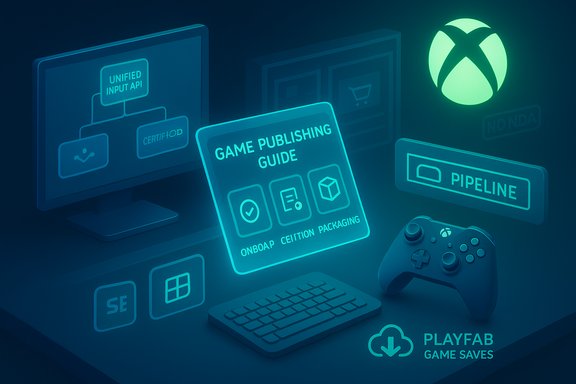
Microsoft’s new public Xbox Game Publishing Guide changes that. The company has posted an openly accessible guide that walks through onboarding, Partner Center setup, wish list and pre-order configuration, steps to participate in the Xbox Insider and Xbox Game Preview programs, and the certification/testing processes that games must pass. The guide is presented as a living document, with Microsoft committing to ongoing updates as processes and tools evolve. Simultaneously, Microsoft highlighted recent improvements in the October Game Development Kit (GDK) release — refinements that make input, packaging, and cross‑platform saves easier for developers targeting both PC and Xbox.
This is more than documentation for documentation’s sake: it’s a policy and tooling move aimed at removing barriers to entry, reducing the surprise factor for developers, and encouraging more content to ship to Xbox platforms — faster, with fewer bureaucratic surprises.
Microsoft’s announcement intentionally echoes that developer-first posture. By putting the full publishing guide into public view and emphasizing no-NDA access, Microsoft is signaling a philosophical pivot: make onboarding transparent, lower administrative friction, and empower creators to decide whether Xbox is a viable target earlier in their roadmap.
That said, being “Steam-like” in transparency doesn’t automatically mean parity in experience. Steam’s public pipelines are paired with decades of platform-specific community habits, discoverability systems, and store dynamics. Microsoft’s move narrows one critical gap — the rules and tools — but other dynamics (store audience, curation policies, promotional mechanics) will continue to shape outcomes for developers.
The broader industry effect could be multifold:
Strengths
For Microsoft, the documentation move dovetails with deeper technical investments and an economic posture that favors PC creators. For developers, the message is clear: the platform is open for inspection, and teams now have the roadmap to decide if and when Xbox should be part of their publishing strategy. The next critical steps will be how Microsoft operationalizes discoverability and how it balances an open publishing funnel with a curated player experience. If Microsoft executes on both fronts, the gap between “can we build for Xbox?” and “should we build for Xbox?” just narrowed — and that’s a big deal for creators and players alike.
Source: Windows Central https://www.windowscentral.com/gami...ing-more-open-and-steam-like-heres-whats-new/
 Background
For over two decades, the technical and policy documentation that governs how games are published on Xbox consoles and the Xbox storefront lived behind program gates and non-disclosure agreements. That meant prospective or smaller teams needed formal program acceptance to learn the rules of the road: certification checklists, packaging requirements, wishlisting and pre‑order workflows, and the finer points of release configuration. The opacity created friction for teams that wanted to scope, budget, or prototype toward Xbox as a target platform.Microsoft’s new public Xbox Game Publishing Guide changes that. The company has posted an openly accessible guide that walks through onboarding, Partner Center setup, wish list and pre-order configuration, steps to participate in the Xbox Insider and Xbox Game Preview programs, and the certification/testing processes that games must pass. The guide is presented as a living document, with Microsoft committing to ongoing updates as processes and tools evolve. Simultaneously, Microsoft highlighted recent improvements in the October Game Development Kit (GDK) release — refinements that make input, packaging, and cross‑platform saves easier for developers targeting both PC and Xbox.
This is more than documentation for documentation’s sake: it’s a policy and tooling move aimed at removing barriers to entry, reducing the surprise factor for developers, and encouraging more content to ship to Xbox platforms — faster, with fewer bureaucratic surprises.
What Microsoft opened — and why it matters
Public documentation where there used to be gates
The Xbox Game Publishing Guide now sits in public view and is freely shareable. That means any developer — from hobbyists and solo creators to established studios — can review the steps required to get a game onto Xbox and the Microsoft Store without waiting for an NDA approval or ID@Xbox acceptance. The guide covers essential operational topics:- Onboarding and ID@Xbox sign-up guidance
- Partner Center game creation and configuration
- Wish list and pre-order setup
- Xbox Insider Program and Xbox Game Preview participation
- Certification (Xbox Requirements) and available test services
- Packaging and upload workflows
NDAs removed — educational content is now safe to create
Microsoft lifted the NDA constraints that traditionally protected much of the Xbox publishing information. That means community educators, streamers, YouTube channels, and training sites can now create guides, tutorials, and walkthroughs explaining the publishing process without legal friction. For an ecosystem, that kind of third‑party educational content is vital: it accelerates skill diffusion and gives small teams actionable, shared knowledge.Tooling that narrows the gap between PC and console
Complementing the documentation release, Microsoft’s GDK updates (the October release) add features that simplify cross‑platform development:- A unified input API that standardizes keyboard, mouse, and controller handling across PC and console.
- Packaging utilities to build and upload console and PC packages more reliably.
- PlayFab Game Saves (preview) for cross‑progression and sync between PC and console.
- A bundled PlayFab Unified SDK and other developer conveniences.
Why this is being compared to Steam — and where the comparison fits
Steam’s success with indie developers has long been attributed to an ecosystem that is, by design, open and user‑driven. Steam’s documentation, publishing tools, and the absence of gatekeeping for basic access make it easier for small teams to experiment with PC launches. The result has been a steady flow of viral indie hits and a cultural expectation among developers that platform rules should be discoverable.Microsoft’s announcement intentionally echoes that developer-first posture. By putting the full publishing guide into public view and emphasizing no-NDA access, Microsoft is signaling a philosophical pivot: make onboarding transparent, lower administrative friction, and empower creators to decide whether Xbox is a viable target earlier in their roadmap.
That said, being “Steam-like” in transparency doesn’t automatically mean parity in experience. Steam’s public pipelines are paired with decades of platform-specific community habits, discoverability systems, and store dynamics. Microsoft’s move narrows one critical gap — the rules and tools — but other dynamics (store audience, curation policies, promotional mechanics) will continue to shape outcomes for developers.
Strengths of Microsoft’s move
1. Better planning and cost control for developers
Open certification and publishing criteria reduce guesswork. Teams can read the checklist early, estimate QA cycles, and integrate certification milestones into sprints. For indies operating on tight budgets, that clarity is a major advantage: less rework, fewer surprise certification failures, and more predictable timelines.2. Faster learning curve via community content
NGOs, instructors, and creators can now produce tutorials, checklists, and walkthroughs without NDA constraints. Expect a surge in community‑authored onboarding material, sample workflows, and video guides that will accelerate skills transfer for first‑time console developers.3. Technical convergence across PC and console
The October GDK updates that unify input handling and provide PlayFab cross‑progression features materially reduce engineering overhead when supporting both PC and console. A single input layer and synced saves mean fewer platform‑specific code forks and lower QA burden.4. Economic incentives for PC developers already in place
Microsoft’s earlier shift to an 88/12 revenue split for PC Game Store sales remains a differentiator for PC-first developers. A friendlier revenue split for PC storefront sales (developer keeps 88%) is a clear economic signal that Microsoft wants more PC developers to consider its store as a viable commercial option when targeting Windows players.Risks, caveats, and what remains unchanged
1. Transparency ≠ automatic approval or easier listing
Publishing the guide removes informational barriers, but it doesn’t change the existence of certification tests, quality requirements, or store curation. Games will still need to pass the Xbox Requirements and certification process. The difference is that teams now know those requirements earlier — not that the requirements are gone.2. Discoverability is still a separate, unsolved problem
Open docs don't fix store discoverability. Steam’s ecosystem may be open, but discoverability on Steam is still fiercely competitive and often requires strong marketing or promotion. Xbox will need to continue investing in curated promotion, store algorithms, and editorial programs to ensure more small developers can be found by players.3. Potential for a deluge of low-quality submissions
One common critique of open publishing systems is the risk of volume over quality. Steam’s open approach helped spawn incredible indie hits — but it also enabled a flood of low-effort titles. Microsoft will need a clear stance on curation, certification thresholds, and store promotion to avoid being overwhelmed by quantity at the expense of player experience.4. Some claims remain speculative and should be treated with caution
Discussion in the community about future hardware (for example, the idea of a next‑gen Xbox “running full Windows” or Xbox model changes that make console hardware “more PC-like”) remains speculative unless explicitly confirmed by Microsoft. Similarly, comparing the resulting developer experience to Steam in practical terms is partly conjectural — open docs are necessary for “Steam-like” ease, but not sufficient on their own.Practical impact on developer workflows — an actionable breakdown
For studios evaluating Xbox as a target platform, here’s a pragmatic sequence to convert the new openness into deliverables.- Read the public Xbox Game Publishing Guide end to end.
- Use the guide to itemize certification criteria relevant to your game’s features (multiplayer, DLC, cloud saves, accessibility).
- Join ID@Xbox if you intend to access ID@Xbox services or dedicated support.
- ID@Xbox remains the official program for indie publishing support, promotions, and outreach assistance.
- Set up Partner Center and create a dev plan that maps to certification milestones.
- Create a release checklist that includes build stabilization, compliance testing, localization, and submission windows.
- Implement GameInput and PlayFab Game Saves where cross‑platform parity is required.
- Choose the GDK’s unified input layer to minimize platform-specific input code. Use PlayFab Game Saves preview to prototype cross-progression early.
- Use the Xbox Game Package Manager and packaging tools early and often.
- Build real console packages in CI to catch packaging and upload issues long before the certification submission.
- Use the Xbox Insider Program for early feedback.
- Playtesting through Xbox Insider can surface user-facing issues before certification, improving chances of a successful first submission.
- Prepare marketing and discoverability assets ahead of release.
- Optimize wish list pages, prepare pre‑order configurations, and plan for launch weekend promotion. Early wish list traction will help retail and digital storefront momentum.
What this means for the industry and competition
Microsoft’s move matters for platform competition. By opening publishing documentation and improving tooling, Microsoft is signaling serious intent to attract indie and PC developers — a class of creators that historically drives discovery and long‑tail revenue. The company’s earlier economic step to match Epic’s 88/12 split on PC already made Microsoft’s PC storefront more attractive financially; the publishing guide lowers the information barrier.The broader industry effect could be multifold:
- More PC‑first indies may consider dual releases on both Steam and Microsoft’s store.
- Academic and community resources around Xbox publishing will proliferate, growing the talent pool familiar with Xbox certification and packaging.
- Valve and other platforms will feel competitive pressure to maintain or improve their own developer ergonomics and discoverability programs.
Critical analysis — strengths, weaknesses, and the path forward
Microsoft’s public publishing guide is a strategic and well‑timed step. It fixes a clear developer pain point — information asymmetry — and pairs it with technical updates in the GDK that directly address engineering friction for multi‑platform builds. The combination — policy transparency plus usable developer tools — is precisely the kind of change that can reduce time to market and increase the likelihood that small teams will add Xbox as an explicit target.Strengths
- Clarity and predictability: Teams can now scope certification and release effort with confidence.
- Community empowerment: Educational content can flourish without legal restrictions.
- Technical parity efforts: GDK features reduce the engineering gap between PC and console development.
- Economic alignment for PC: The historic revenue share change for PC (developer‑favorable split) remains an economic incentive.
- Discoverability remains unsolved: The store still needs stronger, developer-friendly promotional programs to surface new titles.
- Quality control: Opening the gates risks higher volume of low-effort content unless Microsoft maintains robust curation and certification rigor.
- Perception vs. reality: Some developers will correctly point out that documentation access doesn’t remove the need for careful certification testing; it only tells you what that testing will be.
- Cross-store fragmentation: Differences in policies and tools across Steam, Epic, and Microsoft still require bespoke work for each storefront, especially around platform features and community systems.
- Invest in discoverability features that actively surface under‑the‑radar indies with strong engagement metrics.
- Provide sample templates and CI/CD recipes (packaging, upload, test automation) so teams can operationalize certification early.
- Maintain curated editorial programs and promotional credits for high-potential indies to avoid a marketplace dominated by noise.
- Continue expanding cross‑platform tooling (build pipelines, unified telemetry, cross‑progression patterns) to make multi‑store releases less costly.
What indie teams should do now
- Start with the Xbox Game Publishing Guide and map out certification tasks against your milestone plan.
- Integrate GDK features relevant to cross‑platform parity early (input layer, saves, packaging).
- Prototype console packages and run packaging and upload cycles in continuous integration.
- Use community content — tutorials, guides, and video walk‑throughs — to build internal knowledge without legal risk.
- Budget for certification and localization early; transparency helps, but time is still required to meet console expectations.
Closing assessment
Making the Xbox Game Publishing Guide public is a pragmatic, developer‑centric decision that removes a long‑standing informational barrier. It doesn’t magically turn Xbox publishing into a one‑click Steam deploy, but it materially reduces surprises, improves predictability, and invites the ecosystem — educators, streamers, consultancies, and toolmakers — to help more teams ship.For Microsoft, the documentation move dovetails with deeper technical investments and an economic posture that favors PC creators. For developers, the message is clear: the platform is open for inspection, and teams now have the roadmap to decide if and when Xbox should be part of their publishing strategy. The next critical steps will be how Microsoft operationalizes discoverability and how it balances an open publishing funnel with a curated player experience. If Microsoft executes on both fronts, the gap between “can we build for Xbox?” and “should we build for Xbox?” just narrowed — and that’s a big deal for creators and players alike.
Source: Windows Central https://www.windowscentral.com/gami...ing-more-open-and-steam-like-heres-whats-new/
