

Microsoft’s Xbox strategy is entering a new phase in 2026, and the Series X remains central to that transition. What looks, on the surface, like a mature console generation is increasingly behaving like the hub of a wider ecosystem that spans cloud gaming, AI-assisted play, PC integration, and the long tail of subscription revenue. The latest reporting around Xbox Mode on Windows 11 and Gaming Copilot arriving on current-generation consoles reinforces the idea that Microsoft is no longer treating Xbox Series X as just hardware; it is treating it as a platform anchor for a broader gaming stack. That shift matters because it changes how investors, developers, and players should think about the console’s relevance, especially as Microsoft prepares the next-generation transition in parallel. Recent forum coverage of Microsoft’s GDC 2026 messaging shows how tightly the Series X is being woven into that future roadmap
Xbox Series X launched in November 2020 as Microsoft’s premium console answer to the PlayStation 5, and in the years since, it has evolved from a straightforward performance box into the centerpiece of a much larger business model. Microsoft’s betting pattern has been consistent: use powerful first-party hardware to support recurring software and service revenue, then extend that value across devices through cloud streaming and cross-platform features. In 2026, that formula is visibly maturing.
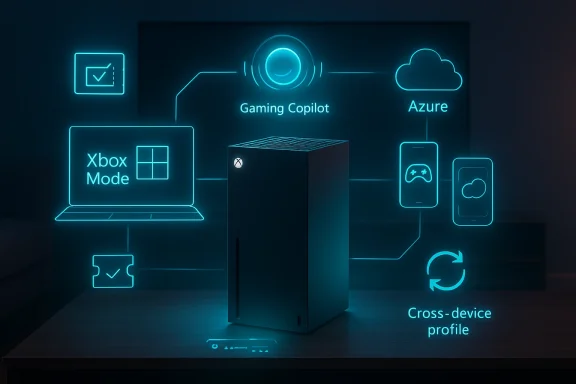
The current conversation around Xbox is not only about frame rates, teraflops, or load times. It is also about subscription economics, cloud reach, and AI-enabled gameplay support. The forum files supplied here point to a broader strategic move: Microsoft is expanding Xbox Mode into Windows 11 in April 2026 and bringing Gaming Copilot natively to Xbox Series X|S later in the year, which suggests that the console is becoming both a consumer device and a reference implementation for Microsoft’s gaming experience across devices
That is important because the Series X now has a dual role. It remains the high-end living-room console for players who want the simplest possible access to premium games, but it also acts as a gateway into Game Pass, cloud streaming, and Microsoft’s broader Windows-connected gaming strategy. In other words, its value is no longer measured only by units sold. It is measured by how effectively it keeps users inside Microsoft’s ecosystem.
This broader framing also helps explain why Microsoft continues to invest in features that outlive the typical console cycle. Backward compatibility, Game Pass integration, cross-device profiles, and cloud access are all about reducing friction and increasing time spent within the Xbox environment. The Series X may be the most visible piece of hardware in that system, but it is also a long-term customer acquisition and retention tool.
The reason hardware still matters is simple: premium consoles create trust. Players who buy a Series X expect top-tier experiences, quick resume, low latency, and strong visual fidelity. That makes the box an attractive launchpad for first-party content and premium third-party releases, especially when those games are tied to the broader Xbox ecosystem. A console that feels fast and dependable also helps normalize subscription usage because the user experience is clean enough to encourage exploration.
There is also a strategic reason to keep the flagship console strong even as the next generation comes into view. A healthy installed base improves the economics of content, accessories, and services. It also gives Microsoft a stable bridge while it continues preparing a more hybrid future, with Project Helix and Xbox Mode showing where the company appears to be headed next
Microsoft has spent years reframing Xbox around recurring engagement rather than one-time purchases alone. On the consumer side, that means access to a large library, cloud saves, and cross-device continuity. On the business side, it means more predictable cash flow, better customer retention, and more opportunities to monetize engagement over time. The forum material suggests Microsoft still sees Game Pass as the core engine behind Xbox’s value proposition, especially with cloud play and PC compatibility extending the service beyond the living room
The commercial logic is reinforced by Microsoft's content portfolio. First-party franchises, acquisition-led catalog depth, and recurring live-service engagement all feed the subscription model. If the Series X is the premium front door, Game Pass is the monetization engine behind it. Together, they create a flywheel that looks more like a digital platform business than a legacy console business.
The consumer upside is obvious: more games, more access, and more ways to play. The corporate upside is quieter but more consequential: higher lifetime value, better engagement data, and stronger leverage over content distribution. That is the kind of structure investors tend to like because it converts entertainment demand into a recurring business model.
This matters because cloud gaming changes the logic of ownership. Instead of asking whether a user bought a console, Microsoft asks whether they are active in the ecosystem at all. If a player can jump from TV to phone to handheld and keep the same profile, the company can preserve engagement even when hardware refresh cycles slow down. That gives Xbox a way to stay relevant in households that may never buy a second console.
The advantage of that model is scale. Microsoft can spread investment across consumer hardware, cloud services, and software subscriptions. It can also use the same platform logic to support game discovery, streaming, AI features, and account persistence. That makes Xbox more resilient than a purely hardware-driven competitor in a market where user expectations keep shifting.
That is also why cloud gaming is so important for international and North American reach. In broadband-heavy markets, the friction of getting into Xbox is lower than ever. In markets where hardware affordability remains a barrier, cloud can still create a relationship with the platform. The result is a broader funnel than a console-only business could ever support.
This is important because it narrows the historical gap between console and PC. For years, Microsoft has tried to bridge those worlds through Play Anywhere, Xbox Game Bar, and shared services. Xbox Mode takes that idea further by making Windows behave more like a console when gaming is the priority. That could simplify the experience for consumers while making development and distribution more consistent for Microsoft.
It also creates a subtle but meaningful ecosystem effect. If the same interface, account system, and service layer are present on Series X and Windows devices, then the value of Xbox becomes less tied to a specific box. The brand becomes portable. That is a classic platform strategy, and it is one Microsoft has been inching toward for years.
That makes the console an architectural reference point. It is not just the place where games run; it is the standard against which Microsoft measures the rest of its gaming experiences. For investors and gamers alike, that is a sign the device still has strategic runway even as the next platform generation comes into focus.
That is a significant shift in product philosophy. If implemented well, Gaming Copilot could help players navigate difficult encounters, discover games, manage settings, and get personalized suggestions without leaving the game environment. If implemented poorly, it could feel like unnecessary clutter. The difference will come down to timing, reliability, and whether players see the assistant as genuinely useful rather than merely fashionable.
There is also a commercial layer here. If Copilot improves discovery, Microsoft can increase engagement with Game Pass content and first-party titles. If it improves onboarding, it can reduce churn. If it becomes a trusted guide, it may even influence purchasing decisions in subtle ways. In that sense, AI becomes a demand-shaping layer, not just a convenience feature.
That risk is amplified in a console setting because living-room devices are shared, not always private. A feature that feels unobtrusive on a PC may feel very different on a television connected to family accounts. Microsoft will need to prove that Gaming Copilot is optional, respectful, and genuinely helpful. That is the difference between innovation and irritation.
Content remains the most direct way to defend hardware relevance. The better the lineup, the easier it is to justify buying the console even in a services-heavy era. Microsoft knows this, which is why it continues to position major releases as reasons to stay within Xbox rather than drift toward competing ecosystems.
There is also a subtle marketing effect at work. Strong exclusives help make Game Pass feel essential rather than optional. If the best games are consistently available through the same ecosystem, the console and the subscription stop looking like separate products and start looking like a single value proposition.
That said, Microsoft seems comfortable with a broader audience if it means a larger ecosystem. The Series X does not need to be the only place to play Xbox games. It only needs to remain the best and most coherent place to experience the Xbox brand in its premium form. That distinction is critical, and Microsoft appears to understand it well.
This is where Microsoft’s broader ecosystem advantage comes into play. By linking console, PC, cloud, and subscription services, Xbox can pursue a wider addressable market than a traditional console vendor. That does not guarantee market leadership, but it does create resilience. If one part of the market weakens, another can carry the business.
The risk is complexity. A broader platform can be harder to explain, especially to mainstream consumers who just want a console that works. Sony’s messaging is often simpler. Nintendo’s is even simpler. Microsoft has to balance platform ambition with clarity, and that is not always easy.
The recent Project Helix chatter and Xbox Mode rollout imply that Microsoft sees no contradiction there. It wants the present and future to overlap. For competitors, that is a problem because it lets Microsoft keep selling hardware while building a post-console identity in parallel
The forum’s market framing reflects this logic. Even when the numbers cited are not independently verified here, the broader point stands: the strategic value of Xbox lies in its ability to support a digital ecosystem with multiple revenue paths. That makes the Series X less like a mature consumer device and more like a strategic asset embedded in Microsoft’s long-term platform strategy.
There is also a balance-sheet dimension. Microsoft can afford to take a long view because gaming is one part of a much larger corporation. That gives Xbox room to experiment with cloud, AI, and cross-platform UI changes in ways that smaller rivals might struggle to finance. The market often rewards companies that can invest ahead of demand.
For North American investors in particular, that distinction is useful. A premium console anchored in a service ecosystem is easier to model than a standalone device business with volatile attach rates. Xbox’s shift toward a platform model could make its gaming segment more strategically important even if the hardware market itself matures.
The other major question is whether Microsoft can keep premium hardware compelling while it prepares for Project Helix and a more hybrid future. The company appears to be building the transition in plain sight, which gives it time to educate users and developers. But it also means every misstep in 2026 will be measured against a future that is already being advertised by the company itself
What to watch next:
Source: AD HOC NEWS Xbox Series X: Microsoft's Flagship Console Driving Gaming Innovation and Cloud Gaming Expansion in
 Overview
Xbox Series X launched in November 2020 as Microsoft’s premium console answer to the PlayStation 5, and in the years since, it has evolved from a straightforward performance box into the centerpiece of a much larger business model. Microsoft’s betting pattern has been consistent: use powerful first-party hardware to support recurring software and service revenue, then extend that value across devices through cloud streaming and cross-platform features. In 2026, that formula is visibly maturing.The current conversation around Xbox is not only about frame rates, teraflops, or load times. It is also about subscription economics, cloud reach, and AI-enabled gameplay support. The forum files supplied here point to a broader strategic move: Microsoft is expanding Xbox Mode into Windows 11 in April 2026 and bringing Gaming Copilot natively to Xbox Series X|S later in the year, which suggests that the console is becoming both a consumer device and a reference implementation for Microsoft’s gaming experience across devices
That is important because the Series X now has a dual role. It remains the high-end living-room console for players who want the simplest possible access to premium games, but it also acts as a gateway into Game Pass, cloud streaming, and Microsoft’s broader Windows-connected gaming strategy. In other words, its value is no longer measured only by units sold. It is measured by how effectively it keeps users inside Microsoft’s ecosystem.
This broader framing also helps explain why Microsoft continues to invest in features that outlive the typical console cycle. Backward compatibility, Game Pass integration, cross-device profiles, and cloud access are all about reducing friction and increasing time spent within the Xbox environment. The Series X may be the most visible piece of hardware in that system, but it is also a long-term customer acquisition and retention tool.
The Hardware That Still Defines the Brand
Xbox Series X remains Microsoft’s most recognizable gaming product because it still embodies the company’s premium performance story. Its custom AMD architecture, fast SSD, and support for modern rendering features gave it a clear next-gen identity at launch, and those advantages still matter when compared with cheaper or more flexible alternatives. Performance leadership is not just a marketing claim; it is part of the way Microsoft justifies the console’s place in a services-first strategy.The reason hardware still matters is simple: premium consoles create trust. Players who buy a Series X expect top-tier experiences, quick resume, low latency, and strong visual fidelity. That makes the box an attractive launchpad for first-party content and premium third-party releases, especially when those games are tied to the broader Xbox ecosystem. A console that feels fast and dependable also helps normalize subscription usage because the user experience is clean enough to encourage exploration.
Performance as a Platform Signal
The most important aspect of the Series X is not only raw horsepower but what that horsepower signals to the market. Microsoft can point to the console as proof that it still competes at the high end of the traditional console market, even while it pushes cloud gaming and PC convergence. That balance gives the company flexibility. It can court enthusiasts without abandoning casual players who value accessibility over specifications.There is also a strategic reason to keep the flagship console strong even as the next generation comes into view. A healthy installed base improves the economics of content, accessories, and services. It also gives Microsoft a stable bridge while it continues preparing a more hybrid future, with Project Helix and Xbox Mode showing where the company appears to be headed next
- Premium hardware still anchors the Xbox brand.
- Performance features help justify Game Pass adoption.
- The console supports first-party software discovery.
- A strong flagship smooths the transition to future hardware.
- High-end specs strengthen Microsoft’s competitive posture.
Game Pass and the Subscription Flywheel
Game Pass remains the most important commercial layer in Microsoft’s gaming strategy, and Series X is one of the cleanest entry points into that ecosystem. The console gives the subscription a premium home: fast downloads, a consistent interface, and enough performance headroom to make day-one releases and catalog browsing feel seamless. That matters because subscriptions thrive when the user experience is frictionless.Microsoft has spent years reframing Xbox around recurring engagement rather than one-time purchases alone. On the consumer side, that means access to a large library, cloud saves, and cross-device continuity. On the business side, it means more predictable cash flow, better customer retention, and more opportunities to monetize engagement over time. The forum material suggests Microsoft still sees Game Pass as the core engine behind Xbox’s value proposition, especially with cloud play and PC compatibility extending the service beyond the living room
Why Subscriptions Beat Box Sales Over Time
Traditional console economics depend heavily on hardware margins, accessory sales, and software attach rates. Microsoft is not abandoning those inputs, but it is changing their relative importance. A customer who stays subscribed for years is often more valuable than one who buys a single console and a few games. That is especially true in a world where digital distribution, cloud streaming, and multi-device access all reduce the old dependence on a single plastic box.The commercial logic is reinforced by Microsoft's content portfolio. First-party franchises, acquisition-led catalog depth, and recurring live-service engagement all feed the subscription model. If the Series X is the premium front door, Game Pass is the monetization engine behind it. Together, they create a flywheel that looks more like a digital platform business than a legacy console business.
- Game Pass reduces reliance on individual game purchases.
- The Series X serves as the premium subscription gateway.
- Day-one access increases perceived value.
- Cross-device play expands retention opportunities.
- Content depth strengthens customer stickiness.
Consumer and Enterprise-Like Thinking
It may seem odd to talk about Xbox in enterprise terms, but Microsoft’s approach increasingly resembles a platform-as-a-service play. It is not selling a single product and walking away. It is building a system that is updated continuously, optimized across devices, and designed to capture ongoing usage. That mindset is one reason Xbox can support both premium gamers and more price-sensitive cloud users at the same time.The consumer upside is obvious: more games, more access, and more ways to play. The corporate upside is quieter but more consequential: higher lifetime value, better engagement data, and stronger leverage over content distribution. That is the kind of structure investors tend to like because it converts entertainment demand into a recurring business model.
Cloud Gaming Extends the Reach
Cloud gaming is where Microsoft’s Xbox strategy becomes genuinely platform-agnostic. The supplied forum coverage repeatedly highlights Azure-backed cloud streaming and Gaming Copilot’s planned expansion to consoles, PCs, mobile devices, and handhelds, which underscores Microsoft’s aim to make gaming an always-available service rather than a hardware-bound purchase. That is a major strategic distinction from more traditional console modelsThis matters because cloud gaming changes the logic of ownership. Instead of asking whether a user bought a console, Microsoft asks whether they are active in the ecosystem at all. If a player can jump from TV to phone to handheld and keep the same profile, the company can preserve engagement even when hardware refresh cycles slow down. That gives Xbox a way to stay relevant in households that may never buy a second console.
Azure as the Hidden Engine
The cloud story is also an Azure story. Even when users do not think about data centers, Microsoft does. Series X hardware becomes part of a larger distributed system, where compute is allocated dynamically and the console itself is only one node in the experience. That architecture gives Microsoft flexibility, but it also creates a strong incentive to keep the gaming stack tightly integrated with its cloud infrastructure.The advantage of that model is scale. Microsoft can spread investment across consumer hardware, cloud services, and software subscriptions. It can also use the same platform logic to support game discovery, streaming, AI features, and account persistence. That makes Xbox more resilient than a purely hardware-driven competitor in a market where user expectations keep shifting.
- Cloud play reduces dependence on local hardware.
- Azure improves Microsoft’s infrastructure leverage.
- Device continuity increases ecosystem stickiness.
- Streaming broadens the addressable market.
- Data-center scale supports feature expansion.
A Different Kind of Competition
Cloud gaming does not erase the console war, but it changes the battlefield. Sony still depends heavily on high-quality first-party content and its own hardware identity. Nintendo continues to win on portability and family appeal. Microsoft, by contrast, is trying to make Xbox everywhere at once. That makes Series X less like a closed appliance and more like the premium node in a networked service.That is also why cloud gaming is so important for international and North American reach. In broadband-heavy markets, the friction of getting into Xbox is lower than ever. In markets where hardware affordability remains a barrier, cloud can still create a relationship with the platform. The result is a broader funnel than a console-only business could ever support.
Xbox Mode and the Windows Convergence Strategy
One of the most significant themes in recent Xbox coverage is the move to bring a console-like experience to Windows 11. The forum data indicates Microsoft is rolling out a controller-first Xbox Mode in April 2026, extending the console feel from living-room hardware into PCs and handhelds. That is more than a UI refresh; it is a clear sign that Microsoft wants Xbox to become a system-level gaming layer across its ecosystemThis is important because it narrows the historical gap between console and PC. For years, Microsoft has tried to bridge those worlds through Play Anywhere, Xbox Game Bar, and shared services. Xbox Mode takes that idea further by making Windows behave more like a console when gaming is the priority. That could simplify the experience for consumers while making development and distribution more consistent for Microsoft.
The Living-Room UI, Reimagined
The value of a console UI is not just aesthetics. It is about reducing decision fatigue and making the device feel purpose-built. When Windows shifts into Xbox Mode, it potentially removes some of the friction that keeps mainstream users from treating a PC like a console. That could be especially compelling on handheld gaming devices, where interface simplicity matters almost as much as performance.It also creates a subtle but meaningful ecosystem effect. If the same interface, account system, and service layer are present on Series X and Windows devices, then the value of Xbox becomes less tied to a specific box. The brand becomes portable. That is a classic platform strategy, and it is one Microsoft has been inching toward for years.
- Xbox Mode reduces the console-PC divide.
- A common UI lowers user friction.
- Handhelds benefit from controller-first design.
- Microsoft strengthens service consistency.
- Platform identity becomes more device-neutral.
Why This Matters for Series X
Some observers may worry that this kind of convergence dilutes the significance of the Series X. In practice, it likely does the opposite. A strong console gives the company a template for the wider ecosystem. The Series X shows what Xbox should feel like when Microsoft gets the experience right, and Xbox Mode carries that lesson into other form factors.That makes the console an architectural reference point. It is not just the place where games run; it is the standard against which Microsoft measures the rest of its gaming experiences. For investors and gamers alike, that is a sign the device still has strategic runway even as the next platform generation comes into focus.
Gaming Copilot and the AI Layer on Top of Play
The most dramatic new wrinkle in the Xbox story is Gaming Copilot. Forum posts from March 2026 indicate Microsoft has confirmed the assistant will arrive on current-generation Xbox consoles later in the year, after earlier testing on Windows Game Bar, mobile, and select handhelds This matters because it turns AI from a background productivity theme into a visible part of console gameplay.That is a significant shift in product philosophy. If implemented well, Gaming Copilot could help players navigate difficult encounters, discover games, manage settings, and get personalized suggestions without leaving the game environment. If implemented poorly, it could feel like unnecessary clutter. The difference will come down to timing, reliability, and whether players see the assistant as genuinely useful rather than merely fashionable.
What AI Adds to the Console Experience
The strongest case for Gaming Copilot is contextual assistance. Players often want help in the moment, not after searching a forum or switching devices. An on-console assistant could reduce friction in tutorials, achievements, and title discovery. That is especially appealing for busy players who want a smoother way to re-enter long campaigns or live-service games.There is also a commercial layer here. If Copilot improves discovery, Microsoft can increase engagement with Game Pass content and first-party titles. If it improves onboarding, it can reduce churn. If it becomes a trusted guide, it may even influence purchasing decisions in subtle ways. In that sense, AI becomes a demand-shaping layer, not just a convenience feature.
- AI can improve in-game navigation.
- Copilot may reduce user frustration.
- Discovery could become more personalized.
- Microsoft may gain more engagement data.
- AI assistance could support retention.
The Privacy Question
Of course, any assistant that listens, interprets, or personalizes raises concerns. Players may like convenience but still be wary of excessive data collection or intrusive prompts. Microsoft will need to be extremely careful about permissions, transparency, and user controls. If Copilot feels too invasive, it could provoke backlash rather than enthusiasm.That risk is amplified in a console setting because living-room devices are shared, not always private. A feature that feels unobtrusive on a PC may feel very different on a television connected to family accounts. Microsoft will need to prove that Gaming Copilot is optional, respectful, and genuinely helpful. That is the difference between innovation and irritation.
Content, Exclusives, and the Software Pipeline
Xbox Series X still lives or dies by content, and Microsoft appears to be using the console as the best showcase for its software strategy. The forum posts reference high-profile franchises, future Bethesda projects, and continued optimization for premium releases, all of which reinforce the idea that the Series X remains the preferred home for Microsoft’s biggest gamesContent remains the most direct way to defend hardware relevance. The better the lineup, the easier it is to justify buying the console even in a services-heavy era. Microsoft knows this, which is why it continues to position major releases as reasons to stay within Xbox rather than drift toward competing ecosystems.
First-Party Franchises Still Matter
Even in an era of subscription access, marquee games still drive identity. Halo, Forza, Gears, Bethesda titles, and future exclusives serve as proof points that Xbox remains a destination, not just a utility. When those games are optimized for Series X, they reinforce the premium narrative that the console needs.There is also a subtle marketing effect at work. Strong exclusives help make Game Pass feel essential rather than optional. If the best games are consistently available through the same ecosystem, the console and the subscription stop looking like separate products and start looking like a single value proposition.
- First-party titles define the brand.
- Exclusives support console prestige.
- Major releases strengthen subscription appeal.
- Optimization highlights Series X capabilities.
- Software depth helps retain users.
The Multi-Platform Balancing Act
Microsoft’s more recent strategy, however, is not strictly about exclusivity in the old sense. It is also about presence. The company wants its franchises to matter on console, PC, and cloud. That can broaden reach, but it also creates a tension: if too many games become too widely available, the hardware advantage can soften.That said, Microsoft seems comfortable with a broader audience if it means a larger ecosystem. The Series X does not need to be the only place to play Xbox games. It only needs to remain the best and most coherent place to experience the Xbox brand in its premium form. That distinction is critical, and Microsoft appears to understand it well.
Competitive Position Against Sony and Nintendo
The Series X sits in a market that is more fragmented than the old console wars would suggest. Sony still has a commanding reputation for single-player prestige titles and a refined hardware identity. Nintendo continues to dominate a different lane entirely, one centered on portability, family appeal, and evergreen franchises. Microsoft’s Series X strategy is therefore not about copying either rival. It is about changing the terms of competition.This is where Microsoft’s broader ecosystem advantage comes into play. By linking console, PC, cloud, and subscription services, Xbox can pursue a wider addressable market than a traditional console vendor. That does not guarantee market leadership, but it does create resilience. If one part of the market weakens, another can carry the business.
Microsoft’s Differentiation Strategy
Microsoft’s clearest differentiator is integration. Series X is not just a machine for running games; it is a node in a cross-platform system that also includes Windows, Azure, handhelds, and increasingly AI-powered services. That gives the company a strategic flexibility rivals may find harder to match.The risk is complexity. A broader platform can be harder to explain, especially to mainstream consumers who just want a console that works. Sony’s messaging is often simpler. Nintendo’s is even simpler. Microsoft has to balance platform ambition with clarity, and that is not always easy.
- Xbox leans on integration instead of isolation.
- Series X supports a broader ecosystem story.
- Cloud and PC reduce platform dependence.
- Sony competes on exclusives and polish.
- Nintendo competes on simplicity and portability.
The Market Meaning of a Hybrid Xbox
If Microsoft succeeds, the Series X may be remembered less as one console generation and more as the transitional hardware that helped redefine Xbox. That is a powerful position, but it is also a risky one. Transitional products can be exciting, yet they can also feel caught between eras. Microsoft’s challenge is to ensure Series X feels current even while the company talks about what comes next.The recent Project Helix chatter and Xbox Mode rollout imply that Microsoft sees no contradiction there. It wants the present and future to overlap. For competitors, that is a problem because it lets Microsoft keep selling hardware while building a post-console identity in parallel
Investor Implications and Financial Framing
For investors, the key takeaway is that Xbox Series X should not be evaluated as a standalone console business. It is part of a larger Microsoft gaming portfolio that mixes hardware, subscriptions, cloud distribution, and content monetization. That blend changes the valuation conversation because it ties gaming to recurring engagement rather than one-off unit sales.The forum’s market framing reflects this logic. Even when the numbers cited are not independently verified here, the broader point stands: the strategic value of Xbox lies in its ability to support a digital ecosystem with multiple revenue paths. That makes the Series X less like a mature consumer device and more like a strategic asset embedded in Microsoft’s long-term platform strategy.
Why Wall Street Cares
Investors care because the business mix is becoming more resilient. Hardware can be cyclical, but subscriptions smooth revenue. Content can be hit-driven, but cloud and platform services create continuity. AI features can increase engagement, and engagement can improve monetization. In aggregate, that is a healthier pattern than dependence on the occasional blockbuster hardware cycle.There is also a balance-sheet dimension. Microsoft can afford to take a long view because gaming is one part of a much larger corporation. That gives Xbox room to experiment with cloud, AI, and cross-platform UI changes in ways that smaller rivals might struggle to finance. The market often rewards companies that can invest ahead of demand.
- Recurring revenue improves predictability.
- Platform scale lowers strategic risk.
- Hardware supports customer acquisition.
- Cloud extends monetization opportunities.
- AI may deepen engagement over time.
A Premium Asset, Not Just a Console
The danger is overreading every new feature as a direct revenue catalyst. Not every interface update changes the business overnight. Still, the direction is clear. The Series X is increasingly valuable because it sits at the center of a broader system that Microsoft can monetize in multiple ways. That makes it a more durable asset than a typical console.For North American investors in particular, that distinction is useful. A premium console anchored in a service ecosystem is easier to model than a standalone device business with volatile attach rates. Xbox’s shift toward a platform model could make its gaming segment more strategically important even if the hardware market itself matures.
Strengths and Opportunities
Microsoft’s Xbox Series X strategy has several real advantages, and many of them compound each other. The console is not just surviving a mature hardware cycle; it is helping Microsoft build a more integrated entertainment platform. That gives the company multiple ways to create value, even as the industry changes around it.- Premium hardware identity keeps the Series X relevant to enthusiasts.
- Game Pass integration drives recurring revenue and retention.
- Cloud gaming reach expands access beyond the console box.
- Xbox Mode on Windows 11 strengthens ecosystem cohesion.
- Gaming Copilot could improve discoverability and onboarding.
- Backward compatibility preserves user investment and lowers churn.
- Cross-platform strategy reduces dependence on a single device category.
Risks and Concerns
The strategy is ambitious, but ambition always comes with tradeoffs. Xbox Series X must remain compelling enough as hardware while also supporting a broader platform agenda, and that creates pressure on messaging, execution, and consumer trust. The more Microsoft expands its gaming footprint, the more it has to manage expectations carefully.- Feature overload could make the platform feel less intuitive.
- Privacy concerns may follow AI-driven gaming assistants.
- Cloud quality dependence could limit adoption in weaker-network regions.
- Cross-platform blur might weaken the console’s distinct identity.
- Execution risk grows as Microsoft coordinates hardware, Windows, and Azure.
- Competitor response from Sony and Nintendo could preserve market fragmentation.
- Investor impatience may rise if monetization does not scale quickly enough.
Looking Ahead
The next several months will tell us whether Xbox Series X is entering a final flourishing phase or a carefully managed transition into a broader Microsoft gaming ecosystem. The rollout of Xbox Mode on Windows 11 and Gaming Copilot on current-generation consoles are the clearest near-term signals to watch, because they show how aggressively Microsoft wants to blur the line between console, PC, and cloud. If those rollouts land well, the Series X will look less like the end of a generation and more like the anchor for a multi-device strategyThe other major question is whether Microsoft can keep premium hardware compelling while it prepares for Project Helix and a more hybrid future. The company appears to be building the transition in plain sight, which gives it time to educate users and developers. But it also means every misstep in 2026 will be measured against a future that is already being advertised by the company itself
What to watch next:
- The full Windows 11 Xbox Mode rollout and whether it feels polished.
- The actual consumer implementation of Gaming Copilot on Series X|S.
- Any new first-party content cadence tied to Game Pass retention.
- Microsoft’s messaging around Project Helix and the next Xbox platform.
- How rivals respond with pricing, exclusives, or their own subscription pushes.
Source: AD HOC NEWS Xbox Series X: Microsoft's Flagship Console Driving Gaming Innovation and Cloud Gaming Expansion in
