Google Play will begin distributing third-party Android app stores in the United States on July 22, 2026, ending the practical barrier that kept rival storefronts dependent on sideloading. Google has also opened onboarding for its new Third-party App Store on Play Program, a court-driven change that could put the Epic Games Store and other competing catalogs in front of mainstream Android users without asking them to download an installer from the web.
The immediate impact is larger than another Android distribution option. Beginning next week, enrolled third-party stores can access Google Play’s catalog under the new Play Catalog Access program, while developers’ U.S. Play listings will be shared by default unless developers opt out. Google’s documentation says downloads initiated through those competing stores can still be completed by Google Play on the same terms as a direct Play Store download.
The Verge first reported that Google and Epic Games have withdrawn their joint attempt to modify the U.S. court injunction that required these changes. Google spokesperson Dan Jackson said the companies did not want to prolong an implementation fight that created uncertainty for the ecosystem. The withdrawal means the original, tougher remedies are now moving from legal theory into product rollout.
For Windows users accustomed to choosing among Steam, Epic Games Store, GOG, Microsoft Store, vendor download pages, and enterprise software portals, the concept is familiar. The novelty is that Android’s dominant app marketplace is being required to provide both the shelf space and much of the catalog that rival stores need to compete.
 Google Is Opening the Door It Tried to Replace
This rollout is the product of
Epic Games v. Google, the antitrust case Epic filed in 2020 after Google removed Fortnite from the Play Store. A jury found that Google held an unlawful monopoly in Android app distribution and in-app billing, and Judge James Donato’s October 2024 injunction ordered broad remedies. The Ninth Circuit upheld those remedies in September 2025.
Two pieces of that injunction matter most now. First, Google must permit competing Android stores to access the Google Play catalog, allowing rivals to offer apps that previously existed only in Play’s distribution universe. Second, Google cannot prohibit the distribution of third-party app stores through Google Play itself.
That second provision is the critical usability change. Android has long permitted sideloading in a technical sense, but technical permission is not the same thing as a usable route to a mass audience. Users must find an external site, authorize installation from an unknown source, understand the warnings, and trust the distributor. That process has been manageable for enthusiasts but is a poor foundation for a competing commercial store.
Google and Epic had previously proposed a modified settlement that would have centered on a worldwide “Registered App Stores” model. Under that approach, users could install approved alternative stores from the web rather than from Google Play. The Federal Trade Commission argued in a January filing that the proposal risked removing both catalog access and Play Store distribution—the two remedies most likely to create meaningful competition.
That concern now appears to have carried the day, at least in the United States. The current injunction remains in force, and Google’s new program is designed to implement it rather than replace it.
The July 22 Model Is Not a Free-for-All
The phrase “third-party stores in Google Play” could imply that Google is turning Play into an unmoderated directory of anything calling itself an app marketplace. The actual system is more controlled, and the distinction matters for security teams as much as for consumers.
Google says interested U.S. Android app distribution platforms and app stores can begin onboarding as of July 15, with the program taking effect July 22. The Ninth Circuit’s decision permits Google to apply reasonable technical and security measures to these stores and the apps they offer. Those measures must be comparable to the measures Google already applies to apps, rather than being designed as a selective obstacle course for rivals.
A rival store will not simply receive the raw APK files for every Play app and independently distribute them without constraint. Google’s developer guidance says a third-party store can offer a developer’s listing—name, icon, description, screenshots, and videos—and downloads are completed through Google Play on the same terms as a direct Play download. Google’s service fee also continues to apply to apps downloaded through that route.
In other words, the early implementation resembles a catalog-and-transaction layer more than a complete handover of Play’s infrastructure. Competing stores can establish a storefront, recommendation engine, editorial identity, pricing strategy, and customer relationship, but Google remains deeply involved in delivery for Play-catalog apps.
That is still a consequential change. A game-focused storefront could surface a curated PC-and-mobile library. A device maker could build a store around its own hardware ecosystem. A privacy-oriented distributor could make a deliberate case for its policies and app selection. But the first phase does not mean all Android software suddenly becomes portable across every store under identical terms.
Developers Need to Check Play Console Settings
For developers with U.S. Android listings, the default is the most important operational detail. Google says that if no catalog preference is selected, Play will begin providing the developer’s listings to enrolled third-party U.S. Android app stores on July 22.
Play Console includes three choices: publish every listing to all eligible stores, manage stores individually, or prevent listings from being published to any third-party store. This is not a change developers should leave to chance, particularly for organizations with regulated software, carefully managed regional distribution, complex licensing, or support obligations tied to a specific channel.
The decision should involve more than a marketing team’s instinct to maximize reach. Developers should review whether screenshots, descriptions, age ratings, pricing references, support contacts, localization, and release cadence will make sense when shown in a different storefront. They should also determine whether their licensing, customer-service tooling, fraud controls, analytics, and contractual distribution rights account for a new discovery layer.
For IT departments managing line-of-business Android deployments, the question is different but related: whether these emerging storefronts could become an unauthorized software path on employee-owned or personally enabled devices. Enterprise mobility management policies, managed Google Play configurations, application allowlists, and endpoint detection workflows should be reviewed as the first stores arrive. The court order permits security controls, but it does not make every third-party storefront subject to Google Play’s content policies.
Alternative Billing Already Changed the U.S. Rules
The store-distribution change lands on top of other U.S. Play rules already altered by the injunction. Since October 2025, Google has not been allowed to require Google Play Billing for apps distributed through Play in the United States, bar developers from using other in-app payment methods, or prevent them from communicating about alternative app prices, payment methods, or download paths.
Those rules have already weakened the old equation in which Play discovery, Play distribution, and Play billing were inseparable. A third-party store adds the missing distribution and discovery component. The potential commercial effect will depend on whether recognizable operators can persuade users to start their Android shopping somewhere other than the default Play Store.
Epic is the obvious early beneficiary. In March, Epic described Google’s broader planned changes as moving Android toward the kind of store competition familiar on Windows, and said it would invest in the Epic Games Store for Android while returning
Fortnite to Google Play globally. But other store operators have not yet publicly announced participation in the July 22 U.S. program, so it would be premature to treat a wave of named competitors as guaranteed.
The real test begins when the first stores are live: whether they can offer distinctive pricing, discovery, services, or communities compelling enough to change user behavior. Google Play will remain the download mechanism for many catalog-access transactions and the default destination for most Android users. But after July 22, it can no longer be the sole gateway by design.

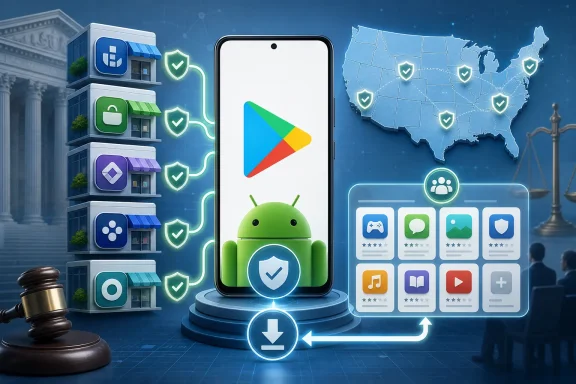 A controlled alternative-store model

