
Google’s Pixel 11 Pro is real enough to have an August 12 Made by Google event and a visible new “Pixel Glow” light, but the latest leak package overstates what has actually been verified. The key correction is that Pistachio is attached to the standard Pixel 11 in the best-documented retail listings, not the Pixel 11 Pro, while the Pro’s reported colors are Dune, Light Fog, Pine, and Sterling.
TelecomTalk’s report, based on images attributed to Evan Blass, claims a Pistachio Pixel 11 Pro with a Tensor G6 chip and 120X zoom. Google’s own Store page confirms the Pixel 11 name, the August 12 event in New York, and pre-orders beginning that day. It does not confirm the Pro’s color, Tensor G6, camera specifications, or the functionality of Pixel Glow.
There is enough independent reporting to treat 120X zoom and Tensor G6 as credible pre-launch claims. There is not enough to present either as a confirmed product specification before Google’s announcement. And the color mismatch matters because it shows how material from several separate leaks has been blended into a single, more certain-sounding story.
Google has shown a multicolored light within the Pixel 11 Pro camera bar in its own teaser material. Android Central reported that the animation’s page metadata described olive and coral Pixel 11 Pro devices, while 9to5Google and other outlets observed that the illuminated element sits in or beside the flash area rather than as a large light strip across the rear of the phone.
That is the strongest piece of evidence in the leak: there will be a hardware light associated with the Pixel 11 Pro’s camera island. Earlier reporting from Android Authority, based on information attributed to Mystic Leaks, had said the Pixel 11 Pro and Pixel 11 Pro XL would replace the temperature sensor with a small RGB LED array. The official teaser gives that prior claim substantial support.
The more elaborate claims about Pixel Glow remain unconfirmed. Google has not said it is a notification LED, a Gemini activity indicator, a charging indicator, or a multi-purpose replacement for the long-departed notification lights of older Android phones. The Made by Google promotion mentions both Gemini Intelligence and the new Pixel lineup, but it does not connect the two at a feature level.
That leaves an important practical gap. A colored light is a visible design change; its usefulness depends on configuration. If Pixel Glow supports per-app alerts, call screening status, timer completion, Do Not Disturb cues, or Gemini processing states, it could make a face-down phone more usable without lighting the full display. If it only animates during assistant use or acts as a generalized notification pulse, it will be a small cosmetic addition housed in an already crowded camera module.
Google’s teaser supports the first sentence, not the second. Buyers should wait for the August 12 software demonstration before deciding whether Pixel Glow is an interface feature or an RGB flourish.
For the Pixel 11 Pro, the same listings identified Dune, Light Fog, Pine, and Sterling. The Pro Fold was reported in Pine and Midnight. Those names also line up more closely with earlier Pro and Fold color leaks than a Pistachio Pro would.
There are two possible explanations. The image TelecomTalk describes may show a green-toned handset that was labeled informally as Pistachio, or a retailer’s mixed-up nomenclature may have spread into marketing-image coverage. Either way, the current public record does not establish Pistachio as a Pixel 11 Pro finish.
This is more than a color-name correction. It is an indicator that Pixel 11 reporting currently consists of separate evidence streams: Google’s official teaser, retailer listing captures, specifications attributed to leakers, and marketing renders. A phone image can substantiate physical design and finish. It cannot substantiate processor architecture, camera zoom quality, or Gemini features printed nearby unless those claims are visible in the original material and independently matched.
The reported design continuity is easier to credit. Google’s own footage shows the familiar horizontal camera bar, and leaked renders have consistently shown a three-camera Pro layout. No evidence so far points to a Pixel 11 Pro redesign on the scale of the Pixel 9 generation. The major visual change is the light source integrated into the camera assembly.
But “expected” is the operative word. Google’s Pixel 11 event page says nothing about Tensor G6. The company has given no official performance figures, modem details, neural-processing specifications, thermal figures, or power-efficiency claims. The submitted report’s wording — “120X camera shot with a G6 sensor” — also muddles two different components: Tensor G6 would be the phone’s application processor, while the image sensor is a separate camera part.
That distinction will matter more than the chip name. A new Tensor generation could affect on-device image processing, speech features, Gemini workloads, battery life, and camera latency, but a processor upgrade does not by itself prove a better telephoto camera. Google’s recent Pixel camera improvements have often depended on a combination of sensor hardware, optics, ISP tuning, computational photography, and cloud-assisted processing.
Google has separately announced that Gemini Intelligence features will roll out in waves to recent Samsung Galaxy and Google Pixel phones. That means Pixel 11 branding around Gemini does not automatically establish that every advertised AI feature will be exclusive to the new handsets, available at launch, processed locally, or supported for the entire seven-year Pixel update period.
For IT teams that permit Android handsets under BYOD policies, the sensible position is to treat Gemini Intelligence as a service and policy question rather than a Tensor G6 specification. Device capability, region, account type, enterprise controls, app permissions, and staged rollout timing can all determine whether an AI feature is usable. Google has not published Pixel 11-specific enterprise management documentation yet.
That is a meaningful improvement in the range Google can advertise over a 100X ceiling, but it should not be read as a 120X optical camera. No smartphone telephoto module in this report is claimed to provide 120X optical magnification. At the far end of the range, output quality will turn on stabilization, available light, subject movement, processing, and how aggressively Google reconstructs detail.
The more useful figure to watch on August 12 is the set of declared high-quality zoom steps. Cinco Días says the leaked material refers to optical-quality output at 0.5X, 1X, 2X, 5X, and 10X. If Google confirms that claim, the 10X position may be more consequential for everyday photography than the headline-grabbing 120X maximum. It would suggest a deliberate attempt to make the periscope camera useful at intermediate framing distances rather than merely extending a digital crop.
Google has not disclosed the primary sensor, ultrawide sensor, telephoto sensor size, aperture, stabilization system, or video limits for the Pixel 11 Pro. Those omissions prevent a serious comparison with the Pixel 10 Pro or competing flagship cameras. The existence of a “120X” sample image is marketing evidence, not a camera test.
The rest requires more discipline. Tensor G6 and 120X zoom have been reported by multiple outlets but remain pre-release specifications. The alleged Pistachio Pixel 11 Pro is contradicted by the strongest retailer-listing record, which puts Pistachio on the regular Pixel 11 and assigns the Pro a separate palette.
Google has also confirmed that pre-orders start on August 12, but it has not publicly provided the Pixel 11 Pro’s price, availability date, storage tiers, supported countries, Tensor G6 specifications, Pixel Glow controls, or a definitive feature matrix for Gemini Intelligence. Those are the details that will determine whether the new light and zoom number amount to a practical upgrade—or simply the most visible parts of a familiar annual refresh.
There is enough independent reporting to treat 120X zoom and Tensor G6 as credible pre-launch claims. There is not enough to present either as a confirmed product specification before Google’s announcement. And the color mismatch matters because it shows how material from several separate leaks has been blended into a single, more certain-sounding story.
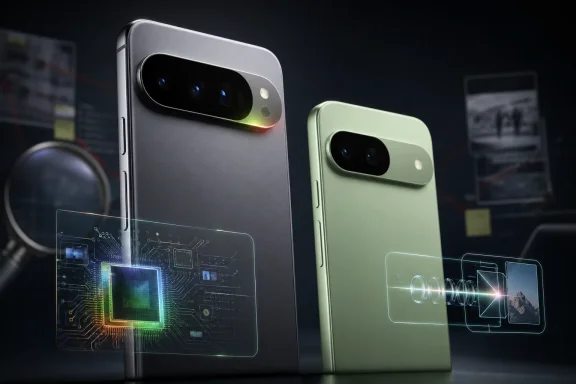 The Pixel Glow hardware is no longer just a rumor
Google has shown a multicolored light within the Pixel 11 Pro camera bar in its own teaser material. Android Central reported that the animation’s page metadata described olive and coral Pixel 11 Pro devices, while 9to5Google and other outlets observed that the illuminated element sits in or beside the flash area rather than as a large light strip across the rear of the phone.That is the strongest piece of evidence in the leak: there will be a hardware light associated with the Pixel 11 Pro’s camera island. Earlier reporting from Android Authority, based on information attributed to Mystic Leaks, had said the Pixel 11 Pro and Pixel 11 Pro XL would replace the temperature sensor with a small RGB LED array. The official teaser gives that prior claim substantial support.
The more elaborate claims about Pixel Glow remain unconfirmed. Google has not said it is a notification LED, a Gemini activity indicator, a charging indicator, or a multi-purpose replacement for the long-departed notification lights of older Android phones. The Made by Google promotion mentions both Gemini Intelligence and the new Pixel lineup, but it does not connect the two at a feature level.
That leaves an important practical gap. A colored light is a visible design change; its usefulness depends on configuration. If Pixel Glow supports per-app alerts, call screening status, timer completion, Do Not Disturb cues, or Gemini processing states, it could make a face-down phone more usable without lighting the full display. If it only animates during assistant use or acts as a generalized notification pulse, it will be a small cosmetic addition housed in an already crowded camera module.
Google’s teaser supports the first sentence, not the second. Buyers should wait for the August 12 software demonstration before deciding whether Pixel Glow is an interface feature or an RGB flourish.
“Pistachio Pixel 11 Pro” does not match the cleaner record
The Pistachio name surfaced in late-July Amazon listings that appeared briefly before removal. Android Authority reported that those listings showed the standard Pixel 11 in Frost, Pistachio, Hibiscus, and Obsidian. 9to5Google found a related naming inconsistency: product titles used Pistachio, Hibiscus, and Obsidian, while description fields called the same shades Moss, Fuchsia, and Midnight.For the Pixel 11 Pro, the same listings identified Dune, Light Fog, Pine, and Sterling. The Pro Fold was reported in Pine and Midnight. Those names also line up more closely with earlier Pro and Fold color leaks than a Pistachio Pro would.
There are two possible explanations. The image TelecomTalk describes may show a green-toned handset that was labeled informally as Pistachio, or a retailer’s mixed-up nomenclature may have spread into marketing-image coverage. Either way, the current public record does not establish Pistachio as a Pixel 11 Pro finish.
This is more than a color-name correction. It is an indicator that Pixel 11 reporting currently consists of separate evidence streams: Google’s official teaser, retailer listing captures, specifications attributed to leakers, and marketing renders. A phone image can substantiate physical design and finish. It cannot substantiate processor architecture, camera zoom quality, or Gemini features printed nearby unless those claims are visible in the original material and independently matched.
The reported design continuity is easier to credit. Google’s own footage shows the familiar horizontal camera bar, and leaked renders have consistently shown a three-camera Pro layout. No evidence so far points to a Pixel 11 Pro redesign on the scale of the Pixel 9 generation. The major visual change is the light source integrated into the camera assembly.
Tensor G6 is probable, but Google has not announced it
Tensor G6 is the expected successor to the Tensor G5 used in the Pixel 10 family, and Android Authority’s May report described it as the chip expected across the Pixel 11 line. The same report tied the platform to broader claims of a 2nm process and described upgraded cameras, displays, and an RGB LED replacing the thermometer.But “expected” is the operative word. Google’s Pixel 11 event page says nothing about Tensor G6. The company has given no official performance figures, modem details, neural-processing specifications, thermal figures, or power-efficiency claims. The submitted report’s wording — “120X camera shot with a G6 sensor” — also muddles two different components: Tensor G6 would be the phone’s application processor, while the image sensor is a separate camera part.
That distinction will matter more than the chip name. A new Tensor generation could affect on-device image processing, speech features, Gemini workloads, battery life, and camera latency, but a processor upgrade does not by itself prove a better telephoto camera. Google’s recent Pixel camera improvements have often depended on a combination of sensor hardware, optics, ISP tuning, computational photography, and cloud-assisted processing.
Google has separately announced that Gemini Intelligence features will roll out in waves to recent Samsung Galaxy and Google Pixel phones. That means Pixel 11 branding around Gemini does not automatically establish that every advertised AI feature will be exclusive to the new handsets, available at launch, processed locally, or supported for the entire seven-year Pixel update period.
For IT teams that permit Android handsets under BYOD policies, the sensible position is to treat Gemini Intelligence as a service and policy question rather than a Tensor G6 specification. Device capability, region, account type, enterprise controls, app permissions, and staged rollout timing can all determine whether an AI feature is usable. Google has not published Pixel 11-specific enterprise management documentation yet.
A 120X number says little without the optical details
Multiple outlets now report that the Pixel 11 Pro will offer up to 120X zoom. Android Central called it 120X digital zoom, while Spain’s Cinco Días reported a 48-megapixel periscope telephoto camera with 5X optical zoom and “up to 120X Pro Zoom.” Those details are compatible: 5X would describe the lens’s native optical magnification, while 120X would be a hybrid or computational endpoint.That is a meaningful improvement in the range Google can advertise over a 100X ceiling, but it should not be read as a 120X optical camera. No smartphone telephoto module in this report is claimed to provide 120X optical magnification. At the far end of the range, output quality will turn on stabilization, available light, subject movement, processing, and how aggressively Google reconstructs detail.
The more useful figure to watch on August 12 is the set of declared high-quality zoom steps. Cinco Días says the leaked material refers to optical-quality output at 0.5X, 1X, 2X, 5X, and 10X. If Google confirms that claim, the 10X position may be more consequential for everyday photography than the headline-grabbing 120X maximum. It would suggest a deliberate attempt to make the periscope camera useful at intermediate framing distances rather than merely extending a digital crop.
Google has not disclosed the primary sensor, ultrawide sensor, telephoto sensor size, aperture, stabilization system, or video limits for the Pixel 11 Pro. Those omissions prevent a serious comparison with the Pixel 10 Pro or competing flagship cameras. The existence of a “120X” sample image is marketing evidence, not a camera test.
August 12 is the point where the leak claims become checkable
The Pixel 11 Pro story is now clear on three points: Google will unveil the Pixel 11 line on August 12; the Pro model shown in Google’s materials retains the recognizable Pixel camera-bar design; and Pixel Glow is a genuine illuminated hardware element.The rest requires more discipline. Tensor G6 and 120X zoom have been reported by multiple outlets but remain pre-release specifications. The alleged Pistachio Pixel 11 Pro is contradicted by the strongest retailer-listing record, which puts Pistachio on the regular Pixel 11 and assigns the Pro a separate palette.
Google has also confirmed that pre-orders start on August 12, but it has not publicly provided the Pixel 11 Pro’s price, availability date, storage tiers, supported countries, Tensor G6 specifications, Pixel Glow controls, or a definitive feature matrix for Gemini Intelligence. Those are the details that will determine whether the new light and zoom number amount to a practical upgrade—or simply the most visible parts of a familiar annual refresh.
References
- Primary source: TelecomTalk
Published: 2026-08-05T02:39:04+00:00
Loading…
telecomtalk.info - Related coverage: androidcentral.com
Loading…
www.androidcentral.com - Related coverage: t3.com
Pixel 11 prices leak and there's a pleasant surprise for two models | T3
Could Google's new phone actually be cheaper than the previous model?www.t3.com - Related coverage: tomsguide.com
Loading…
www.tomsguide.com - Related coverage: store.google.com
Loading…
store.google.com - Related coverage: androidauthority.com
Pixel 11 Pro and Pixel 11 Pro XL leak with improved cameras and 'Pixel Glow' RGB LEDs
Google's upcoming Pixel 11 series has leaked, revealing key improvements in the Pro and the Pro XL phones, among others.www.androidauthority.com - Related coverage: androidcentral.com
Loading…
www.androidcentral.com - Related coverage: ubergizmo.com
Loading…
www.ubergizmo.com - Related coverage: notebookcheck.net
Loading…
www.notebookcheck.net - Related coverage: digitaltrends.com
Google just teased a Pixel 11 feature we have been waiting months to see - Digital Trends
A multicolored light in Google’s new Pixel 11 series teaser may reveal how Pixel Glow will work on the upcoming Pixel 11 Pro.www.digitaltrends.com - Related coverage: 9to5google.com
Pixel 11 Pro Fold in ‘Pine’ leaks & could Pixel Glow just be the camera flash?
With the launch event one month away, the Pixel 11 leaks are picking up, and we now have a look at the “Pine” color for the 11 Pro Fold.9to5google.com - Related coverage: digitaltrends.com
Loading…
www.digitaltrends.com - Related coverage: sempreupdate.com.br
Loading…
sempreupdate.com.br - Related coverage: profesionalreview.com
Loading…
www.profesionalreview.com - Related coverage: giga.de
Loading…
www.giga.de - Related coverage: androidauthority.com
Loading…
www.androidauthority.com - Related coverage: ashgabattimes.com
Loading…
ashgabattimes.com - Related coverage: ashgabattimes.com
Loading…
ashgabattimes.com - Related coverage: techradar.com
Loading…
www.techradar.com - Related coverage: cincodias.elpais.com
Loading…
cincodias.elpais.com - Related coverage: tomsguide.com
Loading…
www.tomsguide.com - Related coverage: los40.com
Loading…
los40.com - Related coverage: cincodias.elpais.com
Loading…
cincodias.elpais.com - Related coverage: los40.com
Loading…
los40.com - Related coverage: 9to5google.com
Loading…
9to5google.com - Related coverage: helentech.jp
Pixel 11 シリーズが米国 Amazon に掲載。カラーとスペックの一部が判明 | HelenTech
Google が 8 月に発表を予告している Pixel 11 シリーズのうち、標準モデルとなる「Pixel 11」や「Pixel 11 Pro」、「Pixel 11 Pro Fold」が米国 Amazon.com で掲載されていることが報helentech.jp - Related coverage: phonearena.com
Loading…
www.phonearena.com - Related coverage: megamobilecontent.com
Loading…
www.megamobilecontent.com - Related coverage: paidfreedroid.com
Loading…
paidfreedroid.com - Related coverage: tuttoandroid.net
Loading…
www.tuttoandroid.net - Related coverage: kod.ru
Loading…
kod.ru - Related coverage: support.google.com
Use Gemini, your AI assistant, on your Pixel phone - Pixel Phone Help
On Pixel 9 and later phones, Gemini comes as the default assistant on your device. Gemini is available for download on all Pixel devices with 2 GB of RAM or more, and Android 10+. Download Gemini on support.google.com
- Related coverage: blog.google
Gemini Intelligence brings proactive AI to Android
At the Android Show 2026, we introduced Gemini Intelligence, proactive new AI features on Android.blog.google - Related coverage: blog.google
Loading…
blog.google - Related coverage: support.google.com
Loading…
support.google.com - Related coverage: notebookcheck.net
Loading…
www.notebookcheck.net - Related coverage: store.google.com
Loading…
store.google.com - Related coverage: gemini.google
Loading…
gemini.google - Related coverage: services.google.com
Loading…
services.google.com - Related coverage: insight.com
Loading…
www.insight.com - Related coverage: insight.com
Loading…
www.insight.com - Related coverage: content.shi.com
Loading…
www.content.shi.com - Related coverage: techradar.com
Loading…
www.techradar.com