
ShipBob’s new AI push is already usable from Claude, Claude Desktop, Claude Code, Visual Studio Code with GitHub Copilot, and other compatible clients—but the company’s own release record shows that the core Model Context Protocol server is not a brand-new August launch. The underlying MCP server entered ShipBob’s developer release notes in January 2026, its one-click Claude OAuth connector appeared in June, and the newly announced in-dashboard agent, Bobby, is still waitlist-only ahead of planned general availability in fall 2026.
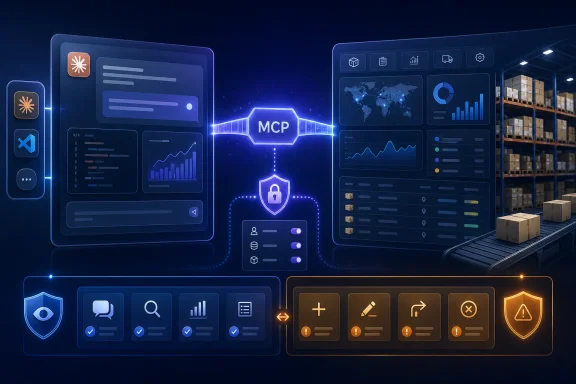
Digital Commerce 360 reported August 5 that ShipBob is bringing an AI layer to its internally built fulfillment stack, allowing merchants to work through Bobby or Anthropic’s Claude. The important technical development is less a chatbot bolted onto a dashboard than a hosted remote MCP service connected to ShipBob’s live Developer API. It can retrieve fulfillment data in plain language and, depending on the permissions granted, create, update, or cancel records.
For merchants and the IT teams supporting them, that changes the risk profile. An AI assistant that can answer “where is this order?” is a reporting tool. One that can move an order into processing, create a receiving order, update data in bulk, or cancel a record is an operational identity with access to a live fulfillment system.
ShipBob’s developer release notes place the initial MCP Server launch in January 2026. At that point, ShipBob described 27 AI-powered tools spanning orders, products, inventory, and channels, with production and sandbox availability for Claude Desktop, VS Code, and other MCP clients.
The scope has since expanded. ShipBob’s July Fulfilled 2026 recap says the MCP exposes 72 tools across 10 domains, including read and write actions such as replenishment-order creation and bulk updates. The company’s current developer documentation says every MCP call reaches the live Developer API, rather than a replicated reporting store.
That timeline matters because the August announcement reads like a single AI-suite debut, while ShipBob’s own material documents a staged rollout:
That distinction is more than branding. Anthropic’s Connectors Directory describes directory entries as reviewed and vetted by Anthropic for security, reliability, and compatibility. A custom connector, meanwhile, is a third-party MCP server added by an organization or user. ShipBob’s documentation gives customers a direct MCP endpoint and an OAuth sign-in flow, which fits the custom-connector model.
ShipBob does offer a hosted service rather than asking customers to run an MCP process locally. Its documentation says there is no ShipBob server to install, update, or maintain, and it uses Streamable HTTP with OAuth authentication. That removes the familiar Windows burden of distributing local executables, managing Node.js dependencies, or keeping a desktop-side integration patched.
It does not remove the need to assess what authority the connector receives. OAuth means users do not have to copy an API token into Claude, which is an improvement over long-lived tokens embedded in configuration files. But the consent screen and the ShipBob account permissions still determine what the AI client may do on behalf of the authenticated user.
The reported examples are operationally material: reordering a SKU, rerouting a shipment, resolving an exception order, moving orders into processing, and creating inbound receiving orders. ShipBob says merchants are already making thousands of MCP requests a day, though it has not published an audited transaction total, error rate, action breakdown, or evidence of the claimed usage level from outside the company.
This is where the promotional framing leaves out the decision that matters most to fulfillment operators. The useful question is not whether an AI model can identify a late package. ShipBob’s conventional platform already has shipping, tracking, exception, inventory, and order-management capabilities. The question is whether a merchant should allow natural-language prompts, interpreted by an external AI client, to invoke state-changing tools against those systems.
MCP’s own security guidance puts user consent and control at the center of this kind of integration. It calls for users to understand what data is shared and what actions are authorized, and it treats tools as potentially powerful execution paths. The protocol’s authorization guidance further recommends least-privilege access by capability or tool rather than broad catch-all permissions.
ShipBob says its new AI Hub will show merchants every action AI takes on their account. That could become an important audit mechanism, but the announcement does not specify whether the log includes the originating user, client application, exact prompt, model output, tool parameters, permission scope, approval status, or a reversible-action history. Those are the records a support or security team needs when a fulfillment change creates a customer-service or inventory problem.
That makes the integration accessible to developers who already use VS Code and Copilot, but it also creates a governance fork. A workspace-level configuration can travel with a repository, while a user-level configuration can make ShipBob tools available across a developer’s projects. Neither arrangement should be treated as harmless convenience configuration when the endpoint can modify live fulfillment records.
A sensible enterprise deployment should start in ShipBob’s sandbox, which the company explicitly provides for MCP testing. Teams should validate the following before enabling production access:
That is a plausible strategic advantage for a fulfillment provider. A model cannot correct a late shipment if it has no authority over inventory, warehouse workflows, carrier selection, and exception handling. But ShipBob has not said that Claude or Bobby directly control its robots, nor has it released technical details on the interfaces, safeguards, human overrides, model evaluation, or boundaries between merchant-directed actions and warehouse automation.
Those omissions matter because “AI can act” encompasses very different levels of automation. A natural-language layer that creates a replenishment order is one thing; autonomous changes to warehouse activity are another. ShipBob’s announcement bundles them into one operating vision, but the current public developer documentation is clearest about API access to fulfillment records—not direct machine control.
ShipBob’s immediate deliverable is therefore a production MCP bridge to live fulfillment data and workflows, with a simpler OAuth setup than a hand-managed API integration. Bobby may eventually make that capability easier to reach inside the ShipBob dashboard, but as of August 6, 2026, it remains a forthcoming agent. Merchants should treat the available MCP connector as a privileged operational integration today, test it in sandbox first, and demand precise audit and approval controls before letting a conversational prompt change a customer’s order.
For merchants and the IT teams supporting them, that changes the risk profile. An AI assistant that can answer “where is this order?” is a reporting tool. One that can move an order into processing, create a receiving order, update data in bulk, or cancel a record is an operational identity with access to a live fulfillment system.
 ShipBob’s MCP has been live since January
ShipBob’s developer release notes place the initial MCP Server launch in January 2026. At that point, ShipBob described 27 AI-powered tools spanning orders, products, inventory, and channels, with production and sandbox availability for Claude Desktop, VS Code, and other MCP clients.The scope has since expanded. ShipBob’s July Fulfilled 2026 recap says the MCP exposes 72 tools across 10 domains, including read and write actions such as replenishment-order creation and bulk updates. The company’s current developer documentation says every MCP call reaches the live Developer API, rather than a replicated reporting store.
That timeline matters because the August announcement reads like a single AI-suite debut, while ShipBob’s own material documents a staged rollout:
- The remote MCP service was available in sandbox and production in January 2026.
- One-click OAuth connection for Claude was listed in ShipBob’s June 2026 product releases.
- Bobby, the dashboard-resident agent presented as part of the broader AI suite, remains on a waitlist with general availability planned for fall 2026.
Claude access is a custom connector, not proof of an Anthropic product endorsement
Digital Commerce 360 described the integration as using an “Anthropic-verified connector.” ShipBob’s own published language is narrower: its Fulfilled 2026 post calls it a custom Claude connector, and ShipBob’s setup instructions tell customers to add the ShipBob MCP server as a custom connector inside Claude or configure it directly in Claude Desktop.That distinction is more than branding. Anthropic’s Connectors Directory describes directory entries as reviewed and vetted by Anthropic for security, reliability, and compatibility. A custom connector, meanwhile, is a third-party MCP server added by an organization or user. ShipBob’s documentation gives customers a direct MCP endpoint and an OAuth sign-in flow, which fits the custom-connector model.
ShipBob does offer a hosted service rather than asking customers to run an MCP process locally. Its documentation says there is no ShipBob server to install, update, or maintain, and it uses Streamable HTTP with OAuth authentication. That removes the familiar Windows burden of distributing local executables, managing Node.js dependencies, or keeping a desktop-side integration patched.
It does not remove the need to assess what authority the connector receives. OAuth means users do not have to copy an API token into Claude, which is an improvement over long-lived tokens embedded in configuration files. But the consent screen and the ShipBob account permissions still determine what the AI client may do on behalf of the authenticated user.
The real product is write access to a fulfillment system
ShipBob’s pitch is that AI must have an “action layer,” not merely visibility. Its MCP documentation confirms that the server supports both querying data and modifying it. The company lists examples ranging from checking order, product, shipment, and inventory status to creating, updating, and canceling records.The reported examples are operationally material: reordering a SKU, rerouting a shipment, resolving an exception order, moving orders into processing, and creating inbound receiving orders. ShipBob says merchants are already making thousands of MCP requests a day, though it has not published an audited transaction total, error rate, action breakdown, or evidence of the claimed usage level from outside the company.
This is where the promotional framing leaves out the decision that matters most to fulfillment operators. The useful question is not whether an AI model can identify a late package. ShipBob’s conventional platform already has shipping, tracking, exception, inventory, and order-management capabilities. The question is whether a merchant should allow natural-language prompts, interpreted by an external AI client, to invoke state-changing tools against those systems.
MCP’s own security guidance puts user consent and control at the center of this kind of integration. It calls for users to understand what data is shared and what actions are authorized, and it treats tools as potentially powerful execution paths. The protocol’s authorization guidance further recommends least-privilege access by capability or tool rather than broad catch-all permissions.
ShipBob says its new AI Hub will show merchants every action AI takes on their account. That could become an important audit mechanism, but the announcement does not specify whether the log includes the originating user, client application, exact prompt, model output, tool parameters, permission scope, approval status, or a reversible-action history. Those are the records a support or security team needs when a fulfillment change creates a customer-service or inventory problem.
Windows admins have a direct integration path
The ShipBob MCP service is relevant to Windows-centric development and operations teams because ShipBob documents support for Claude Desktop, Claude Code CLI, and VS Code with GitHub Copilot. The VS Code setup uses the standard workspace or user-level MCP configuration approach: a server entry points at ShipBob’s hosted endpoint, then browser-based ShipBob authentication completes the OAuth flow.That makes the integration accessible to developers who already use VS Code and Copilot, but it also creates a governance fork. A workspace-level configuration can travel with a repository, while a user-level configuration can make ShipBob tools available across a developer’s projects. Neither arrangement should be treated as harmless convenience configuration when the endpoint can modify live fulfillment records.
A sensible enterprise deployment should start in ShipBob’s sandbox, which the company explicitly provides for MCP testing. Teams should validate the following before enabling production access:
- Test the exact tool inventory available to the connected client, rather than relying on high-level claims about “AI fulfillment.”
- Use dedicated, least-privilege ShipBob identities where the platform’s role model permits it, instead of connecting a broad administrative account.
- Separate read-oriented inventory and shipment queries from tools that create, edit, cancel, reroute, or prioritize orders.
- Require human review for high-impact exceptions until the organization has measured model behavior, tool-call accuracy, and recovery procedures.
- Preserve the ShipBob-side activity log and correlate it with AI-client, identity-provider, and API audit logs.
- Keep sandbox and production endpoints distinct in configuration management so testing does not quietly become live execution.
Robots and cameras are part of the sales story, not the MCP interface
ShipBob is also presenting the AI suite as a link between merchant software and warehouse-floor automation, including autonomous mobile robots and AI-powered returns grading. The company argues that owning its fulfillment technology, software, and operational data lets it coordinate physical and digital execution more tightly during demand spikes and other volatile events.That is a plausible strategic advantage for a fulfillment provider. A model cannot correct a late shipment if it has no authority over inventory, warehouse workflows, carrier selection, and exception handling. But ShipBob has not said that Claude or Bobby directly control its robots, nor has it released technical details on the interfaces, safeguards, human overrides, model evaluation, or boundaries between merchant-directed actions and warehouse automation.
Those omissions matter because “AI can act” encompasses very different levels of automation. A natural-language layer that creates a replenishment order is one thing; autonomous changes to warehouse activity are another. ShipBob’s announcement bundles them into one operating vision, but the current public developer documentation is clearest about API access to fulfillment records—not direct machine control.
ShipBob’s immediate deliverable is therefore a production MCP bridge to live fulfillment data and workflows, with a simpler OAuth setup than a hand-managed API integration. Bobby may eventually make that capability easier to reach inside the ShipBob dashboard, but as of August 6, 2026, it remains a forthcoming agent. Merchants should treat the available MCP connector as a privileged operational integration today, test it in sandbox first, and demand precise audit and approval controls before letting a conversational prompt change a customer’s order.
References
- Primary source: Digital Commerce 360
Published: 2026-08-05T20:41:10+00:00
ShipBob adds Claude-integrated AI to in-house fulfillment tech suite
Fulfillment platform ShipBob has introduced an AI suite to connect to merchants' live operations using using its agent, Bobby, or Claude.www.digitalcommerce360.com - Related coverage: developer.shipbob.com
MCP Server Overview | ShipBob Developer API
Connect AI assistants like Claude Desktop and VS Code with GitHub Copilot to ShipBob using the Model Context Protocol (MCP). The ShipBob MCP Server is a hosted remote server with built-in OAuth.developer.shipbob.com
- Related coverage: developer.shipbob.com
Setup | ShipBob Developer API
Add the ShipBob MCP Server to your AI assistant. The flow is the same for every client: paste a URL, sign in to ShipBob, grant access. - Related coverage: shipbob.com
- Related coverage: support.claude.com
MCP connectors | Claude Help Center
support.claude.com
- Related coverage: claude.com
Connectors directory - Claude.ai Documentation
Browse verified and community MCP integrations for Claudeclaude.com - Related coverage: shipbob.com
- Related coverage: claude.com
Connectors | Claude by Anthropic
Connect Claude to your favorite tools to get more relevant responses. Choose from a variety of tools from trusted partners, built for Model Context Protocol.claude.com - Related coverage: platform.claude.com
MCP connector - Claude Platform Docs
Connect to remote MCP servers directly from the Messages API without an MCP client, and allowlist, denylist, or configure individual tools.platform.claude.com - Related coverage: resources.anthropic.com
- Related coverage: sacra-pdfs.s3.us-east-2.amazonaws.com
- Related coverage: softblues.io
- Related coverage: media.base44.com
- Related coverage: press.spglobal.com
S&P Global and Anthropic Announce Integration of S&P Global's Trusted Financial Data into Claude - Jul 15, 2025
PDF documentpress.spglobal.com
